
| ☀️ Light | Full sun |
|---|---|
| 💧 Water | Moderate (lightly moist) |
| 🪴 Soil | Well-drained loam or sandy soil of medium to low fertility |
| 🌡️ Temp | 1°C – 32°C |
| 🐾 Safety | Cats: toxic · Dogs: toxic |
| 📏 Mature size | 1.0 m |
Where It Grows & Climate Tolerance
Pet & Companion Animal Toxicity (Cape Gooseberry (Rasbhari, Goldenberry))
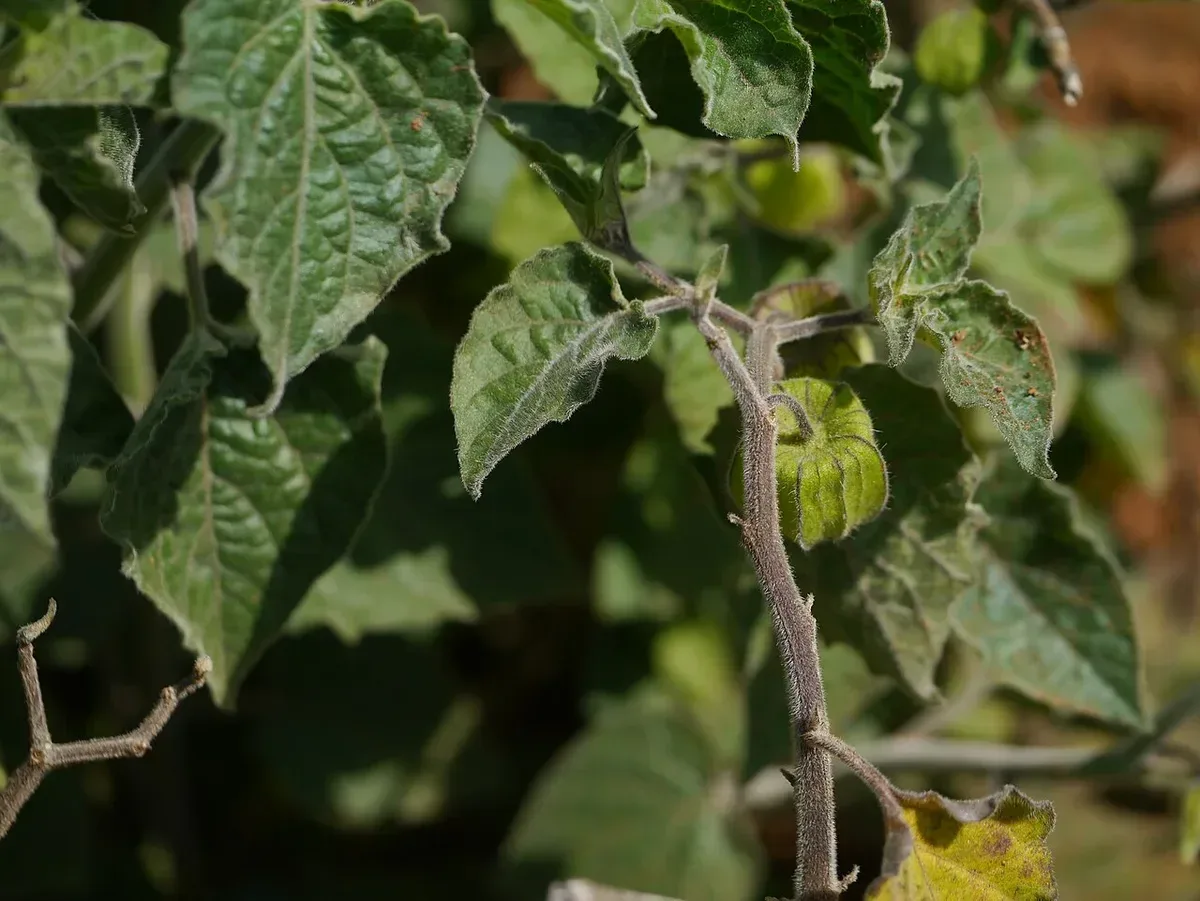
Cape gooseberry (Physalis peruviana) is a sprawling, soft-leaved plant in the tomato family that bears sweet-tart orange berries, each wrapped in a papery lantern-shaped husk. It is grown from seed like a tomato, crops for months in mild weather, and is killed by frost.
Care instructions
Care Guide & Maintenance Routine
Raise from seed and plant in full sun in well-drained soil of modest fertility. Support the floppy stems. Water regularly while young, then more sparingly; rich soil and heavy watering give leaves instead of fruit. Pick berries when husks turn papery and straw-coloured. Protect from frost. Unripe fruit and leaves are toxic.
Light & Sunlight
The RHS and NC State both call for a sunny position. Fruit set and sweetness drop in shade.
Watering Schedule
Water regularly while plants establish. The University of Arkansas Extension warns that too much water, like heavy feeding, encourages leafy growth and delays flowering. Once plants are fruiting, water when the top few centimetres are dry.
Potting Mix & Drainage
Well-drained loam or sandy soil of medium to low fertility
Temperature & Humidity
The RHS rates it H2: tolerant of low temperatures but not surviving being frozen (1 to 5°C). The University of Arkansas Extension notes it is winter hardy only south of USDA zone 8, freezing back to the ground. Flowering and fruit set slow in strong heat; the 32°C maximum is an approximate guide. RHS gives a height and spread of 1 to 1.5 m.
About cape gooseberry
Cape gooseberry is a soft-stemmed perennial in the nightshade family, native to the Andes of South America. It is grown worldwide for its fruit. The RHS describes a lax, branching plant with soft, hairy, heart-shaped leaves, reaching 1 to 1.5 m tall and as wide. Bell-shaped yellow flowers with chocolate-brown centres are followed by round orange berries about 2 cm across.
Each berry sits inside a papery, lantern-shaped husk formed from the flower's calyx. The fruit tastes sweet and tart at once, a little like a cross between a tomato and a pineapple. The University of Arkansas Extension notes the English name probably refers to its early introduction in South Africa, around the Cape of Good Hope, in the early 1800s.
Where it grows
In mild, frost-free climates it is a short-lived perennial that fruits for much of the year. The University of Arkansas Extension notes it is winter hardy only south of USDA zone 8 and grows as a summer annual elsewhere, starting to fruit 70 to 80 days after transplanting. In hot lowland tropics it grows, but fruits best in the cooler months.
Relatives and look-alikes
Several Physalis species carry husked fruit. Ground cherries and husk cherries are lower, more sprawling plants with smaller, sweeter berries that ripen earlier. Tomatillo has large green fruit for salsa. The ornamental Chinese lantern, with bright orange husks, is grown for decoration, not food. Check the botanical name on seed packets before you buy.
Raising plants from seed
Most plants are grown from seed. NC State suggests starting seed indoors 6 to 8 weeks before planting out. The seed is tiny: scatter it on the surface of moist, fine mix and press it in. Keep it warm and bright; seedlings appear in one to three weeks. Move them to small pots at the two-leaf stage. Saved seed from a ripe, home-grown berry works well. The RHS adds that established plants can be divided in spring.
Site and soil
Choose full sun. The RHS lists loam and sandy soils that are moist but well drained, at any pH. The University of Arkansas Extension recommends medium to poor fertility. This is unusual for a fruit: generous feeding gives a huge, leafy plant and few berries. Avoid freshly manured beds.
Planting and spacing
Plant out once the danger of frost has passed, or at the start of the cool season in warm climates. Space plants 60 to 75 cm apart. ICAR's Punjab recommendations use 0.75 by 0.60 m.
Support
Stems are soft and sprawl under the weight of fruit. The RHS advises supporting the branches. Set a tomato cage, a few stakes with string, or a low trellis at planting time. Pinch the tips of young plants once or twice to make them bushier.
Watering
Water steadily while plants establish. After that, water when the top few centimetres of soil are dry. The University of Arkansas Extension notes that too much water, like too much fertiliser, encourages leaves and delays flowering. Uneven watering after a dry spell can split ripening berries.
Growing in containers
A pot at least 30 cm wide and deep, filled with a free-draining mix, holds one plant. Container plants are easier to move into shelter on cold nights and can be kept going for a second season in mild areas.
Harvesting
Fruit is ripe when the husk turns dry, papery and straw-coloured and the berry inside is golden. Ripe fruit often falls; a mulch under the plants keeps fallen husks clean. Pick every few days in peak season. Leave fruit in its husk for storage: the University of Arkansas Extension notes it keeps for several months that way.
Using the fruit
Peel back the husk and eat the berry fresh, or use it in salads, jam, chutney and desserts. The husk folded back makes a neat handle for dipping berries in chocolate.
Toxicity
NC State warns that in Physalis all parts of the plant except the ripe fruit are toxic, containing solanine and related alkaloids. Do not eat leaves, stems or green berries. There is no ASPCA entry for cape gooseberry; NC State lists the genus as a problem for horses, so keep animals away from the plants.
Pests and problems
- Leaves but no fruit: soil too rich or too wet.
- Whitefly and aphids: mostly in warm, sheltered spots or under cover.
- Spider mites: in hot, dry weather.
- Slugs: on young plants.
- Frost: plants are killed or cut back by freezing.
The RHS describes the plant as generally problem free. Leaf spots and yellowing can have several causes, so check watering and the undersides of leaves before acting.
Keeping plants for a second year
In frost-free gardens, or in a pot kept under shelter, a plant can be cut back after its first crop and grown on. Second-year plants fruit earlier but are often less vigorous, and older plants collect pests. Many gardeners prefer fresh seedlings each year.
After harvest
Where frost ends the season, pull plants and compost them. In mild areas, the RHS suggests cutting plants to ground level after harvesting; they regrow. Self-sown seedlings often come up the next year from fallen fruit.
Cape gooseberry is grown in much the same way as its relatives tomato, eggplant and chilli. For other small home fruits, see strawberry, raspberry and haskap.
India and Canada in brief
In one market the plant is raised after the rains and fruits through the cool, dry months. In the other it is started indoors in late winter and races to ripen before the first fall frost. The market sections give sowing months and varieties.
Seasonal rhythm
Seasonal Calendar
A month-by-month calendar for Cape Gooseberry (Rasbhari, Goldenberry) in Global is coming soon. See the light, water and temperature notes above.
Diagnostics
Common Problems & Troubleshooting
Lots of leaves but little fruit in rich soil or with heavy watering; floppy stems without support; fruit splitting after heavy rain; frost kill; seedlings collapsing in wet, cold mix.
Pests & seasonal watch: The RHS describes it as generally problem free. Whitefly, aphids and spider mites can appear in warm, sheltered spots, and slugs eat young plants.
Q&A
Frequently Asked Questions
How do I know when cape gooseberries are ripe?
The husk turns from green to dry, papery and straw-coloured, and the berry inside is golden orange. Ripe fruit often drops to the ground in its husk.
Is it safe to eat unripe fruit?
No. NC State warns that in Physalis all parts except the ripe fruit are toxic because of solanine. Eat only fully ripe, golden berries.
Why is my plant all leaves and no fruit?
Rich soil or too much water. The University of Arkansas Extension notes heavy fertilisation and too much water encourage leafy growth and delay flowering.
How long until it fruits?
The University of Arkansas Extension says plants set out as transplants begin fruiting in about 70 to 80 days and keep producing while they grow.
Does it need support?
Yes. The RHS advises supporting the lax branches. A cage or a few stakes and string keep stems and fruit off the ground.
Can I grow it in a pot?
Yes, in a container at least 30 cm wide and deep. ICAR notes cape gooseberry is one of the fruit crops suitable for terrace gardens.
Is it the same as a ground cherry?
They are related Physalis species. Ground cherries are smaller, lower plants with smaller fruit; cape gooseberry is taller with larger, tangier berries.
How long do the berries keep?
Left in their husks, they store well. The University of Arkansas Extension notes husked fruit can keep for several months, which is why it travelled well on sea voyages.
Is it safe for pets?
No ASPCA entry exists, but NC State lists Physalis plants as toxic except for the ripe fruit and as a problem for horses. Keep pets away.
Similar Botanical Matches
Keep exploring
Related plants
Grower field notes
Reader Field Notes in Global
Share how this plant performs in your local Global climate.