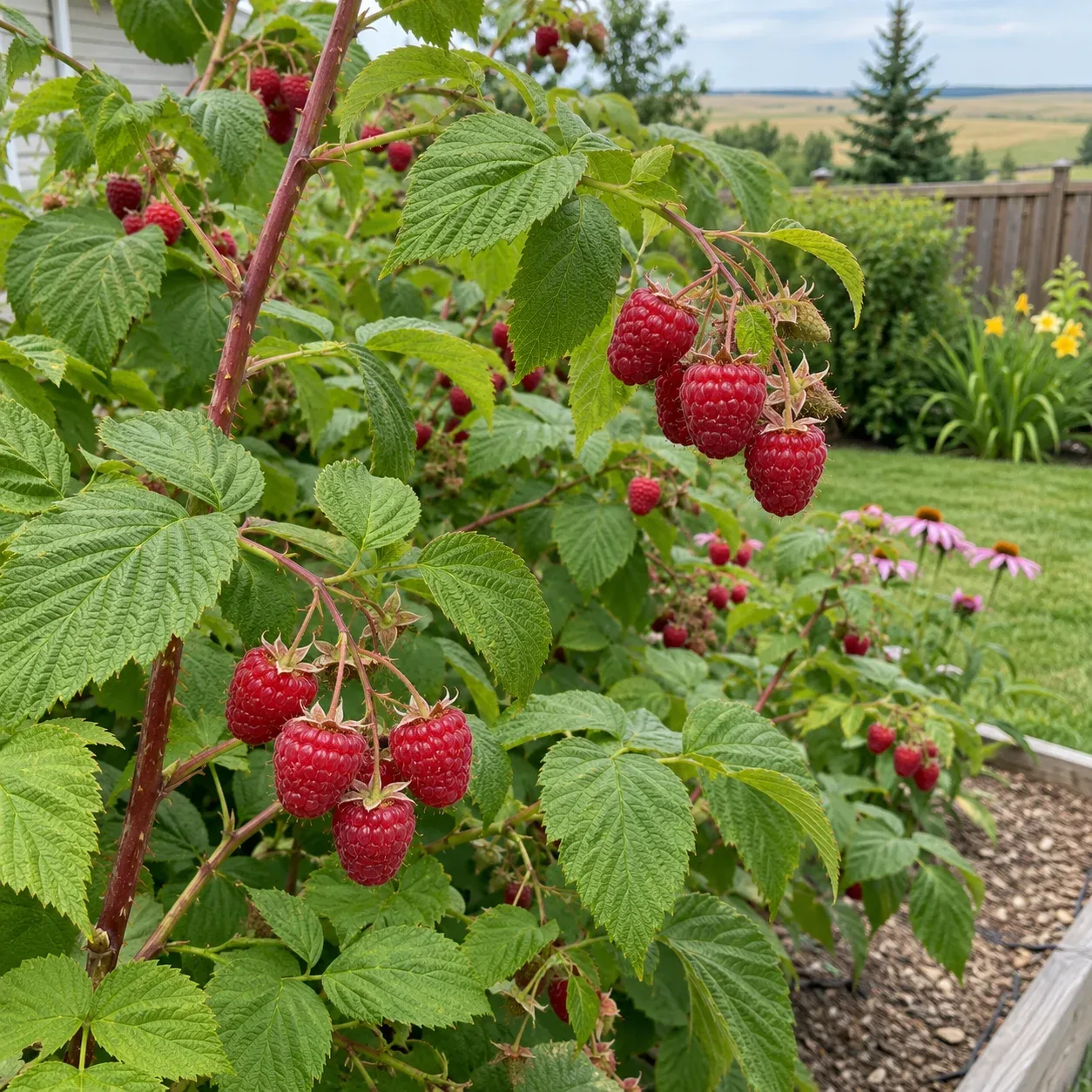
| ☀️ Light | Full sun |
|---|---|
| 💧 Water | Moderate (lightly moist) |
| 🪴 Soil | Fertile, well drained. |
| 🐾 Safety | Cats: toxic · Dogs: toxic (ASPCA Animal Poison Control) |
Where It Grows & Climate Tolerance
Pet & Companion Animal Toxicity (Raspberry)
A backyard berry crop whose pruning depends on whether the cultivar fruits on second-year or current-season canes.
Care instructions
Care Guide & Maintenance Routine
Full sun; Even moisture; avoid waterlogging; Fertile, well drained. Check local climate and variety guidance.
Light & Sunlight
Full sun. Site exposure may vary with local summer heat.
Watering Schedule
Even moisture; avoid waterlogging. Adjust to soil drainage and weather.
Potting Mix & Drainage
Fertile, well drained.
Temperature & Humidity
Use local frost dates, climate and cultivar suitability; one national temperature threshold is unreliable.
A backyard berry crop whose pruning depends on whether the cultivar fruits on second-year or current-season canes.
Growing and care
Choose locally adapted, disease-free nursery stock and a sunny site with good drainage and airflow. Space plants according to the cultivar and support canes where needed. Keep the root zone evenly moist during establishment and fruiting, using mulch to moderate drying. Identify the fruiting type before pruning: summer-bearing plants fruit on second-year canes, so remove canes after they finish fruiting and retain healthy new canes; fall-bearing types may be managed for a single fall crop by cutting all canes to the ground in dormancy. Confirm the chosen system locally. Remove diseased material and watch for cane injury and spotted fruit. Avoid giving one national planting date or fertilizer dose.
Canadian seasonal care
Spring—thin and support canes, inspect winter damage. Summer—water and harvest; remove spent summer-bearing canes. Autumn—harvest fall-bearing cultivars; assess disease. Winter—prune according to fruiting type and local advice.
Seasonal rhythm
Seasonal Calendar
A month-by-month calendar for Raspberry in Canada is coming soon. See the light, water and temperature notes above.
Diagnostics
Common Problems & Troubleshooting
Few berries: identify fruiting type and pruning history. Cane disease: improve sanitation and airflow.
Pests & seasonal watch: Inspect regularly and identify the pest or disease before treatment. Follow current local guidance.
Care encyclopedia · 5 guides
Guides & Articles for Raspberry
Fall Garden Cleanup Checklist for Canadian Gardens
A step-by-step fall cleanup checklist for Canadian gardens: what to remove, what to leave standing for birds and stem-nesting bees, how to handle leaves and the lawn, and how to put tools and water away for winter.
Read guide →Yellow Leaves on Plants: What's Causing It and How to Fix It
Yellow leaves are a symptom, not a diagnosis. Learn to read the pattern, from lower leaves yellowing after overwatering to new growth yellowing between green veins on the Prairies, and how to fix the most common causes indoors and in Canadian gardens.
Read guide →Natural vs Chemical Pest Control in Canada: What's Legal and What Actually Works
Is that garden spray legal where you live? Learn how Health Canada and each province regulate pesticides in 2026, from Ontario's and Quebec's cosmetic bans to BC's certificate rules, and which natural and low-risk methods actually work.
Read guide →Japanese Beetle in Canada: How to Identify It, Control It and Where It's Regulated
Japanese beetles are established in Ontario, Quebec and the Maritimes, and CFIA is fighting them in BC and Newfoundland. Learn how to identify adults and grubs, where they are regulated in 2026, how to report a sighting, and how to protect your roses, raspberries and lawn.
Read guide →Leaf Spot, Rust and Botrytis (Grey Mould): A Canadian Gardener's Guide
Spots, orange pustules or fuzzy grey rot? Learn how to tell leaf spot, rust and botrytis (grey mould) apart, which Canadian plants they hit, from strawberries and peonies to saskatoons and hollyhocks, and the simple habits that prevent all three.
Read guide →Q&A
Frequently Asked Questions
Why did my raspberry not fruit?
First establish its fruiting type and whether productive canes were removed.
Do canes need support?
Many cultivars benefit from a trellis or wires.
Can wet soil harm raspberries?
Yes; select a drained site.
Similar Botanical Matches
Grower field notes
Reader Field Notes in Canada
Share how this plant performs in your local Canada climate.