| ☀️ Light | Full sun |
|---|---|
| 💧 Water | Low (allow soil to dry) |
| 🪴 Soil | Gritty, fast-draining cactus and succulent mix with extra pumice or coarse sand |
| 🌡️ Temp | 10°C – 27°C |
| 🐾 Safety | Cats: non-toxic · Dogs: non-toxic (ASPCA Animal Poison Control) |
| 🏔️ Hardiness | Indoors only in Canada. Outdoors hardy in USDA zones 10-11 only (NC State Extension) |
| 📏 Mature size | 2.4 m |
Where It Grows & Climate Tolerance
Pet & Companion Animal Toxicity (Ponytail Palm)
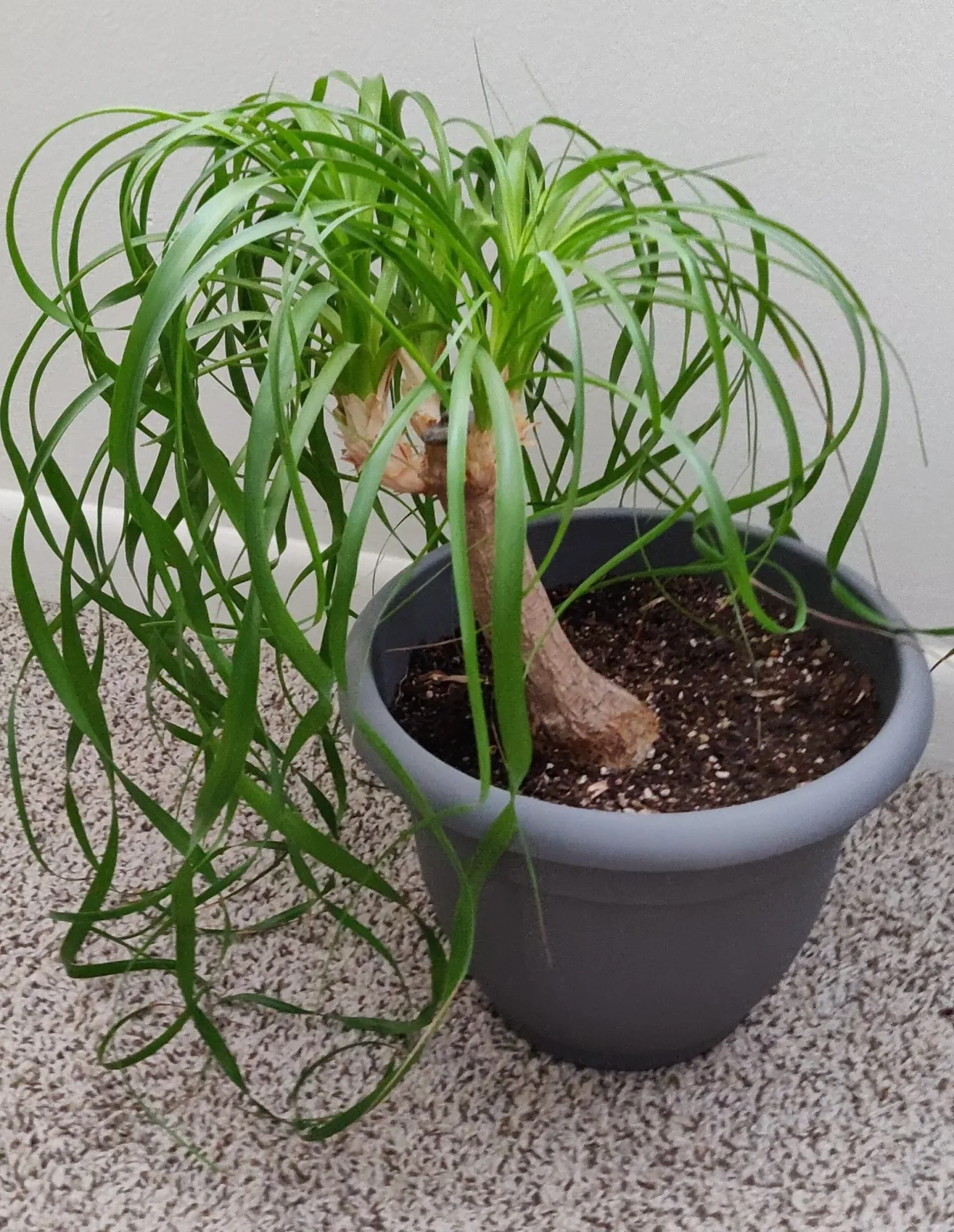
Slow-growing, drought-tolerant houseplant with a swollen trunk and arching leaves. Loves sun and dry air; pet-safe. Water sparingly, especially in winter.
Care instructions
Care Guide & Maintenance Routine
Bright sun (4-6 hours). Soak then let dry completely; water every 2-8 weeks. Gritty, fast-draining mix. 15-27 C, minimum 10 C. No feeding October-February. Non-toxic to cats and dogs.
Light & Sunlight
Bright light with 4-6 hours of direct sun; a sunny south or west window
Watering Schedule
Low: soak, then let the soil dry out completely (every 2-8 weeks; monthly or less in winter)
Potting Mix & Drainage
Gritty, fast-draining cactus and succulent mix with extra pumice or coarse sand
Temperature & Humidity
Verified temperature range: 10°C–27°C (50°F–81°F). Protect from cold drafts and direct airflow from heating or cooling vents.
Ponytail palm (Beaucarnea recurvata) is not a true palm. It is an evergreen perennial in the asparagus family from rocky, poor soils in Mexico, with a thick, swollen trunk base (caudex) that stores water and narrow dark green leaves that arch like a fountain. NC State Extension notes it has won the Royal Horticultural Society's Award of Garden Merit.
A forgiving plant for heated Canadian homes
Ponytail palm prefers dry winters and does well even with indoor heated air, which makes many other houseplants suffer. It is hardy outdoors only in USDA zones 10-11, so across Canada it is a houseplant, and can spend summer on a sunny, protected patio if you adjust it gradually to the outdoors. Bring it in before temperatures fall below about 10 C.
Light
Give it as much light as you can: a sunny window with about four to six hours of direct sun is ideal. In low light it survives but barely grows. Growth is very slow, often only one or two new leaves a year, which is normal.
Watering
In summer, water deeply but let the soil dry out between waterings. In winter, water very little, stretching the interval to a month or more. The caudex is a water reservoir, so it is much more likely to be killed by soggy soil, which rots the base, than by drought.
Soil and pot
Use a fast-draining cactus and succulent mix with extra pumice or coarse sand, in a pot with drainage holes. It actually prefers a snug pot, because a pot that is too large holds wet soil.
Feeding
Feed lightly with a diluted fertilizer in summer and stop from October to February.
Size
Plants can reach 6-8 feet (about 1.8-2.4 m) in a pot, but very slowly, and in nature can grow far taller.
Pets
The ASPCA lists the bottle palm (Beaucarnea recurvata) as non-toxic to dogs and cats, which makes it a good statement plant for pet households.
Seasonal rhythm
Seasonal Calendar
A month-by-month calendar for Ponytail Palm in Canada is coming soon. See the light, water and temperature notes above.
Diagnostics
Common Problems & Troubleshooting
- Soft, mushy caudex or trunk | Cause: Overwatering or soggy soil | Fix: Let the soil dry fully; in winter water very rarely; repot in gritty mix if rot is early - Very slow growth | Cause: Normal for the species, or too little light | Fix: Give brighter light and sun in summer - Brown leaf tips | Cause: Dry soil for too long or salts | Fix: Soak thoroughly when watering and flush salts - Mealybugs, scale, spider mites | Cause: Common houseplant pests | Fix: Inspect leaves regularly and treat early
Care encyclopedia · 2 guides
Guides & Articles for Ponytail Palm
Top 10 Pet-Safe Houseplants for Canadian Homes
Snake plant, pothos and lilies are common in Canadian homes but toxic to pets. These 10 houseplants are listed as non-toxic to both cats and dogs by the ASPCA, and they cope with short days and dry winter air.
Read guide →14 Pet-Safe Houseplants for Canadian Homes With Cats and Dogs
A spider plant, a parlor palm or a Christmas cactus is a solid start if you want houseplants in a home with cats or dogs. All fourteen plants below have a Canada profile and an ASPCA non-toxic listing. That is not the same as safe to eat.
Read guide →Q&A
Frequently Asked Questions
Is ponytail palm safe for pets?
Yes. The ASPCA lists it (as bottle palm, Beaucarnea recurvata) as non-toxic to dogs and cats.
Is it really a palm?
No. It is in the asparagus family and stores water in a swollen caudex.
How often should I water it?
Soak it and then let it dry completely. That is about every 2-8 weeks depending on light and season, and much less in winter.
Why does it grow so slowly?
Slow growth is normal. Even healthy plants may add only one or two leaves a year.
Similar Botanical Matches
Grower field notes
Reader Field Notes in Canada
Share how this plant performs in your local Canada climate.