
| ☀️ Light | Full sun |
|---|---|
| 💧 Water | Low (allow soil to dry) |
| 🪴 Soil | Lean, sharply drained |
| 🌡️ Temp | -30°C – 35°C |
| 🐾 Safety | Cats: toxic · Dogs: toxic (ASPCA Animal Poison Control) |
| 📏 Mature size | 1.2 m |
Where It Grows & Climate Tolerance
Pet & Companion Animal Toxicity (Russian Sage)
Silvery drought-tough perennial for hot dry Canadian sites; cut back hard in spring.
Care instructions
Care Guide & Maintenance Routine
Full sun, dryish soil, cut to low buds in spring.
Light & Sunlight
Full sun.
Watering Schedule
Low once established.
Potting Mix & Drainage
Lean, sharply drained
Temperature & Humidity
Zone 4 typical; colder with snow cover.
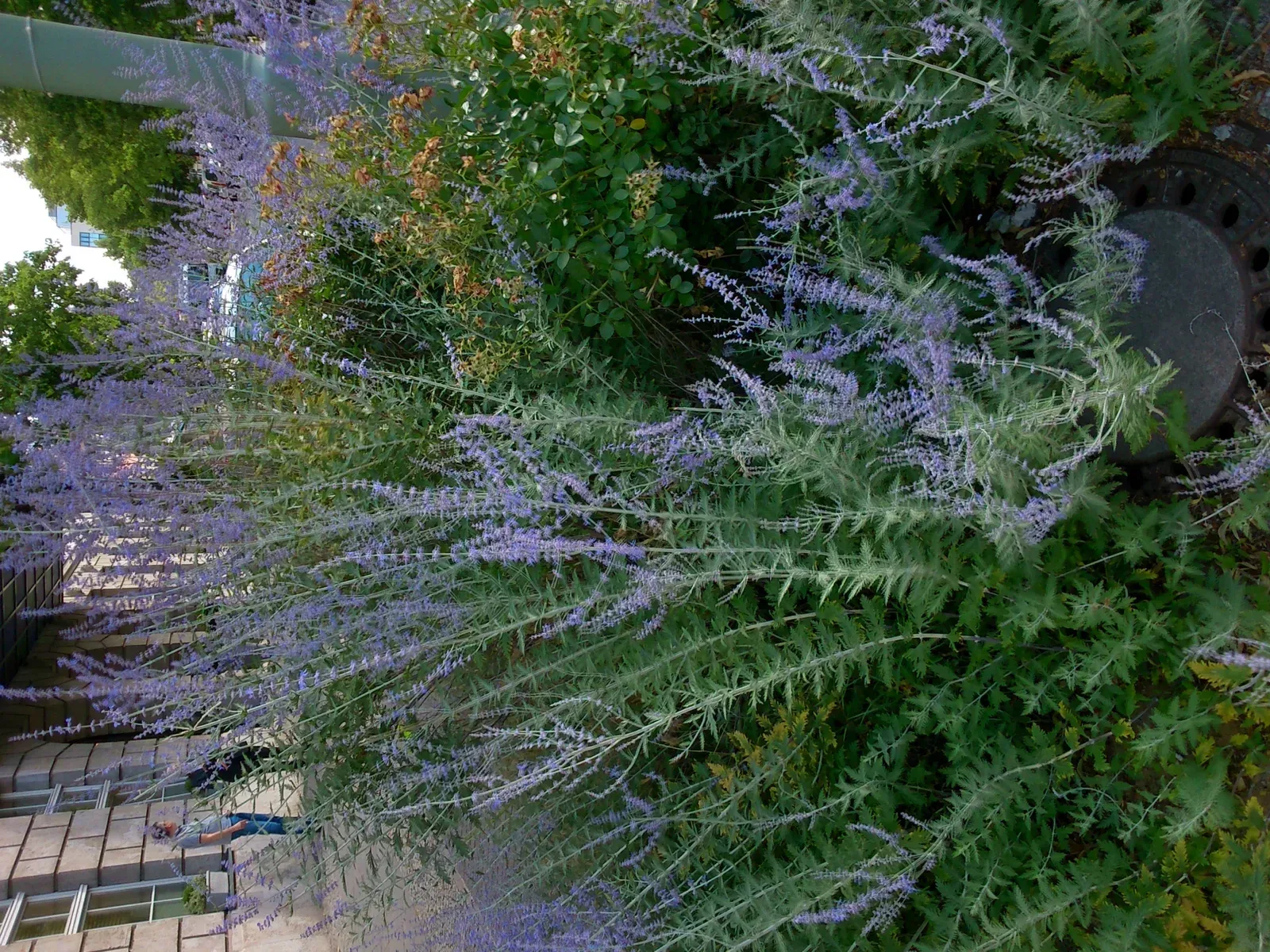
Russian sage fills hot, dry Canadian borders with silver stems and a blue haze from midsummer on.
Full sun and sharp drainage are essential. Rich wet soil makes it flop and rot.
Cut stems hard in early spring. Leave stems through winter for better survival.
Often Zone 4, colder with snow. Pair with grasses and yarrow for a low-water look.
Russian sage anchors hot Canadian parking strips and south foundations where lawn dies. Cut only in spring. Fall pruning removes insulating stems and invites losses. Gravelly soil or a raised berm beats clay every time.
Silver foliage looks good even before bloom. Bees work the blue haze for weeks. Hardiness around Zone 4 with colder success under snow. Keep pets from heavy grazing. Pair with feather reed grass for a modern low-water border.
Woody stems can be left for winter interest and bird shelter, then cut when you see green basal buds. Wear gloves — stems are rough. It pairs with coneflowers, grasses and autumn sedums already on many Canadian sites. Avoid high-nitrogen lawn fertilizer drifting into the bed. Once roots run deep, ignore summer drought and enjoy the blue haze until frost.
Seasonal rhythm
Seasonal Calendar
A month-by-month calendar for Russian Sage in Canada is coming soon. See the light, water and temperature notes above.
Diagnostics
Common Problems & Troubleshooting
Winter loss (wet soil); flopping (shade).
Pests & seasonal watch: Few.
Care encyclopedia · 1 guide
Guides & Articles for Russian Sage
Q&A
Frequently Asked Questions
When to prune?
Hard in early spring when buds show — not fall.
Why did it die?
Winter loss is often caused by wet soil.
Full sun?
Yes, Russian sage needs full sun.
Invasive?
It can seed; deadhead if concerned.
Similar Botanical Matches
Keep exploring
Related plants
Grower field notes
Reader Field Notes in Canada
Share how this plant performs in your local Canada climate.