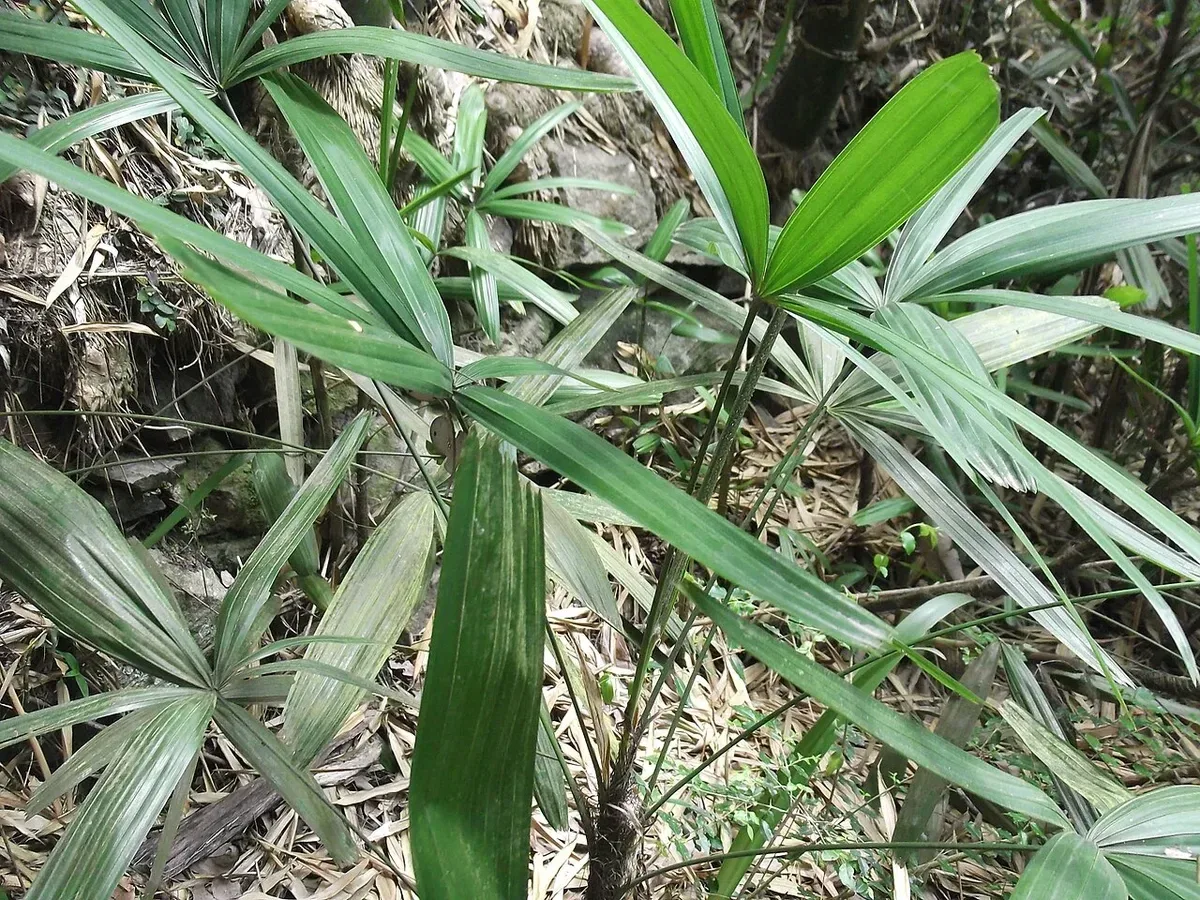
| ☀️ Light | Medium light |
|---|---|
| 💧 Water | Moderate (lightly moist) |
| 🪴 Soil | Well-drained, peat-free potting mix with bark or perlite |
| 🌡️ Temp | 10°C – 35°C |
| 🐾 Safety | Cats: non-toxic · Dogs: non-toxic |
| 📏 Mature size | 1.8 m |
Where It Grows & Climate Tolerance
Pet & Companion Animal Toxicity (Lady Palm Care in Canada)
In Canada the lady palm is a long-lived floor plant for living rooms, offices and entrances. NC State notes it needs only indirect light, has low humidity needs and tolerates cold drafts near doors, three qualities that suit a Canadian winter.
Care instructions
Care Guide & Maintenance Routine
Set it a metre or two from an east, west or south window, or in a dim corner, out of direct summer glare. From November to March, a drink roughly every two to three weeks is typical. Keep it above 10°C. A shaded deck works from mid-June; carry it back indoors by Labour Day.
Light & Sunlight
NC State Extension says it needs indirect light and withstands deep shade. Bright, filtered light gives the best colour and growth; direct afternoon sun yellows and scorches the leaves.
Watering Schedule
NC State recommends regular watering except in winter, when watering can be reduced. Let the top few centimetres of mix dry between waterings and never leave the pot standing in water.
Potting Mix & Drainage
Well-drained, peat-free potting mix with bark or perlite
Temperature & Humidity
Not hardy outdoors anywhere in Canada. Keep above about 10°C. Short drafts at a door are tolerated, but prolonged exposure to freezing air from an open door or window damages leaves.
Lady palm in Canadian homes
Few palms handle a Canadian winter indoors as calmly as this one. Short, grey days, forced-air heating and a chilly front hall are all within its range.
Light through the year
From November to February, a spot a metre or two from an east, west or south window is ideal. North windows and offices with ceiling lights work too, though growth slows. From May to August, keep it out of direct sun through south and west glass, which scorches leaves.
Winter watering
In a big pot, the mix dries slowly in a cool room. Check with a finger and water only when the top few centimetres are dry; that may be every two to three weeks in January. Overwatering in winter, not dryness, is the usual way lady palms decline in Canadian homes.
Dry air from the furnace
NC State notes the lady palm has low humidity needs, so it copes better than areca or kentia palms when relative humidity falls below 30 per cent. Keep it away from heat registers and baseboard heaters, which dry the leaf tips.
Entrances and drafts
NC State describes it as a good palm near doors because it tolerates periodic winter drafts. A front hall in a Winnipeg or Edmonton house is fine as long as the room stays above about 10°C and the plant is not hit by -30°C air every time the door opens.
Summer outside
Once nights stay above 10°C, usually by early June in southern Ontario and on the BC coast and later on the Prairies, the palm can move to a shaded deck. Bring it in before nights cool in September, after checking for insects.
Moving day and delivery
Buying a large palm in January? Ask the store to sleeve it, warm the vehicle first and carry it straight inside; a few minutes at -20°C can freeze the leaves. Spring and early fall are the gentlest months to move or buy one.
Condos and offices
Downtown towers in Toronto, Vancouver and Calgary often have tinted windows and sealed, dry air. Lady palm handles both, provided it sits near the glass rather than deep in a hallway.
Tap water
Hard tap water in Calgary, Regina and parts of Ontario leaves white crust and can brown tips. Water thoroughly so some drains out, and flush the pot in spring.
Humidity trays and humidifiers
If indoor humidity in a Montréal or Ottawa winter drops near 20 per cent, a pebble tray or a room humidifier helps both the palm and the people. Keep the pot base above the water line.
Questions from Canadian readers
- Is it safe with a cat? Yes. ASPCA lists lady palm as non-toxic to cats and dogs.
- How long will it last? With steady care, decades.
Seasonal rhythm
Seasonal Calendar
| Month | Care Tasks | Seasonal Focus |
|---|---|---|
| Jan | protect | Deep freeze: a drink every two to three weeks; clear of forced-air registers. |
| Feb | protect | Shower-rinse dusty fronds; look for webbing from mites. |
| Mar | protect | March break: inspect canes with a flashlight for scale. |
| Apr | feed, repot | Spring thaw: divide or repot crowded clumps; slow-release granules. |
| May | protect | Victoria Day: lengthening days mean more frequent watering. |
| Jun | protect | Canada Day weekend: a sheltered, shaded deck or balcony. |
| Jul | feed | Midsummer top-up feed; check pot moisture after heatwaves. |
| Aug | protect | August: shield from noon glare on the patio. |
| Sep | protect | Labour Day: debug, then carry back indoors. |
| Oct | protect | Thanksgiving: settled inside; longer gaps between drinks. |
| Nov | protect | Heating season: watch for crisping tips. |
| Dec | protect | Holiday guests: keep it away from a constantly opening front door. |
Diagnostics
Common Problems & Troubleshooting
Brown leaf tips from irregular watering, fertiliser salts or very dry air; yellowing and scorch in direct sun; root rot in waterlogged pots; scale and mealybugs on leaf undersides and canes; spider mites in hot, dry rooms.
Pests & seasonal watch: Scale and mealybugs hitchhiking indoors on deck plants each September. Spider mites flaring up beside furnace registers in January and February. Fungus gnats in chilly, soggy pots during the dark months.
- Yellow leaves — Leaves fade from green to yellow, often starting at the bottom.
- Brown tips — Leaf tips and edges turn dry, brown and papery.
- Root rot — Roots turn brown and mushy in soil that stays wet.
- Mealybugs — White cottony clumps in leaf joints, often with sticky honeydew.
- Spider mites — Fine webbing and pale speckled leaves, worse in dry heated rooms.
- Scale — Hard or soft brown bumps stuck to stems and leaf ribs, often with sticky honeydew.
- Leaf spot — Brown or tan spots with a yellow halo, sometimes with tiny dots in the centre.
- Overwatering — Soil stays wet, leaves yellow or droop, and the pot feels heavy.
- Sun scorch — Bleached or crispy patches on the side that faces strong sun.
Care encyclopedia · 1 guide
Guides & Articles for Lady Palm Care in Canada
Similar Botanical Matches
Grower field notes
Reader Field Notes in Canada
Share how this plant performs in your local Canada climate.