
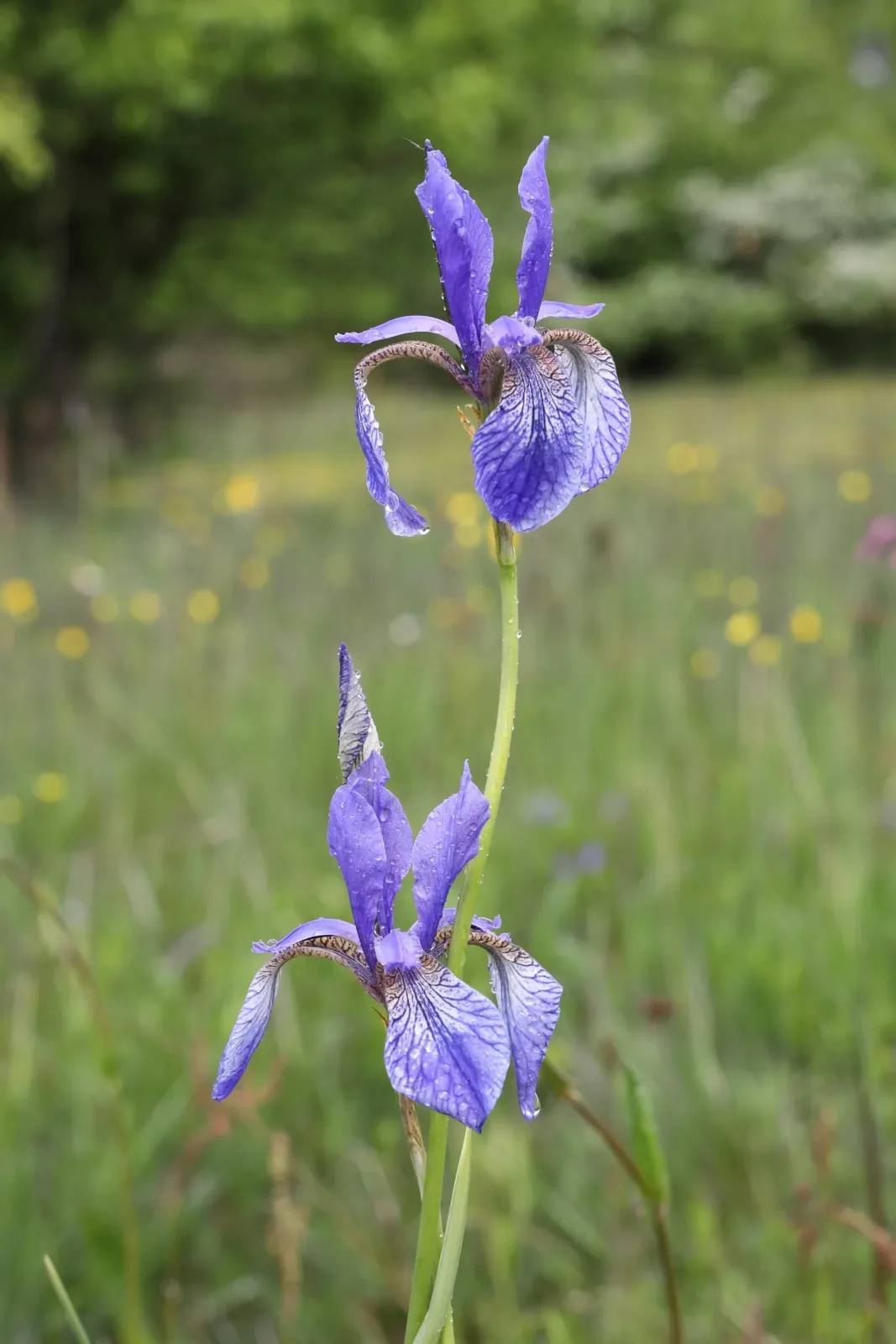
Siberian iris brings grassy foliage and a short flower display to a moist border. Its roots should not be managed like sun-baked bearded iris rhizomes, a common source of confusing planting advice.
Quick answer
Siberian iris needs useful sun and moisture-retentive drained soil, not the exposed rhizome treatment used for bearded iris. Preserve leaves after flowering and divide crowded healthy clumps when appropriate. Canadian dormant crowns need a locally suitable cultivar. Fresh divisions must be replanted promptly, with roots protected from drying during the work.
How do you identify siberian iris?
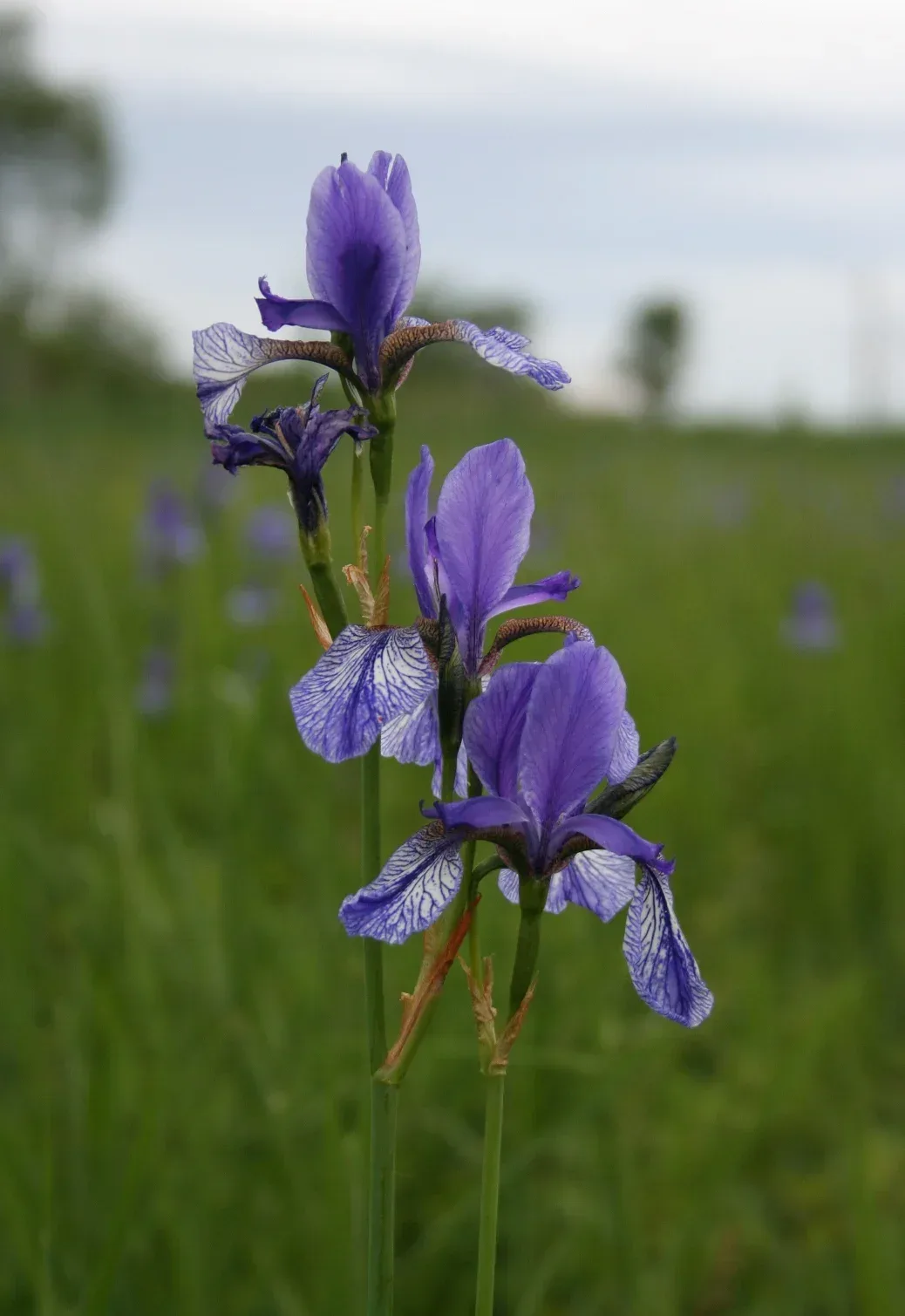
Siberian iris: Iris sibirica has narrow grassy leaves and slender stems. 'Caesar's Brother' is a familiar blue cultivar. It is not Iris versicolor or bearded iris; photographs and planting-depth advice should not be swapped between them.
How do you get an old Siberian iris flowering again?
Congested clumps can flower poorly in the centre. Divide and keep vigorous outer sections, then water until established. Unlike bearded iris, its root zone should not bake exposed on the surface. It likes moisture but need not stand permanently flooded. Shade and summer drought can also reduce bloom. Retain green leaves after flowering so they feed the crown. Clear diseased foliage once dead rather than cutting a healthy clump down immediately after the flower display.
Where should you plant it for enough light?
Full sun to light shade.
Siberian iris forms a grassy clump and bears flowers above relatively narrow leaves. It is not a bearded iris, so instructions to expose a thick bearded rhizome to baking sun should not be transferred blindly. Keep the cultivar name if colour and flowering time matter. Give the plant useful sun, allowing for regional heat and soil moisture. A lightly shaded site may work, but deep shade often reduces the display. After flowering, the upright foliage remains useful in a Canadian perennial border. Allow space around it rather than hiding the whole clump behind a later, much larger perennial.
How should you water through the seasons?
Moist; handles wetter sites than bearded iris.
A moisture-retentive but aerated soil supports establishment. Siberian iris can suit a bed that stays fresher than a dry rock garden, but that does not mean every cultivar should sit in stagnant water indefinitely. Water a new division so its roots make contact with the surrounding soil. Do not let freshly lifted roots bake on a driveway while you prepare another bed. Mulch can moderate moisture during establishment without covering the crown heavily. In a dry summer, check beneath the leaves because a dense clump can conceal a dry centre even when neighbouring annuals are being watered regularly.
What soil or potting mix is best?
Moist fertile soil; tolerates heavier ground. Fertile; not bone dry.
Planting depth should suit the actual roots and crown, following reliable instructions for Siberian iris rather than a generic iris diagram. Spread roots into prepared soil and firm gently. A small division placed in a huge deep pot of wet compost can be difficult to manage before planting. If it must wait, keep the roots cool and appropriately moist without sealing them in a waterlogged bag. Established clumps eventually become crowded and may flower less well in the middle. That is a reason to assess division, not automatically to apply a stronger flower fertilizer to an aging congested crown.
What temperatures and winter protection does it need?
Commonly grown around Canadian zone 3 and warmer, with some selections used in zone 2. Confirm the cultivar locally.
When should you plant, repot or divide?
Division is a substantial job once the root mass becomes dense. Lift a manageable portion at a suitable season, use a sharp clean tool and retain healthy outer sections with sound roots and growth points. Discard obviously dead central material. Replant promptly and water carefully while the pieces establish. Very small fragments may take longer to make a worthwhile display. Do not expect a newly divided clump to perform exactly like its mature parent immediately. Label each division before placing several cultivars on the same tarp; their leaves can be almost indistinguishable once the flowers are gone.
How should you prune it?
Cut foliage after frost browns it.
A modest spring feeding or compost dressing can help where the soil needs improvement. Excess nitrogen is unnecessary for a healthy established planting. If flowering is poor, review sun, crowding and recent disturbance first. Remove spent flower stalks if seed production is unwanted, keeping the green leaves. Cutting the entire clump down directly after flowering removes the foliage that supports next year's reserves. Later, remove leaves after they have died back. In Canadian gardens, dormant crowns generally remain outside if the cultivar matches the local hardiness zone. Snow cover and drainage still influence winter outcomes.
What is the best propagation method?
Divide after flowering or in a suitable early-autumn window with time to root before freezing. Each piece needs leaves and healthy roots. Keep lifted roots from drying out. Seed does not preserve named cultivars.
Which pests and diseases should you watch for?
Few; iris borer less than bearded types.
Inspect damaged leaves and buds for insects or disease rather than assuming all iris problems are identical. Iris borers can affect some plantings in regions where they occur, while leaf spots and crown decay need separate assessment. Remove affected debris and seek a local diagnosis if symptoms recur. Avoid sharing divisions from a suspect clump. Slugs may mark emerging growth, especially around dense damp mulch. Keep the base accessible for inspection. Do not interpret ordinary brown leaf tips after a dry spell as proof of a particular pathogen without other signs.
How do you work out the cause?
Few blooms (shade/need divide); flopping (too much shade).
Is it safe around pets and children?
Iris is listed by ASPCA as toxic for pets; keep the underground plant parts especially well contained. Keep divisions away from children and pets. Ornamental iris roots are not food crops.
A seasonal care calendar for Canada
| Season | What to do |
|---|---|
| Spring | Bloom push. |
| Summer | Foliage feeds rhizomes. |
| Autumn | Divide if crowded. |
| Winter | Avoid disturbing the resting Siberian iris root mass. |
What should you check before buying?
The broad foliage of peony contrasts with iris leaves after flowering. Use astilbe or garden phlox for another part of the border sequence, checking that each planting position supplies its own appropriate moisture level.
Buy roots or potted plants labelled specifically as Siberian iris, with a cultivar and hardiness rating. Be wary of packages showing a bearded flower photograph beside an unrelated name. Firm living roots and a sound crown matter more than a tall fading flower stalk. Container plants need suitable root protection over winter if not planted out. Keep rhizomes and other pieces away from pets and children; ornamental iris is not an edible crop. A well-placed clump can be low-maintenance, but correct identification, timely division and steady establishment care are what make that possible.
What should happen to a fresh division?
Set the division in prepared ground before its exposed roots lose moisture, then water gently to settle soil around them. Mark its position and cultivar immediately. Keep weeds from competing with the small new clump, and assess establishment from fresh leaves rather than expecting a full flower display in its first season.
Watch: a related growing task
This Eden Brothers lesson covers Siberian iris roots, not the exposed-rhizome method used for bearded iris. Adjust planting time to workable local soil and your regional frost outlook.
Comments
No comments yet — share what worked in your climate.