
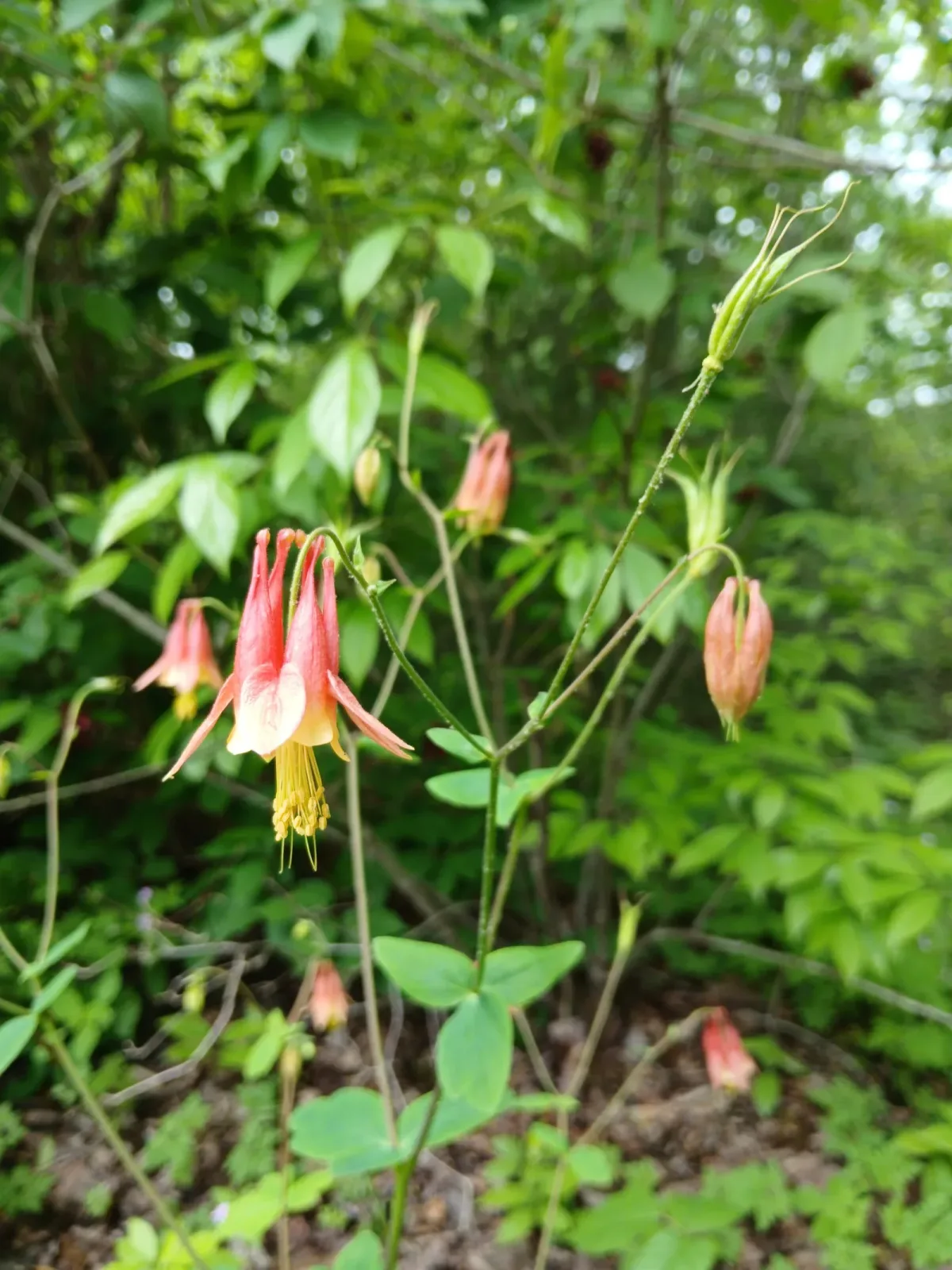
Canadian columbine is useful where a lighter, nodding flower suits the border. Correct species identity and a place for a few seedlings are more valuable than expecting one clump to last unchanged forever.
Quick answer
Choose an Aquilegia species or cultivar suited to your Canadian region and ecological goals. Give young roots steady establishment moisture in drained soil. Decide how much self-sowing you want before removing every capsule. Leaf-miner trails can be mostly cosmetic. Seedlings vary, and mature tap-rooted plants are not always easy to divide.
How do you identify columbine?
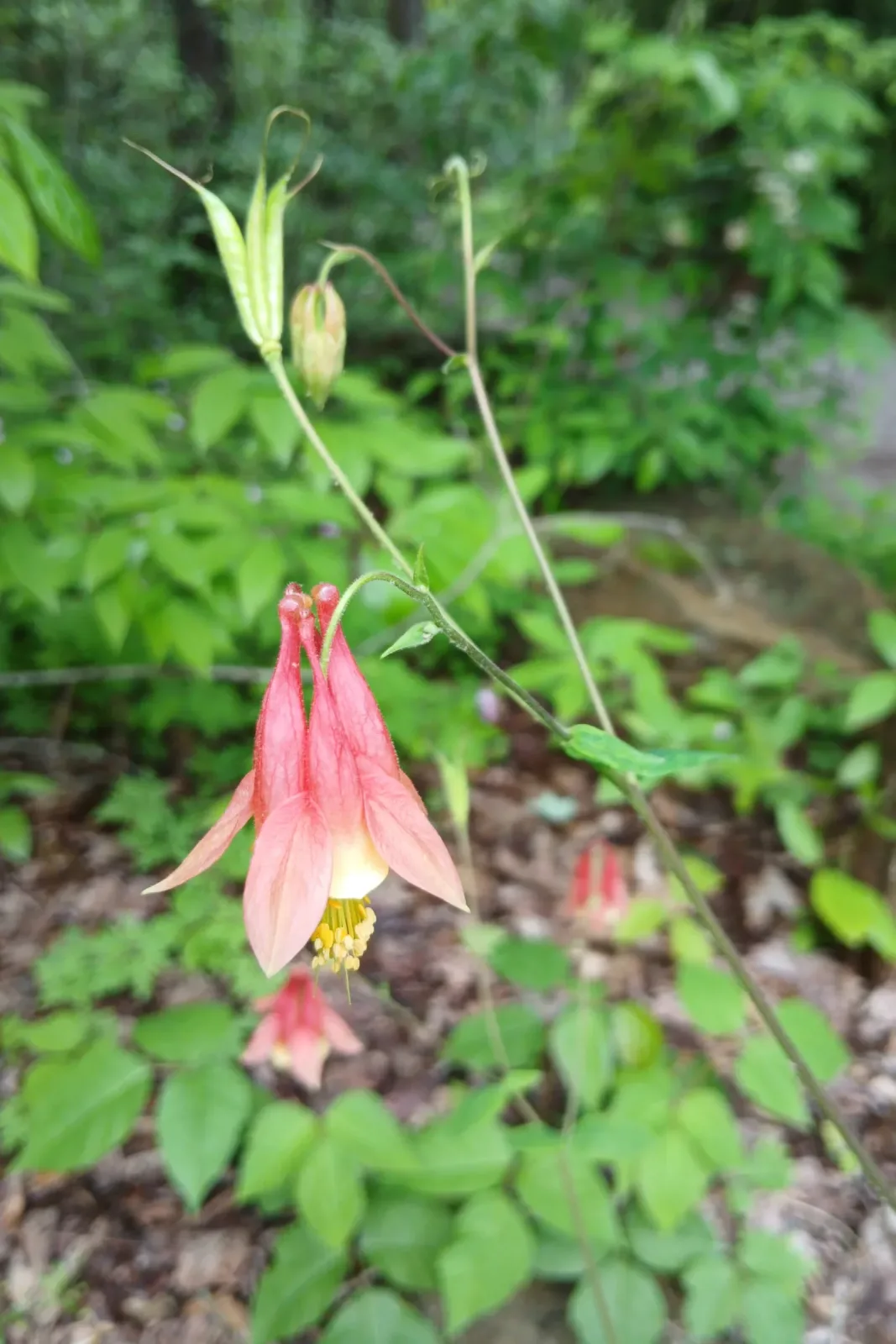
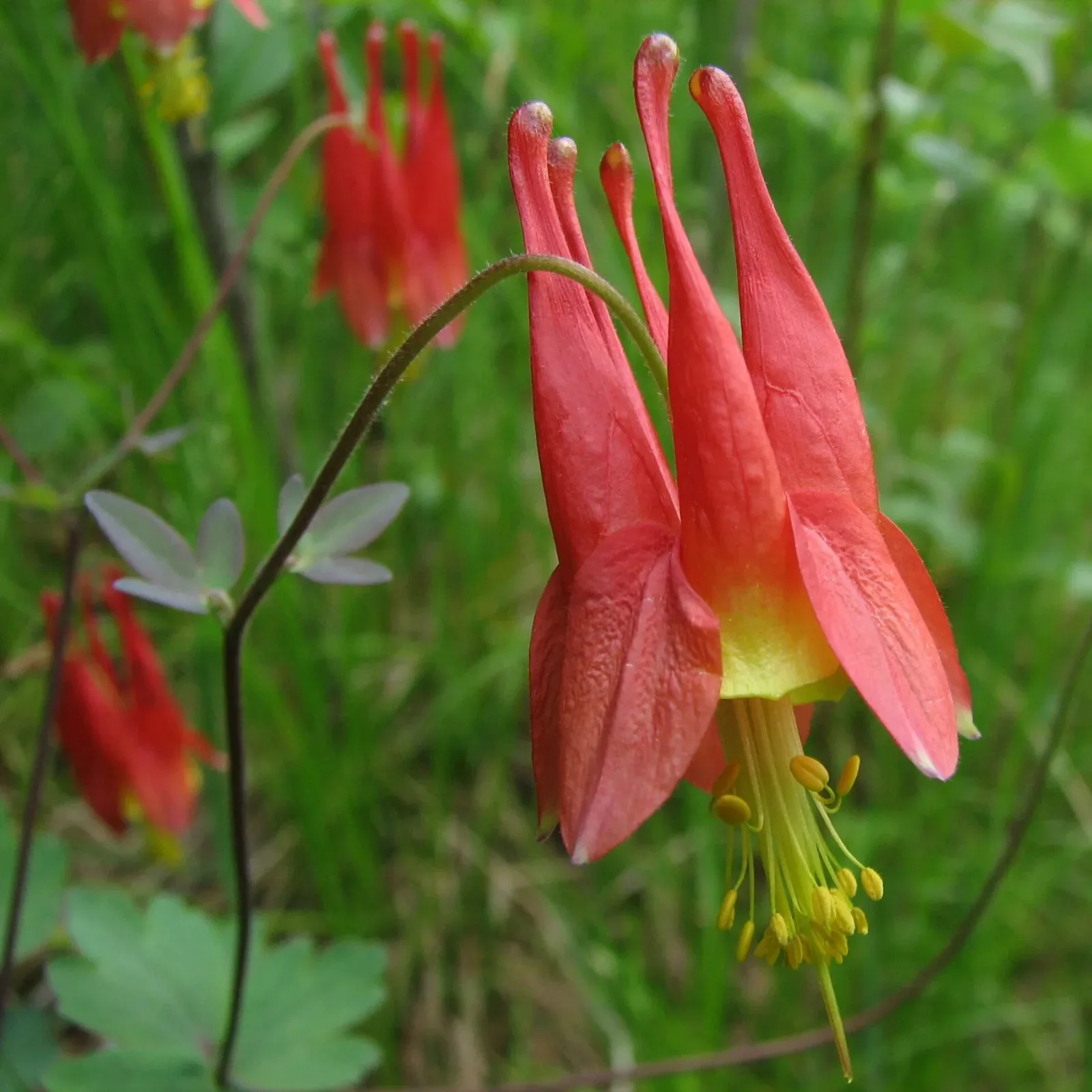
Columbine: Aquilegia canadensis has nodding red-and-yellow flowers and divided leaves. Large-flowered garden hybrids are different. For native projects, buy correctly identified local stock rather than assuming any Canadian columbine seed suits every province.
What causes trails inside columbine leaves?
Winding pale tracks usually indicate leaf miners. They can look untidy without seriously harming established plants. Remove the worst leaves if useful and keep healthy new growth. Broad spraying may miss larvae within the leaves and harm beneficial insects. Columbines can be short-lived, so leave some seed where welcome. Nearby hybrids can change future seedlings. Label selected plants if maintaining a native planting matters. Avoid deep cultivation around crowns, and do not mistake normal seedling variation for a fertilizer problem.
Where should you plant it for enough light?
Morning sun or light shade.
Columbines belong to Aquilegia, a genus with species and hybrids that vary in flower form, height and garden behaviour. Native Canadian species may suit regional wildlife goals better than an unidentified mixture. Check the botanical name rather than assuming every packet labelled columbine is locally native. Choose light appropriate to the species and climate, often sun to light shade with reasonable soil moisture. In hotter sites, some afternoon shade can protect the foliage. Outdoor dormant plants need no winter grow lights, but seedlings started inside require enough light to avoid long weak stems before planting out.
How should you water through the seasons?
Medium.
Prepare a drained bed and water new plants until their roots establish. Columbines can develop a substantial central root, making frequent later moves less convenient than choosing the site carefully at the start. Avoid a permanently wet crown, especially through winter. A mulch layer can moderate moisture without covering the growing centre deeply. Established plants may tolerate ordinary dry spells, yet a small fresh transplant cannot immediately match that resilience. If leaves brown after flowering, inspect the root zone and seasonal condition before assuming that the entire plant has died or needs a strong feed.
What soil or potting mix is best?
Average, well-drained.
When should you fertilize?
Feed moderately in a reasonably prepared bed. Excess fertilizer is not necessary for a healthy columbine and will not remove leaf-miner trails. Check moisture and light first when growth is weak. After the display, trim spent stems if seed is unwanted, keeping healthy basal foliage. If the foliage becomes very damaged, a considered tidy-up can encourage fresh leaves when conditions support it. Do not cut a drought-stressed plant bare and then expect immediate recovery without addressing the dry soil. The response depends on season, species and the amount of living crown remaining.
What temperatures and winter protection does it need?
Often used around Canadian zone 3 upward. Match seed provenance and local habitat rather than treating Canada as one native range.
How should you prune it?
Cut spent stems; leave some seed for seedlings.
What is the best propagation method?
Seed is practical. Fresh seed or suitable cold-moist treatment may help, depending on the seed lot. Sow in labelled trays or a prepared outdoor bed and be patient. Dividing old tap-rooted plants is less dependable.
Many columbines are relatively short-lived perennials, and seedlings can keep a planting going. Decide whether you want those seedlings before every seed head is removed. Leaving a few capsules allows renewal, while deadheading the rest limits unwanted spread and tidies the display. Seedlings from hybrid plants may not resemble the parent. Keep a selected cultivar separate from an open-pollinated seed project if accurate identity matters. A seedling with an unexpected colour is not a failure, but it should not be distributed under the original cultivar name. Check local ecological guidance before adding freely seeding non-native forms near natural areas.
Seed propagation is often more practical than splitting an old tap-rooted plant. Some seed benefits from appropriate cold treatment, so use instructions suited to the species and the freshness of the seed. Outdoor sowing can expose seed to natural seasonal conditions, but protect the pot from being washed out or mistaken for empty compost. Label it clearly and be patient. A nursery-grown plant gives a quicker predictable display, while seed offers variation. Division is possible for some healthy plants but can damage roots if attempted aggressively. Do not reduce a small crown into many weak pieces just to increase numbers.
Which pests and diseases should you watch for?
Leaf miners ; remove mined leaves.
Leaf miners can leave pale winding trails inside the leaves. That distinctive damage may look worse than its effect on an otherwise healthy plant. Remove a few badly affected leaves where practical, preserving enough foliage for the plant. Sawfly larvae or other chewing insects can cause a different pattern and deserve separate identification. Avoid applying a broad insecticide simply because the foliage is imperfect during bloom. Columbine flowers may be visited by pollinators, and treatment choices should account for them. New clean growth after flowering can be more useful to assess than repeatedly studying old mined leaves.
How do you work out the cause?
Leaf miners; short-lived (let it reseed).
Is it safe around pets and children?
Do not eat columbine seeds or other parts. No individually verified ASPCA entry for Aquilegia canadensis is claimed here. Keep it away from children and chewing pets and use the botanical name when seeking advice.
A seasonal care calendar for Canada
| Season | What to do |
|---|---|
| Spring | Bloom. |
| Summer | Seed set. |
| Autumn | Seedlings appear. |
| Winter | Keep columbine crown markers in place during winter bed work. |
What should you check before buying?
For a layered perennial planting, compare the seasonal habits of bleeding heart and astilbe. The taller display of delphinium needs its own support and spacing, so avoid placing delicate young columbines where later stems will smother them.
Keep all parts, particularly seeds, away from children and pets who might eat them. Attractive capsules are not a substitute for safe play materials. At purchase, inspect the crown for firmness and the leaf undersides for pests. Choose a species and hardiness rating appropriate to your Canadian region. Protect soft nursery growth from late frost during establishment, even when the mature plant is hardy. A potted columbine also needs protection for exposed roots over winter. Buying correctly named stock and allowing a controlled amount of self-sowing can create a more dependable planting than repeatedly replacing anonymous flowering pots.
How can you recognize useful seedlings?
Mark the parent plant and watch for the characteristic young divided leaves nearby. Keep a few seedlings where their eventual spread will not crowd a path, then remove extras before roots become difficult to lift. If the original plant was a named hybrid, label the youngsters simply as seedlings unless their identity is independently established. Let at least one flower before deciding whether its colour belongs in the border. Seedling variation can be enjoyable, but it should not be confused with accurate propagation of a selected cultivar or proof that the plant is locally native.
Watch: a related growing task
Comments
No comments yet — share what worked in your climate.