
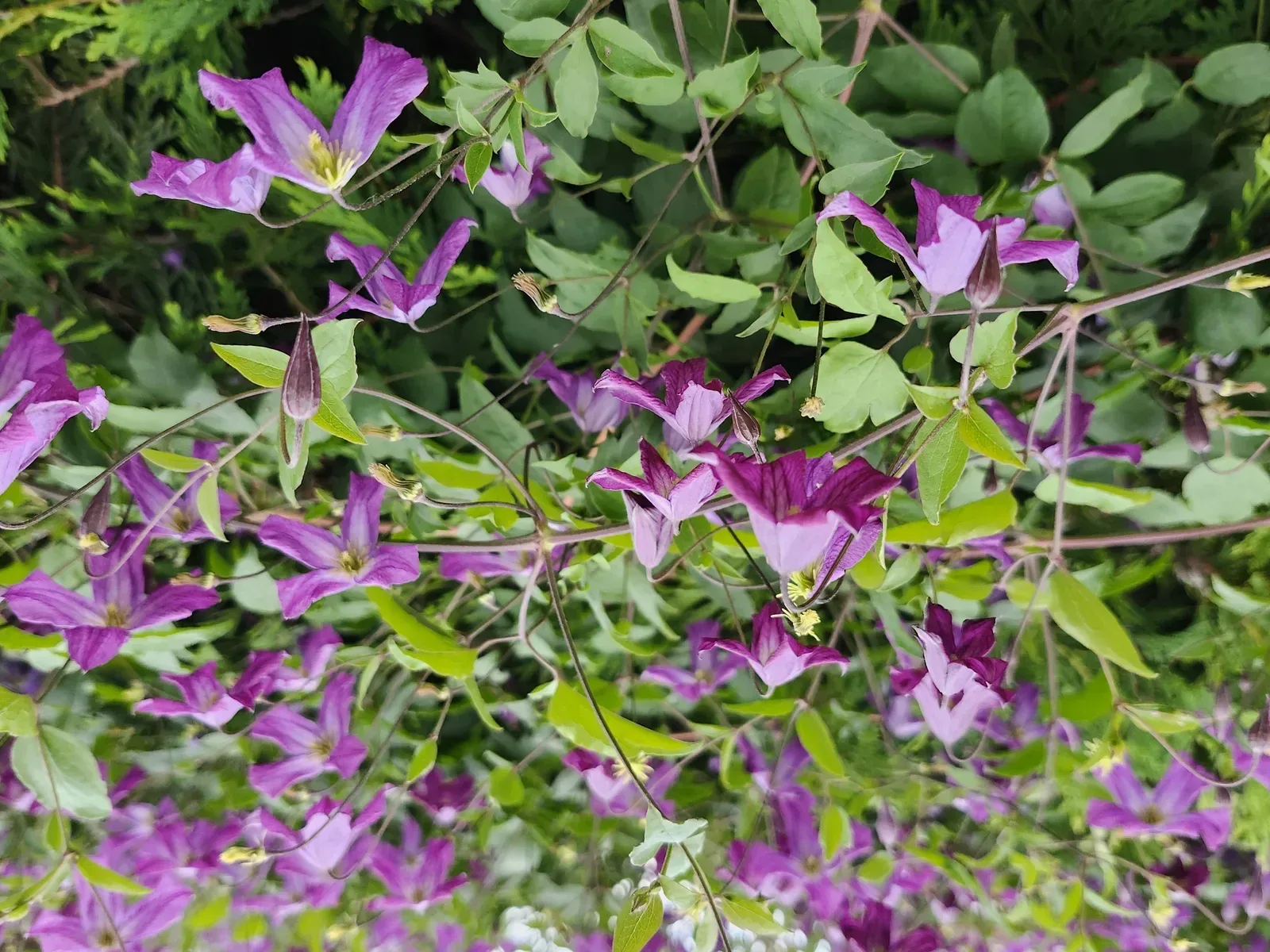
A clematis label is worth keeping. Its cultivar and pruning group decide which stems carry flowers, and a neat autumn cut can remove a whole spring display from the wrong vine.
Quick answer
Identify the clematis cultivar and pruning group before making major cuts. Provide suitable sun, dependable root moisture and a support its leaf stalks can grasp. Protect delicate basal stems from damage. Canadian hardiness varies by selection, and container roots need separate winter planning. A generic annual cutback can remove spring flowers.
How do you identify clematis?
Clematis: Clematis is a genus, not one pruning formula. Group 1 flowers mainly on old growth; group 2 includes large-flowered hybrids; group 3 flowers on new growth. 'Jackmanii' and many viticella types suit group 3 care.
How do you choose the right clematis pruning group?
Look up the cultivar before cutting. Group 3 vines can be shortened above healthy low buds in spring. Group 1 usually needs tidying after bloom. Cutting every clematis to ground level in autumn can remove flowers. Use a slender trellis that leaf stalks can grip. Mulch shades roots without a heavy stone holding moisture around the crown. A suddenly wilted stem needs checking for damage and disease; cut back to healthy tissue. Do not assume every wilt means dry soil.
Where should you plant it for enough light?
6+ hours sun on foliage; keep roots cool with mulch.
Choose a support the leaf stalks can actually grasp. Narrow wires, mesh or slender rods are more useful than a broad smooth post alone. Position it before growth tangles through neighbouring shrubs. Tie young shoots loosely where necessary and check that ties do not tighten around expanding stems. A windy wall can snap delicate new growth even when the roots are well protected. Plan access to the base for watering and inspection. A vine hidden behind dense perennials may have shaded roots but also face severe competition for moisture. Cool roots do not mean roots crowded out by another plant.
How should you water through the seasons?
Steady moisture first years; mulch helps.
What soil or potting mix is best?
Fertile, well-drained garden soil. Rich, draining; alkaline OK.
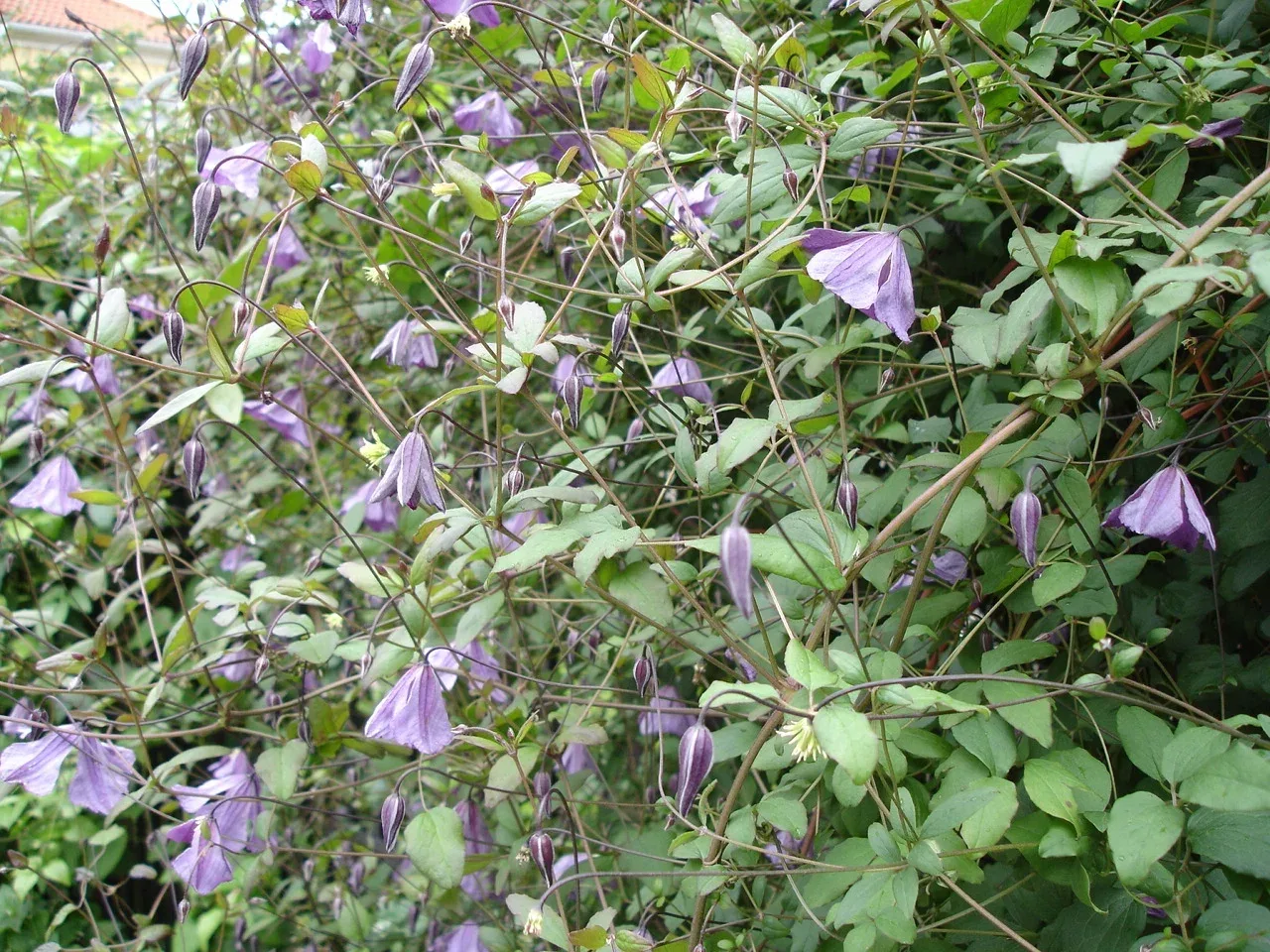
Plant into a broadly improved, drained area rather than an isolated compost-filled hole in clay. Planting depth recommendations differ with type, so use the cultivar and nursery guidance instead of treating all species as identical. Water the original root ball and the surrounding soil during establishment. A thirsty young clematis can be overlooked because nearby plants look fine. Mulch helps moderate moisture, but leave space at the stems. Avoid a large stone that prevents checking the crown or directs excessive rain against it. A site with dependable moisture and air in the soil is more important than a decorative trick.
When should you fertilize?
Compost in spring; balanced feed for heavy bloomers.
Feed a growing vine modestly where soil fertility warrants it. Heavy nitrogen can produce a mass of shoots without solving poor flowering. Check pruning history, light and maturity first. In a dry spring, fertilizer placed beside a dry root ball can increase stress. Water appropriately before and after an application according to the label. Once the vine has climbed, inspect the lower stems periodically instead of focusing only on the flowers above eye level. Slugs can damage emerging shoots, and mechanical injuries at the base can cause dramatic collapse. Protect fragile stems during weeding and lawn work.
What temperatures and winter protection does it need?
Many cultivars suit Canadian zones around 3 or 4 upward, but flower-bud and root hardiness vary. Buy the exact cultivar for your site.
For winter, check the actual cultivar's rating and the exposure of your site. A root system in the ground is better insulated than one in a freestanding balcony pot. Do not pull live stems off a trellis in autumn merely to make the garden look tidy; some carry next year's flowers. Snow cover is variable, and roof runoff can create damaging ice. At purchase, choose healthy basal shoots, sound roots and a complete label rather than only the largest flower. Wrap spring nursery plants against late cold during transport. Keep trimmings away from pets and children, since clematis is not an edible vine.
How should you prune it?
Know your pruning group before cutting.
Start with the cultivar's name and pruning group. A large-flowered hybrid, a spring-flowering alpine type and a vigorous late-flowering vine do not respond identically to cutting. If the name is missing on an established plant, observe a season of growth before making drastic cuts. Note whether flowers appear on old stems, new stems or both. Keep that record with a photograph of the flower. Canadian winter dieback can complicate the picture, so distinguish dead wood from healthy buds before pruning. A generic instruction to cut all clematis to the ground can erase a spring display.
What is the best propagation method?
Layer a flexible healthy stem into a nearby pot, leaving the tip free, and separate after rooting. Softwood cuttings also work. Seed does not faithfully reproduce named cultivars. Check rights before propagation for sale.
Layering a healthy flexible stem can create a new plant while it remains attached to the parent. Secure a suitable node in contact with rooting medium and wait for a useful root system before separation. Softwood or semi-ripe cuttings require appropriate material and controlled moisture. Neither method should begin with a diseased stem. Seedlings may differ from named hybrids, and some take patience to flower. Keep the cultivar name with divisions or rooted layers. The ability to reproduce the name accurately matters when the recipient needs to know pruning group and local hardiness.
Which pests and diseases should you watch for?
Clematis wilt ; cut infected stems to ground.
Sudden wilting deserves investigation. Check moisture, snapped stems, root condition and the possibility of clematis wilt rather than assuming one diagnosis from a photograph. Remove clearly affected stems with clean tools and retain healthy basal growth if present. Some plants can recover from below, but a dead rotted crown cannot be guaranteed to reshoot. Avoid transferring suspect cuttings to other gardens. Powdery mildew is another possible issue on crowded foliage. Improve airflow and suitable light without exposing the plant to severe drought. Do not interpret every lower yellow leaf as a reason to apply fungicide.
How do you work out the cause?
Few flowers (wrong prune/shade); wilt; dry roots in containers.
Is it safe around pets and children?
ASPCA lists clematis as toxic to cats and dogs. Sap can irritate skin. Keep away from children who taste plants and wear gloves for pruning.
A seasonal care calendar for Canada
| Season | What to do |
|---|---|
| Spring | Prune groups 2 to 3 as needed; mulch. |
| Summer | Water clematis roots through dry spells while protecting delicate basal stems. |
| Autumn | Label the clematis pruning group and secure its remaining live framework before winter winds. |
| Winter | Dormant; protect containers. |
What should you check before buying?
A climbing garden design can draw on explorer rose for a stronger woody framework. The shrub forms of ninebark and smooth hydrangea need different spacing, so keep access to the clematis crown when arranging the supporting border.
What belongs on the support label?
Keep the cultivar and pruning group on a durable tag near the trellis. A second photograph stored with the purchase details is useful if the tag fades or breaks during winter.
Watch: a related growing task
This demonstrates group 3 pruning only. Confirm your cultivar group before copying the cut height; early old-wood flowering clematis needs different treatment.
Comments
No comments yet — share what worked in your climate.