
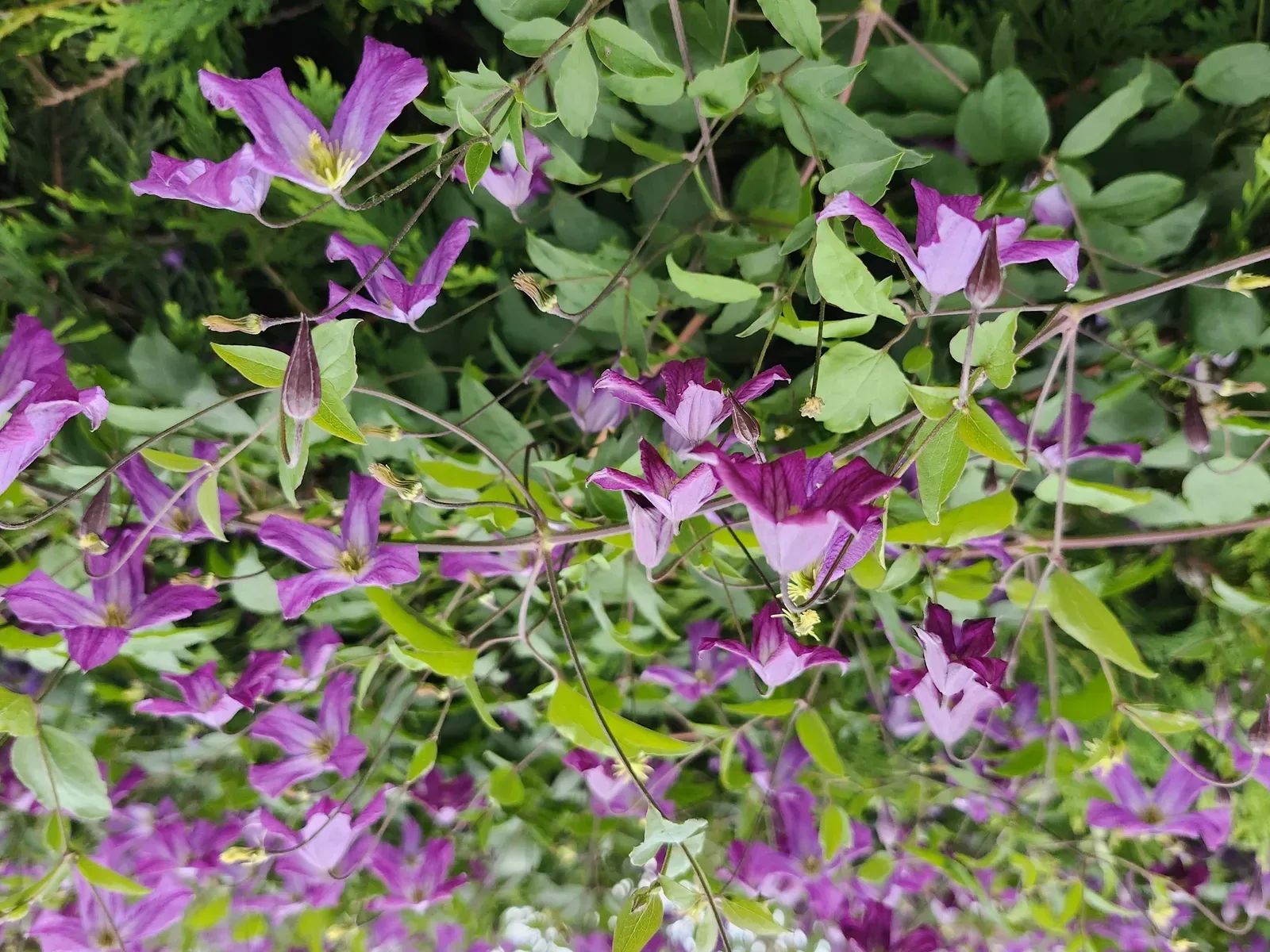
| ☀️ Light | Full sun |
|---|---|
| 💧 Water | Moderate (lightly moist) |
| 🪴 Soil | Fertile, well-drained garden soil |
| 🌡️ Temp | -30°C – 30°C |
| 🐾 Safety | Cats: toxic · Dogs: toxic (ASPCA Animal Poison Control) |
| 📏 Mature size | 3.0 m |
Where It Grows & Climate Tolerance
Pet & Companion Animal Toxicity (Clematis)
Flowering vine for Canadian gardens; cool roots, sunny tops, prune by group.
Care instructions
Care Guide & Maintenance Routine
Sun on vines, shade on roots, mulch, prune by type (groups 1–3).
Light & Sunlight
6+ hours sun on foliage; keep roots cool with mulch.
Watering Schedule
Steady moisture first years; mulch helps.
Potting Mix & Drainage
Fertile, well-drained garden soil
Temperature & Humidity
Choose cultivars for your zone; many hardy to Zone 3–4.
Clematis covers Canadian fences and arbors with big summer flowers when roots stay cool and vines get sun.
Plant where vines get at least 6 hours of sun but mulch the root zone. Water new plants steadily. Fertile, draining soil suits them.
Pruning depends on the group printed on the tag — spring bloomers, rebloomers and late bloomers are cut differently. Clematis wilt means cutting stems to the ground; healthy plants often resprout.
Many cultivars are hardy to Zone 3 or 4. Keep pets from chewing — the plant is toxic. With the right prune and a cool root run, clematis is one of the showiest hardy vines for Canadian yards.
Canadian gardeners succeed with clematis when they match pruning group to cultivar. Group 1 blooms early on old wood — tidy only. Groups 2 and 3 take more cutting. Labels at nurseries matter; photograph the tag when you plant.
Mulch the root zone and you can even underplant with shallow perennials to shade soil. Clematis wilt looks sudden — cut stems to the ground and keep watering; many plants resprout. Choose Zone 3–4 types for colder regions. With sun on the vine and cool roots, fences fill with colour for months.
Plant the crown a few centimetres deeper than it sat in the nursery pot to encourage buried buds that can resprout after wilt. Soft twine ties guide new shoots onto trellis without cutting stems. Water through dry June while buds form. Mulch annually with compost. Photograph the flower and keep the tag in a garden journal so pruning group is never a guess.
Seasonal rhythm
Seasonal Calendar
A month-by-month calendar for Clematis in Canada is coming soon. See the light, water and temperature notes above.
Diagnostics
Common Problems & Troubleshooting
Few flowers (wrong prune/shade); wilt; dry roots in containers.
Pests & seasonal watch: Clematis wilt — cut infected stems to ground.
Care encyclopedia · 1 guide
Guides & Articles for Clematis
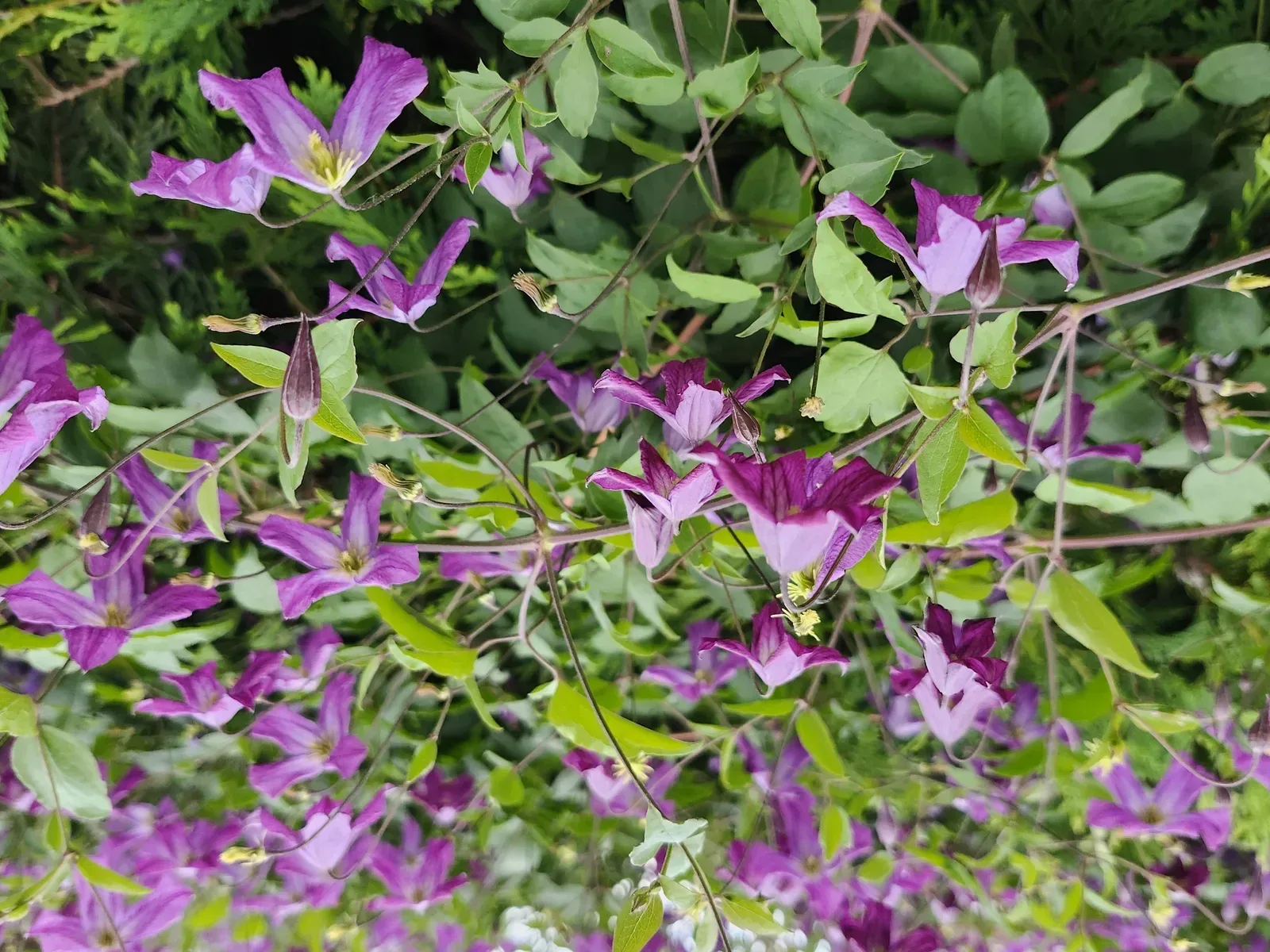
Q&A
Frequently Asked Questions
How do I prune clematis?
It depends on the pruning group on the label — cut wrong and you lose blooms.
Why head in sun, feet in shade?
Cool moist roots with sunny vines give the best flowering.
Is it toxic?
Yes — keep pets from chewing.
What zone?
Many types hardy to Zone 3–4; check the cultivar.
Similar Botanical Matches
Keep exploring
Related plants
Grower field notes
Reader Field Notes in Canada
Share how this plant performs in your local Canada climate.