
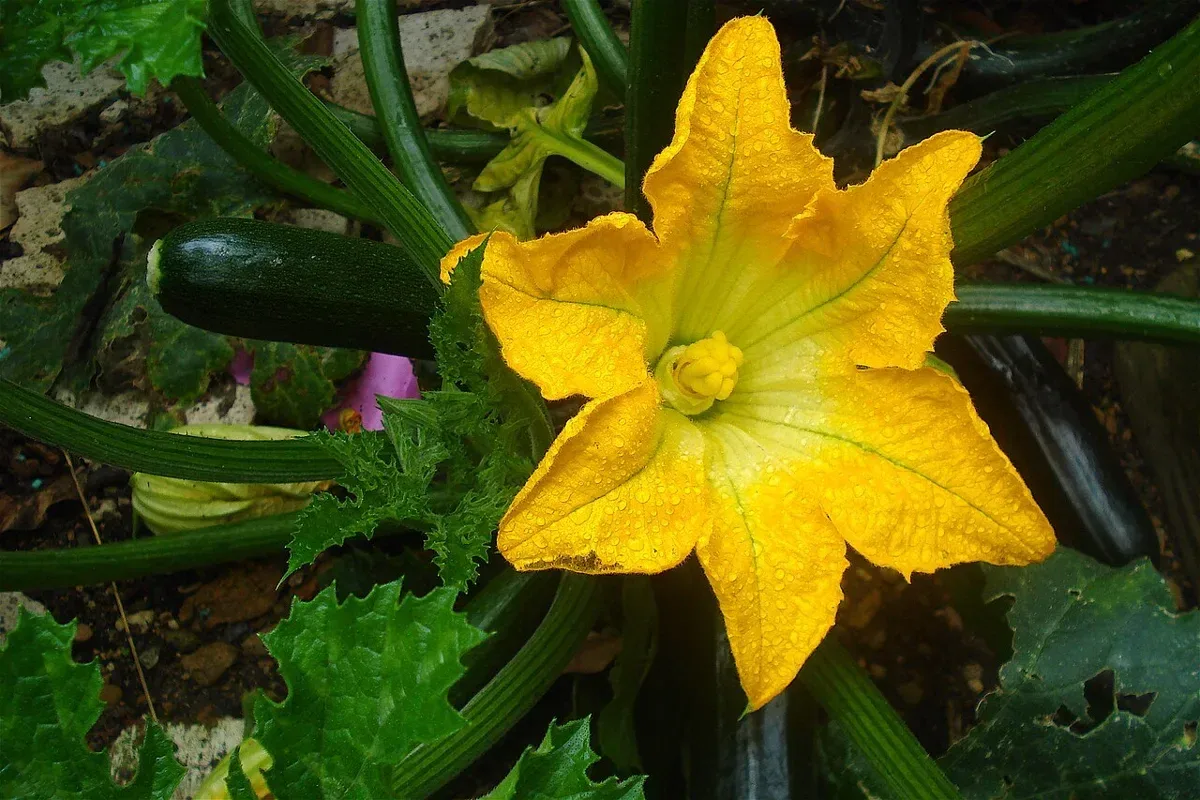
| ☀️ Light | Full sun |
|---|---|
| 💧 Water | High (consistently moist) |
| 🪴 Soil | Rich, moist, well-drained soil with plenty of compost |
| 🌡️ Temp | 10°C – 32°C |
| 🐾 Safety | Cats: non-toxic · Dogs: non-toxic |
| 📏 Mature size | 60 cm |
Where It Grows & Climate Tolerance
Pet & Companion Animal Toxicity (Zucchini (Courgette))
Zucchini, or courgette, is a bushy summer squash (Cucurbita pepo) grown for its tender, fast-growing fruits. One healthy plant gives fruit every couple of days for weeks, starting about two months after sowing. It needs warmth, sun, rich soil and plenty of space.
Care instructions
Care Guide & Maintenance Routine
Sow or plant in warm soil after frost in a sunny spot, about 90 cm apart. Keep the soil moist and mulched. Pick fruits small, at 15 to 20 cm, every two or three days. If young fruits shrivel, help pollination by hand. Watch for powdery mildew late in the season.
Light & Sunlight
The University of Saskatchewan notes zucchini needs full sun to produce well and does not tolerate shade. The RHS also recommends a warm, sunny position.
Watering Schedule
Large leaves lose a lot of water. Water deeply at the base two or three times a week in warm weather, more in pots. Avoid wetting the leaves, which encourages mildew.
Potting Mix & Drainage
Rich, moist, well-drained soil with plenty of compost
Temperature & Humidity
PAU says summer squash needs a warm season between 18 and 30°C. The University of Saskatchewan advises transplanting once day and night temperatures reach about 18°C, and says seed germinates in 5 or 6 days at 24°C. Frost kills the plant; growth stalls below about 10°C. NC State rates Cucurbita pepo for USDA zones 3a to 11b as a seasonal crop.
About zucchini
Zucchini, called courgette in Britain, is a summer squash: a form of Cucurbita pepo picked young, while the skin is soft and the seeds are small. The species also includes many pumpkins, acorn squash and ornamental gourds. Zucchini plants are compact bushes rather than long vines, which makes them practical in a small bed or a large pot.
Leaves are broad, lobed and rough, sometimes with silvery markings that are normal and not a disease. Fruits may be dark green, pale green, striped or golden, and long or round.
Types
- Long green zucchini: the familiar cylindrical fruit, dark or pale green.
- Golden zucchini: yellow skin, same use.
- Round zucchini: ball-shaped fruits, good for stuffing.
- Striped Italian types such as 'Costata Romanesco': ribbed, nutty fruits on larger plants.
- Patty pan: flat, scalloped summer squash of the same species.
The RHS recommends looking for varieties with good disease resistance, especially to powdery mildew and mosaic viruses.
Buying seed or plants
Seed is large and germinates fast, so most growers start from seed. Two or three plants are enough for a family. Young plants are sold at planting time; pick ones with three or four leaves, a sturdy stem and no yellowing, and avoid pots that are root-bound.
Where to plant
Choose the warmest, sunniest spot available. The RHS suggests leaving at least 90 cm between plants. Shelter from strong wind matters because the large leaves tear and the fruits scar. A raised bed or a mound of compost-rich soil drains well and warms faster.
Soil
Zucchini are hungry plants. Dig a planting pocket and fill it with compost or aged manure mixed with soil. The University of Saskatchewan warns against fresh manure as a soil additive. Mulch after planting to hold moisture and keep fruits off bare soil.
Sowing and planting
Direct sowing
The RHS suggests sowing two or three seeds 2.5 cm deep at each planting spot once the soil is warm, then keeping the strongest seedling. A cloche or fleece over the station speeds things up.
Starting in pots
Sow one or two seeds on edge in a 9 cm pot two to three weeks before planting out. The University of Saskatchewan says seed germinates in 5 or 6 days at 24°C. Harden off seedlings for a few days before planting.
Planting out
Set plants at the same depth they grew in the pot and water well. Handle the root ball gently; transplant shock can stall growth for weeks.
Flowers and pollination
Each plant carries separate male and female flowers. Male flowers come first, on long thin stalks. Female flowers have a small swelling, the future fruit, behind the petals. Bees carry pollen from one to the other in the morning. When bees are scarce, the young fruit yellows and shrivels from the tip. Hand-pollinate by brushing pollen from a male flower onto the centre of a female flower.
Watering through the season
After planting
Water to settle the soil and keep it moist, not wet, until new leaves show.
Fruiting
Water deeply at the base two or three times a week, more in hot spells and in containers. Midday wilting on a hot day is common and often recovers by evening; wilting in the morning means the plant needs water or has a root or stem problem.
Late season
Keep watering while the plant crops. Dry stress makes plants more prone to powdery mildew.
Growing in containers
A compact bush variety in a container of 45 to 60 litres can crop as well as a garden plant. Use rich potting mix with compost, set the pot where it gets sun for most of the day, and stand it on bricks so it drains freely. Containers dry out quickly once the plant is large, so daily watering is normal in warm weather. Push a short stake in at planting time; heavy plants can tip over in wind.
Saving seed
Zucchini cross freely with other Cucurbita pepo plants, including pumpkins and gourds, so saved seed rarely grows true unless flowers are bagged and hand-pollinated. Hybrid varieties do not come true at all. Most home growers buy fresh seed.
Feeding
Compost at planting covers early growth. Once fruits start, a balanced or potassium-rich liquid feed at label rate every two weeks keeps container plants cropping.
Harvesting
Cut fruits with a short piece of stalk when they are 15 to 20 cm long. Check every two or three days: a fruit missed for a week turns into a large, seedy marrow, and the plant slows down. Use the flowers too; male flowers can be picked for cooking once some female flowers have set.
Troubleshooting
Small fruits shrivel
Poor pollination. Hand-pollinate and plant flowers nearby for bees.
White powder on leaves
Often powdery mildew. Remove the worst leaves and improve spacing.
Mottled, distorted leaves and fruits
Mosaic viruses are one cause, but nutrient problems and herbicide drift can look similar. Ask a local extension office to confirm before removing plants.
Sudden wilting of the whole plant
Check the base of the stem for holes or soft rot and the soil for waterlogging.
Uses
Zucchini are grilled, stir-fried, roasted, stuffed, grated into baking or sliced raw into salads. Flowers are stuffed and fried. Very large fruits are best grated for soups and breads.
Safety and pets
ASPCA lists zucchini as non-toxic to dogs, cats and horses. Very bitter fruit, which can occasionally occur in squash, should not be eaten.
Common mistakes
- Planting too early into cold soil.
- Crowding plants, which invites mildew.
- Growing in a small pot.
- Missing a few days of picking.
- Planting more than the household can eat.
Zucchini share a bed and similar pests with cucumber and pumpkin. A few nasturtiums nearby attract pollinators.
India and Canada in brief
Both markets grow the same plant within a window of mild warmth, but the window sits in opposite parts of the year. Planting months and varieties for each market are set out separately.
Seasonal rhythm
Seasonal Calendar
A month-by-month calendar for Zucchini (Courgette) in Global is coming soon. See the light, water and temperature notes above.
Diagnostics
Common Problems & Troubleshooting
Young fruits shrivelling from the tip after poor pollination; white powdery coating on leaves; oversized, seedy fruits if picking is missed; wilting at midday in heat; split or scarred fruits after wind or uneven watering.
Pests & seasonal watch: NC State lists slugs, aphids and beetles. Squash vine borer, red pumpkin beetle and cucumber beetles occur in different regions. Powdery mildew and mosaic viruses are common.
Care encyclopedia · 1 guide
Guides & Articles for Zucchini (Courgette)
Q&A
Frequently Asked Questions
What is the difference between zucchini and courgette?
None. Zucchini is the Italian-derived name used in North America and India; courgette is the French-derived name used in Britain. Both mean young fruits of bush summer squash, Cucurbita pepo.
Why do my zucchini fruits rot or shrivel when small?
Usually poor pollination. The female flower was not visited by bees, so the young fruit stops growing and shrivels from the tip. Hand-pollinate with a small brush in the morning.
How big should zucchini be when picked?
Most cooks prefer them at 15 to 20 cm long. PAU notes fruits are ready about 7 days after they set and recommends picking every 2 to 3 days.
How long does zucchini take to crop?
The University of Saskatchewan says most zucchini need 48 to 60 days to maturity. PAU gives 60 to 80 days to first picking, depending on variety and season.
Can I grow zucchini in a pot?
Yes, in a big one. Use at least 45 to 60 litres of rich mix per plant, water often and feed once fruits start.
What is the white powder on the leaves?
Powdery mildew is the most common cause, especially late in the season. Remove the worst leaves, keep plants well spaced and water the soil rather than the foliage.
Can I eat zucchini flowers?
Yes. Male flowers are usually picked for stuffing or frying, leaving a few for pollination. Pick in the morning when they are open.
Is zucchini safe for pets?
ASPCA lists zucchini as non-toxic to dogs, cats and horses.
Why are there flowers but no fruit?
Plants often make only male flowers for the first week or two. Female flowers follow. If they still do not set, hand-pollinate.
Similar Botanical Matches
Keep exploring
Related plants

Grower field notes
Reader Field Notes in Global
Share how this plant performs in your local Global climate.