
| ☀️ Light | Full sun |
|---|---|
| 💧 Water | High (consistently moist) |
| 🪴 Soil | Rich, moist, well-drained soil high in organic matter; slightly acidic to neutral |
| 🌡️ Temp | 12°C – 35°C |
| 🐾 Safety | Cats: non-toxic · Dogs: non-toxic |
| 📏 Mature size | 45 cm |
Where It Grows & Climate Tolerance
Pet & Companion Animal Toxicity (Cucumber)
Cucumber (Cucumis sativus) is a fast, warm-season vine grown for its crisp fruit. Its wild relatives come from the Himalaya to northern Thailand. It needs warm soil, full sun, rich soil and steady water, and most varieties are ready about 45 to 65 days after sowing.
Care instructions
Care Guide & Maintenance Routine
Sow when the soil is at least 15 to 18°C and nights stay warm. Grow in full sun on a trellis, in rich soil with plenty of compost. Water deeply and regularly at the base, keeping leaves dry. Pick fruit young and often; yellow fruit is overripe and slows the plant down.
Light & Sunlight
Full sun is needed for good fruit production. Avoid shaded beds.
Watering Schedule
Keep soil evenly moist, especially during flowering and fruiting; water at soil level and use mulch after warming.
Potting Mix & Drainage
Rich, moist, well-drained soil high in organic matter; slightly acidic to neutral
Temperature & Humidity
USask says seed needs soil of at least 15°C, and direct sowing works best at 18°C or more; it germinates in 5 to 6 days at 24°C. The RHS says plant out only when temperatures stay above 12°C and gives 18 to 25°C as ideal under glass. The 35°C maximum is a guide: fruit set falls in extreme heat. NC State lists a sprawling height of 20 to 45 cm and a spread of 0.9 to 2.4 m; on a trellis vines climb higher.
About cucumber
Cucumber is an annual vine in the gourd family (Cucurbitaceae). NC State Extension gives its native range as the Himalaya to northern Thailand. The plants sprawl 0.9 to 2.4 m wide, or climb a trellis using tendrils, and produce crisp green fruit used fresh and for pickling. They grow fast in warm weather and slow to a crawl when it is cool.
Types and varieties
- Slicing cucumbers: longer fruit for eating fresh.
- Pickling cucumbers: shorter fruit, best picked small, as USask notes.
- Snacking or cocktail types: small fruit with thin skin.
- Greenhouse or English cucumbers: USask describes them as hybrids bred for all-female flowers that set seedless fruit without pollination. They are meant for greenhouses and do not yield well outdoors.
TNAU lists 'Japanese Long Green', 'Straight Eight' and 'Poinsettee', and the hybrids 'KPCH 2' and 'Pant C 2', for Tamil Nadu. For containers, look for compact or bush types on the seed packet.
Sowing and planting
Warmth is everything. USask says seed needs soil of at least 15°C, works best direct-sown at 18°C or more, and germinates in 5 or 6 days at 24°C. Sow 1 cm deep, two seeds per spot, then keep the stronger seedling.
Cucumbers dislike root disturbance. If you start them indoors, USask recommends sowing only 2 to 3 weeks before planting out, so seedlings are 10 to 14 days old with one or two true leaves. Older transplants sulk for weeks. Use peat or paper pots that go straight into the ground.
Soil and containers
Use rich, well-drained soil with plenty of compost or aged manure (USask advises against fresh manure). TNAU suggests sandy loam rich in organic matter with a pH of 6.5 to 7.5. In containers, NC State gives a minimum of about 4 litres and 20 cm deep, but bigger pots of 20 litres or more cope far better with hot weather.
Trellising
Growing vertically on a trellis, netting or even a wire fence improves airflow, reduces disease and gives straighter fruit, according to NC State. It also saves space on balconies and terraces. NC State notes vertical plants lose moisture faster, so check water more often. The RHS suggests pinching out the tip once the main stem reaches the top of its support.
Watering through the season
Early growth
USask suggests about 2.5 cm of water a week. Water deeply at the base and keep the leaves dry.
Flowering and fruiting
Demand rises sharply. By mid-summer USask suggests 2.5 cm twice a week. Pots may need daily watering in heat. Mulch helps keep moisture even.
Rainy spells
Make sure beds and pots drain freely. Waterlogged roots rot, and wet leaves invite mildew.
Feeding
Mix compost into the soil at planting. USask suggests a balanced water-soluble fertiliser weekly before fruit set and twice weekly afterwards, mixed according to the label. The RHS feeds container plants every 10 to 14 days with a general liquid feed and switches to a high-potash feed once flowering starts. Do not feed seeds or tiny seedlings.
Flowers and pollination
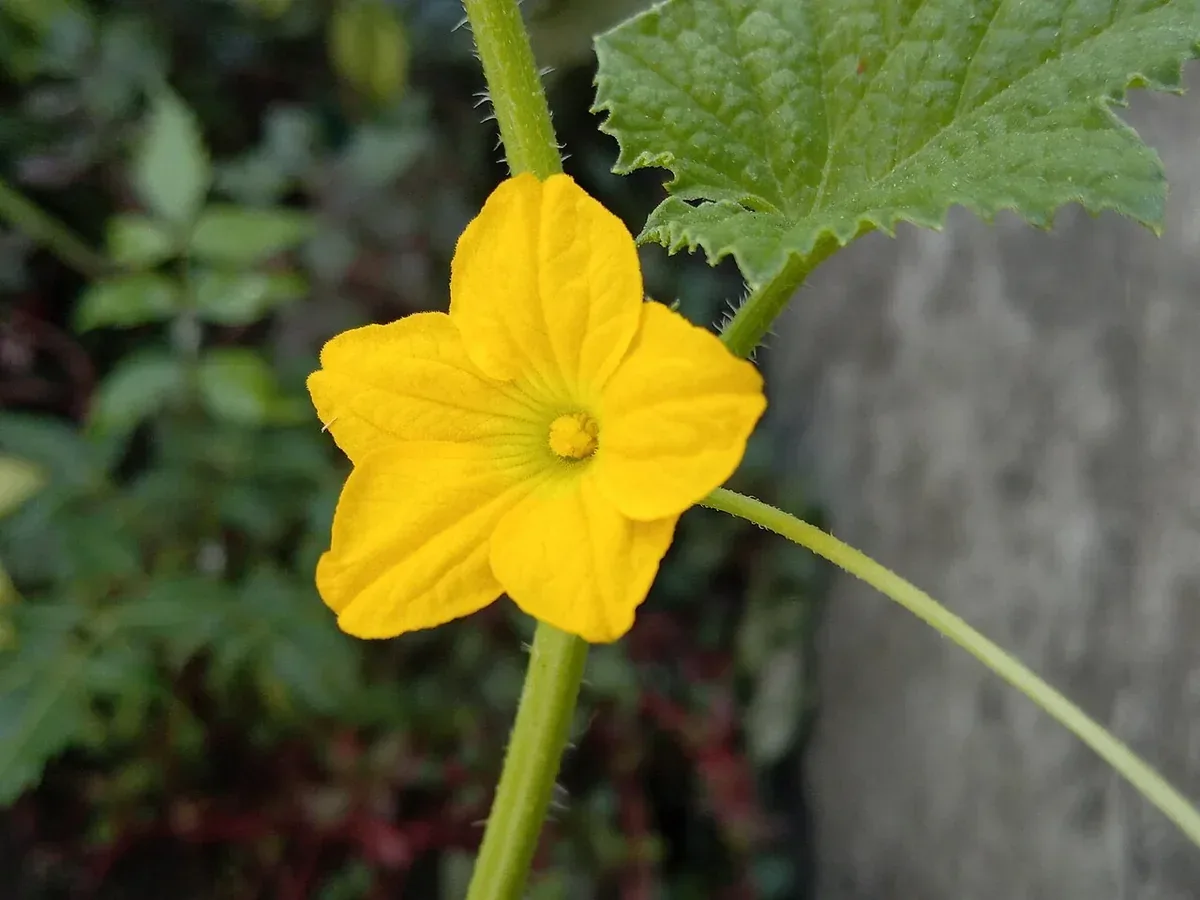
Cucumbers have separate male and female flowers. USask explains that male flowers come first and often drop, which is normal. Female flowers, with a small fruit behind the petals, appear 7 to 10 days later. Bees carry pollen between them. If you use crop covers, remove them as soon as flowers appear so pollinators can reach the plants. Poor pollination gives misshapen fruit, as NC State notes. On a balcony with few bees, you can move pollen from a male flower to a female flower with a small brush.
Harvesting
USask gives 45 to 65 days to maturity depending on variety. Cut fruit with a sharp knife or scissors rather than pulling. Pick every day or two at the size you like; it is better to harvest a little early than late. Yellow fruit is overripe and tough. USask suggests cooling fruit soon after picking and storing it at 5 to 10°C, where it keeps for two weeks or more. Regular picking keeps the vine producing.
Troubleshooting
Flowers falling, no fruit
Step 1: Look behind the fallen flowers. If there is no tiny fruit, they are male flowers, which drop naturally. Step 2: Wait 7 to 10 days for female flowers. Step 3: If female flowers wither with their small fruit, pollination is failing: check for bees, remove covers, or hand-pollinate. The same process applies to other gourds, described in our bottle gourd flowers but no fruit guide.
White powder on leaves
Wipe a leaf. A powdery white coating that rubs off is powdery mildew. Remove the worst leaves, improve airflow and water at the base in the morning. See powdery mildew.
Yellow, mottled, crinkled leaves
Compare old and new growth. Mottling and distortion on new leaves with stunted growth fits cucumber mosaic virus, which the RHS describes. Aphids spread it. Remove affected plants; there is no cure.
Bitter or misshapen fruit
Think back over watering. Dry spells cause bitterness. Curved or narrow-ended fruit usually means poor pollination or uneven water.
Wilting in the afternoon
Check the soil in the evening. If it is moist and the plant recovers overnight, it is heat stress. If the soil is dry, water more. If plants stay wilted with moist soil, look for damage at the stem base or insects under the leaves.
Uses
Cucumbers are eaten raw in salads, raita, sandwiches and as a snack, and pickled whole or sliced. Grow them alongside other summer climbers such as bitter gourd and bottle gourd.
Safety and pets
ASPCA lists cucumber as non-toxic to dogs, cats and horses, and NC State gives no poison information. The RHS lists the genus Cucumis as toxic if eaten, which applies to wild relatives and very bitter fruit rather than normal garden cucumbers. Do not eat cucumbers that taste extremely bitter.
Common mistakes
- Sowing into cold soil.
- Raising transplants too long before planting out.
- Letting pots dry out in hot weather.
- Leaving fruit to turn yellow on the vine.
- Panicking when the first flowers drop.
India and Canada compared
In India, cucumbers are a summer and rainy-season crop in the plains, with sowings timed around the heat and the monsoon. In Canada they are a short summer crop sown or transplanted once nights are warm, roughly two weeks after the last frost, and finished by the first fall frost.
Seasonal rhythm
Seasonal Calendar
A month-by-month calendar for Cucumber in Global is coming soon. See the light, water and temperature notes above.
Diagnostics
Common Problems & Troubleshooting
Flowers but no fruit early on (male flowers come first); misshapen fruit from poor pollination; bitter fruit from dry soil or overripeness; yellow fruit left too long; white powdery leaves; yellow mottled, distorted leaves from mosaic virus.
Pests & seasonal watch: Cucumber beetles, aphids, whitefly and red spider mite feed on leaves and spread viruses. Fruit flies attack fruit in warm climates. Cutworms cut young stems; USask suggests a collar around seedlings. Powdery mildew and cucumber mosaic virus are common diseases (RHS).
Care encyclopedia · 1 guide
Guides & Articles for Cucumber
Q&A
Frequently Asked Questions
Why does my cucumber have flowers but no fruit?
Male flowers appear first and fall off. USask says female flowers, with a tiny fruit behind them, follow 7 to 10 days later. If females also drop, pollination is the problem.
Why are my cucumbers bitter?
Dry soil and overripe fruit are common causes. USask notes dry soil can make cucumbers bitter, and over-mature fruit gets bitter with thicker skin.
How long do cucumbers take to grow?
USask gives 45 to 65 days to maturity depending on variety.
Can I grow cucumbers in pots?
Yes. NC State gives a minimum of about 4 litres and 20 cm deep, but a 20 litre pot or larger keeps the soil moist longer. Add a trellis.
Why are my cucumbers turning yellow?
Fruit left on the vine too long turns yellow and tough, as NC State notes. Pick young and often.
Are cucumbers safe for dogs and cats?
ASPCA lists cucumber as non-toxic to dogs, cats and horses.
Do cucumbers need a trellis?
Not always, but NC State notes trellising improves airflow, reduces disease and gives straighter fruit.
What are greenhouse or English cucumbers?
USask explains they are hybrids with all-female flowers that set fruit without pollination. They yield poorly outdoors.
When can I plant cucumbers outside?
When nights are warm. The RHS says once temperatures stay above 12°C; USask waits for 18°C day and night, about two weeks after the last frost.
Similar Botanical Matches
Keep exploring
Related plants
Grower field notes
Reader Field Notes in Global
Share how this plant performs in your local Global climate.