
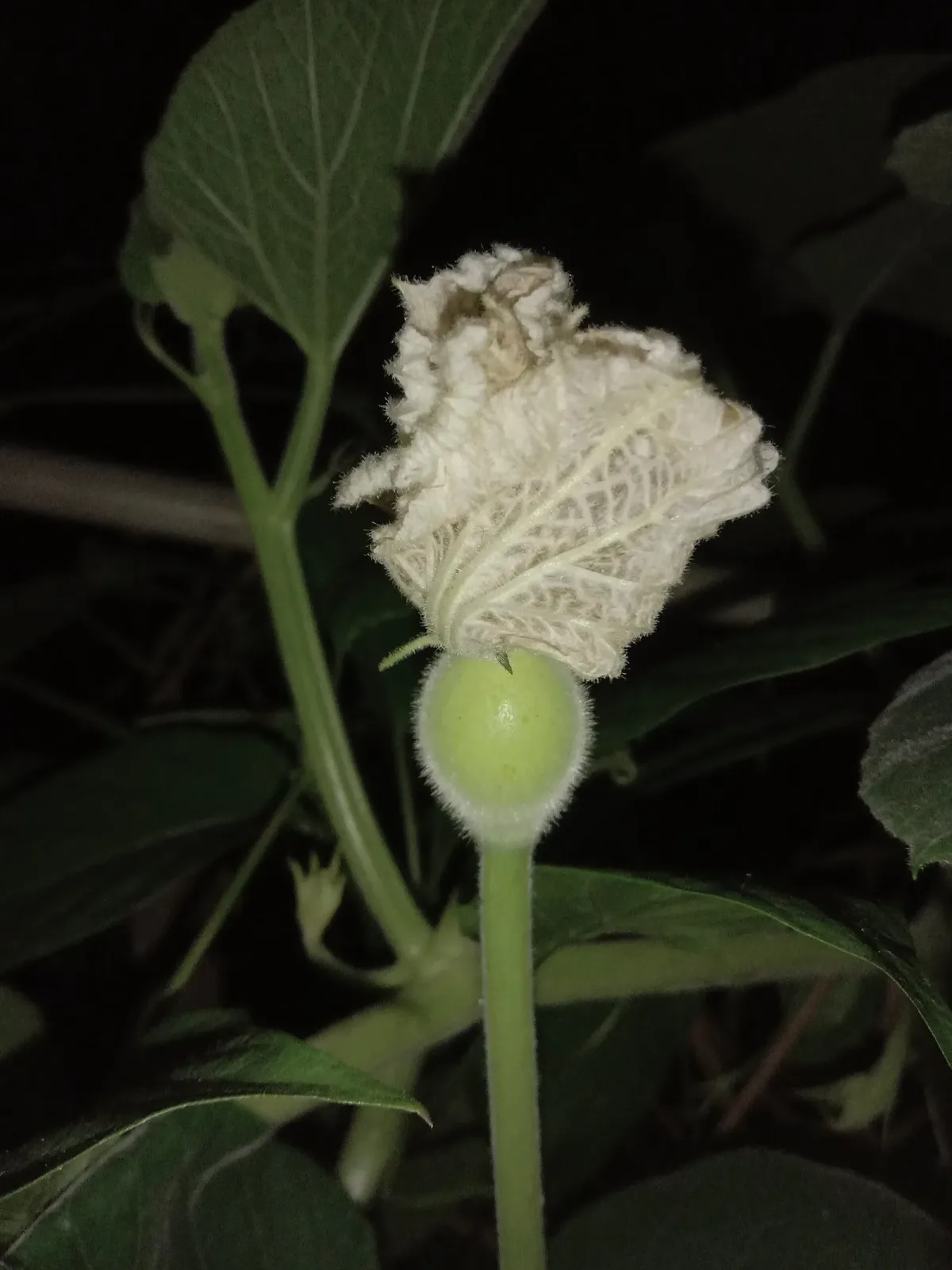
A lauki vine that flowers but gives no fruit usually has one of two problems. Either all the flowers so far are male, which is normal for the first couple of weeks of flowering, or the female flowers are opening but not being pollinated. Lauki flowers open in the evening, so the insects that pollinate them are mostly moths and beetles, not day-flying bees. Check for female flowers (with a tiny gourd behind the petals), and if they shrivel, hand pollinate them in the evening, between about 6 and 8 pm.
Male and female lauki flowers
Bottle gourd is monoecious: one vine carries separate male and female flowers.
- Female flower: a small, hairy, green baby gourd (the ovary) sits directly behind the petals. In the middle of the flower is a thick, lobed stigma.
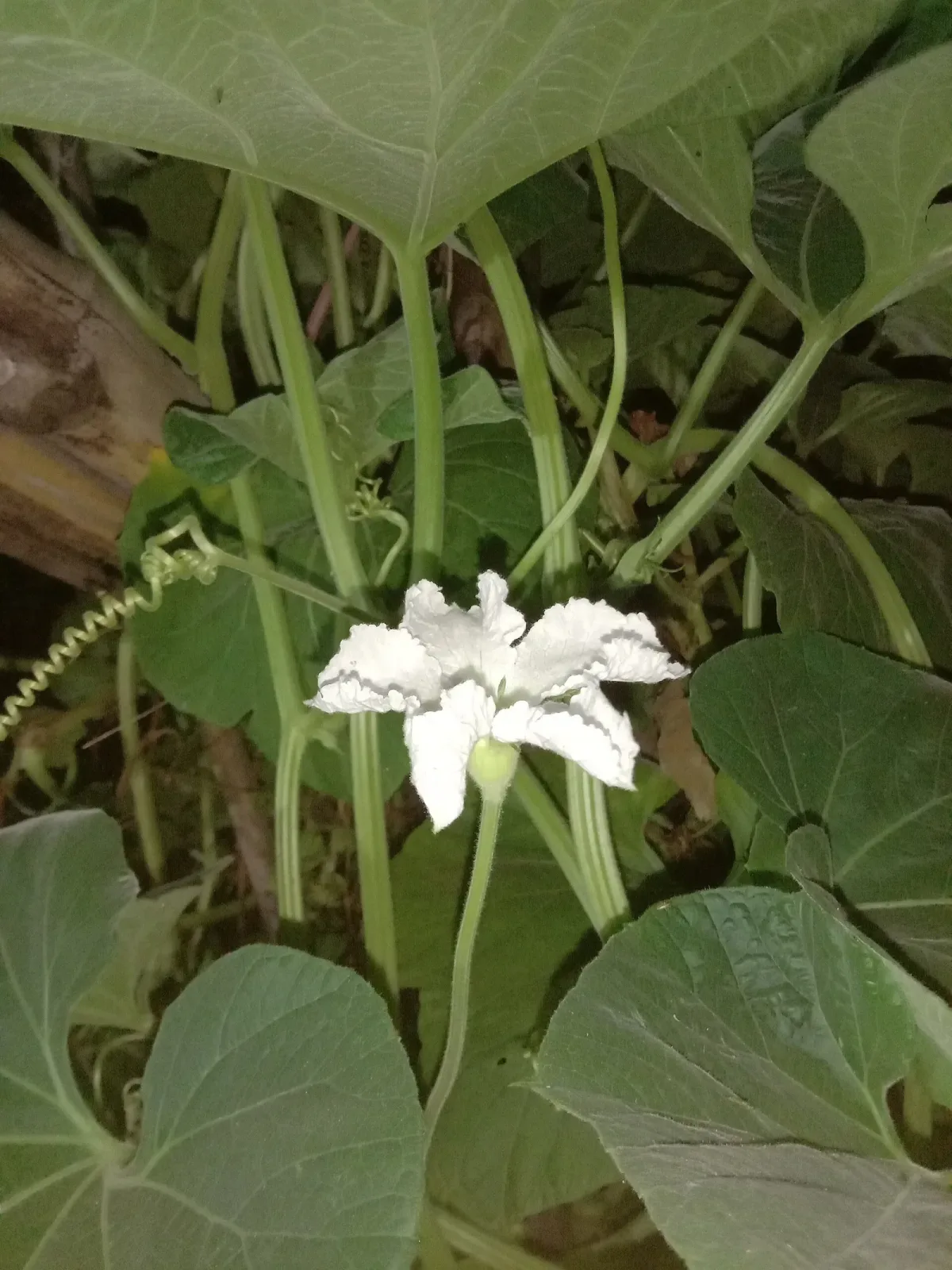
- Male flower: no swelling behind the petals, usually on a longer, thinner stalk. In the middle is a cluster of yellowish anthers covered with pollen.
In a study at Navsari Agricultural University in Gujarat, the first male flower appeared 48 days after planting and the first female flower 54 days after planting, and each plant carried a higher proportion of male flowers. So a week or two of only male flowers at the start is normal. Keep feeding and watering steadily, and female flowers usually follow.
Why lauki flowers open in the evening
The Navsari study recorded lauki flowers opening between about 5:20 and 6:30 pm and shedding pollen (anthesis) from about 5:50 to 7 pm, with the stigma ready at the same time. Pollen stayed viable until the next morning. Hawk moths and other night-flying moths made up the largest group of flower visitors, followed by beetles. A 2025 review of bottle gourd pollination also describes its flowering as crepuscular and nocturnal, and names small sap beetles as frequent visitors.
This matters on a terrace or balcony. If you see few bees and assume nothing is pollinating your lauki, you are looking at the wrong time of day. But in a high-rise flat, or a city with few moths, female flowers may still go unpollinated.
How to hand pollinate lauki
- In the evening, find a female flower that has just opened (baby gourd behind it).
- Pick a freshly opened male flower and pull back or remove its petals.
- Gently rub the pollen-covered centre of the male flower onto the stigma of the female flower. Cover all lobes.
- One male flower can usually pollinate one or two female flowers.
- If you miss the evening, try early the next morning; pollen stays viable until then, but fresher is better.
If pollination worked, the baby gourd keeps growing within two or three days. If it turns yellow, softens and drops, it was not pollinated or the vine was stressed.
Other reasons for no fruit
Wrong season for your area
Lauki likes warm, humid weather; IIVR gives 25 to 35°C. Grow it when your region has that range.
| Region | Sowing time | Source |
|---|---|---|
| Northern and central plains | Summer crop February to March; kharif crop June to July | ICAR-IIVR, Varanasi |
| Uttarakhand plains | June to July | GB Pant University |
| Hills (Uttarakhand) | April to May | GB Pant University |
| Tamil Nadu | July and January (TNAU); the state agriculture department gives July to January | TNAU; Tamil Nadu Department of Agriculture |
| Kerala and the West Coast | January to March and September to December; a rainfed crop can be sown with the first showers in May to June | KAU |
For other states, check your state agricultural university or KVK; the same warm-season windows usually apply, adjusted for your rains and winter.
Not enough sun or root space
Lauki is a large, hungry vine. In a small pot, with only a few hours of sun, it may flower weakly and abort fruits. Use the biggest container you can manage (a grow bag of 50 litres or more is a sensible home size; this is our practical suggestion, not a research figure), a sunny wall or trellis, and plenty of compost.
Water stress
IIVR advises regular irrigation, especially during flowering and fruiting. In a pot in April or May, that may mean watering daily. A vine that wilts every afternoon will drop flowers and baby fruits.
Fruit fly
If young gourds grow for a while and then rot, shrivel or drop with small marks or holes, check for fruit fly. TNAU's IPM guide calls fruit fly (Bactrocera cucurbitae) a major pest of cucurbits; its maggots cause young and ripening fruits to rot, or to dry and shrivel before maturity. Cut open a fallen fruit: small white maggots inside point to fruit fly. Look-alikes are unpollinated fruits (yellow from the tip, no maggots) and fruit rot in wet weather (soft, often with fungal growth). Pick up and destroy fallen fruits. Training the vine up a support keeps fruit off wet soil; TNAU recommends this against fruit rot in the rainy season. Ask your KVK for current, approved control options for your area; we do not list chemical doses here.
Quick checklist
| What you see | Likely reason | What to do |
|---|---|---|
| Only flowers with no baby gourd behind them | Only male flowers so far | Wait one to two weeks; keep feeding and watering |
| Female flowers that yellow and drop within days | Not pollinated | Hand pollinate in the evening |
| Gourds that grow, then rot or shrivel | Possible fruit fly, or fruit rot | Cut open to check; remove fallen fruit; ask KVK |
| Few flowers, weak vine | Small pot, little sun, water stress | Bigger container, sunnier spot, regular watering |
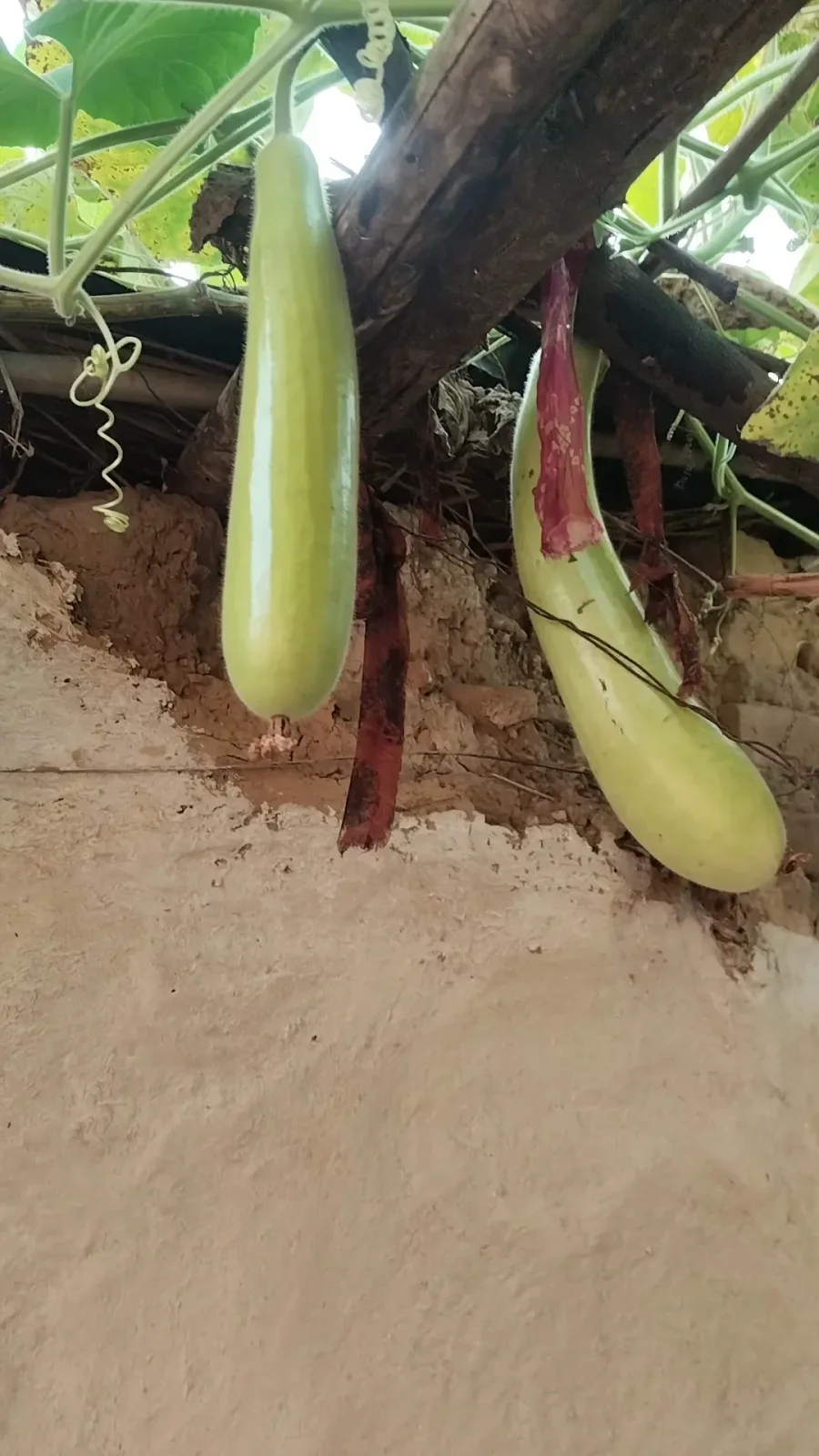
Watch: hand pollinating lauki
A Hindi terrace-gardening video showing how to identify and hand pollinate lauki flowers.
Related plants and guides
- Bottle gourd (lauki)
- Ridge gourd (turai), bitter gourd (karela) and pumpkin
- Terrace garden setup
- Bitter gourd flowers but no fruit
- Ridge gourd not fruiting
Sources
- Tamil Nadu Department of Agriculture: Cropping season for major horticulture crops (Tamil Nadu planting seasons for banana, papaya, pomegranate, tomato, brinjal, okra, gourds and drumstick). Accessed 10 Nov 2026.
- Kerala Agricultural University: Package of Practices, vegetables (Kerala sowing seasons for okra, bitter gourd, bottle gourd, ridge gourd, Basella and drumstick). Read on 9 Nov 2026; the site returned errors on the 10 Nov 2026 recheck.
- Journal of Entomology and Zoology Studies 9(2), 2021 (Navsari Agricultural University): Floral biology and diversity of pollinator fauna in bottle gourd (evening anthesis times; first male flower 48 days, first female 54 days; more male flowers; hawk moths as main visitors). Accessed 10 Nov 2026.
- International Journal of Entomology Research 10(7), 2025: Bee or beetle? A review on the pollination biology of bottle gourd (monoecious, crepuscular and nocturnal anthesis; beetle visitors). Accessed 10 Nov 2026.
- ICAR-IIVR: Bottle gourd (25 to 35°C; sowing February to March and June to July; regular irrigation during flowering and fruiting). Accessed 10 Nov 2026.
- TNAU Agritech: Bottle gourd (July and January sowing; training over supports against rainy-season fruit rot; fruit fly listed). Accessed 10 Nov 2026.
- TNAU / NCIPM: IPM schedule for vegetables (fruit fly damage symptoms in cucurbits). Accessed 10 Nov 2026.
- GB Pant University of Agriculture and Technology: Kharif season advisory 2020 (bottle gourd April to May in hills, June to July in plains). Accessed 10 Nov 2026.


Comments
No comments yet — share what worked in your climate.