
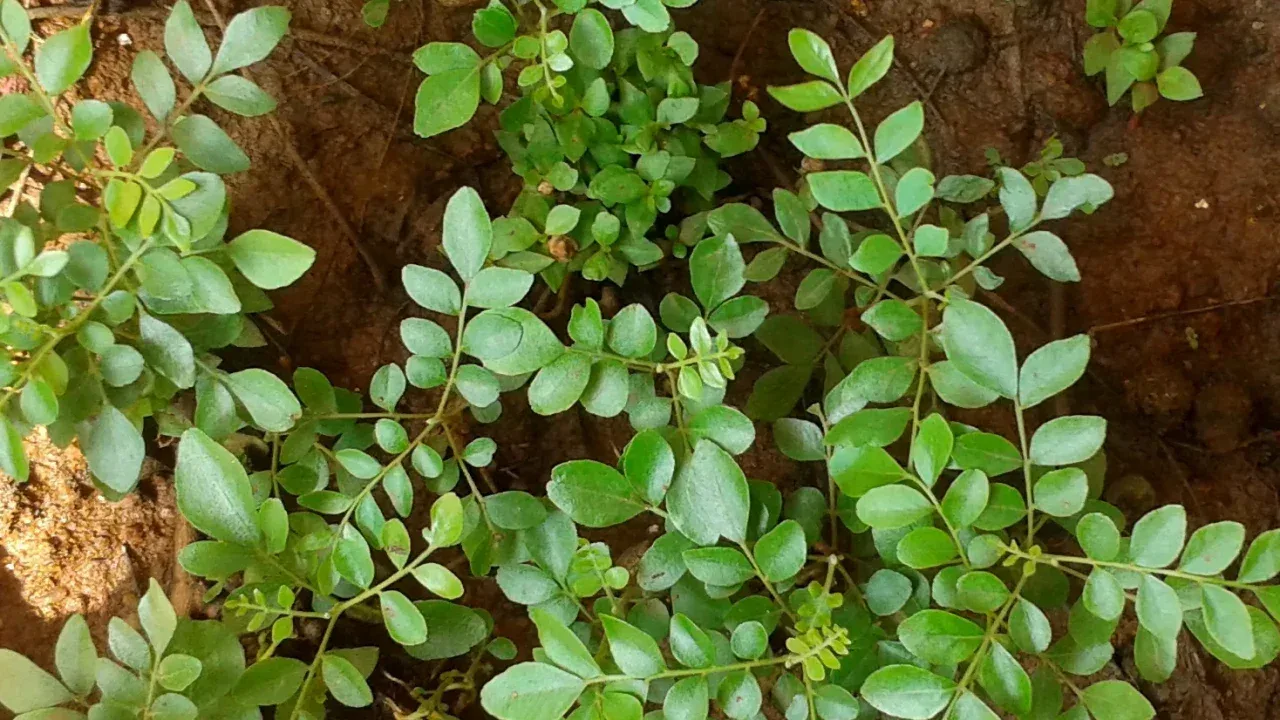
If your kadi patta plant is turning yellow and dropping leaves in December, you are not alone. In most of North India, curry leaf plants look their worst from December to February. Usually the plant is not dying. It is reacting to cold, and it pushes out fresh leaves again when the weather warms in March. But winter is also when overwatering and pests finish off weak plants, so it is worth checking properly.
This guide explains what is normal, how to check that your plant is alive, and how to look after a curry leaf plant in a pot through winter, region by region.

Why curry leaf plants drop leaves in winter
Curry leaf (Murraya koenigii) is a tropical shrub from the citrus family. TNAU's curry leaf guide gives its optimum temperature as 26 to 37°C. North Indian winter nights fall far below that, often under 10°C, and the plant responds by slowing down and shedding older leaves. Young plants and plants in small pots on open terraces suffer most.
Other common winter causes:
- Cold, wet roots: the plant drinks very little in winter. Regular watering keeps the mix soggy and roots start to rot.
- Frost: on frosty nights, young leaves can blacken and dry overnight.
- Less sun: a spot in shade for most of the winter day leads to thin growth and leaf drop.
- Pests: TNAU lists psyllids and scale insects among the main pests of curry leaf. They suck sap, and heavy infestations cause yellowing and sticky leaves.
- Root-bound pot: a plant that has filled its pot for years dries out unevenly and sheds leaves under any stress.
Normal winter leaf drop or a real problem?
Yellow leaves do not tell you the cause by themselves. Check these before you change anything:
- Stems: scratch a twig lightly with your nail. Green and moist underneath means it is alive. Twigs that bend are alive; twigs that snap are dead.
- Soil: push a finger 3 to 4 cm into the pot. If it is wet days after watering, or smells sour, the roots may be rotting. Ease the plant out and look: healthy roots are firm and light-coloured, rotten roots are dark and soft.
- Leaves and stems: turn over a few leaves and look along young stems for small brown bumps (scale), tiny sap-sucking insects clustered on soft new shoots (psyllids), or a black sooty coating. See our scale insects page.
- Pattern: if older, lower leaves are going yellow slowly while stems stay green, cold is the likely cause. If leaves turn black and dry overnight after a cold night, that is frost. If the whole plant wilts with wet soil, suspect the roots.
Winter care for curry leaf in a pot
Sun and shelter
- Move the pot to the sunniest place you have, ideally against a south-facing wall.
- Keep it out of cold wind on open terraces.
- Lift the pot onto a brick or stand so it is not sitting on a cold floor.
Protect from frost
The India Meteorological Department's cold wave advice recommends covering young plants with straw, polythene sheets or gunny bags on cold nights. For a potted curry leaf, use a jute bag or old cotton sheet over a few sticks, and remove it in the morning. Small pots can move indoors near a bright window on the coldest nights.

Water much less
- Water only when the top few centimetres of mix are dry. In peak winter this can mean once every week or more.
- Water in the late morning, not in the evening.
- Never leave the pot standing in a saucer of water.
No feeding until it grows again
IMD advises against applying nutrients during cold weather, because roots take up very little. Stop feeding from mid December and start again with compost when new leaves appear in late February or March. If you then use a packaged fertiliser, follow its label.
Harvest lightly
Every sprig you pick in winter is a leaf the plant cannot replace until spring. Take only what you need, from the outer branches.
Wait to prune and repot
- Pruning: IMD suggests removing cold-damaged parts at the end of February or early March. That is the right time to trim curry leaf too, when you can see which twigs are alive. TNAU recommends cutting the main tip once the plant is about 1 metre tall to encourage branching, and keeping 5 to 6 branches.
- Repotting: move a root-bound plant to a pot one size bigger in spring, with fresh, well-draining mix. Our potting mix guide explains the ingredients.
Region-wise notes
- North Indian plains (Punjab, Haryana, Delhi, UP, Bihar, Rajasthan): leaf drop from December to February is expected. Protect from frost and cut watering sharply. New growth usually returns in March.
- Hills: curry leaf rarely survives outdoor hill winters. Keep it in a pot and bring it indoors to a bright window from November to March.
- East and central India: some leaf yellowing on cold nights in January. Shelter and less water are usually enough.
- South India and the coasts: curry leaf grows almost all year. If it drops leaves here in winter, look first at waterlogging during the northeast monsoon rains, pests such as psyllids and scale, and a root-bound pot.
Growing new curry leaf plants
TNAU notes that curry leaf fruits ripen in July and August, and advises cleaning the pulp off the seeds and sowing them within 3 to 4 days of collection. So new plants are raised from fresh fruit in the monsoon, not in winter. Varieties listed by TNAU include Sen Kaampa, Dharwad-1 and Dharwad-2. See the curry leaf plant profile for year-round care.
Watch: curry leaf care in winter

Related pages
- Plant care in winter in India
- Lemon plant, a citrus-family relative with similar winter needs
- Leaf drop
- Yellow leaves
- Root rot
Sources
- TNAU Agritech Portal, Curry leaf
- India Meteorological Department (Agromet), Dos and Don'ts for Cold Wave
Comments
No comments yet — share what worked in your climate.