
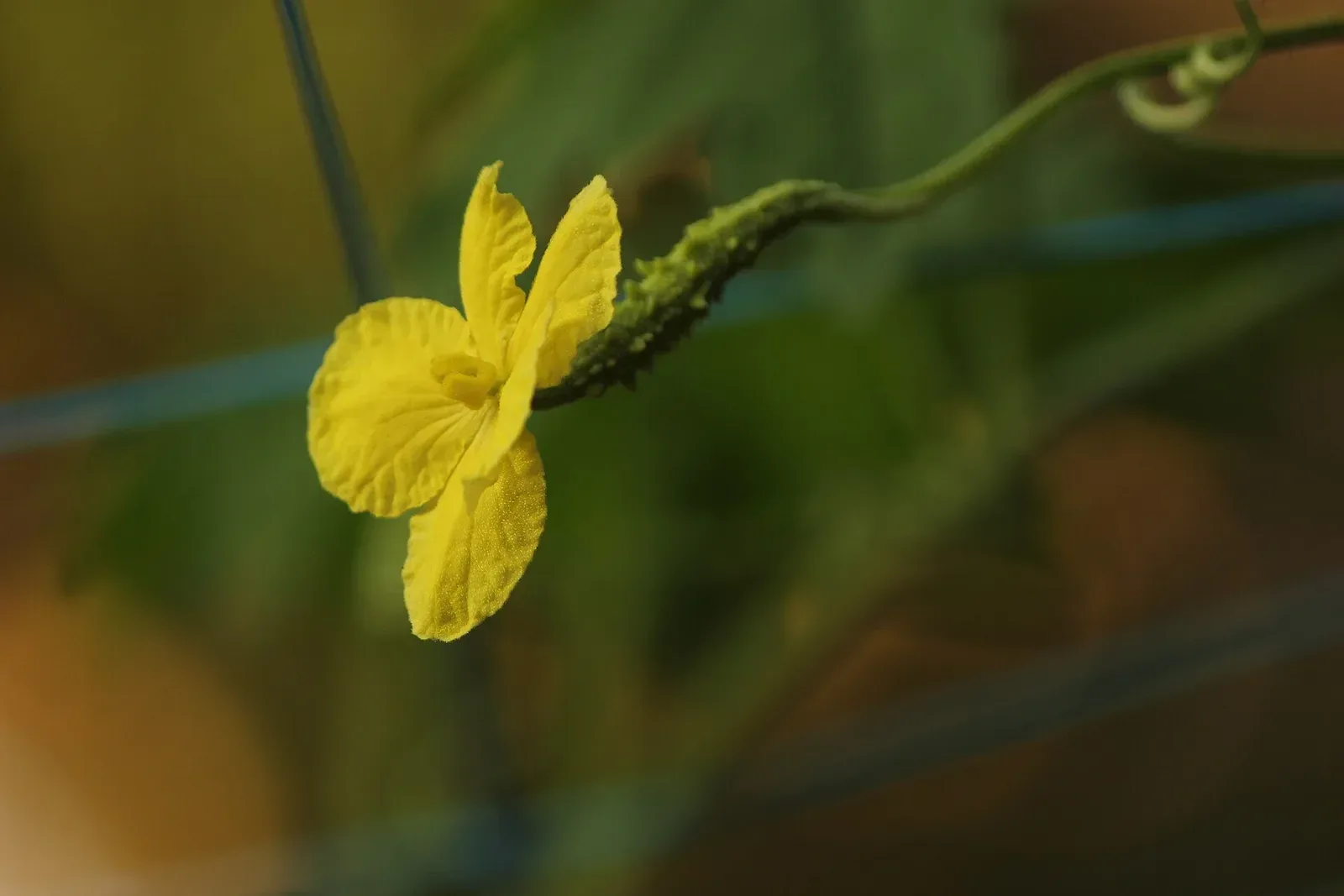
If your karela vine has many yellow flowers but no fruit, first check whether any are female (a tiny warty karela behind the petals). Early on, most flowers are male. If female flowers are there but wither the next day, they were not pollinated. Karela flowers open before dawn and last about one day, and bees are their main pollinators. On a balcony or terrace with few bees, hand pollinate female flowers in the morning. Also check the season, sunlight, watering and fruit fly.
Male and female karela flowers
Bitter gourd carries separate male and female flowers on the same vine.
- Female flower: a small, ridged, warty baby karela (the ovary) sits between the stalk and the petals.
- Male flower: borne on a long, thin stalk with nothing swollen behind the petals. The centre has the pollen-bearing anthers.
Male flowers usually outnumber female flowers by a wide margin, so a vine covered in yellow flowers may have only a handful of female ones. That is normal.
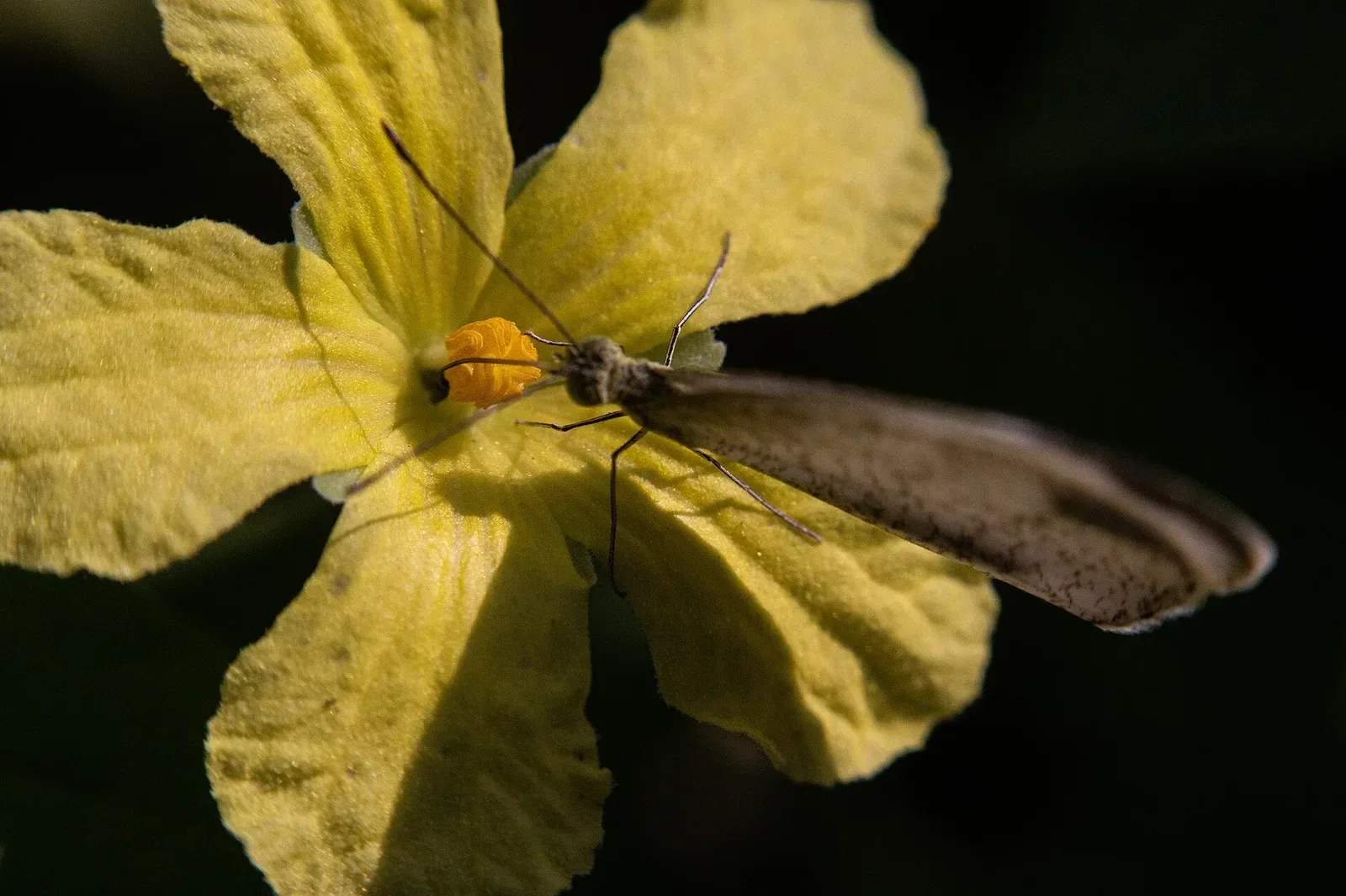
When karela flowers open and who pollinates them
A study at the University of Agricultural Sciences, Bengaluru (2014 to 2015) recorded these points for bitter gourd (variety Arka Harit):
- Plants started flowering 40 to 45 days after sowing, and flowering lasted 55 to 60 days.
- Flowers opened from around 2 am until 8 am, male flowers first, then female.
- Each flower lasted about one day. Male flowers dropped the same evening; female flowers withered the next morning if not fertilised.
- Pollen viability and stigma receptivity were highest between 10 am and 2 pm, which matched the peak activity of Asian honey bees (Apis cerana) and dwarf honey bees (Apis florea).
- When insects were kept away from the flowers, the yield was zero.
That last point explains a lot of balcony failures. Karela needs insects, mainly bees, to move pollen. If your vine is behind a grille or net, high up in a building, or in an area where bees are rare, female flowers will drop unfertilised.
How to hand pollinate karela
- In the morning, find a female flower that opened today (petals fully open, baby karela behind it).
- Pick a fresh male flower from the same morning and remove its petals.
- Touch and gently rub the male flower's centre on the female flower's stigma, covering it with yellow pollen.
- The Bengaluru study found pollen and stigma at their best from 10 am to 2 pm. Mid-morning is a good time, before the flowers start to close.
- One male flower can usually do one or two female flowers.
A successfully pollinated fruit keeps growing over the next few days. An unpollinated one yellows from the tip and drops.
Other reasons for no fruit
Season and temperature
TNAU describes bitter gourd as needing moderately warm temperatures. ICAR-IIVR notes that its variety Kashi Mayuri can fruit in hot summer above 35°C, which suggests many other varieties struggle in that heat. Grow in your region's warm, not scorching, months.
| Region | Sowing time | Source |
|---|---|---|
| Uttarakhand plains | June to July | GB Pant University |
| Uttarakhand hills | April to May | GB Pant University |
| Tamil Nadu | July and January (TNAU); the state agriculture department gives July to January | TNAU; Tamil Nadu Department of Agriculture |
| Kerala and the West Coast | January to March and September to December; a rainfed crop can be sown with the first showers in May to June | KAU |
| Other northern and central plains | Usually a summer crop (sown February to March) and a rainy-season crop (June to July), the same windows ICAR-IIVR gives for bottle gourd and ridge gourd. We found no bitter-gourd-specific date for these states | Inferred; confirm with your state university or KVK |
Not enough sun
Karela needs full sun. A vine in partial shade grows long and thin with few female flowers.
Water stress and small containers
Give a large container and keep the soil evenly moist. A pot that dries out in a summer afternoon causes flower and fruit drop.
Fruit fly
Fruits that grow for a few days and then turn yellow, rot or shrivel may have fruit fly maggots. TNAU's IPM guide lists fruit fly (Bactrocera cucurbitae) as a major cucurbit pest that causes young fruits to rot or dry before maturity. Cut a fallen fruit open; white maggots inside point to fruit fly. Unpollinated fruit drops earlier and has no maggots. Remove and destroy fallen fruit. Many home growers cover young fruits with paper bags; ask your KVK for current approved control options. We do not list chemical doses.
Growth regulators
TNAU's commercial package for bitter gourd includes a plant growth regulator spray in the early weeks to increase female flowers. That is a farm practice that needs correct, approved dosing. For a home vine, pollination, sun and water fix most problems.
Quick checklist
| What you see | Likely reason | What to do |
|---|---|---|
| Only yellow flowers on thin stalks | Male flowers only so far | Wait; keep feeding and watering |
| Female flowers wither the next morning | Not pollinated | Hand pollinate mid-morning |
| Fruits rot or shrivel after growing | Possible fruit fly | Cut open; destroy fallen fruit; bag young fruit |
| Few flowers, weak vine | Shade, small pot, heat or water stress | Full sun, bigger pot, even watering |
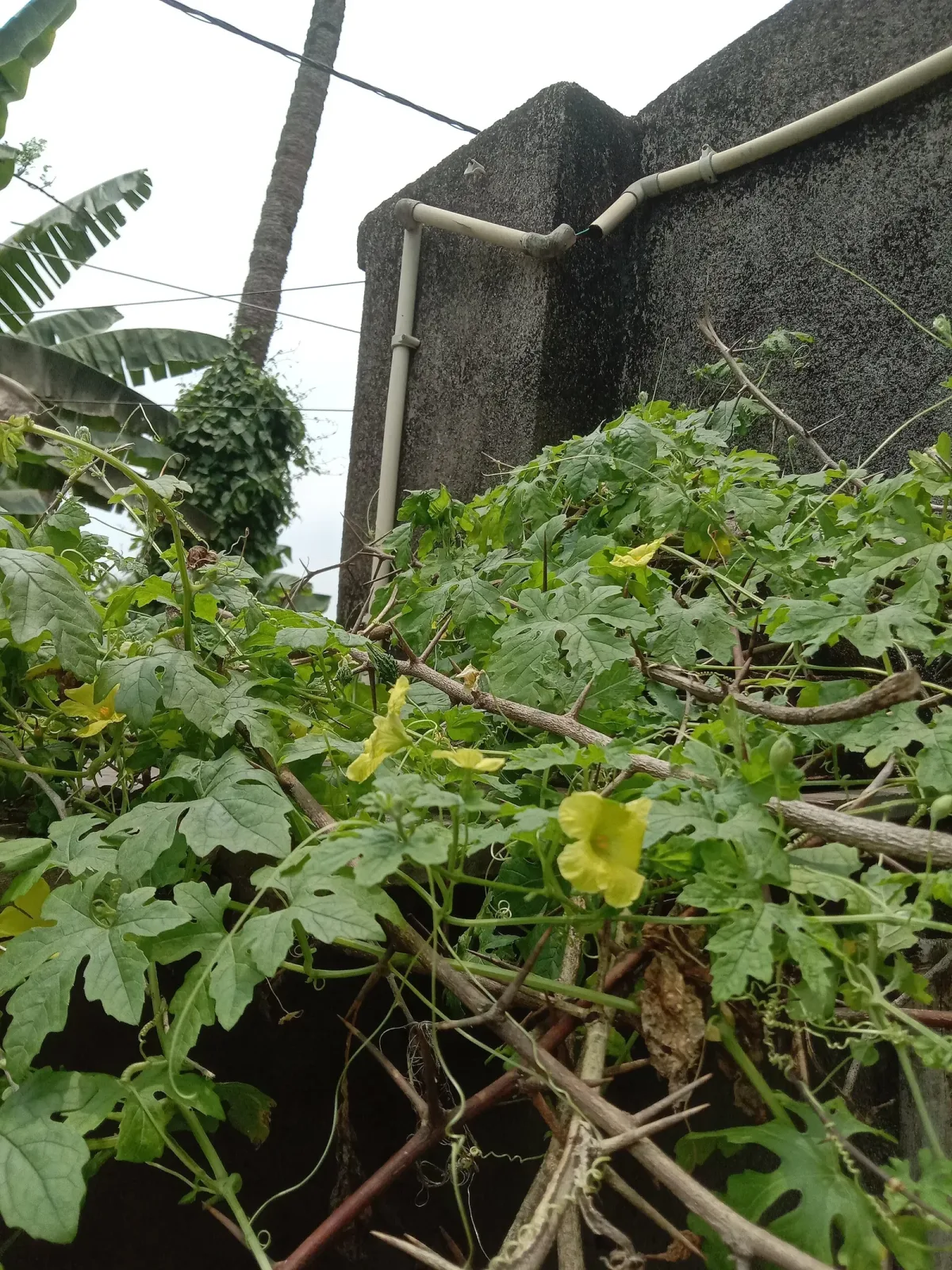
Watch: male and female karela flowers
A Hindi kitchen-gardening video showing how to tell male from female karela flowers.
Related plants and guides
- Bitter gourd (karela)
- Bottle gourd (lauki) and ridge gourd (turai)
- Terrace garden setup
- Bottle gourd flowers but no fruit
Sources
- Tamil Nadu Department of Agriculture: Cropping season for major horticulture crops (Tamil Nadu planting seasons for banana, papaya, pomegranate, tomato, brinjal, okra, gourds and drumstick). Accessed 10 Nov 2026.
- Kerala Agricultural University: Package of Practices, vegetables (Kerala sowing seasons for okra, bitter gourd, bottle gourd, ridge gourd, Basella and drumstick). Read on 9 Nov 2026; the site returned errors on the 10 Nov 2026 recheck.
- University of Agricultural Sciences, Bengaluru: Valuation of pollination service in bitter gourd seed production (Mysore Journal of Agricultural Sciences 50(2), 2015) (flowering at 40 to 45 days; anthesis 2 am to 8 am; one-day flowers; receptivity 10 am to 2 pm; Apis cerana and A. florea; zero yield without visitors). Accessed 10 Nov 2026.
- TNAU Agritech: Bitter gourd (moderately warm temperature; July and January sowing; growth regulator in commercial package; fruit fly). Accessed 10 Nov 2026.
- ICAR-IIVR: Bitter gourd varieties (Kashi Mayuri fruits in hot summer above 35°C). Accessed 10 Nov 2026.
- TNAU / NCIPM: IPM schedule for vegetables (fruit fly damage in cucurbits). Accessed 10 Nov 2026.
- GB Pant University of Agriculture and Technology: Kharif season advisory 2020 (bitter gourd April to May in hills, June to July in plains). Accessed 10 Nov 2026.


Comments
No comments yet — share what worked in your climate.