
| ☀️ Light | Full sun |
|---|---|
| 💧 Water | Moderate (lightly moist) |
| 🪴 Soil | Poor to average, well-drained soil; sandy or gritty mixes work well |
| 🌡️ Temp | 0°C – 35°C |
| 🐾 Safety | Cats: non-toxic · Dogs: non-toxic |
| 📏 Mature size | 2.0 m |
Where It Grows & Climate Tolerance
Pet & Companion Animal Toxicity (Nasturtium)
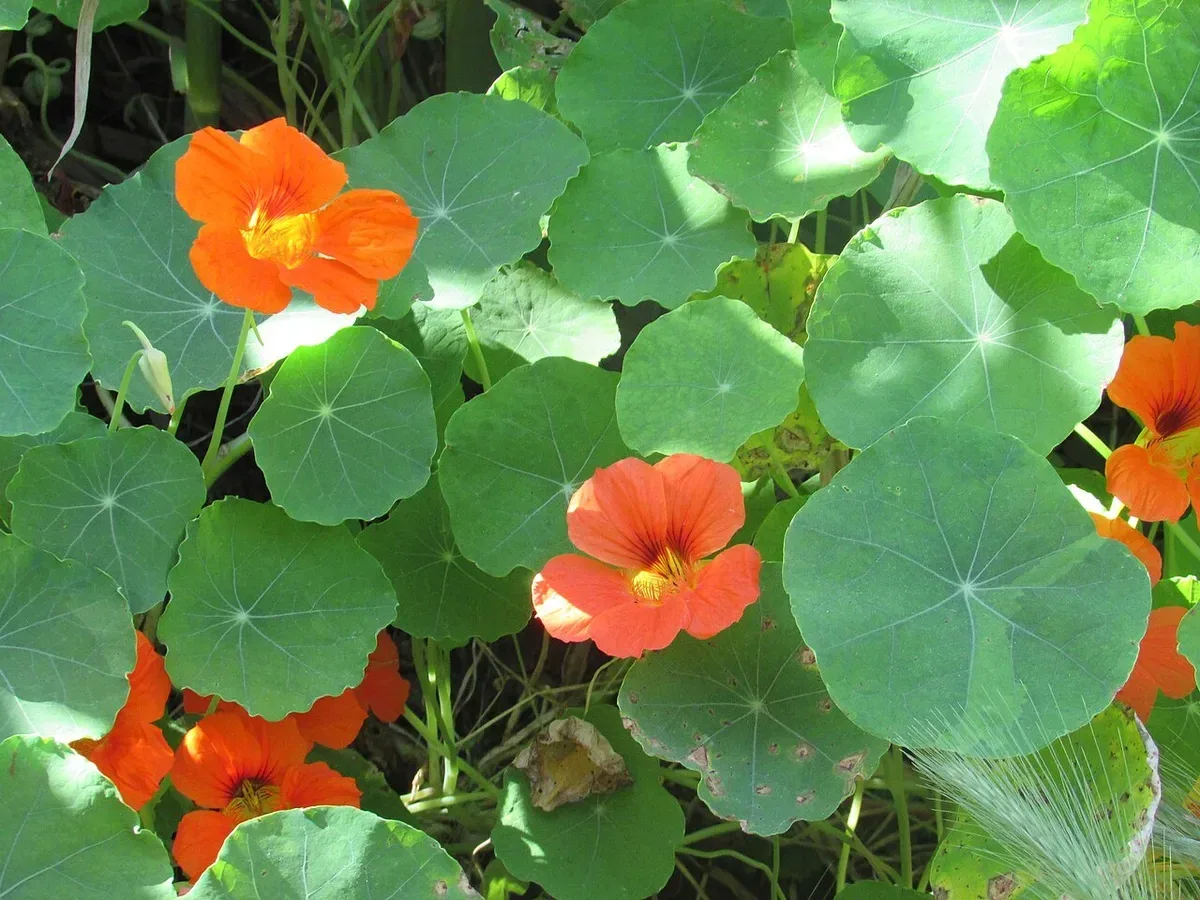
Nasturtium (Tropaeolum majus) is a quick, easy annual with round, shield-shaped leaves and spurred flowers in yellow, orange, red and cream. Bush types stay near 30 cm; trailing types spill from baskets or scramble up a fence. Leaves and flowers are edible, with a peppery taste.
Care instructions
Care Guide & Maintenance Routine
Sow the large seeds directly in poor to average, well-drained soil in full sun. Water regularly but do not feed, since rich soil gives leaves instead of flowers. Pick flowers to keep them coming. Afternoon shade helps in hot weather. Frost kills the plants.
Light & Sunlight
Wisconsin Horticulture advises full sun and notes plants grow in partial shade but do not bloom well there. NC State suggests some afternoon shade during hot summers.
Watering Schedule
Nasturtium tolerates drought, but Wisconsin Horticulture recommends regular watering through the season to keep plants blooming strongly. Let the top few centimetres dry between waterings and never leave pots standing in water.
Potting Mix & Drainage
Poor to average, well-drained soil; sandy or gritty mixes work well
Temperature & Humidity
A tender plant that grows as an annual; frost blackens it. Wisconsin Horticulture rates it a tender perennial only in zone 9a. Growth and flowering slow in strong heat, which is why NC State suggests afternoon shade.
About nasturtium
Nasturtium (Tropaeolum majus) is a fast annual from South America, grown for its round leaves and bright, spurred flowers. Wisconsin Horticulture explains that the common name comes from a mustard oil like the one in watercress, and early English herbalists called it Indian cress.
The leaves are shield-shaped, with the stalk joined near the centre and pale veins spreading out like spokes. Flowers have five petals and a nectar spur at the back, in yellow, orange, red, cream and mahogany shades.
Bush and trailing types
Compact bush varieties stay around 30 cm tall and suit edges and pots. Trailing types spread a metre or more and look good in baskets or spilling over walls; NC State notes climbing forms can reach about 3 m with support. Wisconsin Horticulture points out that they lack tendrils, so they need tying in.
Growing conditions
Grow in full sun, in poor to average, well-drained soil. This is one of the few plants that flowers better without fertiliser. NC State notes it tolerates drought and neglect, and benefits from some afternoon shade in hot summers.
Sowing
The large seeds are easy for children to sow. Soak them for a few hours, push them about 1 cm deep, and expect seedlings in 7 to 10 days. Direct sowing works well; plants grow quickly once the soil is warm.
Watering and picking
Water regularly to keep flowers coming, and pick or deadhead often. Plants keep flowering until heat or frost ends them.
In the kitchen
NC State lists the leaves, buds, flowers, pods and seeds as edible. Leaves taste peppery, stronger in hot sun. Flowers brighten salads, and green seeds can be pickled like capers.
Pests
Aphids are the main nuisance. Whiteflies, mealybugs, cabbage white caterpillars and leaf miners also turn up. Many gardeners use nasturtiums as a trap plant beside cabbages and beans, though this is garden practice rather than a tested control.
Nasturtium pairs well with calendula and marigold in a bright, edible bed.
Buying tips
Decide on the habit first. Wisconsin Horticulture lists compact bush varieties such as 'Tom Thumb', 'Peach Melba' and 'Empress of India' for pots and edging, and trailing ones such as 'Jewel of Africa' for baskets, walls and fences. 'Alaska' has cream-marbled leaves, and 'Whirlybird' has spurless, upward-facing flowers. Seed is cheap and germinates well, so there is little need to buy plants.
Watering through the year
Young plants
Keep the soil lightly moist until seedlings have a few leaves.
Flowering
Although nasturtiums tolerate dry soil, Wisconsin Horticulture recommends regular watering to keep plants blooming strongly. Water when the top few centimetres of soil are dry.
Heat
Leaves wilt in strong afternoon sun. Water in the morning and give some shade if plants droop every day.
Troubleshooting
Big leaves, few flowers
Soil is too rich or the plant is being fed. Stop feeding; next time sow into poorer soil.
Black insects under leaves
Aphids. Hose them off or pinch out heavily infested shoots.
Holes in leaves and green caterpillars
Cabbage white caterpillars, which Wisconsin Horticulture lists as a common pest. Pick them off by hand.
Winding pale lines inside leaves
Leaf miners. Remove affected leaves; the plant usually carries on.
Yellowing and collapse
Heat, waterlogged pots or the natural end of the season.
Safety and pets
ASPCA lists nasturtium as non-toxic to dogs, cats and horses, but the NC State Plant Toolbox tags it as a possible problem for pets. Discourage pets from eating large amounts.
Kitchen ideas
Use young leaves in salads and sandwiches. Whole flowers make a peppery garnish. NC State notes the seeds can be used as a substitute for capers when pickled green.
Common mistakes
- Adding manure or compost to the bed.
- Sowing too early into cold soil.
- Expecting trailing types to climb without tying in.
- Eating flowers from plants sprayed with pesticides.
India and Canada in brief
In India nasturtium is sown after the rains and flowers from late winter into spring, or through summer at higher elevations. In Canada it is a quick summer annual sown after frost that flowers until the first cold night in fall.
Where nasturtiums look best
Wisconsin Horticulture notes compact types make good edging, and trailing types suit hanging baskets, window boxes and walls. They can also cover bare ground or be tied to a trellis. Monet famously planted them along the path to his house at Giverny. In mixed pots, trim them back from time to time so they do not smother other plants.
Saving seed
Each flower forms a fruit that splits into three large seeds. Let them turn tan and fall, or pick them when they come away easily. Dry for a week on a tray and store in a paper envelope. Wisconsin Horticulture notes plants self-seed readily, which is useful but can spread them around in mild climates.
Growing with children
The big seeds, quick sprouting and bright flowers make nasturtiums one of the best first plants for children. A single seed in a yogurt pot on a sunny windowsill shows a seedling in about a week.
Bees and hummingbirds
The long nectar spur at the back of each flower is visited by bees, and NC State tags the plant as hummingbird friendly. Plant a row near vegetables to bring more visitors into the garden.
Nasturtiums need very little from you: sun, lean soil and regular picking are nearly all it takes.
Seasonal rhythm
Seasonal Calendar
A month-by-month calendar for Nasturtium in Global is coming soon. See the light, water and temperature notes above.
Diagnostics
Common Problems & Troubleshooting
Lots of leaves and few flowers from rich soil or feeding; poor flowering in shade; yellowing in heat or waterlogged pots; collapse at first frost.
Pests & seasonal watch: Aphids (often black, on stems and leaf undersides), mealybugs and whiteflies (NC State). Cabbage white caterpillars and leaf miners (Wisconsin Horticulture); leaf miner trails look bad but do not seriously harm plants.
Care encyclopedia · 1 guide
Guides & Articles for Nasturtium
Q&A
Frequently Asked Questions
Can you eat nasturtiums?
Yes. NC State lists the leaves, buds, flowers, pods and seeds as edible, with a spicy, peppery taste. Young leaves taste best, and only eat plants not sprayed with pesticides.
Why does my nasturtium have leaves but no flowers?
Usually too much fertiliser or rich soil, or too much shade. Both NC State and Wisconsin Horticulture say feeding increases leaves and reduces flowers.
Should I soak nasturtium seeds?
Soaking for a few hours or overnight can improve germination, according to Wisconsin Horticulture. Sow about 1 cm deep.
Is nasturtium safe for cats and dogs?
ASPCA lists it as non-toxic to dogs, cats and horses. NC State tags it as a possible problem for pets, so do not let pets eat large amounts.
Why is my nasturtium covered in black bugs?
Most likely aphids, which cluster on stems and leaf undersides. Hose them off or remove badly hit shoots.
Do nasturtiums come back every year?
They are grown as annuals. Wisconsin Horticulture notes they are perennial only in mild climates such as zone 9a, but they self-seed readily.
Can nasturtiums climb?
Trailing types scramble and can be tied to a trellis, but Wisconsin Horticulture notes they lack tendrils and do not climb well on their own.
What are the white trails on nasturtium leaves?
Leaf miners tunnel inside the leaves. Wisconsin Horticulture says the trails do not seriously harm the plant; pick off affected leaves if you like.
Which nasturtium varieties are best for pots?
Compact bush types. Wisconsin Horticulture describes 'Tom Thumb', 'Peach Melba' and 'Empress of India' as good choices for containers.
Similar Botanical Matches
Keep exploring
Related plants
Grower field notes
Reader Field Notes in Global
Share how this plant performs in your local Global climate.