
| ☀️ Light | Full sun |
|---|---|
| 💧 Water | Moderate (lightly moist) |
| 🪴 Soil | Fertile, moisture-retentive, well-drained soil |
| 🌡️ Temp | 2°C – 35°C |
| 🐾 Safety | Cats: not verified · Dogs: not verified |
| 📏 Mature size | 45 cm |
Where It Grows & Climate Tolerance
Pet & Companion Animal Toxicity (Scarlet Sage (Salvia, Bedding Salvia))
Not yet verified: Toxicity status for cats, dogs, and horses has not yet been confirmed against veterinary poison-control records. Keep out of reach of pets or consult your veterinarian.
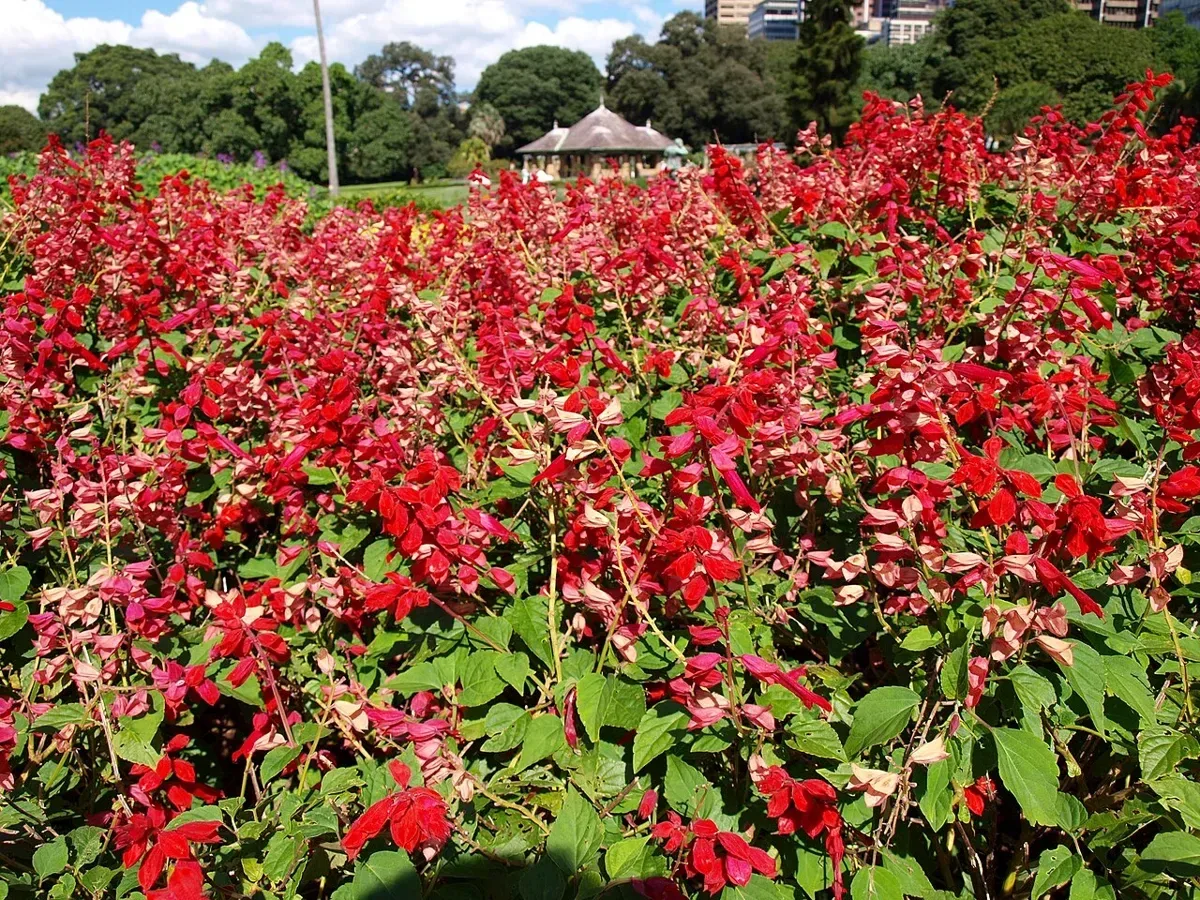
Scarlet sage is a tender perennial from Brazil grown almost everywhere as a bedding annual. Dense spikes of tubular red flowers sit in red calyces that stay colourful after the petals fall, so beds look bright for months. Cultivars also come in purple, pink, salmon and white.
Care instructions
Care Guide & Maintenance Routine
Grow in full sun or light shade in fertile, well-drained soil that stays moist. Water regularly, since NC State notes it does not tolerate drought. Pinch young plants for bushier growth and remove faded spikes. It needs warmth and dies at frost, so in cold climates plant out only after the last frost.
Light & Sunlight
Full sun gives the most flowers; NC State lists full sun to partial shade. In the hot Indian plains, some afternoon shade keeps flowers fresher in March and April.
Watering Schedule
Keep the soil evenly moist. NC State notes scarlet sage is not drought tolerant; wilting plants drop flowers and the lower leaves yellow. Avoid soggy soil, which causes root and stem rot.
Potting Mix & Drainage
Fertile, moisture-retentive, well-drained soil
Temperature & Humidity
NC State notes scarlet sage needs warmth and is hardy only in zones 10 and 11; frost kills it. Cold, wet nights below about 10°C slow growth and purple the leaves. In Indian plains, flowering fades in the April and May heat.
About scarlet sage
Scarlet sage, Salvia splendens, belongs to the large sage genus in the mint family. NC State describes it as a tender perennial native to Brazil, grown almost everywhere as an annual bedding plant. In the wild it is a shrubby plant; garden strains are compact, mostly 25 to 60 cm tall, though NC State gives up to 90 cm for taller types.
Plants have square stems and oval, toothed, bright green leaves. Flowers are tubular, about 3 to 4 cm long, packed in upright spikes. Each sits in a calyx of the same colour, and NC State notes the calyx stays bright after the petals drop. Red is the classic colour; there are also purple, lavender, salmon, pink, cream and white strains, and bicolours.
Uses
- Bedding: blocks of colour in parks, roundabouts and formal beds.
- Borders and edges: dwarf strains in front, taller strains behind.
- Containers: pots, window boxes and balcony troughs.
- Wildlife: in the Americas hummingbirds visit the red flowers, though NC State notes many bedding cultivars have no nectar.
NC State also lists it as deer resistant.
Types to look for
- Dwarf strains (20 to 30 cm): compact, early, ideal for edging and pots.
- Medium strains (30 to 45 cm): the usual bedding height.
- Tall strains (60 to 90 cm): older or species-like types, looser and more natural, for the back of borders.
Seed is sold by colour, such as red, purple, salmon or white, or as mixes. Red strains are the most vigorous and the most widely grown. Purple and white strains often fade faster in strong sun.
Light
Full sun gives the most compact plants and the best colour. Light shade is tolerated, and in very hot climates a little afternoon shade keeps flowers from fading. Deep shade gives tall, floppy plants with few spikes.
Soil
Scarlet sage likes fertile, well-drained soil with plenty of organic matter that does not dry out quickly. Very rich soil, or heavy nitrogen feeding, pushes leafy growth.
Sowing
Most gardeners buy plants, but seed is easy. NC State advises not covering the seed, because it needs light to germinate. Sow on the surface of moist seed mix, keep it warm and bright, and keep the surface damp until seedlings appear, usually within one to two weeks. Seedlings are prone to damping-off, so sow thinly, use fresh mix and give air once they emerge. Prick out at the two-leaf stage.
Planting out
Harden off seedlings and plant once nights are warm. RHS advises planting tender salvias out in late May or June in the UK climate. Space dwarf types about 20 to 25 cm apart and taller ones 30 to 40 cm.
Watering
NC State notes scarlet sage is not drought tolerant. Water whenever the top few centimetres of soil feel dry. In pots this can mean every day in hot weather. Plants that wilt badly drop buds and lower leaves.
Feeding
RHS notes salvias in borders usually need no feeding, but container plants benefit from a potassium-rich liquid fertiliser once a month through the growing season. Use the dose on the label.
Pinching and deadheading
Pinch young plants once or twice for bushier growth. When a spike fades, cut it back to the next pair of leaves; new side spikes follow within a few weeks. In frost-free climates, cut tired plants back by half after a long flush.
Cuttings and seed
Soft tip cuttings root easily in warm weather and are a simple way to keep a favourite colour. Saved seed from mixed beds often does not come true. PAU notes salvia is often cross-pollinated and needs at least 100 m isolation for pure seed.
Pests and diseases
NC State lists the common problems:
- Damping-off: seedlings collapse at soil level.
- Powdery mildew: white coating on leaves in humid, still air.
- Botrytis: grey fuzzy mould on flowers and stems in wet weather.
- Aphids, whiteflies and spider mites: sap feeders on young leaves and leaf undersides.
Good spacing, watering at the base and removing dead flowers prevent most problems.
End of season
Bedding salvias are usually treated as annuals; RHS notes they are composted in autumn. In frost-free gardens they can carry on for a second season if cut back, but plants grown fresh from seed or cuttings usually flower better.
Design tips
Scarlet sage is a strong colour, so it works best in clear blocks or repeated clumps rather than dotted singly. Classic combinations are red salvia with white or yellow edging plants, or with silver foliage, which cools the red. In containers, one upright salvia makes a centrepiece with trailing plants around it. Plant in groups of at least five for impact in a bed.
Common mistakes
- Covering seed too deeply, so it fails to germinate.
- Planting out too early into cold soil.
- Letting pots dry out, which drops flowers.
- Feeding heavily with nitrogen, which gives leaves and few spikes.
- Crowding plants, which invites mildew and grey mould.
Safety
Toxicity to pets has not been verified for Salvia splendens. The ASPCA page titled scarlet sage refers to Salvia coccinea, a different plant.
Companions
Scarlet sage pairs well with marigold, petunia, celosia and zinnia in bright bedding schemes. For hardy relatives, see culinary sage and Russian sage.
India and Canada in brief
In India scarlet sage is a cool-season bedding plant on the plains and a summer annual in the hills. In Canada it is a summer bedding annual planted after the last frost.
Seasonal rhythm
Seasonal Calendar
A month-by-month calendar for Scarlet Sage (Salvia, Bedding Salvia) in Global is coming soon. See the light, water and temperature notes above.
Diagnostics
Common Problems & Troubleshooting
Seedlings collapsing from damping-off; few flowers in shade or rich soil; leaf drop and wilting when the soil dries; powdery mildew and grey mould in crowded, damp beds; spider mites in dry heat; aphids and whitefly on young growth.
Pests & seasonal watch: NC State lists damping-off, powdery mildew, botrytis, aphids, spider mites and whiteflies as the common problems, especially in greenhouses. Damping-off kills seedlings at soil level in wet, crowded trays.
Q&A
Frequently Asked Questions
Is scarlet sage annual or perennial?
NC State describes it as a tender perennial grown as an annual. It survives only in frost-free climates, zones 10 and 11.
How do I get more flowers on scarlet sage?
Grow it in full sun, keep the soil moist, pinch young plants, and cut off faded spikes. RHS notes border plants usually need no feeding; feed pots monthly with a potassium-rich fertiliser.
Should I cover scarlet sage seed?
No. NC State notes the seed needs light to germinate, so press it onto the surface of the mix.
Why are my seedlings collapsing?
This is usually damping-off, a fungal disease of seedlings in wet, crowded trays. Use fresh mix, sow thinly and give air.
Is scarlet sage safe for pets?
Toxicity has not been verified for Salvia splendens. The ASPCA scarlet sage page refers to Salvia coccinea, a different plant.
Does scarlet sage attract hummingbirds and bees?
Red tubular flowers are visited by hummingbirds in the Americas, but NC State notes many bedding cultivars produce no nectar.
When should I sow scarlet sage in India?
SKUAST-Jammu lists salvia with winter annuals: sow in September or October and transplant in October or November on the plains; in the hills, annuals are grown in summer.
Can I grow scarlet sage in shade?
It tolerates light shade but flowers less. NC State lists full sun to partial shade.
How is it different from culinary sage?
Culinary sage, Salvia officinalis, is a hardy shrubby herb with grey leaves. Scarlet sage is a tender bedding plant grown for its flowers, not used in cooking.
Similar Botanical Matches
Keep exploring
Related plants
Grower field notes
Reader Field Notes in Global
Share how this plant performs in your local Global climate.