
| ☀️ Light | Full sun |
|---|---|
| 💧 Water | Moderate (lightly moist) |
| 🪴 Soil | Fertile, loose, well-drained loam rich in organic matter |
| 🌡️ Temp | -5°C – 35°C |
| 🐾 Safety | Cats: toxic · Dogs: toxic |
| 📏 Mature size | 45 cm |
Where It Grows & Climate Tolerance
Pet & Companion Animal Toxicity (Onion and Spring Onion)
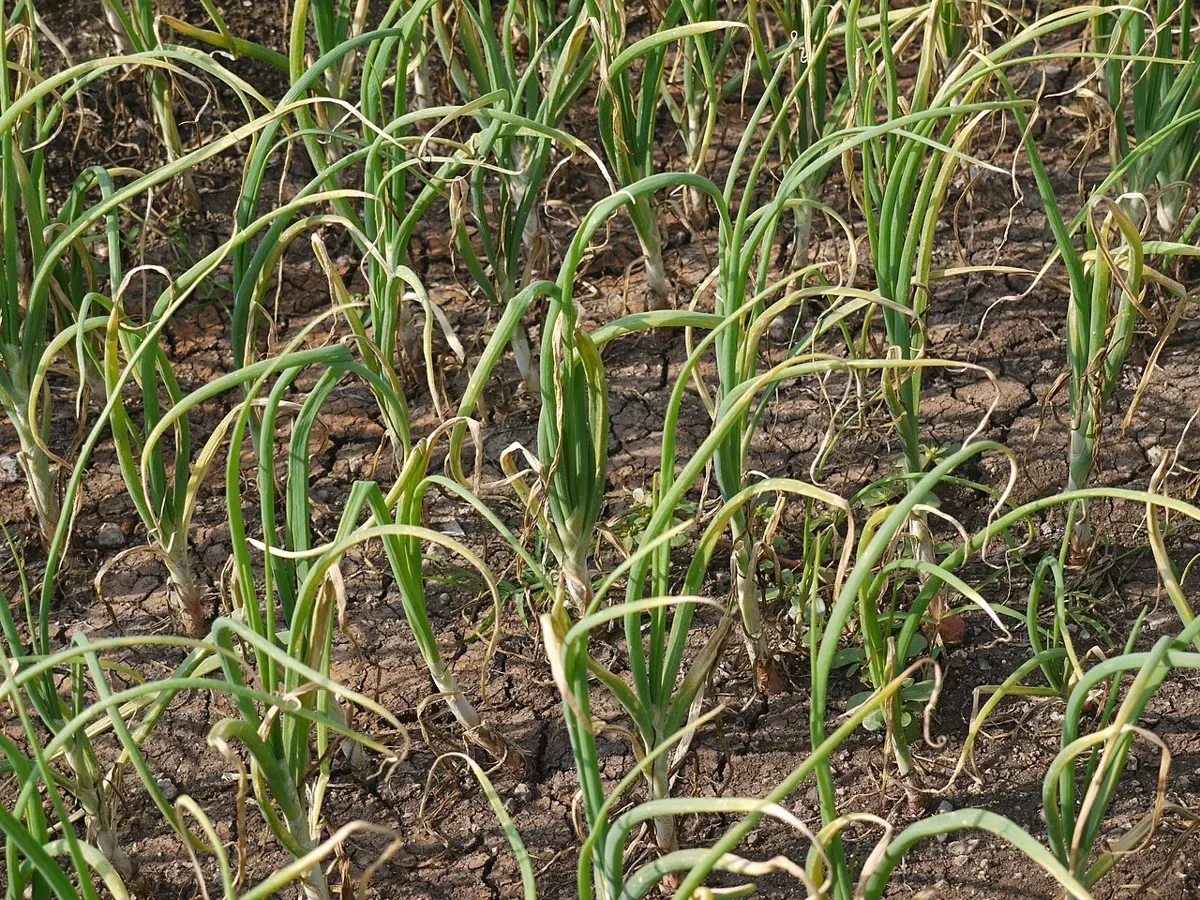
Onion (Allium cepa) is grown for its bulb, while spring onions are the same plant, or the related Welsh onion (Allium fistulosum), picked young for the green leaves and white shank. Bulbs take four to five months; spring onions can be cut in eight to ten weeks from a pot or a short row.
Care instructions
Care Guide & Maintenance Routine
Grow in full sun in loose, well-drained soil that is free of weeds. Raise bulb onions from seed, seedlings or small sets, and choose a variety that matches your latitude. Water evenly until the bulbs swell, then stop. Lift when the tops fall over, and cure in shade before storing. Sow spring onions little and often.
Light & Sunlight
The RHS recommends a warm, sunny site. Bulb onions need full sun to size up. Spring onions accept a few hours of shade but grow thin in deep shade.
Watering Schedule
Onions have short roots and need steady moisture while leaves are growing. PAU advises stopping irrigation at least a fortnight before harvest so bulbs store longer. Waterlogged soil leads to bulb rot.
Potting Mix & Drainage
Fertile, loose, well-drained loam rich in organic matter
Temperature & Humidity
PAU notes onions grow best in a mild climate without extreme heat, cold or heavy rain. Very low temperatures on young plants cause bolting, and a sudden rise in temperature brings early maturity with small bulbs. Young plants tolerate light frost; -5°C is an approximate limit for established seedlings. NC State rates the species for USDA zones 5a to 10b.
About onions and spring onions
Onion (Allium cepa) is a biennial in the amaryllis family, the group that also holds garlic, leeks and chives. Gardeners grow it as an annual. In the first season it makes a bulb of swollen leaf bases; if it is left in the ground, or stressed by cold, it sends up a flower stalk instead.
Spring onions, scallions and green onions are names for onions eaten young. The RHS notes that salad onions are varieties of either Allium cepa or Allium fistulosum, the Welsh or bunching onion. Allium fistulosum forms clumps of hollow leaves with straight white shanks and no real bulb, and it comes back year after year.
Types to choose from
- Bulb onions: red, brown, yellow or white skinned. Pungent types usually store longest; mild, sweet types are best eaten fresh.
- Spring onions: fast varieties sown thickly for leaves and slim shanks.
- Bunching onions: perennial clumps cut repeatedly; Japanese 'Ishikura' is a well-known example listed by the RHS.
- Multiplier and shallot types: clusters of small bulbs grown from bulbs rather than seed.
Day length decides the bulb
An onion plant starts to swell its bulb when the days reach a set length. Short-day varieties begin with about 11 to 12 hours of daylight, intermediate types with a little more, and long-day types need the long summer days of high latitudes. A long-day variety planted far south keeps growing leaves and never bulbs properly. A short-day variety grown far north bulbs early and stays small. Check the seed packet or ask a local supplier which type suits your area. Spring onions are picked before bulbing, so day length matters little for them.
Buying seed and sets
The RHS notes that sets, which are small bulbs grown the year before, are the easiest way to start bulb onions, though they bolt more readily than seedlings. Choose firm sets about the size of a marble; very large sets often flower. Heat-treated sets resist bolting. Onion seed does not keep well, so buy fresh seed each season and store any leftovers cool and dry.
Site and soil
Choose an open, sunny bed with loose, well-drained soil. Onions have shallow roots and thin, upright leaves that cast little shade, so weeds quickly overtake them. Dig in well-rotted compost a few weeks before planting and rake the surface fine. Avoid fresh manure, which gives soft, leafy growth. Move onions to a new bed each year.
Sowing and planting
From seed
Sow thinly about 1 cm deep in a nursery bed or trays. Seedlings are ready to move when they are about the thickness of a pencil, six to eight weeks after sowing.
From sets
Push sets into the soil so just the tip shows, about 10 cm apart in rows 25 to 30 cm apart. Birds sometimes pull them out; replant any that lift.
Spring onions
Sow thinly in short rows or scatter seed across a pot. Sow a little every three to four weeks for a steady supply, as the RHS suggests.
Watering through the crop
Leaf growth
Keep the soil evenly moist while the plants build leaves. Each leaf becomes a ring in the bulb, so this stage sets the final size.
Bulb swelling
Water deeply but less often as the bulbs fatten. Wet soil around a swelling bulb invites rot.
Ripening
Stop watering once the tops begin to yellow and fall over. Dry soil firms the outer skins and helps the bulbs store.
Feeding
Compost dug in before planting covers most needs. A light nitrogen feed four to six weeks after planting supports leaf growth. Do not feed late in the season; it delays ripening and gives thick necks.
Harvesting, curing and storing
NC State advises lifting bulb onions once about two-thirds of the tops have flopped. Ease them out with a fork on a dry day. Spread them in a single layer in shade with good airflow for two to three weeks until the necks are tight and the skins papery. Trim the roots and the leaves, then store in mesh bags, nets or slatted crates in a dry, airy place. Spring onions can be pulled at any size once they are big enough to use.
Troubleshooting
Flower stalks appear
Bolting, often after a cold spell on young plants or from oversized sets. Snap off the stalk and use the bulb soon.
Silvery streaks on leaves
Often thrips, which feed in hot, dry weather. Keep plants watered and check leaf folds with a hand lens before deciding on any treatment.
Bulbs rot in storage
Usually a thick neck, bruising, or bulbs stored before they were fully dry. Cure longer and handle gently.
Small bulbs
Possible causes are crowding, weeds, a shady site, late planting or the wrong day-length type.
Uses
Bulbs are cooked in almost every cuisine and eaten raw in salads and relishes. Spring onion leaves and shanks go into stir-fries, soups, omelettes and garnishes. The leaves of young bulb onions can be thinned out and eaten while the rest of the row grows on.
Safety and pets
ASPCA lists onion as toxic to dogs, cats and horses. Onion compounds damage red blood cells, and raw, cooked and powdered onion are all harmful. Keep onion beds, stored bulbs and kitchen scraps away from pets.
Common mistakes
- Choosing a variety bred for a different day length.
- Letting weeds crowd young plants.
- Watering right up to harvest, which shortens storage life.
- Storing bulbs before the necks are dry.
- Cutting green leaves off bulb onions for the kitchen.
Onions pair well in a bed with carrots and lettuce. For a perennial onion flavour without bulbs, see chives, and for a related bulb crop, garlic.
India and Canada in brief
The two markets use opposite day-length types, so the variety list and the planting month differ completely. Each market section below gives local varieties, dates and storage advice.
Seasonal rhythm
Seasonal Calendar
A month-by-month calendar for Onion and Spring Onion in Global is coming soon. See the light, water and temperature notes above.
Diagnostics
Common Problems & Troubleshooting
Bolting from cold stress or old sets; thick necks that rot in storage; small bulbs from crowding, weeds or the wrong day-length type; silvery streaked leaves from thrips; soft bulbs after late watering.
Pests & seasonal watch: Thrips are the main leaf pest in warm, dry weather. NC State lists bulb mites and bulb rot in wet soil. Onion fly maggots attack roots in cooler regions.
Q&A
Frequently Asked Questions
Are spring onions and onions the same plant?
Often, yes. The RHS notes salad onions are varieties of Allium cepa or Allium fistulosum. Many spring onions are ordinary onions picked young; bunching types such as Welsh onion (A. fistulosum) never form a large bulb.
Should I grow onions from seed or sets?
The RHS says sets are the easiest and fastest route but are more prone to bolting, and heat-treated sets reduce that risk. Seed is cheaper and gives more choice of varieties but takes longer.
Why are my onions flowering?
That is bolting. PAU says very low temperatures at an early stage cause it. Snap off the flower stalk and use those bulbs first, since they will not store well.
When are onions ready to harvest?
NC State advises lifting when about two-thirds of the tops have fallen over. PAU says harvest when the tops dry and fall, after stopping irrigation about two weeks earlier.
How do I cure and store onions?
Dry bulbs in shade with good airflow for two to three weeks, as NC State suggests, then trim the leaves 1 to 2 cm above the bulb. Store in mesh bags or slatted crates in a dry, airy place and check them every couple of weeks.
What does day length have to do with onions?
Onions start forming bulbs when days reach a certain length. Short-day varieties suit tropical and subtropical latitudes; long-day varieties need the long summer days found further north. The wrong type gives small bulbs or none.
Can I regrow spring onions from the roots?
Yes, for a short time. Stand the white base with roots in a pot of mix and it sends up new leaves. The second crop is thinner, so sowing fresh seed gives better plants.
Are onions toxic to pets?
Yes. ASPCA lists onion as toxic to dogs, cats and horses. The compounds damage red blood cells, and cooked or dried onion is also harmful.
How far apart should onions be?
NC State gives about 15 cm for bulb onions in garden rows. PAU uses 15 cm between rows and 7.5 cm between plants in the field. Spring onions can be sown much closer, about 1 to 2 cm apart.
Similar Botanical Matches
Keep exploring
Related plants
Grower field notes
Reader Field Notes in Global
Share how this plant performs in your local Global climate.