
| ☀️ Light | Full sun |
|---|---|
| 💧 Water | Moderate (lightly moist) |
| 🪴 Soil | Rich, moist, well-drained loam with plenty of organic matter |
| 🌡️ Temp | -5°C – 27°C |
| 🐾 Safety | Cats: not verified · Dogs: not verified |
| 📏 Mature size | 45 cm |
Where It Grows & Climate Tolerance
Pet & Companion Animal Toxicity (Mustard Greens (Sarson Saag))
Not yet verified: Toxicity status for cats, dogs, and horses has not yet been confirmed against veterinary poison-control records. Keep out of reach of pets or consult your veterinarian.
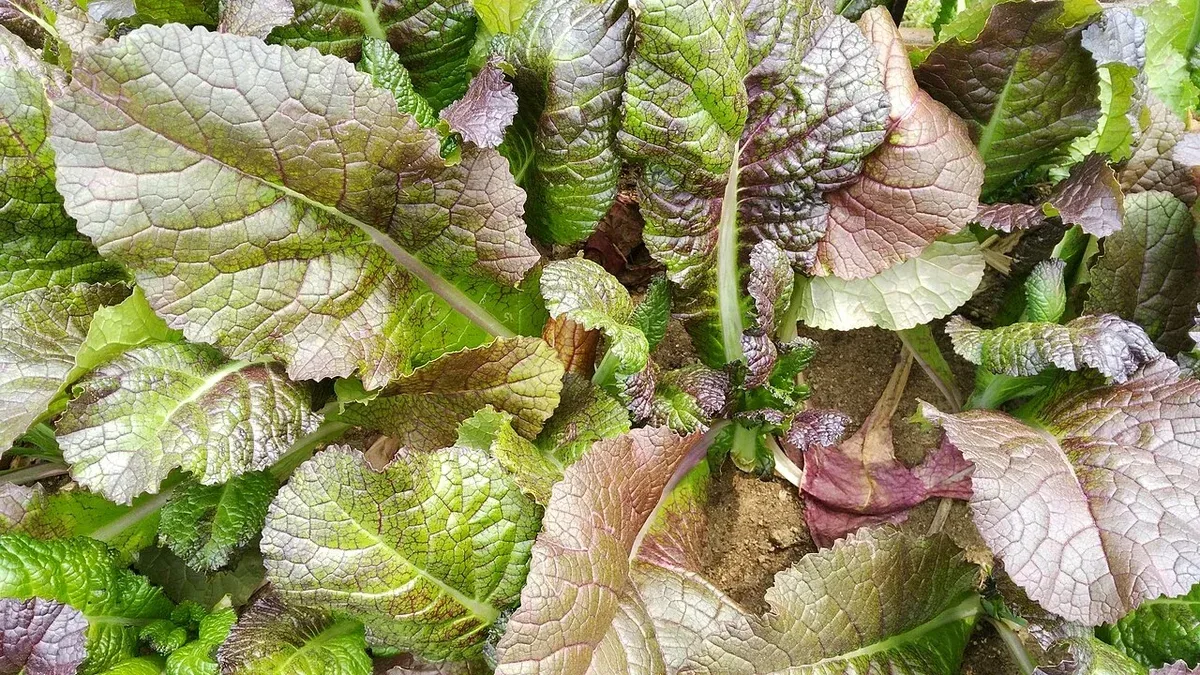
Mustard greens (Brassica juncea) are fast, cool-season leafy greens with a peppery bite, grown for young salad leaves or larger leaves for cooking. Green, red, frilly and broad-leaved types are sown in autumn or early spring and picked within weeks; heat makes them bolt and turn harsh.
Care instructions
Care Guide & Maintenance Routine
Sow in full sun or light shade in rich, moist, well-drained soil during cool weather. Keep the soil evenly moist. Thin seedlings, pick outer leaves from about five weeks, and sow again every two to three weeks. Expect plants to flower and turn bitter once days grow hot.
Light & Sunlight
NC State lists full sun to part shade and notes some shade is welcome as the weather turns hot, especially for baby greens.
Watering Schedule
NC State recommends consistently moist soil and watering early in the day so leaves dry before night, which reduces fungal disease. Moisture stress makes the leaves spicier and unpleasantly strong.
Potting Mix & Drainage
Rich, moist, well-drained loam with plenty of organic matter
Temperature & Humidity
A cool-season crop. NC State notes it bolts and develops a strong flavour in summer heat, and that curly-leaved cultivars tolerate frost better than straight-leaved ones. ICAR reports mustard greens surviving severe frost in the Uttarakhand hills. The -5°C figure is an approximate guide for hardened plants of frost-tolerant types. NC State gives a height of 30 to 45 cm before flowering.
About mustard greens
Mustard greens are the leafy forms of Brassica juncea, the same species grown for brown mustard seed. NC State describes it as a fast-growing annual in the cabbage family, native to Eurasia. Plants form a loose rosette of leaves 30 to 45 cm tall before sending up stalks of small yellow flowers.
The leaves have a hot, peppery mustard flavour that is mild in young leaves and stronger in older ones. Young leaves go into salads; larger leaves are cooked, stir-fried or pickled. The flowers are edible too.
Types and varieties
- Broad-leaved green: large, flat, tender leaves with white or green midribs, used for cooked greens.
- Curly or frilly: crinkled leaves that, according to NC State, tolerate frost better than straight-leaved kinds.
- Red and purple: coloured leaves for salads; colour deepens in cold weather.
- Thick-stemmed types: such as gai choy, grown for chunky stems and leaves for pickling and soups.
- Regional landraces: many local types exist; the Indian section describes some.
Choosing seed
Read the packet before you buy. Seed sold for leaves names a leaf type or variety; seed sold for oil, sprouting or condiment mustard can produce thin, sharp leaves. Fresh seed germinates in a few days, while old seed stored somewhere warm and damp sprouts patchily. Keep spare seed sealed in a cool, dry cupboard.
When to sow
Mustard greens are a cool-season crop. NC State notes they do best in spring and fall and bolt and turn strong-flavoured in summer. Germination is quick in cool, moist soil. For a steady supply, NC State suggests sowing again every two to three weeks rather than one large sowing.
Site and soil
Choose full sun in cool months; NC State notes some shade is welcome as days warm, especially for baby leaves. Soil should be rich, well drained and consistently moist. Dig in compost or well-rotted manure before sowing. Crop rotation matters: avoid sowing where cabbage, cauliflower, radish or turnip grew last season, to reduce pests and soil diseases shared within the family.
Sowing and spacing
Sow thinly about 1 cm deep in rows 30 cm apart. Thin seedlings to 15 to 20 cm apart for full-sized leaves; thinnings are excellent baby greens. For a cut-and-come-again patch, sow more thickly and cut the whole patch at 8 to 10 cm, letting it regrow once or twice.
Growing in containers
A trough, grow bag or pot at least 20 cm deep holds several plants. Use potting mix with compost. Containers dry out quickly, so water often. Pots on a balcony let you shift the crop into shade when the weather turns warm.
Microgreens
Mustard is one of the easiest microgreens. Scatter seed thickly on a tray of moist mix, keep it on a bright windowsill and cut the seedlings with scissors when the first true leaves appear, seven to ten days later. They add a sharp, hot note to sandwiches and eggs.
Planning a steady supply
A short row every two to three weeks gives far more usable leaves than one large sowing that bolts all at once. Mark the date on a label so you know which row to pick first.
Watering
Keep the soil evenly moist. Dry spells cause bolting and harsh flavour. NC State recommends watering early in the day so the leaves dry before nightfall, which lowers the risk of fungal disease. A mulch of straw or dry leaves helps hold moisture.
Feeding
Good soil usually carries one crop. For repeat cutting, top-dress with compost or give a liquid feed every two to three weeks at label rate. Pale, yellowish older leaves on a fast-growing crop often point to hungry soil, but check watering and roots too.
Harvesting
Pick baby leaves three to four weeks after sowing. Larger leaves are ready in five to seven weeks. Take outer leaves a few at a time so the centre keeps producing, or cut the whole plant. Harvest in the morning, when leaves are crisp. Once a flower stalk appears, leaves become tough and bitter; pull the plant or let it flower for bees.
Pests and problems
- Flea beetles: tiny holes peppering seedling leaves. Fine insect mesh over young plants helps.
- Aphids: grey or green colonies under leaves and on flower stalks. Wash off with water.
- Caterpillars: larger ragged holes. Pick off by hand.
- Slugs and snails: damage at night in damp weather.
- Bolting: early flowering in heat, drought or long days.
Holes and spots can come from more than one cause, so look closely at leaves, day and night, before treating anything.
Saving seed
Let a few healthy plants flower and set pods. When pods turn brown and dry, cut the stalks and dry them in a paper bag. Seed from open-pollinated varieties comes true if no other mustard types flower nearby.
In the kitchen
Cook larger leaves slowly with garlic and chilli, or blanch and blend them. Young leaves add bite to salads and sandwiches. Thick stems are pickled in many cuisines.
Pets
ASPCA has no entry for mustard greens. NC State tags Brassica juncea as a problem for horses. Pet safety is not verified, so keep animals from grazing on it.
Other cool-season leaves to grow nearby include spinach, fenugreek, kale and arugula. Radish and turnip are relatives in the same family, so rotate them with mustard.
India and Canada in brief
The crop needs cool weather in both markets, but the cool season falls at different times. In one it is a winter crop; in the other it is sown in spring and again in late summer. The market sections give sowing months and local types.
Seasonal rhythm
Seasonal Calendar
A month-by-month calendar for Mustard Greens (Sarson Saag) in Global is coming soon. See the light, water and temperature notes above.
Diagnostics
Common Problems & Troubleshooting
Bolting and bitter, tough leaves in heat or long days; small holes in seedling leaves from flea beetles; aphid colonies under leaves; slug damage in damp weather; poor germination in cold, wet soil.
Pests & seasonal watch: NC State lists flea beetles, caterpillars, aphids, slugs and snails. Aphids build up quickly in mild, dry weather; flea beetles riddle seedlings with small holes.
Q&A
Frequently Asked Questions
When should I sow mustard greens?
In cool weather. NC State notes it does best in spring and fall and bolts in summer heat. On the Indian plains that means October to February; in Canada, early spring and late summer.
Why are my mustard greens so spicy?
Heat and dry soil. NC State notes temperature and moisture stress make the flavour spicier and unpleasantly strong. Keep the soil moist and harvest young.
Can I grow mustard greens in a pot?
Yes. A pot or trough 20 cm deep is enough. Sow thinly and keep the mix moist.
How do I stop them bolting?
You can only delay it. Sow in cool seasons, keep plants watered, give light shade as weather warms, and sow every two to three weeks so a young crop is always coming.
What are the tiny holes in the seedling leaves?
Often flea beetles, which NC State lists as a common pest. Slugs and caterpillars also make holes. Look under leaves and at night before deciding on a cause.
Are these the same as the mustard grown for seed?
Same species, Brassica juncea, but leaf types are selected for broad, tender leaves. Seed types are grown for oil and condiment mustard.
Do mustard greens survive frost?
Many do. NC State notes curly-leaved types tolerate frost better, and ICAR reports leaf mustard surviving severe frost in the Uttarakhand hills.
How soon can I harvest?
Baby leaves in about three to four weeks. ICAR reports first leaf picking 35 to 40 days after sowing for a purple-leaved selection in Uttarakhand.
Is it safe for pets?
Not verified. There is no ASPCA entry for mustard greens, and NC State tags the plant as a problem for horses. Keep pets from grazing on it.
Similar Botanical Matches
Keep exploring
Related plants
Grower field notes
Reader Field Notes in Global
Share how this plant performs in your local Global climate.