
| ☀️ Light | Bright indirect light |
|---|---|
| 💧 Water | Moderate (lightly moist) |
| 🪴 Soil | Rich, loose, moisture-retentive but well-drained soil or potting mix |
| 🌡️ Temp | 10°C – 35°C |
| 🐾 Safety | Cats: not verified · Dogs: not verified |
| 📏 Mature size | 60 cm |
Where It Grows & Climate Tolerance
Pet & Companion Animal Toxicity (Coleus)
Not yet verified: Toxicity status for cats, dogs, and horses has not yet been confirmed against veterinary poison-control records. Keep out of reach of pets or consult your veterinarian.
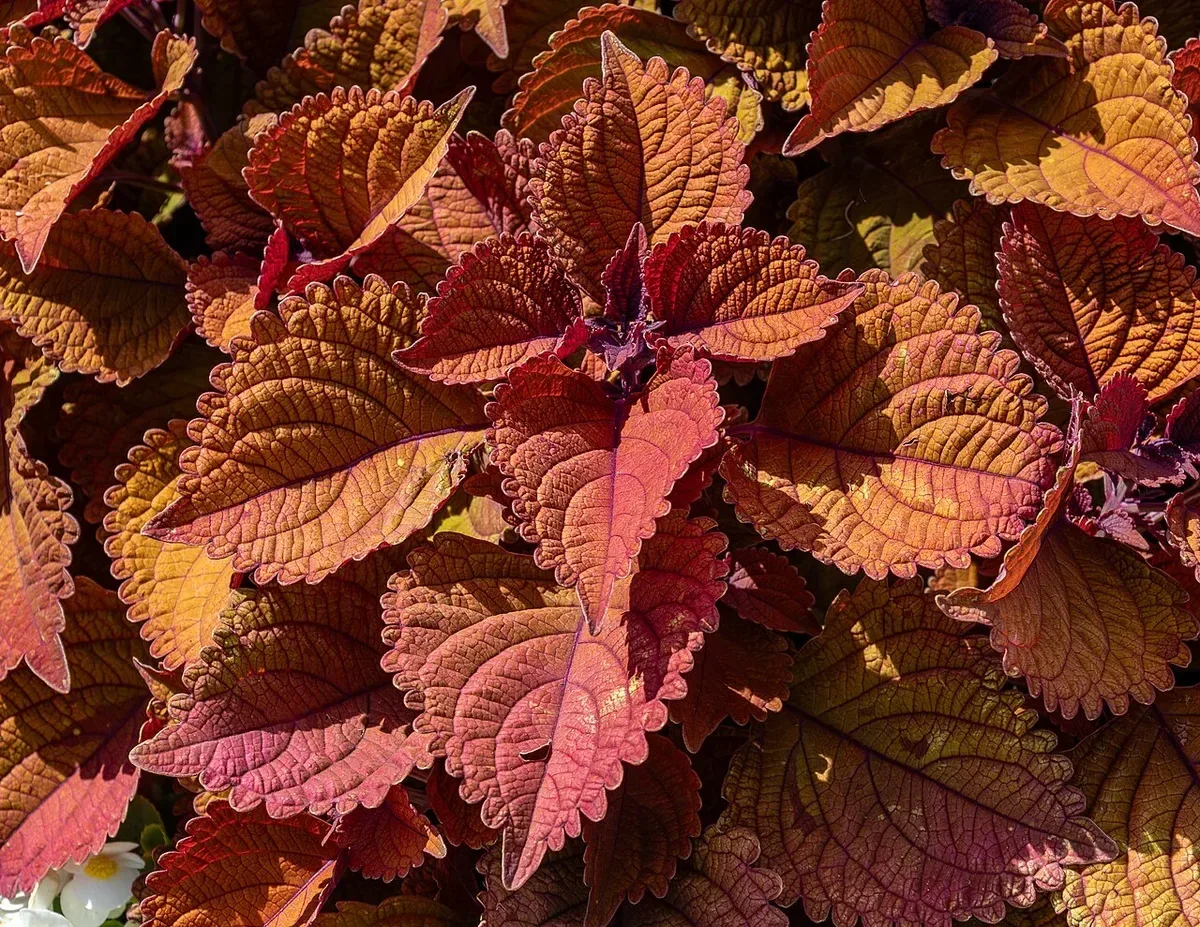
Coleus (Coleus scutellarioides) is a soft-stemmed foliage plant in the mint family, grown for leaves splashed with red, pink, lime, copper, purple and green. It grows fast in warm weather, roots from cuttings in days, and brightens shady corners where few flowers perform.
Care instructions
Care Guide & Maintenance Routine
Grow in bright shade or morning sun in rich, moist, free-draining soil. Keep it evenly moist and warm. Pinch the tips and remove flower spikes to keep it bushy. It does not tolerate frost; in cold climates treat it as a summer annual or keep cuttings indoors.
Light & Sunlight
NC State Extension says coleus grows best in part shade, tolerates full shade, and may wilt in full sun; too much shade gives leggy plants. Newer sun-tolerant cultivars cope with more sun. Indoors it needs bright light.
Watering Schedule
Keep the soil evenly moist but not soggy. Plants in pots and in sun dry out fast and wilt quickly, but usually recover after watering. Reduce watering in cool weather.
Potting Mix & Drainage
Rich, loose, moisture-retentive but well-drained soil or potting mix
Temperature & Humidity
NC State rates coleus for USDA zones 10 and 11 only, and the RHS gives it hardiness rating H1C (grow outside only in summer, minimum about 5 to 10°C). Growth stops and leaves can be damaged in cool weather; 10°C is used here as a practical minimum. In strong heat and sun, plants wilt unless shaded and watered.
About coleus
Coleus (Coleus scutellarioides) is a soft, upright plant in the mint family. NC State Extension gives its native range as tropical and subtropical Asia to northern Australia and describes a mound up to about 90 cm tall and wide. You may also see it sold as Solenostemon or Plectranthus scutellarioides; botanists have moved these into Coleus.
The appeal is the leaves: velvety, toothed or frilled, in shades of red, pink, purple, copper, cream, lime and nearly black. The square stems and paired leaves show its link to mint and basil.
Light
NC State recommends part shade and notes coleus even tolerates full shade, though deep shade makes it leggy, and plants may wilt in full sun. Morning sun with afternoon shade gives strong colour in most gardens. Newer "sun coleus" strains handle more light.
Soil, water and feeding
Plant in moist, rich, loose soil with good drainage. Keep it evenly moist; coleus flops when dry but recovers quickly after a drink. A balanced liquid feed every few weeks keeps pots growing steadily.
Pinching and flowers
Pinch the shoot tips regularly while plants are young to make them branch. Flower spikes of small blue-violet flowers appear from summer onwards. They are not showy, so most gardeners nip them off to keep energy in the leaves.
Cuttings
Coleus is one of the easiest plants to propagate. Cuttings root in water or clean potting mix, often within a week or two in warm weather. Many gardeners keep a few rooted cuttings as a backup, since older plants get woody.
Temperature
NC State rates it for USDA zones 10 and 11 only, and the RHS hardiness rating H1C means it can grow outside only in summer in cool climates. Cool nights stall growth, and frost kills it.
Pests
NC State lists aphids, whiteflies and spider mites, especially on indoor plants. Mealybugs also hide in the leaf joints.
Safety
NC State notes that repeated handling of the leaves can cause mild skin irritation in some people. Pet safety for this species is not confirmed: the ASPCA entry called coleus is a different species, Coleus amboinicus, listed as toxic. Treat it with caution around pets.
Coleus combines well with other shade foliage such as fittonia and polka dot plant.
Buying tips
Labels often say whether a variety is sold for sun or shade. Sun-tolerant types hold their colour better in brighter spots, while older seed-raised types prefer shade. Choose bushy plants with several stems and no flower spikes yet. Turn a few leaves over and check for whiteflies or the fine webbing of spider mites before you buy.
Watering through the year
Warm, growing months
NC State says coleus grows best in moist, rich, loose soil. Keep the soil evenly moist and water pots as soon as the top few centimetres dry. Leaves droop quickly when thirsty but usually recover within an hour of watering.
Rainy spells
Beds drain well enough in most gardens, but pots should not sit in water. Pinch out any soft, blackened stems.
Cool months
Growth slows. Water indoor plants less and let the surface dry between waterings.
Troubleshooting
Wilting in the afternoon
NC State notes plants may wilt in full sun. Move them to part shade or water more often.
Long, floppy stems
Full shade can cause leggy growth, according to NC State. Give more light and pinch the tips.
Faded or dull colours
Too much or too little light. Colours are usually richest in bright shade.
Sticky leaves and tiny white insects
Whiteflies or aphids. Spider mites cause speckled leaves and fine webs. NC State notes all three are more common on indoor plants. Rinse leaves and isolate the plant.
Plant suddenly flowering
Coleus slows leaf growth once it flowers. Pinch off the spikes as soon as they appear.
Using coleus in the garden
NC State suggests coleus for beds, borders, hanging baskets and containers. Mix two or three leaf colours in one large pot, or pair coleus with ferns, begonias and impatiens in a shady corner. A single bold variety looks good in a large glazed pot by a doorway.
Keeping favourite plants
Named varieties do not come true from seed, so keep them going from cuttings. NC State notes cuttings root easily in water or clean potting soil. Pot them up once roots are a few centimetres long.
Common mistakes
- Leaving flower spikes on.
- Letting pots dry out completely in hot weather.
- Planting shade types in all-day sun.
- Planting out before the weather is reliably warm.
India and Canada in brief
In India coleus is an easy plant for shaded beds and pots for much of the year. In Canada it is grown for the warm months only, and favourite varieties are carried on from year to year as rooted pieces kept in the house.
Pinching for shape
Start pinching when young plants have three or four pairs of leaves. Nip out the growing tip just above a leaf pair, and repeat on each new shoot every few weeks. This gives a dense, rounded plant rather than a single tall stem. NC State notes pinching the stem tips makes the plant bushier.
Growing as a houseplant
Coleus can live indoors if it gets plenty of light; NC State notes houseplants need bright light. A sunny window or a grow light keeps colours bright. Water when the top of the mix is dry, pinch often, and replace leggy plants with fresh cuttings.
Seasonal rhythm
Seasonal Calendar
A month-by-month calendar for Coleus in Global is coming soon. See the light, water and temperature notes above.
Diagnostics
Common Problems & Troubleshooting
Wilting in sun or dry soil; leggy growth in deep shade or after flowering; faded colour in too much or too little light; leaf drop and blackening in cold; mealybugs and whiteflies indoors.
Pests & seasonal watch: NC State lists aphids, whiteflies and spider mites, especially on indoor plants. Mealybugs also hide in leaf joints indoors.
Q&A
Frequently Asked Questions
Does coleus need sun or shade?
NC State says part shade is best and plants may wilt in full sun. Sun-tolerant cultivars exist, but most coleus colour best in bright shade or morning sun.
Should I remove coleus flowers?
Yes, for the best leaves. The flowers are small and not showy, and pinching the spikes keeps the plant bushy and leafy.
How do I make coleus bushy?
Pinch out the growing tips every few weeks while the plant is young, as NC State suggests. Cut leggy plants back by half.
Can coleus grow indoors?
Yes, in bright light near a window. Watch for mealybugs, whiteflies and spider mites, which NC State notes are more common on indoor plants.
Why is my coleus wilting?
Usually dry soil or too much hot sun. Water deeply and move it to shade; it normally recovers within hours. Constant wilting in wet soil can mean root problems.
Is coleus safe for pets?
Not verified for this species. The ASPCA entry named coleus refers to Coleus amboinicus, which it lists as toxic. Keep plants away from pets that chew leaves until you have checked with your vet.
How do I keep coleus through winter?
In frost or cool climates, take cuttings in late summer and grow them indoors in bright light, or bring the whole pot in before nights drop to about 10°C.
Is coleus the same as Cuban oregano?
No. Cuban oregano or Indian borage is Coleus amboinicus, a thick, aromatic herb. Ornamental coleus is Coleus scutellarioides.
Can coleus cuttings root in water?
Yes. NC State notes cuttings root easily in water or clean potting soil. Use a non-flowering tip about 10 cm long, remove the lower leaves and pot it up once roots form.
Similar Botanical Matches
Keep exploring
Related plants
Grower field notes
Reader Field Notes in Global
Share how this plant performs in your local Global climate.