
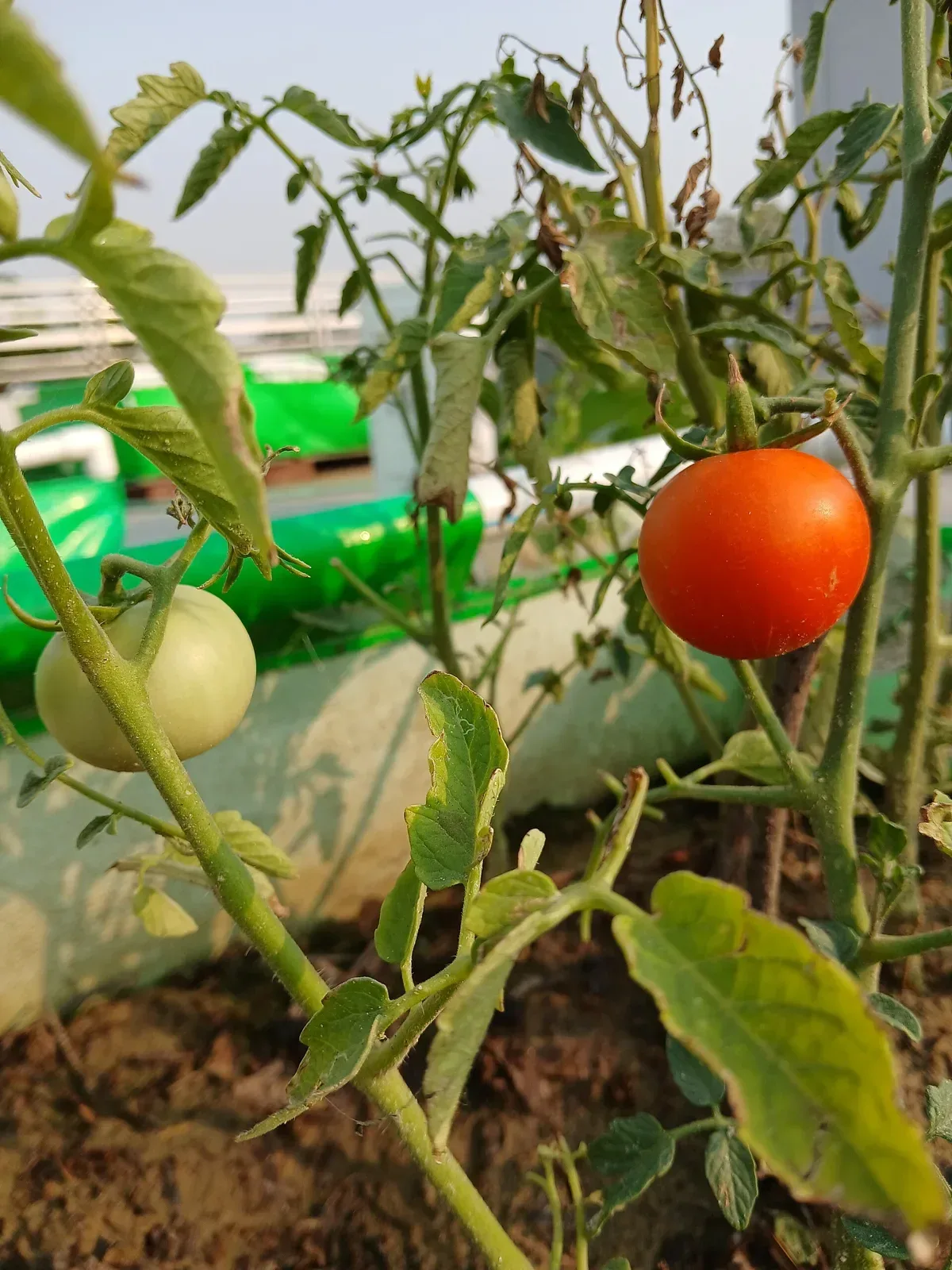
A tomato plant (tamatar) in a pot is one of the most rewarding things you can grow on a terrace or sunny balcony. It is also one of the most demanding. Tomatoes want strong sun, steady water, a stake to lean on and the right season. Get the season wrong, and the plant either refuses to set fruit or gets eaten by pests. Get it right, and a single healthy plant can keep a small family in salad tomatoes for weeks.
This guide covers tomato plant care in pots and grow bags from start to finish: when to plant in your part of India, which pot and soil to use, watering, feeding, staking, pruning, the problems you are likely to meet, and when to pick. If your plant is already flowering but not fruiting, our guide on tomato flowers but no fruit goes deeper into that problem. For other crops for the cooler months, see winter vegetables to grow in pots.
Tomato care at a glance
- Sun: at least 6 hours of direct sun a day, more in winter.
- Pot: about 15 to 20 litres for a compact plant, 25 litres or more for a tall one.
- Soil: loose, well-drained mix with plenty of compost.
- Water: deep and even. Do not let the pot swing between bone dry and soggy.
- Support: a stake or cage from the day you plant.
- Season: mild weather. Fruit sets best when nights are cool but not cold.
When to grow tomatoes in pots in India
Tomatoes are a warm-season crop, but they dislike extremes. Punjab Agricultural University notes that the critical factor in fruit set is the night temperature, with 15 to 20°C as the best range, and that frost damages the plant. The red colour also develops properly only between about 15 and 30°C. This is why timing changes so much across the country. The dates below come from state agricultural university and KVK recommendations, but local weather and the variety you grow can shift them by a few weeks.
North India plains
In Punjab, Haryana, Delhi and western Uttar Pradesh, the main home-garden crop is raised through winter. PAU recommends sowing the nursery in October to November and transplanting in November to December, with the plants covered on frosty nights. A spring crop can be sown in late December and transplanted around mid-February once frost has passed. A rainy-season crop is possible with a July nursery and August transplanting, but leaf curl virus is common then, so PAU suggests virus-tolerant varieties for it. Fruit set drops sharply in the May and June heat.
South India
In Tamil Nadu, TNAU's recommended sowing seasons are May to June and December to January. In Karnataka, nursery sowing for ICAR-IIHR varieties such as Arka Rakshak is usually done in May to June or November to December. Places with mild weather, like Bengaluru, can grow tomatoes for much of the year in pots, while hot interior areas of Telangana, Andhra Pradesh and north Karnataka struggle in April and May.
Coastal regions
In Mumbai, Goa, coastal Karnataka, Kerala, Chennai and Odisha, heavy rain and humidity bring fungal leaf spots and split fruit. The drier months after the monsoon, from about October into February, are usually the easiest for pots. If you grow through the rains, keep plants under a roof edge where they still get sun but stay out of the downpour.
Hills
In the hills, tomatoes are a summer and rainy-season crop. The KVK Kishtwar package of practices from SKUAST-Jammu gives nursery sowing in February to March and transplanting in March to April for the mid hills, and nursery in March to April with transplanting in April to May for the high hills. Wait until the risk of frost has passed.
Choosing a tomato variety for pots
Tomato plants come in two growth types, and this matters more for pots than the brand on the packet.
- Determinate (bush) types grow to a fixed height, around 60 cm to 1 metre, set most of their fruit over a few weeks and then slow down. They suit smaller pots and balconies.
- Indeterminate (vine) types keep growing and fruiting until the season ends. They give a longer harvest but need a tall stake, a bigger pot and regular pruning.
Cherry tomatoes are usually indeterminate and are the most forgiving choice for beginners, because small fruits set more easily in less than perfect weather. Among public-sector varieties, Pusa Ruby from IARI is an old favourite. IIHR's Arka Rakshak hybrid is bred for resistance to leaf curl virus, bacterial wilt and early blight, and TNAU lists PKM 1 and CO 3 among popular varieties for Tamil Nadu. PAU has released cherry types such as Punjab Red Cherry and rainy-season varieties like the Punjab Varkha Bahar series. Buy seed from a reliable source and read the packet for growth type and season.
Pot size and soil mix
Pot or grow bag
A compact determinate tomato can manage in a 15 to 20 litre pot or a grow bag of a similar size. A tall indeterminate plant does much better in 25 to 40 litres. Small pots dry out within hours in summer and lead to stunted plants and split fruit. Plastic, clay and fabric grow bags all work. Our comparison of grow bags vs pots covers the pros and cons. Whatever you use, make sure it has several drainage holes.
Potting mix
Tomatoes want a loose mix that holds moisture but never stays waterlogged. A simple home mix is roughly equal parts garden soil, well-rotted compost or vermicompost, and cocopeat or coarse sand. If your garden soil is heavy clay, use less of it and more compost and cocopeat. Avoid using soil from a bed where tomatoes, brinjal or chilli grew last season, because they share many soil diseases.
Seeds or nursery seedlings
Seedlings from a nursery save time. Choose short, sturdy plants with dark green leaves and no yellowing or spots. If you grow from seed, sow in a seedling tray or small pot about half a centimetre deep, keep the mix just moist, and place it in bright light once the seeds sprout. Seedlings are usually ready to move about 25 to 30 days after sowing in warm weather, as TNAU recommends, and may take 4 to 6 weeks in cooler hill weather.
How to transplant
- Water the seedlings an hour before moving them.
- Fix the stake in the pot first, so you do not stab the roots later.
- Plant a little deeper than the seedling sat in the tray. Tomato stems grow roots along the buried part, which gives a stronger plant. Remove any leaves that would end up under the soil.
- Firm the mix gently and water well.
- Keep the pot in light shade for two or three days, then move it into full sun.
Sunlight and placement
Tomatoes need at least 6 hours of direct sun. A plant in a dim balcony gets tall, pale and floppy, and drops its flowers. The best spot is usually the sunniest edge of a terrace or a south or west facing balcony in winter. In the plains, the problem in April and May is too much sun and heat. Move pots out of the harshest afternoon sun or put up a shade net, as explained in our guide on protecting plants from heat. Keep pots a little apart so air can move between them, which reduces leaf diseases.
Watering tomatoes in pots
Uneven watering causes more tomato trouble than almost anything else. A pot that dries out completely and is then flooded leads to dropped flowers, cracked fruit and blossom end rot.
- Check the mix with your finger every day. Water when the top 2 to 3 cm feels dry.
- Water slowly until a little runs out of the bottom, then stop.
- Water at the base. Wet leaves, especially in the evening, invite leaf spots.
- Morning is the best time. In very hot weather, a large plant in a small pot may need a second check in the late afternoon.
- Mulch the surface with dry leaves, straw or coco chips to slow drying.
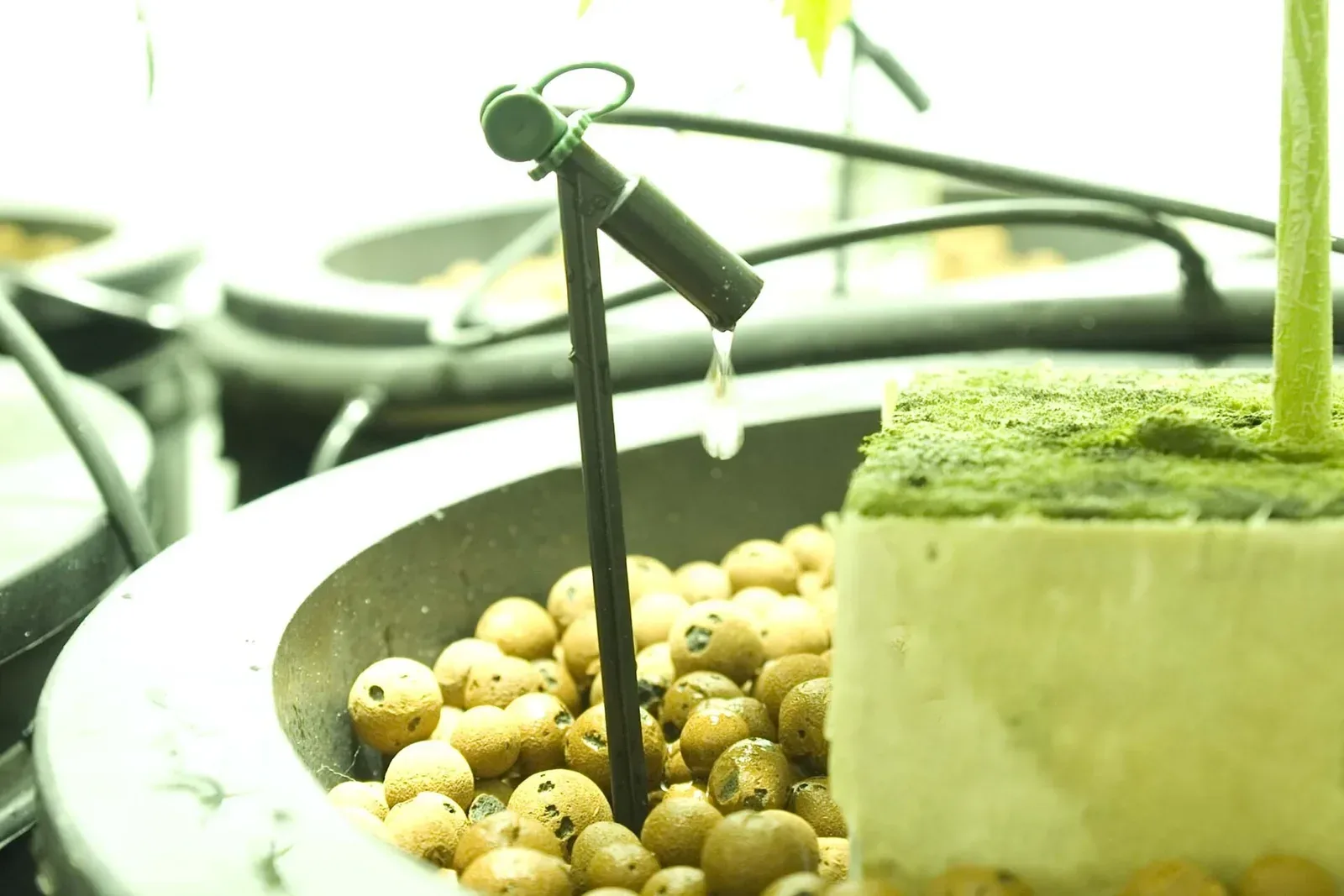
In winter in the north, a pot may need water only every two or three days. In summer it may need it daily. If you have many pots, a simple drip system keeps the moisture steady.
Feeding tomato plants
Tomatoes are hungry, but the type of food matters. Too much nitrogen gives a large, leafy plant with few fruits. Mix plenty of compost or vermicompost into the pot at planting. Once the plant starts to grow strongly, add a thin layer of compost on the surface every few weeks and water it in. When flowering starts, many gardeners switch to a feed with more potassium. If you use a packaged fertiliser, follow the dose on the label, because pot plants burn easily.
Home feeds like banana peel or kitchen waste release nutrients slowly and are not complete foods on their own. Our banana peel fertilizer guide explains what it can and cannot do. Never bury fresh kitchen scraps in a tomato pot, as they rot and attract pests.
Staking and support
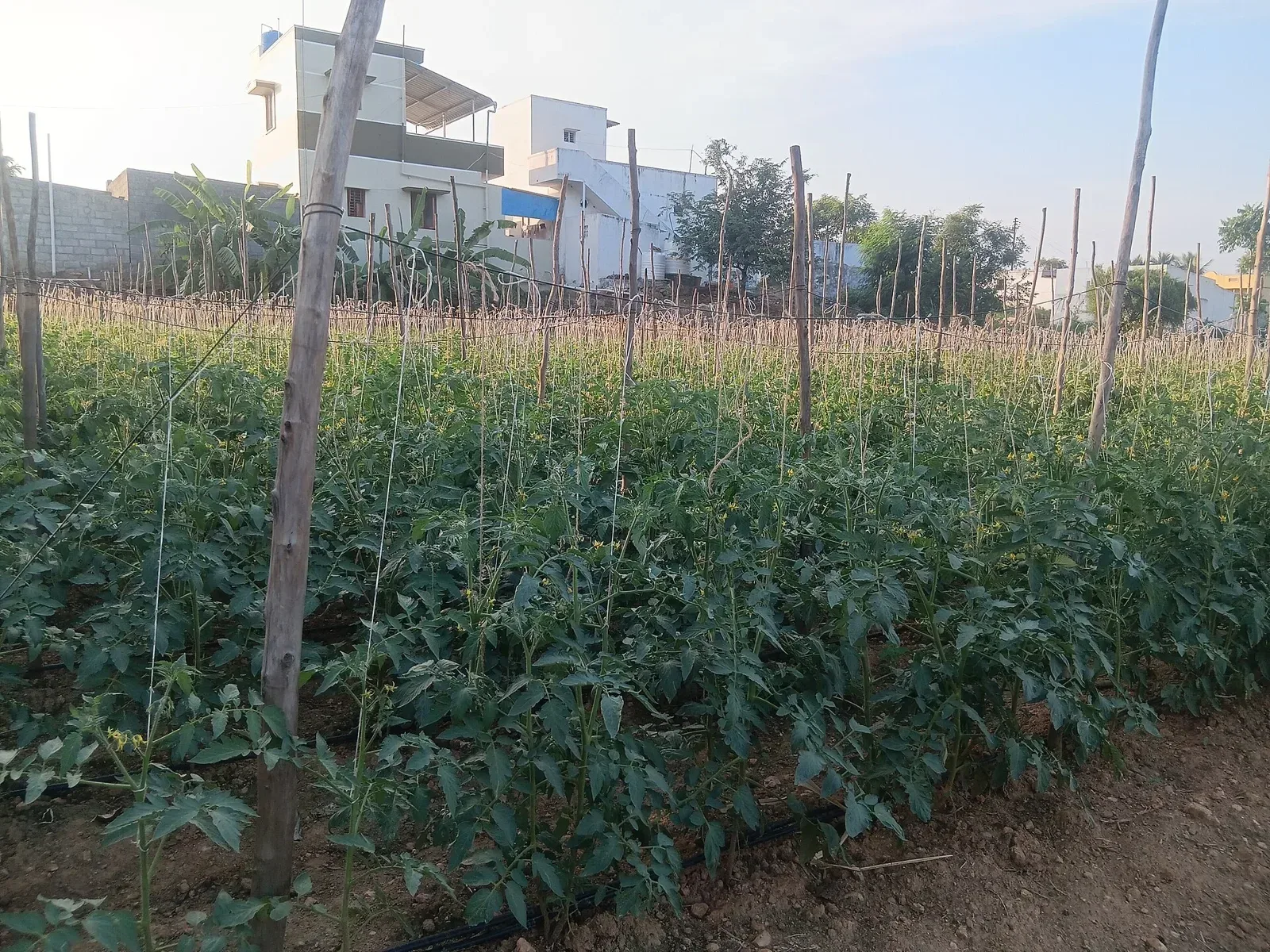
Even a bush tomato flops over once it carries fruit. Give each plant a strong bamboo stake about 1.2 to 1.8 metres tall for indeterminate types, or a shorter stake or wire cage for bush types. Tie the main stem to the stake every 20 to 30 cm with soft string or cloth strips, in a loose figure-of-eight so the stem is not strangled as it thickens. On a terrace, a string tied from an overhead wire down to the base of the plant is a neat way to train tall vines.
Pruning a tomato plant
Pruning keeps a potted tomato manageable and lets air move through the leaves.
- Suckers are the small shoots that grow in the angle between a leaf and the main stem. On indeterminate types, pinch most of them out while they are small, leaving one or two strong stems per plant.
- Bush types need little pruning. Removing too many shoots reduces the crop.
- Remove lower leaves that touch the soil, and any yellow or spotted leaves, to reduce the spread of leaf diseases.
- Late in the season, pinch off the growing tip of tall vines so the plant puts its energy into ripening the fruit already set.
Flowers and fruit set
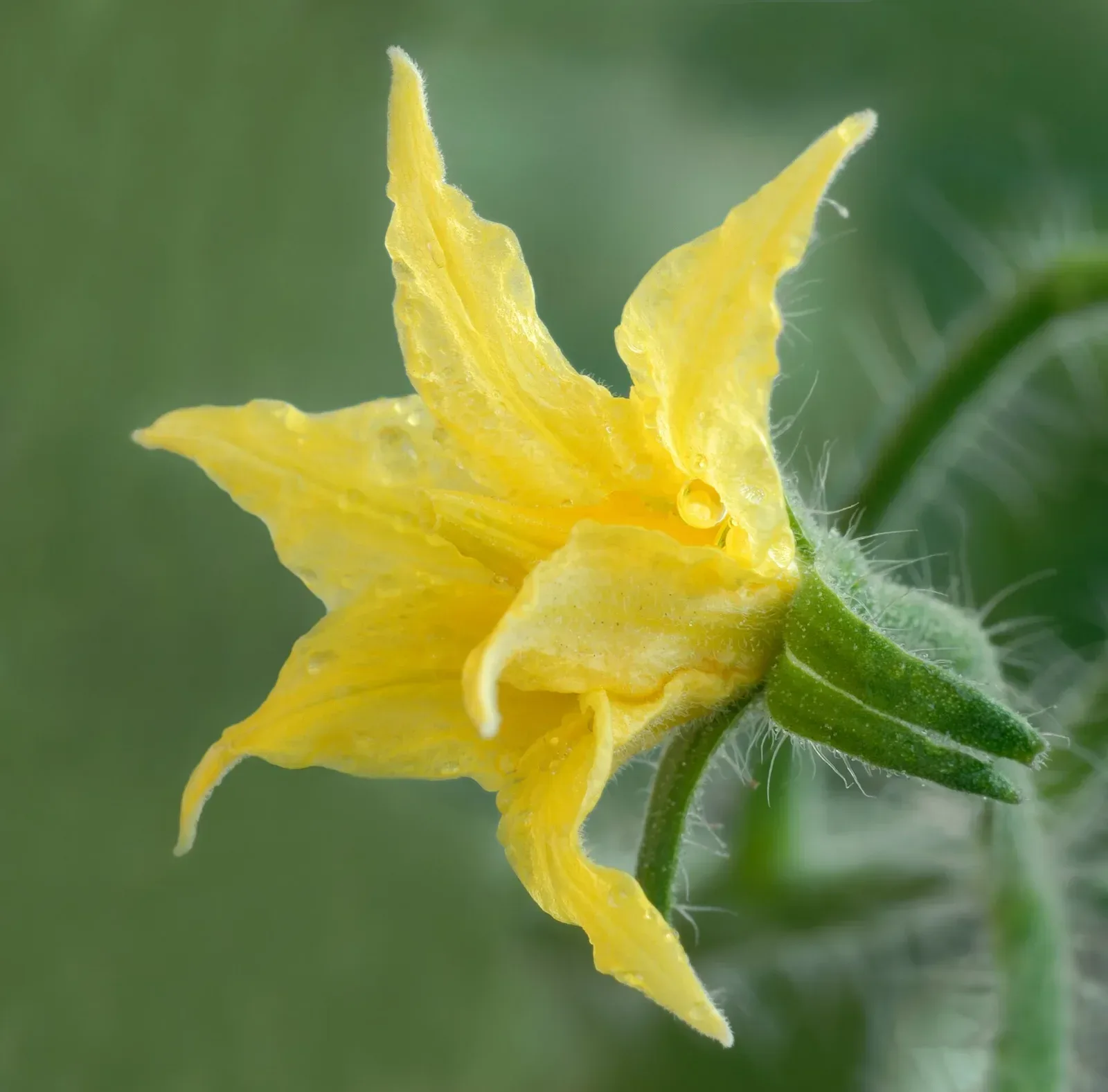
Tomato flowers usually pollinate themselves, helped by wind and the buzz of visiting bees. On a still balcony, gently tapping the flower clusters or the stake around mid-morning helps the pollen fall. If the plant flowers well but the flowers drop, the cause is most often temperature: hot nights in summer or cold nights in a North Indian winter. Our guide on tomato flowers but no fruit covers the causes and fixes in detail.
Common tomato problems and what to check
Many tomato problems look alike, and the same symptom can have more than one cause. Use the notes below to narrow it down, and for anything spreading fast, show a photo or sample to your nearest Krishi Vigyan Kendra or state horticulture department before treating.
Curled, puckered, yellowish leaves
New leaves that curl upwards, stay small and turn pale, with a stunted plant, can point to tomato leaf curl virus, which is spread by whitefly. Turn the leaves over and look for tiny white insects that fly up when disturbed. There is no cure for a virus. Pull out badly affected plants early so they do not act as a source for others, hang yellow sticky traps to monitor whitefly, and choose a resistant variety next time. Leaf curl can also come from heat, wind or herbicide drift, so check the whole picture. See our pages on whitefly and curling leaves.
Brown spots on lower leaves
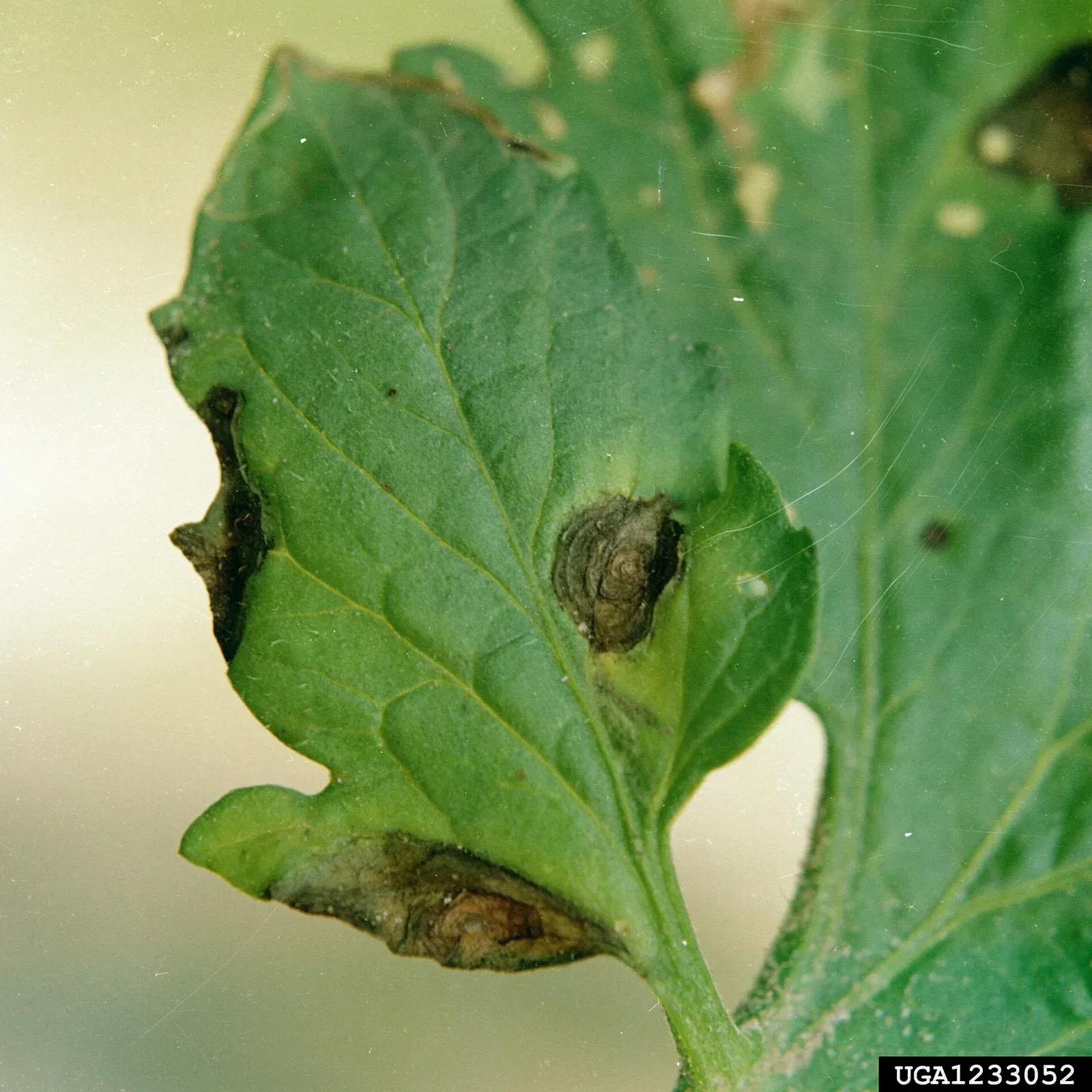
Brown spots with ring-like zones and a yellow edge, starting on older leaves, are often linked with early blight, a fungal disease. Large, greasy, dark patches that spread fast in cool, wet weather can point to late blight, which is more common in the hills and in North Indian winters. Other leaf spots and nutrient problems can look similar. Remove affected leaves, stop wetting the foliage, improve air flow, and seek advice before spraying. Our leaf spot page has more checks.
Plant wilts even though the soil is wet
Sudden wilting in a well-watered plant can be a root or stem disease such as bacterial or fungal wilt, or simply roots damaged by waterlogging. Check that the pot drains freely. If the plant does not recover by evening and the problem spreads, remove it and do not reuse that soil for tomatoes, brinjal or chilli.
Black, sunken patch at the bottom of the fruit
This is blossom end rot. It is linked to the fruit not getting enough calcium, which usually happens because of uneven watering rather than a shortage in the soil. Keep moisture steady and mulch. New fruits often come out fine once watering evens out.
Cracked fruit
Cracks appear when a dry plant suddenly gets a lot of water, from heavy rain or a big watering after a dry spell. Even watering and picking ripe fruit promptly before heavy rain both help.
Holes in fruit
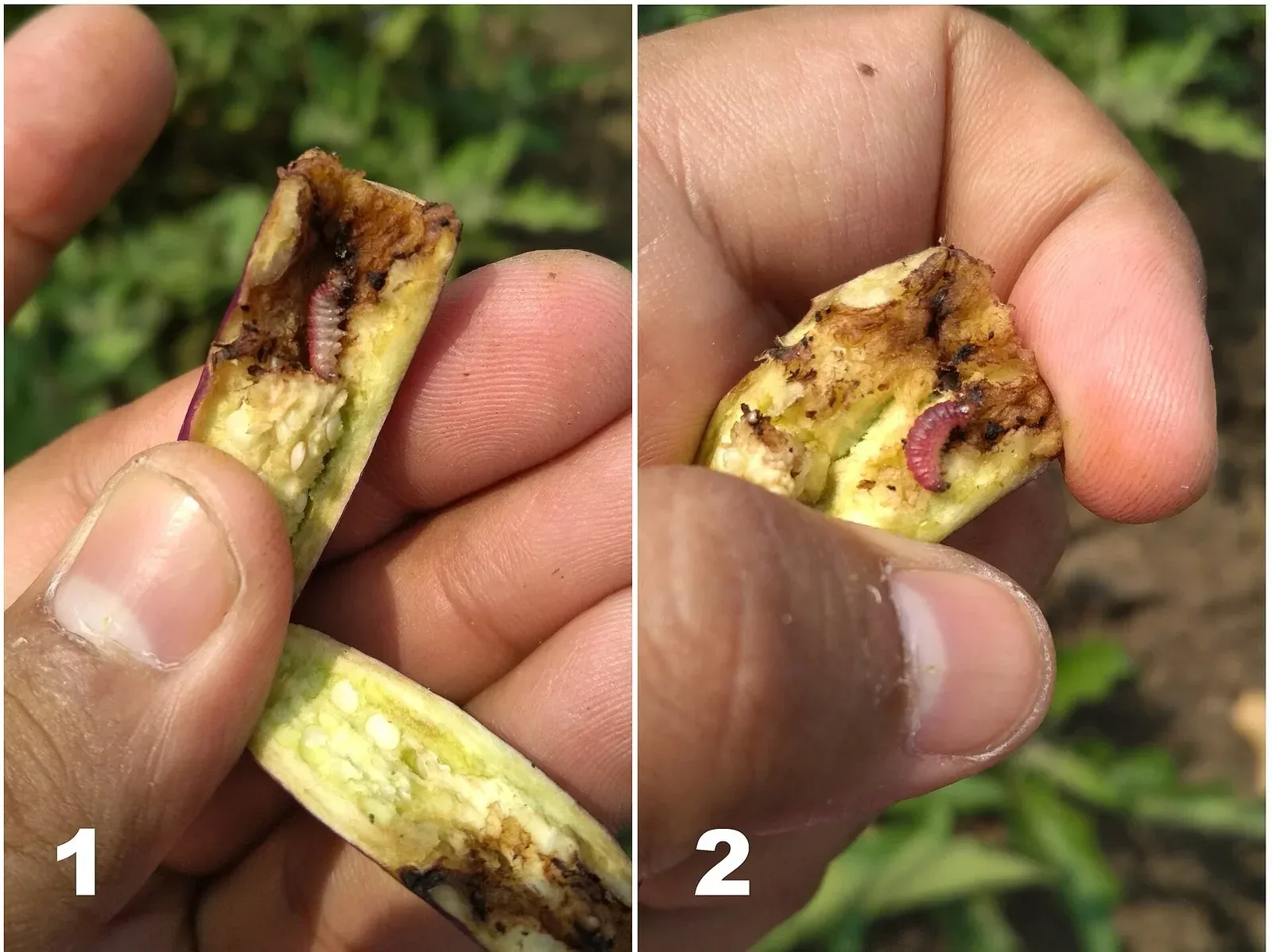
Round holes with droppings near the stalk are usually the work of the fruit borer caterpillar. In a few pots, the best control is to check plants every couple of days and pick off caterpillars and damaged fruit. ICAR-IIHR's pest management advice for tomato fields uses tall African marigold as a trap crop, because the moths prefer to lay eggs on its flowers. A few marigold plants near your tomatoes are worth trying, as long as you check and remove the caterpillars that collect on them.
Harvesting tomatoes
The first fruits usually ripen anywhere from about two months after transplanting in warm weather to three or four months for a winter crop in the north, depending on the variety and season. You do not have to wait for full red on the plant. Pick when the fruit first shows a blush of colour and let it ripen indoors at room temperature, out of direct sun. This saves fruit from birds, monkeys and cracking in rain. In the summer heat, fruits may stay orange or yellowish because the red colour forms poorly in very hot weather, so picking early and ripening indoors helps there too.
Good neighbours and crop rotation
Quick crops like coriander can be sown around the base of a large tomato pot while the plant is young, and a pot of marigold nearby brings colour and helps with fruit borer monitoring. At the end of the season, empty the mix, remove old roots and refresh it with compost before planting again. Do not plant tomato, brinjal or chilli in the same mix season after season.
Watch: tomato growing and care tips
This Hindi video from a home gardening channel walks through planting, pruning, feeding, watering and tying up tomato plants in a home garden. Use it alongside the season and regional advice above, since the best timing depends on where you live.
Comments
No comments yet — share what worked in your climate.