
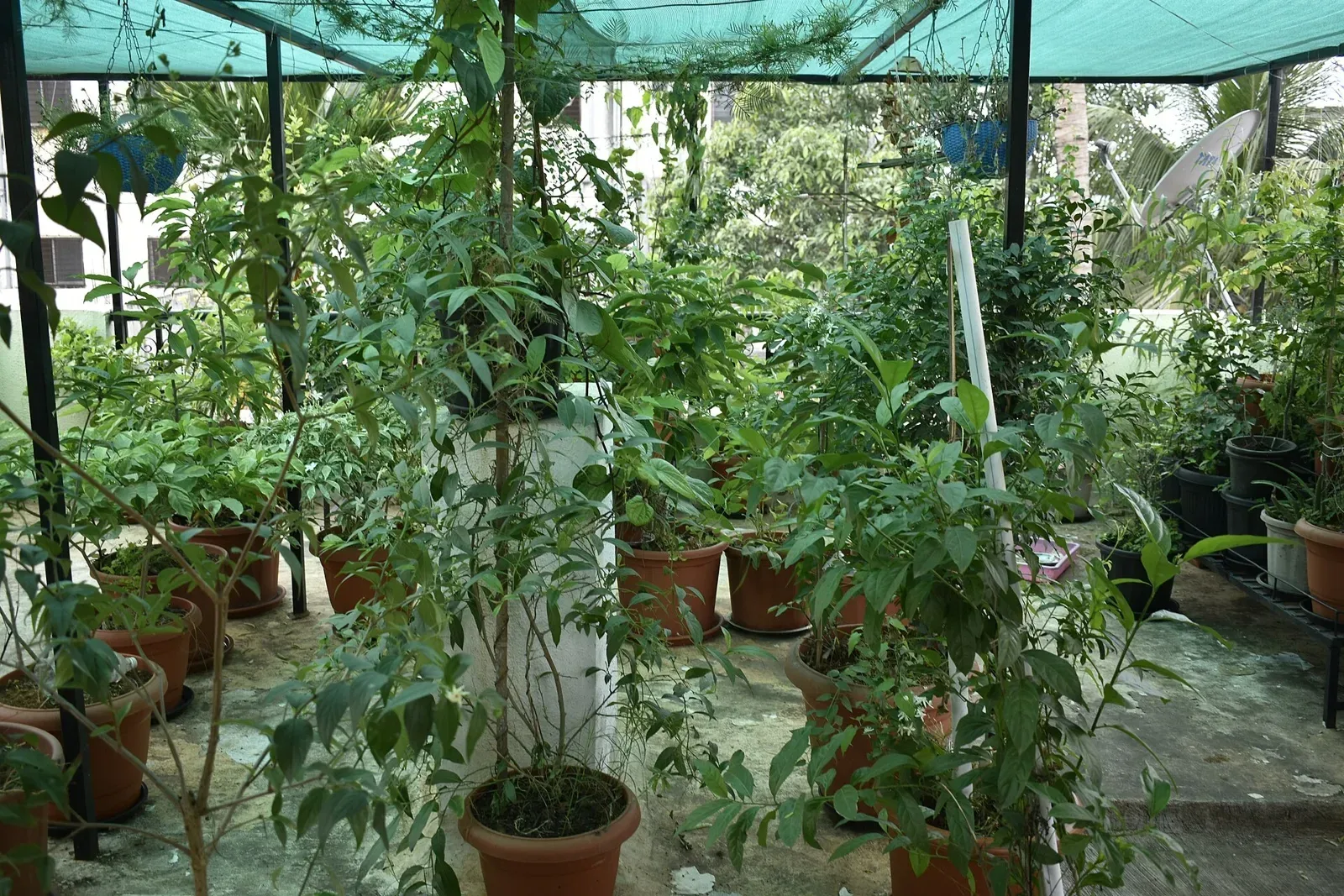
The time to prepare a terrace garden for summer is before it gets hot, not on the first afternoon your plants collapse. A shade net has to be bought and fixed, mulch has to be collected, and tender plants are easier to move in February than in May. This guide is written now, in the cool months, so you have a plan ready for March to June.
It is part of our balcony and terrace gardening in India series. Below you will find what heat does to potted plants, how the risk differs between North India, the south, the coast and the hills, and the practical steps that make the biggest difference: shade, mulch, watering, pot choice and placement.
Why terrace and balcony plants suffer more
A plant in the ground has a large, cool mass of soil around its roots. A plant in a pot has a few litres of mix surrounded by plastic, clay or fabric that sits in the sun. On a terrace, the concrete floor soaks up heat all day and gives it back in the evening, so the pots stay warm long after sunset. Parapet walls reflect light and heat onto plants placed against them. Wind on an open roof pulls water out of leaves and dries the mix fast.
West-facing balconies have their own problem. They are shaded all morning and then take the full afternoon sun at the hottest time of day. Plants that look fine there in winter can burn badly in April.
How heat damage looks
- Leaves droop at midday and lift again by evening. This is the plant saving water and is not yet serious, as long as it recovers.
- Leaves stay limp in the evening and the next morning. The plant is short of water or its roots are damaged.
- Pale, papery or brown patches on the leaves that face the sun, and crisp brown edges. This is sun scorch.
- Flowers and small fruits drop without opening or setting. Many vegetables, including tomato, brinjal and bhindi, set fruit poorly in very hot spells.
- Leafy greens like palak, methi and dhania bolt, sending up flower stalks and turning bitter.
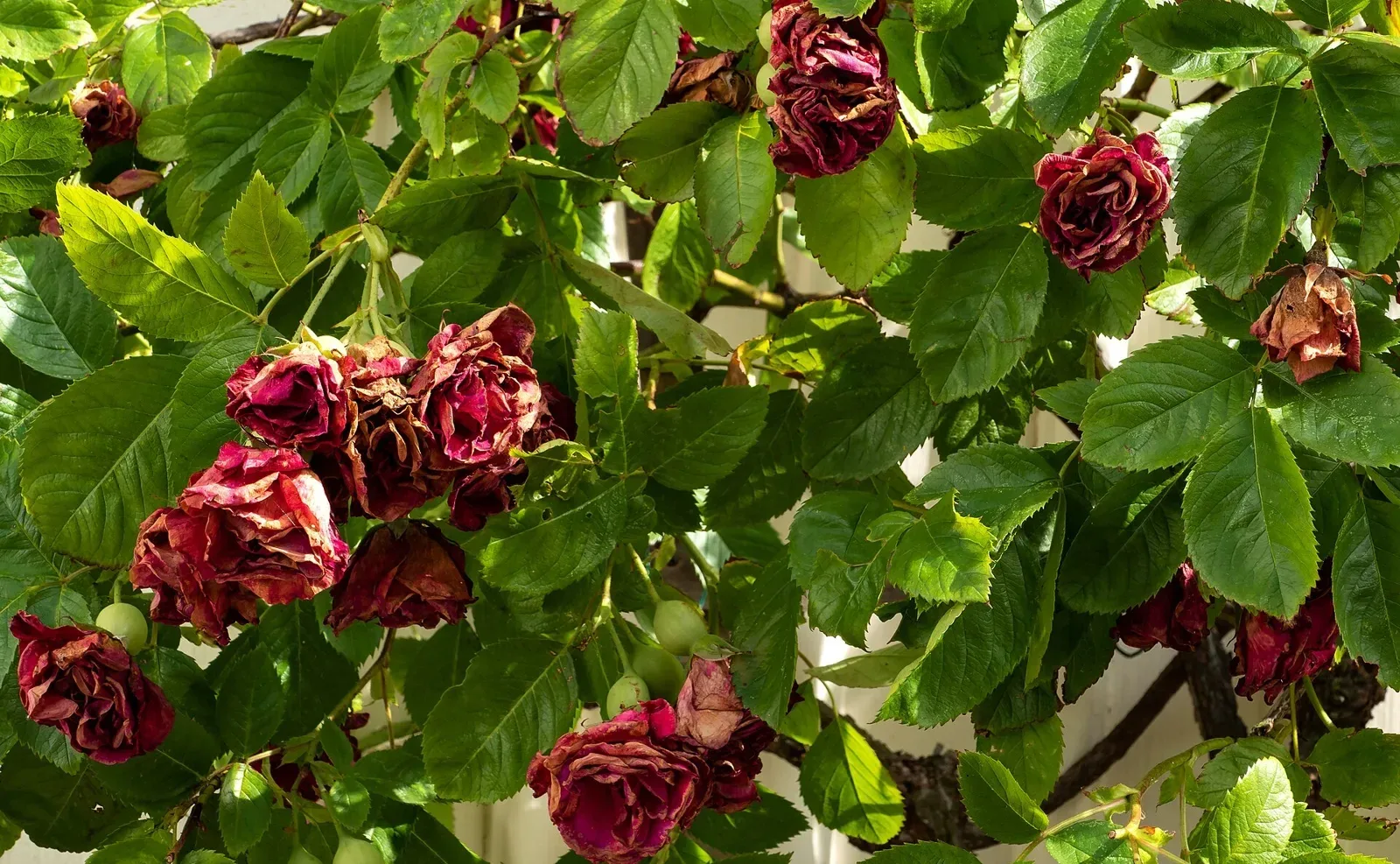
- Flowers dry on the plant, as in the photo below.
Wilting is not always heat. A pot that has been watered too often can also wilt because the roots are rotting. Before you add more water, push a finger into the mix. If it is wet a few centimetres down, do not water. Look for a sour smell and dark, soft roots instead.
What summer looks like in your region
Dates move every year, so treat these as a guide and follow the IMD forecast and heat alerts for your district.
North India: dry heat and loo
In Delhi, Punjab, Haryana, Rajasthan, Uttar Pradesh and Madhya Pradesh, heat builds from April, and May and June bring loo, the hot, dry wind that blows across the plains in the afternoons. Low humidity and wind together dry pots and leaves very fast. Shade, mulch and a windbreak on the windward side all matter here. Terrace gardens in this belt usually need the most protection of any region.
South India: early heat inland
Interior Karnataka, Telangana, Andhra Pradesh and inland Tamil Nadu warm up from March, and April and May are the hardest months. Bengaluru stays milder than Hyderabad or Vijayawada, but an open terrace there still gets strong sun. Pre-monsoon thunderstorms can bring relief in May, though they are not reliable enough to plan around.
Coastal cities: humid heat
In Mumbai, Goa, Mangaluru, Kochi, Chennai, Visakhapatnam and Kolkata, the temperature may not reach the extremes of Delhi, but humidity stays high. Pots dry a little slower, yet plants still stress in the strong sun, and damp leaves left wet overnight invite fungal spots. Sea-facing balconies also get salt-laden wind, which can burn leaf edges. On the coast, shade and good air movement matter more than constant watering.
Hills
In Himachal, Uttarakhand, Jammu and Kashmir, Sikkim and the hill districts of the northeast and the south, summer is the main growing season, not a time to survive. The sun is strong at altitude, so tender seedlings and indoor plants moved outdoors can still scorch, and May and early June can be dry before the rains. Most hill gardens need light shade only for young or tender plants, plus mulch and regular checks.
Shade nets: which percentage to buy
A shade net is the single most useful summer purchase for an open terrace. Nets are sold by the share of light they block, written as 35%, 50%, 75% and so on. ICAR's Central Institute for Arid Horticulture notes that nets range from about 25 to 75% and are used to cut radiation and prevent scorching and wilting in the hot months.
Here is what Indian research and extension sources say for different plants:
- 35% for fruiting vegetables. TNAU recommends a 35% shade net for growing hybrid tomato in summer, and a Punjab study found tomato under 35% nets grew sturdier than under 50% or 75%, where plants became tall and soft.
- 50% during heat waves. ICAR's 2022 heat wave bulletin advises a 50% shade net over cucurbits such as sponge gourd and cucumber, and over radish, to reduce the intensity of sunlight.
- 50% for nurseries and seedlings. TNAU uses 50% shade net over vegetable nurseries.
- 75% for shade lovers. TNAU recommends a 75% shade net house for anthurium. Ferns, peace lily and other indoor plants kept outside in summer need this kind of deep shade.
For a mixed terrace with vegetables and flowering plants, 50% is a sensible middle choice. If you mostly grow fruiting vegetables, lean towards 35%. Too much shade gives weak, leggy growth and fewer flowers.
Colour and fixing
Green and black nets are the common choices in India. The ICAR arid horticulture bulletin says black nets reduce temperature most, because they absorb the most heat. Green is easier on the eye on a home terrace. Either works if the percentage suits your plants.
Fix the net on a frame well above the plants, not resting on them, and leave a gap for air to move. ICAR's heat wave advice places the net 1.5 to 2 metres above gourds and 1 to 1.5 metres above radish. On a terrace, a frame of GI pipe or bamboo tied to weighted bases works well. Do not drill into a waterproofed floor, and keep the net tight so it does not flap in pre-monsoon storms. If you only want shade on one side, a net hung on the west side cuts the harshest afternoon sun.
Take it down when summer ends
A net that helps in May can hold plants back from July onwards, when cloud cover already cuts light. Birsa Agricultural University in Ranchi designed a temporary shade net structure for exactly this reason, using it only for the hot months of March to May. Roll back or remove your net once the monsoon settles, and store it dry.
Mulch: cover the soil
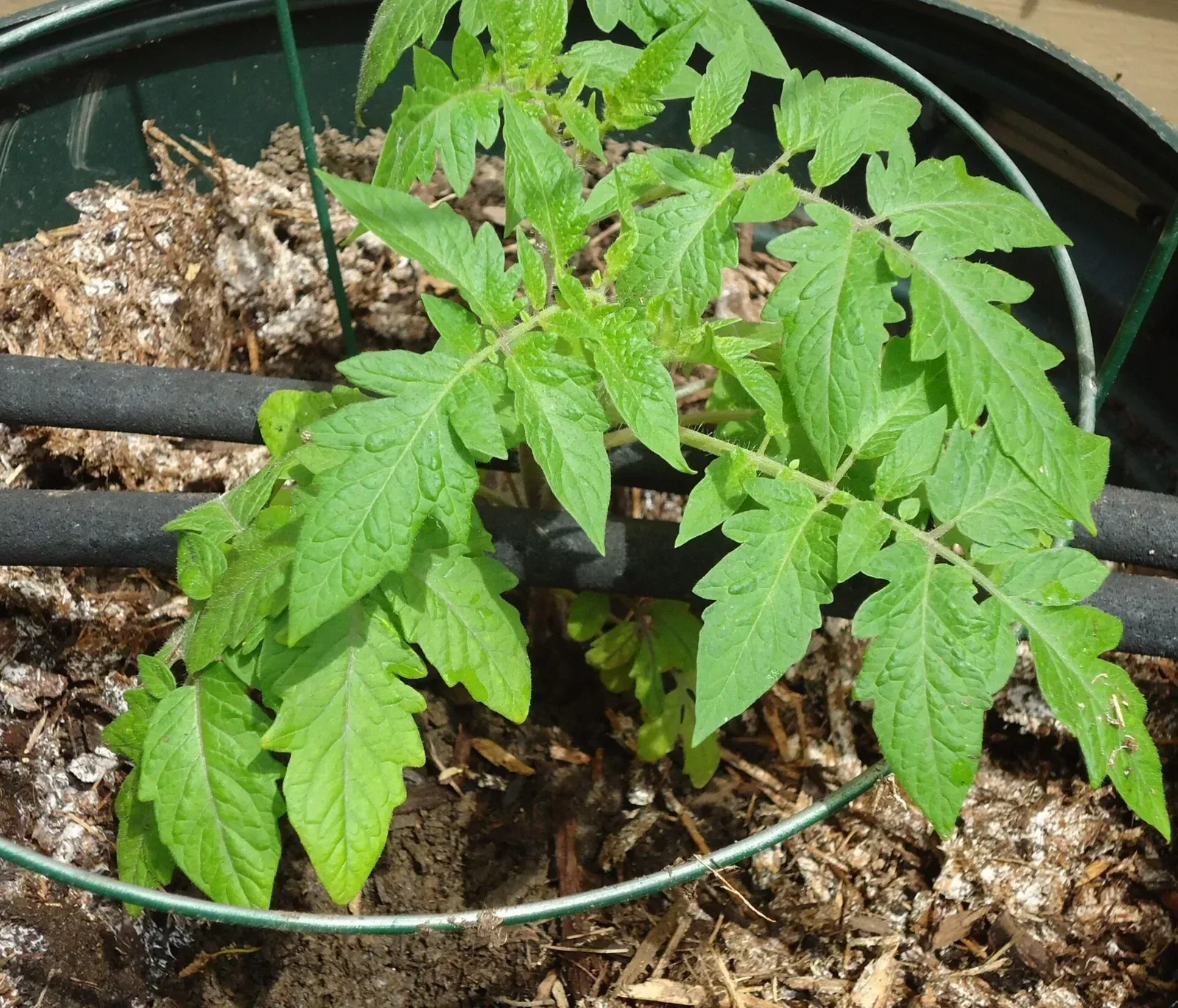
Mulch, called palwar in Hindi, is a layer of material spread over the soil. It keeps the top of the mix shaded, slows evaporation and stops the surface from cracking. ICAR's heat wave bulletin recommends 5 to 7 cm of organic mulch around tomato and okra in the field during heat waves. Pots have less room, so a layer of 2 to 5 cm is more practical, leaving a little space below the rim for water.
Good mulch materials you can get easily:
- Dry leaves, crushed by hand
- Paddy or wheat straw
- Coco husk chips
- Dried grass clippings, spread thin
- Small bark or wood chips
Keep mulch a finger's width away from stems to avoid rot. In humid coastal areas, use a thinner layer and check under it for snails and slugs. Do not use plastic sheets on top of pots. They trap heat and make it hard to see when the mix is dry.
When and how to water
Water early in the morning, before the sun is strong. The plant then has water in its tissues for the hottest hours. Indian agromet advisories for heat waves consistently say to irrigate in the early morning or evening and avoid midday.
- Water until a little drains out of the bottom, then stop. A small splash every few hours wets only the top layer.
- In North Indian loo weeks, check small pots and fabric grow bags again in the late afternoon. Many need a second drink.
- On the coast, an evening watering is fine for the soil, but try to keep leaves dry at night to avoid fungus.
- Do not water a pot that is still wet. Hot, waterlogged soil kills roots faster than brief dryness.
- If water in a hose or pipe has been sitting in the sun, let it run until it is cool before watering.
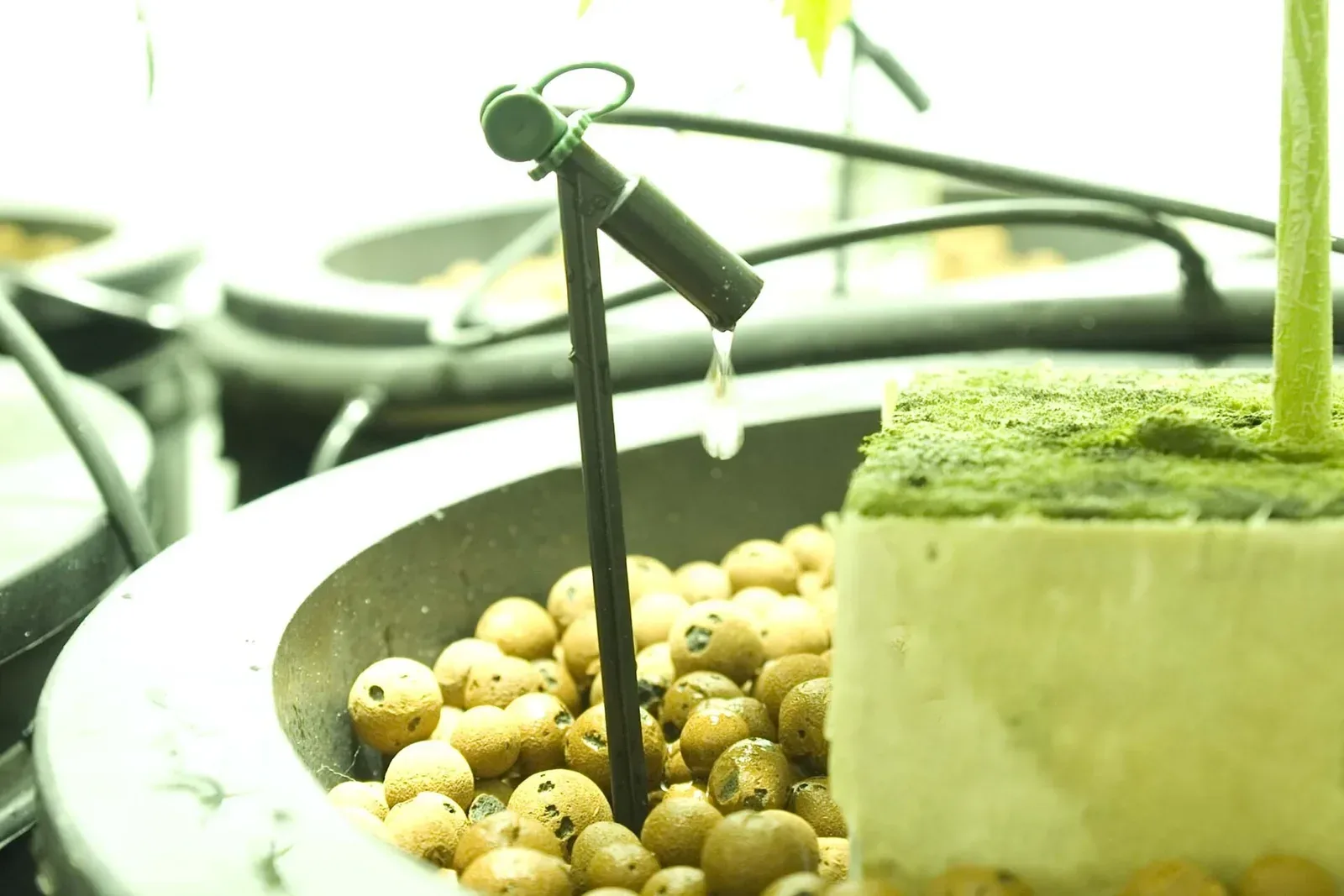
If you have many pots, a timer-based setup removes the guesswork about when you get home. See our guide to drip irrigation for a terrace garden for how to set one up and how long to run it in summer.
Pot colour, material and placement
Colour and material
Dark pots absorb more heat than light ones, so roots in a thin black plastic pot in full sun get very hot. White or light coloured pots stay cooler. Terracotta pots lose water through their walls, which cools the root zone, but they dry out faster, so they need closer watching. HDPE grow bags that are white outside and black inside are a common choice on Indian terraces for this reason. Our guide to grow bags vs pots compares the options in detail.
Placement
- Lift pots off the hot floor on bricks, stands or a wooden plank.
- Group pots together so they shade each other's sides. Put tall, tough plants on the sunny side and tender ones behind them.
- Pull pots a little away from white parapet walls that reflect heat.
- Move indoor plants such as money plant and peace lily back inside or under deep shade.
- Slip a small pot inside a bigger one with a gap filled with dry leaves or coco husk. This "double pot" keeps the inner pot cooler.
If you are setting up a terrace garden from scratch, plan shade, water access and pot positions with summer in mind. Our terrace garden setup guide covers the full plan.
Plants that handle the heat, and those that need help
Some plants love an Indian summer. Sadabahar (periwinkle), portulaca, zinnia, bougainvillea, gourds such as lauki and karela, and bhindi all grow well in heat as long as they get water. Tulsi grows fast in summer but likes some afternoon shade on an open North Indian terrace and dries out quickly in small pots.
Plants that usually need help include leafy greens, coriander, petunia and other winter annuals, which tend to finish by April in the plains, plus tomato in peak heat, ferns and most foliage houseplants. How each one copes also depends on the variety and on whether it is in a small pot or a large bed, so watch your own plants and adjust.
Helping a heat-stressed plant recover
- Move it into shade, or put temporary shade over it with a cloth or net.
- Check the soil. If dry, water slowly and deeply. If soaked, let it drain and do not water again until the top dries.
- If the root ball has shrunk away from the pot wall, water runs straight past it. Stand the pot in a bucket of water for 20 to 30 minutes so the mix soaks up water again, then drain well.
- Leave scorched leaves on for now. They still shade the stems. Trim them once new growth appears.
- Do not feed, prune hard or repot until the plant shows fresh leaves and the weather eases. These all add stress.
- Give it a week or two. Many plants that look dead after a hot spell push out new leaves from the stem once conditions improve.
A pre-summer checklist (February to March)
- Buy shade net in the right percentage and fix the frame before April.
- Collect dry leaves now, when trees are shedding, and store them for mulch.
- Repot plants that have outgrown their pots while it is still mild.
- Test your drip lines and replace blocked drippers.
- Sow heat-tolerant flowers and summer vegetables on time for your region.
- Plan who will water if you travel in May or June.
Watch: easy ways to care for plants in summer
This Hindi video from a home gardening channel shows simple summer care steps for terrace and balcony plants. Use it alongside the regional advice above, since the right amount of shade and water depends on your climate and plants.
Comments
No comments yet — share what worked in your climate.