
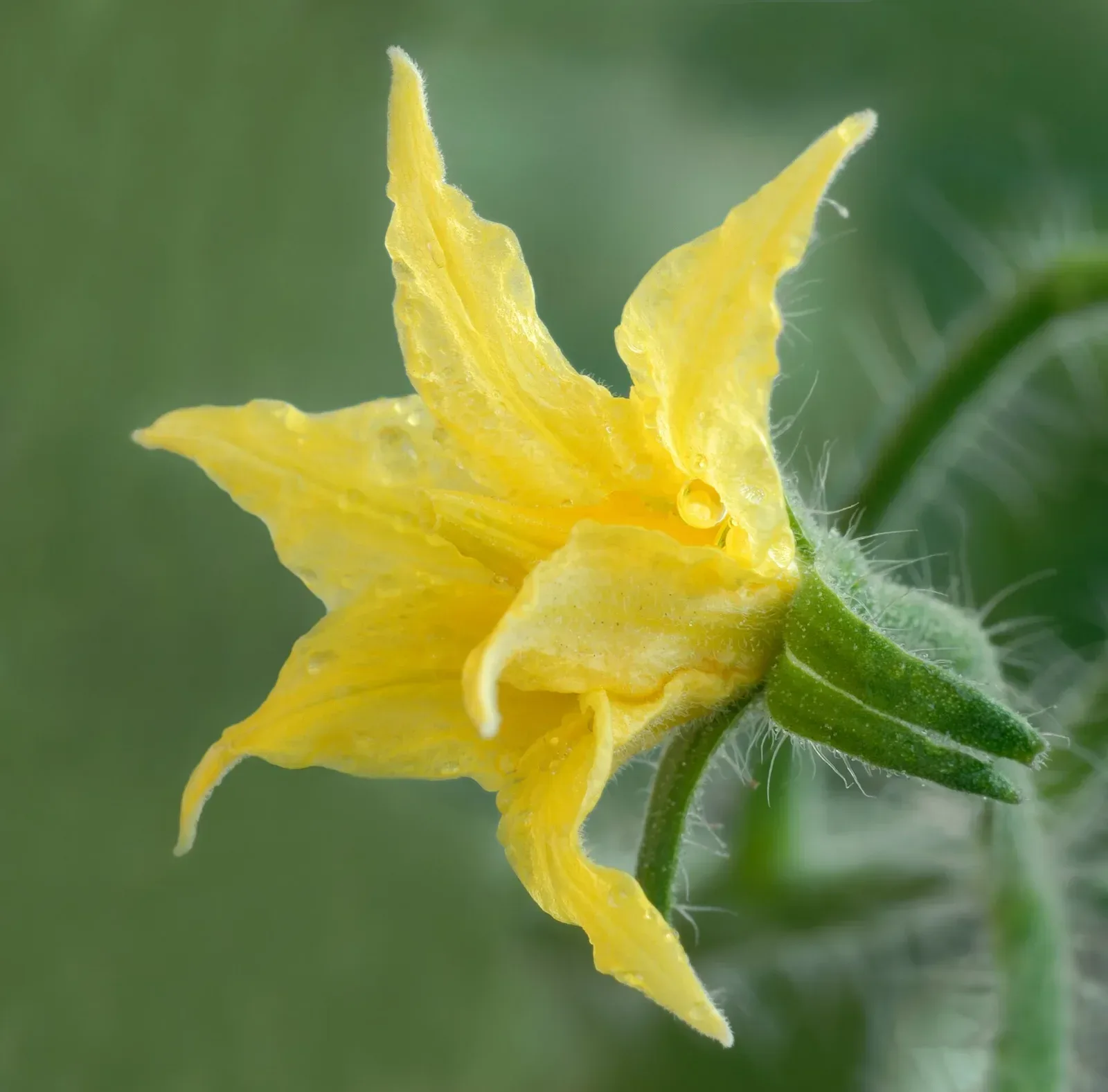
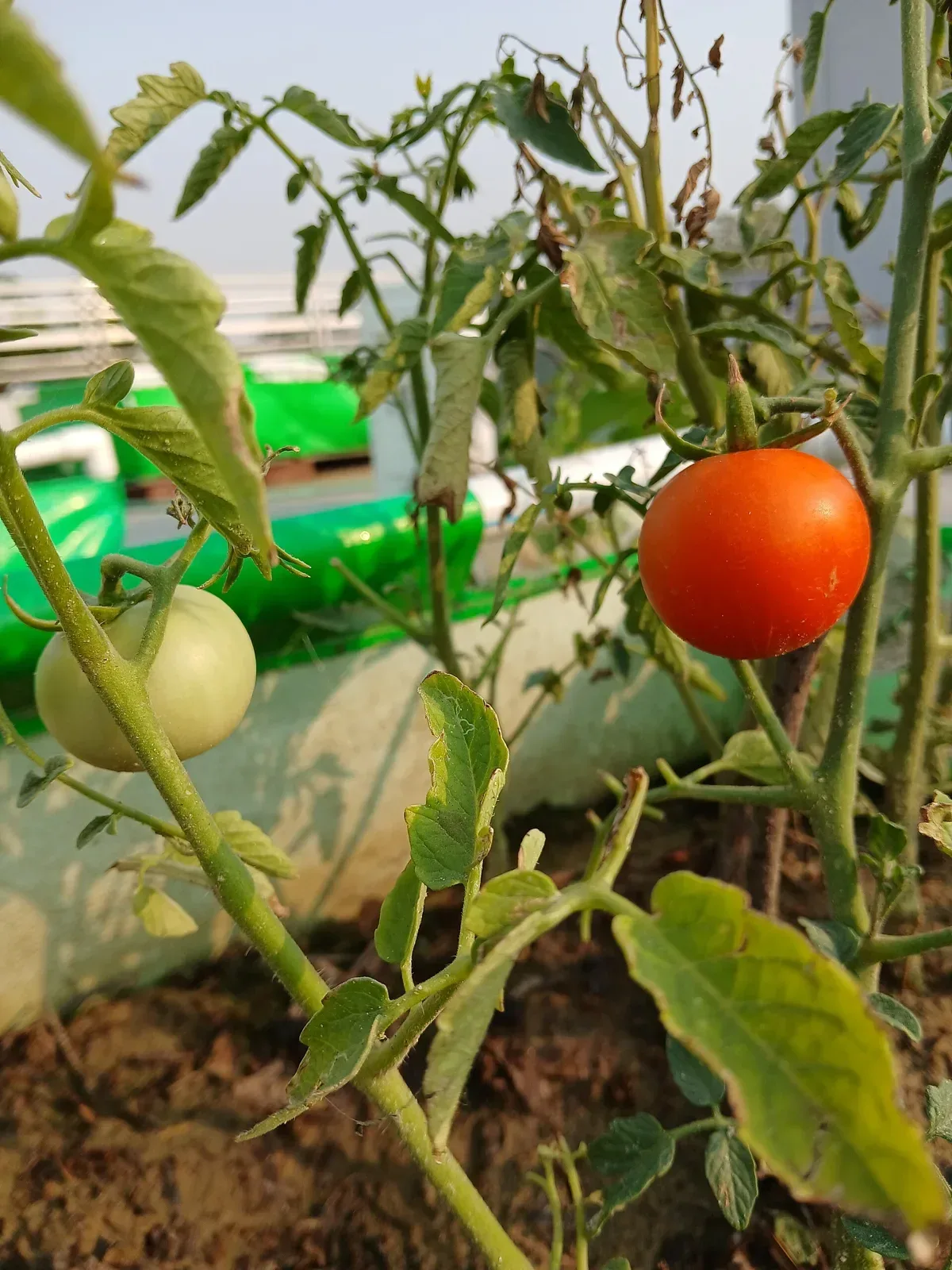
When a tomato (tamatar) plant has plenty of flowers but no fruit, the usual reason in India is temperature. Hot nights in April to June, or cold nights below about 10°C in a North Indian December and January, damage pollen so the flowers drop without setting fruit. Heavy rain, low light, very wet or very dry soil and too much nitrogen fertiliser make it worse. Grow tomatoes in the right season for your region, give full sun, water evenly, and gently shake the flower trusses around midday.
How a tomato sets fruit
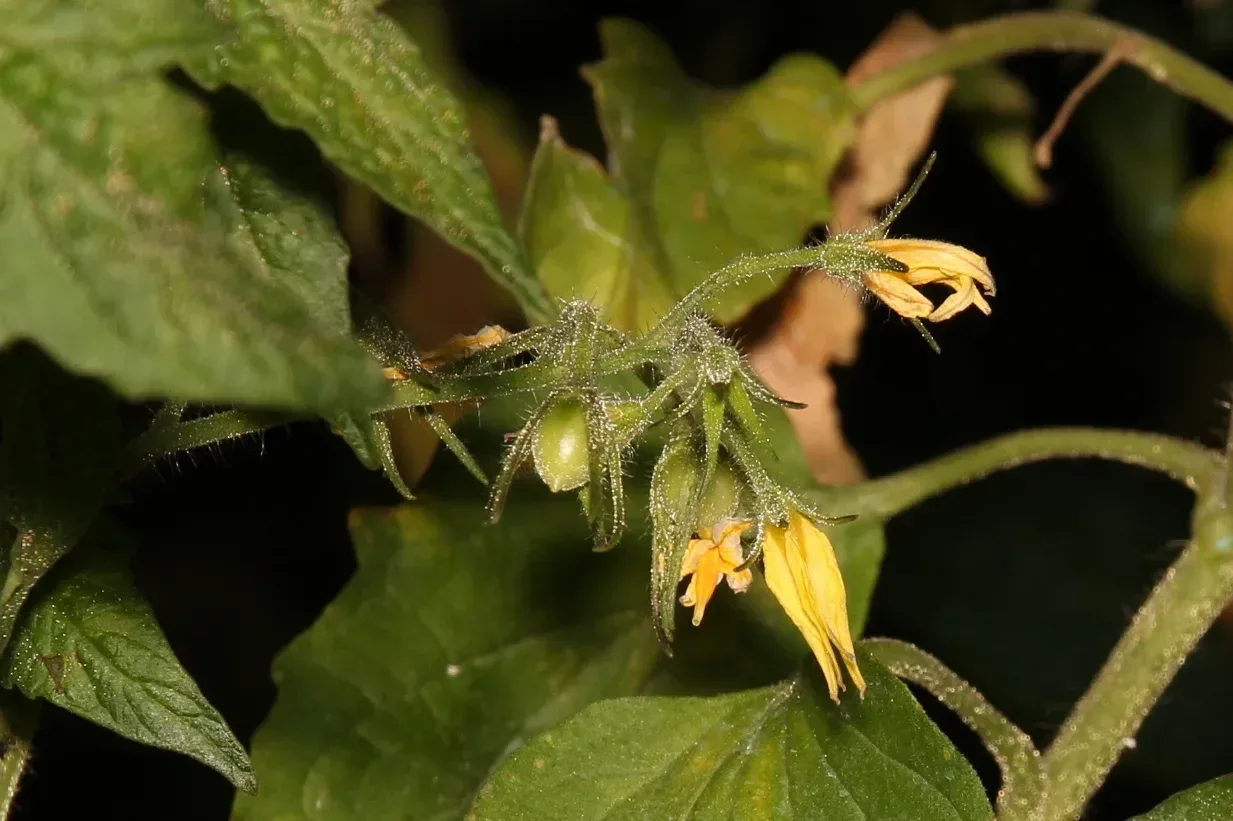
Tomato flowers are self-pollinating. The yellow cone in the middle holds the pollen, and the stigma sits inside or just at its tip. When the flower is shaken by wind or an insect's buzz, pollen drops onto the stigma. If the pollen is healthy and the stigma is in the right place, the ovary behind the flower swells into a small green fruit. If not, the flower stalk yellows and the flower falls off. Some dropping is normal; a tomato plant rarely sets every flower.
Temperature: the main cause
Hot days and warm nights
An IARI phytotron study (Indian Journal of Agricultural Sciences, 2014) grew tomato varieties under four night/day temperature regimes. Flowering and fruiting were normal (more than 80 percent) at 20/24°C and 22/26°C. At 24/32°C, fruit set fell to 25 to 49 percent in most varieties and 65 percent in the heat-tolerant Pusa Sadabahar. At 27/37°C almost nothing set. The authors concluded that high night temperature, around 26°C or above at flowering, was a bigger factor than day temperature.
Purdue University's vegetable crops team explains why: heat damages pollen as it develops, about nine days before the flower opens, and can push the stigma out past the pollen cone so pollen cannot land on it. So a heat wave can cause flowers to drop a week or more later, even if the weather has cooled.
Cold nights in a North Indian winter
A second IARI study (Indian Journal of Horticulture, 2015) notes that in the North Indian plains, temperatures below 10°C in December and January drastically affect fruit set, and that normal fruit set needs roughly 15 to 25°C, depending on variety. Pusa Sadabahar and Pusa Sheetal showed tolerance to low temperature in that study.
So a tomato that flowers in late December in Delhi or Lucknow and does not set fruit is normal. It usually starts setting again in February as nights warm.
Right season for your region
TNAU notes that tomato can be grown almost all year in India if you pick the season to match your climate. It performs best at an average monthly temperature of about 21 to 23°C.
| Region | Good seasons | When fruit set is poor |
|---|---|---|
| Northern plains | Autumn, spring and summer crops are possible (TNAU). GB Pant University gives June to July for sowing or transplanting the rainy-season crop in the Uttarakhand plains. | December to January cold; May to June heat |
| South India | Sowing June to July, October to November, and January to February (TNAU) | Peak summer heat; very heavy rain |
| Coastal cities | Cooler, drier months | Hot, humid summer nights; monsoon rain |
| Hills | Planted April to June for a summer crop (GB Pant University advisory for Uttarakhand hills) | Cold nights early and late in the season |
For exact sowing dates in the northern plains, check your state agricultural university or local KVK; TNAU lists the seasons but not dates for the North.
Other causes of flowers but no fruit
Rain and humidity
TNAU states that excessive rain causes flower drop and hurts fruit set. Wet pollen clumps and does not shed well. In the monsoon, grow tomatoes under a roof overhang if you can, or choose a different season.
Low light
Tomatoes need full sun. On a balcony with only two or three hours of direct sun, plants stretch, flower weakly and set few fruits.
Too much nitrogen
A plant with huge dark green leaves and thick stems but few fruits has often been given too much nitrogen (urea, fresh manure, high-N feeds). Switch to a balanced feed once flowering starts.
Uneven watering
Letting a pot dry until the plant wilts and then flooding it stresses the plant and causes flower drop. Water deeply when the top few centimetres dry, and mulch the pot surface.
No movement
Outdoors, wind and bees shake the flowers. On an enclosed balcony or behind a grille, there may be little movement. Gently tap the flower trusses or the stake once a day around midday when the air is warm and dry. This is a simple home practice rather than a research recommendation, but it does no harm.
Quick checklist
| Question | If yes |
|---|---|
| Are night temperatures above about 26°C, or have there been days near 40°C? | Heat. Wait for cooler nights; give afternoon shade; plant earlier next year. |
| Is it December or January in the northern plains, with nights below 10°C? | Cold. Fruit set should improve in February. |
| Is it raining heavily for days? | Rain. Move under cover if possible. |
| Fewer than six hours of direct sun? | Move to a sunnier spot. |
| Very leafy plant, regular urea or manure? | Cut nitrogen; use a balanced feed. |
| Pot drying out then flooded? | Water evenly; mulch. |
Choosing varieties
In the IARI studies, Pusa Sadabahar set more fruit than other varieties under both heat and cold stress, and Pusa Sheetal also handled cold. If you garden in the northern plains and your tomatoes always struggle at one end of the season, look for varieties described as heat-set or cold-set by Indian research institutes or seed companies.
Is it a disease?
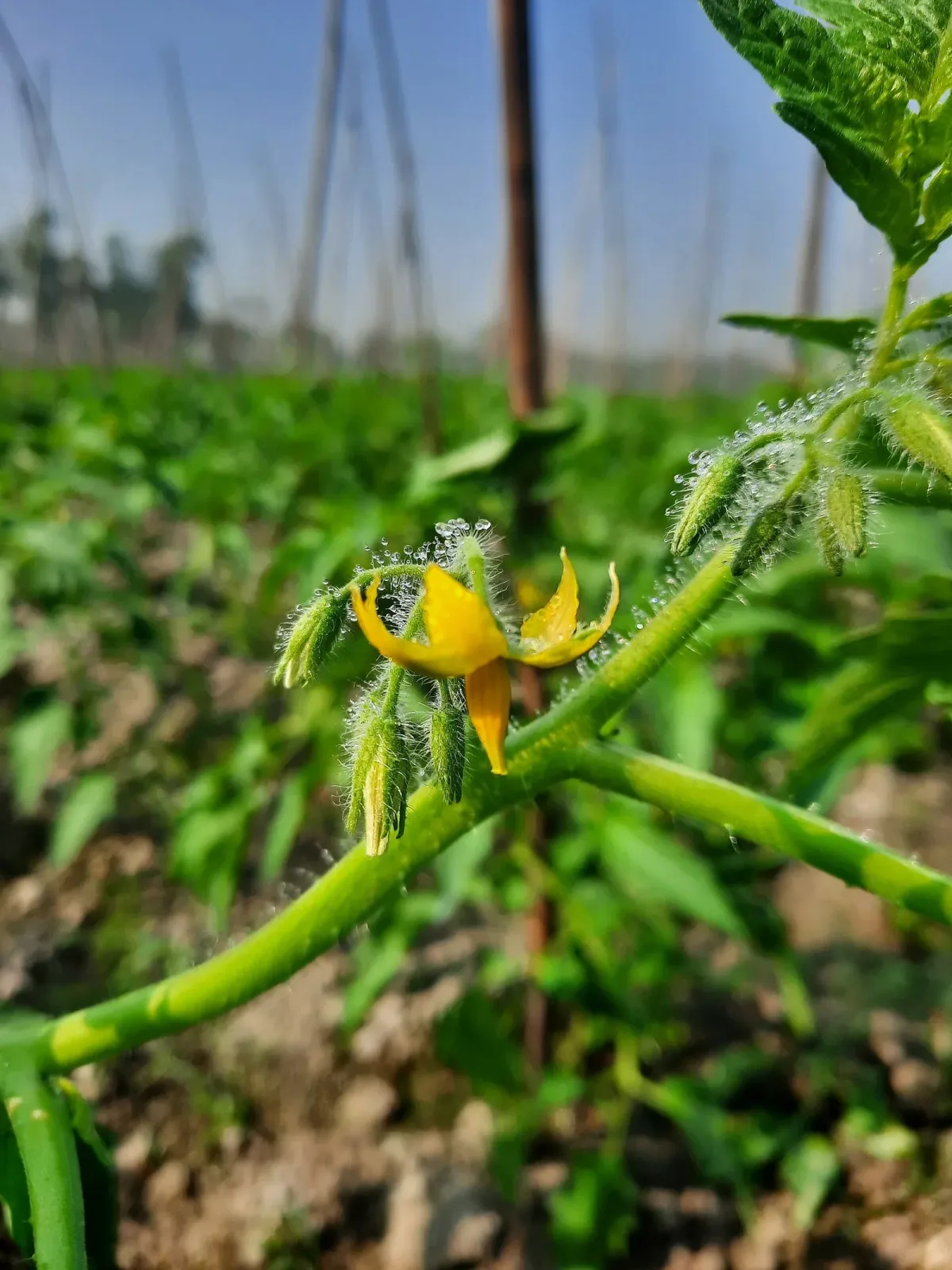
Flower drop on its own is rarely caused by disease. If leaves are also curling, yellowing or spotting, look at those symptoms separately. Upward-curling, crinkled, yellowish leaves with stunting can point to a virus spread by whitefly; compare with our whitefly page before acting. Do not spray fungicides or insecticides for flower drop alone.
Pets
ASPCA lists the tomato plant as toxic to dogs, cats and horses and names solanine as the toxic principle. It notes that ripe fruit is non-toxic. Keep plants out of reach of pets that chew leaves.
Watch: why tomato flowers fall off
A US gardener explains blossom drop and the role of temperature. The same principles apply in India; use the Indian temperatures and seasons above.
Related plants and guides
- Eggplant (brinjal) and chilli, tomato's close relatives
- Terrace garden setup
- Seasonal planting calendar
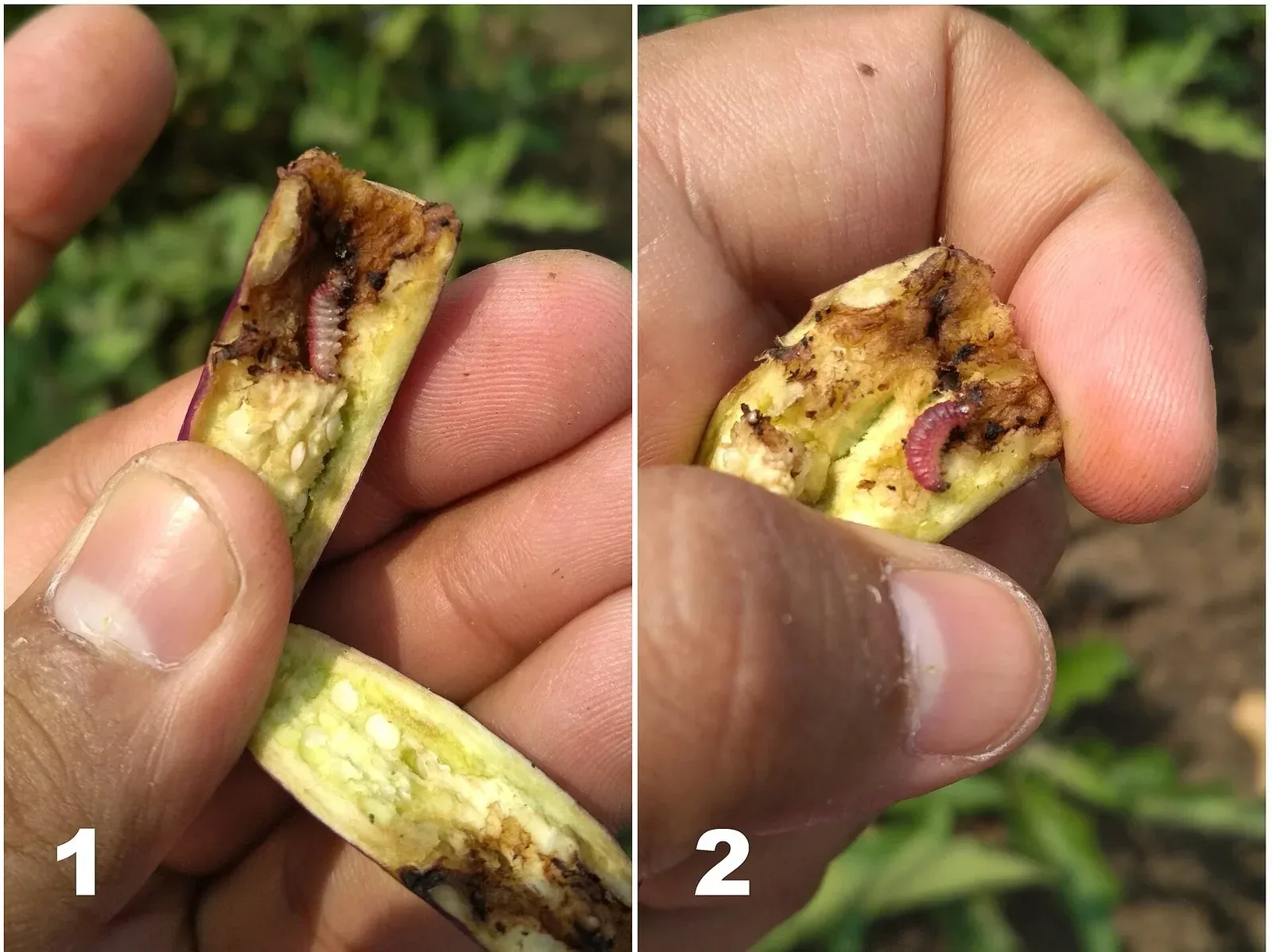
- Brinjal fruit borer symptoms
Sources
- Indian Journal of Agricultural Sciences 84(2), 2014 (IARI): Effect of high day and night temperature regimes on tomato genotypes (fruit set at 20/24, 22/26, 24/32 and 27/37°C; night temperature effect; Pusa Sadabahar). Accessed 10 Nov 2026.
- Indian Journal of Horticulture 72(3), 2015 (IARI): low temperature tolerance in tomato (below 10°C in North Indian plains in December-January; 15 to 25°C for fruit set; Pusa Sadabahar, Pusa Sheetal). Accessed 10 Nov 2026.
- Purdue University Vegetable Crops Hotline: Understanding high temperature effects on fruit set of tomatoes (pollen develops about nine days before opening; stigma exertion). Accessed 10 Nov 2026.
- TNAU Agritech (organic farming): Tomato climate and season (21 to 23°C average; excessive rain causes flower drop; seasons in North and South). Accessed 10 Nov 2026.
- GB Pant University of Agriculture and Technology: Kharif season advisory 2020 (tomato sowing or transplanting April to June in hills, June to July in plains). Accessed 10 Nov 2026.
- ASPCA: Tomato Plant (toxic; ripe fruit non-toxic). Accessed 10 Nov 2026.


Comments
No comments yet — share what worked in your climate.