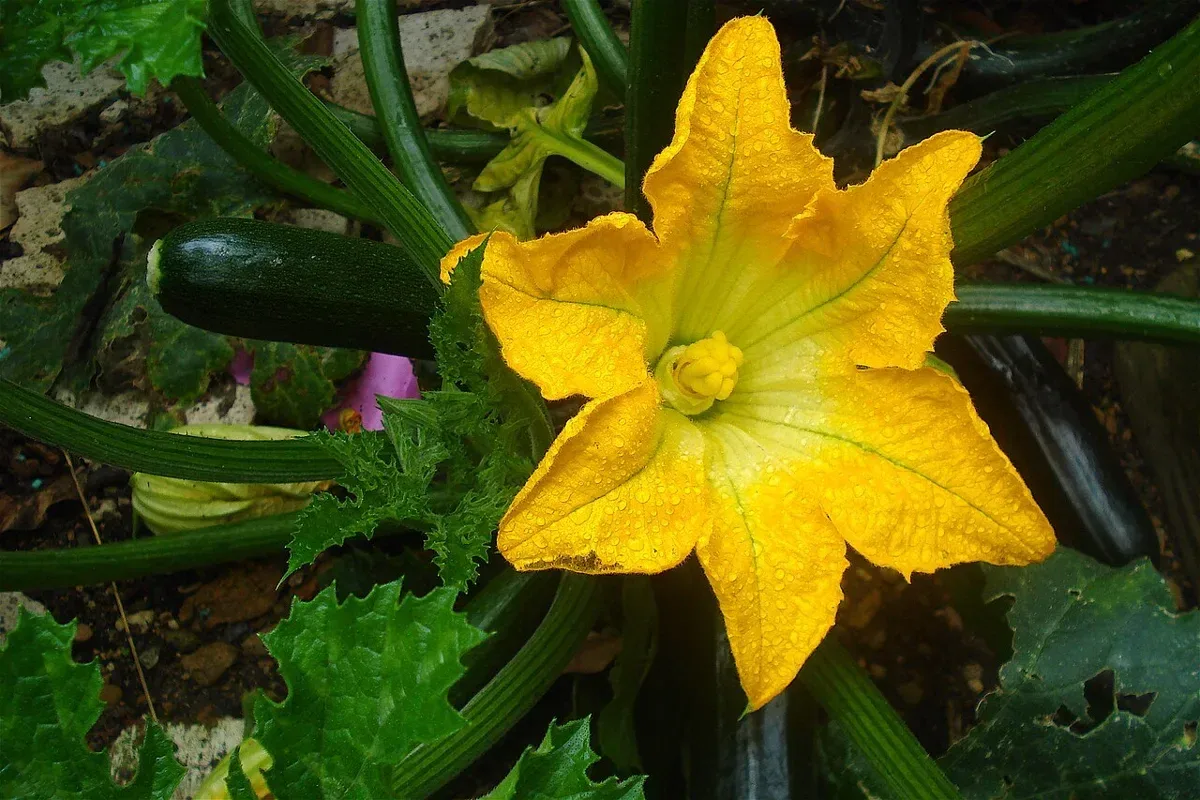
| ☀️ Light | Full sun |
|---|---|
| 💧 Water | High (consistently moist) |
| 🪴 Soil | Rich, moist, well-drained soil with plenty of compost |
| 🌡️ Temp | 10°C – 32°C |
| 🐾 Safety | Cats: toxic · Dogs: toxic (ASPCA Animal Poison Control) |
| 📏 Mature size | 60 cm |
Where It Grows & Climate Tolerance
Pet & Companion Animal Toxicity (How to Grow Zucchini in Canada)
Zucchini is a summer staple in Canadian gardens. Plant after the last frost once the soil is warm, and a single plant can give more than a family can eat from July to the first fall frost.
Care instructions
Care Guide & Maintenance Routine
Start seedlings indoors 2 to 3 weeks before planting out, or sow directly in warm soil. Transplant about two weeks after the average last frost, when days and nights reach 18°C. Space 90 cm apart, mulch, water deeply, and pick often.
Light & Sunlight
The University of Saskatchewan notes zucchini needs full sun to produce well and does not tolerate shade. The RHS also recommends a warm, sunny position.
Watering Schedule
Large leaves lose a lot of water. Water deeply at the base two or three times a week in warm weather, more in pots. Avoid wetting the leaves, which encourages mildew.
Potting Mix & Drainage
Rich, moist, well-drained soil with plenty of compost
Temperature & Humidity
Frost kills zucchini outright. Plant out only when nights stay above about 18°C, roughly two weeks after the average last frost. Cover plants on cold September nights on the Prairies; the first fall frost ends the season.
Zucchini in Canadian gardens
The zucchini glut is a Canadian summer tradition, and the plant fits the short season well. The University of Saskatchewan's Gardenline notes most zucchini need only 48 to 60 days to maturity.
Soil warmth and timing
Gardenline says zucchini can be seeded or transplanted once the soil is at least 18°C, and that transplants go out when day and night temperatures reach 18°C, about two weeks after the average last frost. Average last frost dates from ECCC 1991-2020 normals, compiled by GrowersGuide.ca:
- Vancouver 26 March, Victoria 14 April, Kelowna 16 May: plant out from mid-May on the coast, early June in the Okanagan.
- Windsor 22 April, Hamilton 28 April, Toronto 4 May, Ottawa 7 May: plant out from late May.
- Québec City 11 May, Sudbury 17 May, Edmonton 22 May, Moncton 23 May: plant out in early June.
- Calgary 26 May, Regina 28 May, St. John's 1 June: plant out in mid-June.
Starting indoors
Gardenline suggests starting seedlings 2 to 3 weeks before transplanting; older seedlings suffer more transplant shock. For Saskatoon it gives a start date around 7 May for planting out at the end of May or early June. Harden plants off in a sheltered, frost-free spot for at least three days.
Warming the ground
Gardenline recommends covering the soil with clear plastic two weeks before planting to warm it. A cutworm collar pushed at least 5 cm into the soil protects each stem in June. Space plants 90 to 120 cm apart.
The far north
In Whitehorse, Yellowknife or northern Saskatchewan, Gardenline advises growing zucchini from seedlings. For Wollaston Lake it gives a plant-out date of about 20 June. Raised beds and black plastic mulch help.
Zones and frost-free days
Zucchini is grown as an annual, so frost-free days count more than NRCan zones. GrowersGuide.ca lists about 106 frost-free days for Calgary and 110 for Edmonton, versus more than 200 on southern Vancouver Island. NRCan's 1991-2020 map runs from about Zone 3a in Saskatchewan to 9a on the coast; NC State's USDA rating uses a different method.
August mildew
Powdery mildew often coats leaves in August, especially in humid Ontario and Quebec summers. Remove the worst leaves and keep picking; plants usually crop until frost.
Using the glut
By August many Canadian gardeners shred extra zucchini and freeze it in measured bags for winter baking, or share it through community fridges and food banks that accept garden produce. Picking smaller fruits more often keeps the supply manageable.
Questions from Canadian readers
- How many plants do I need? Two plants feed most households.
- Dog in the garden? ASPCA lists zucchini as non-toxic to dogs and cats.
Seasonal rhythm
Seasonal Calendar
| Month | Care Tasks | Seasonal Focus |
|---|---|---|
| Jan | protect | Order seed of compact bush varieties. |
| Feb | protect | Plan bed space: 90 cm or more per plant. |
| Mar | protect | Gather pots and seed-starting mix. |
| Apr | sow | BC coast: start seedlings late in the month. Elsewhere: prepare beds and compost. |
| May | sow, plant | Start seedlings 2 to 3 weeks before planting out. Coast and southern Ontario: plant out late month. |
| Jun | plant, protect | Prairies, Quebec and the Maritimes: plant out when nights reach 18°C. Fit cutworm collars. |
| Jul | feed, harvest | First fruits. Feed container plants every two weeks. Hand-pollinate if fruits shrivel. |
| Aug | harvest, protect | Peak harvest. Pick every two or three days. Remove mildewed leaves. |
| Sep | harvest, protect | Cover plants on cold nights. Prairies: first frost ends the crop. |
| Oct | harvest | Coast and southern Ontario: last fruits. Compost spent plants. |
| Nov | protect | Clean up plant debris to reduce overwintering pests. |
| Dec | protect | Record varieties and yields for next year. |
Diagnostics
Common Problems & Troubleshooting
Young fruits shrivelling from the tip after poor pollination; white powdery coating on leaves; oversized, seedy fruits if picking is missed; wilting at midday in heat; split or scarred fruits after wind or uneven watering.
Pests & seasonal watch: Cutworms on transplants in late May and June. Striped cucumber beetle and squash bugs in southern Ontario and Quebec. Squash vine borer in parts of eastern Canada. Powdery mildew in August.
- Yellow leaves — Leaves fade from green to yellow, often starting at the bottom.
- Drooping — Stems and leaves hang limp even though the plant was recently fine.
- Aphids — Clusters of small soft insects on new tips, often sticky.
- Whitefly — Tiny white insects fly up in a cloud when you touch the plant.
- White powder — A white powdery film on leaves, usually in still, humid air with dry soil at the roots.
- Underwatering — Soil is bone dry and leaves are crispy, curled or dull.
Similar Botanical Matches
Grower field notes
Reader Field Notes in Canada
Share how this plant performs in your local Canada climate.