| ☀️ Light | Full sun |
|---|---|
| 💧 Water | Moderate (lightly moist) |
| 🪴 Soil | Well-drained; tolerates dry to average moisture |
| 🌡️ Temp | Min -40°C |
| 🐾 Safety | Cats: non-toxic · Dogs: non-toxic (ASPCA Animal Poison Control) |
| 🏔️ Hardiness | Zones 3–9 |
| 📏 Mature size | 1.2 m |
Where It Grows & Climate Tolerance
Pet & Companion Animal Toxicity (Wild Bergamot)
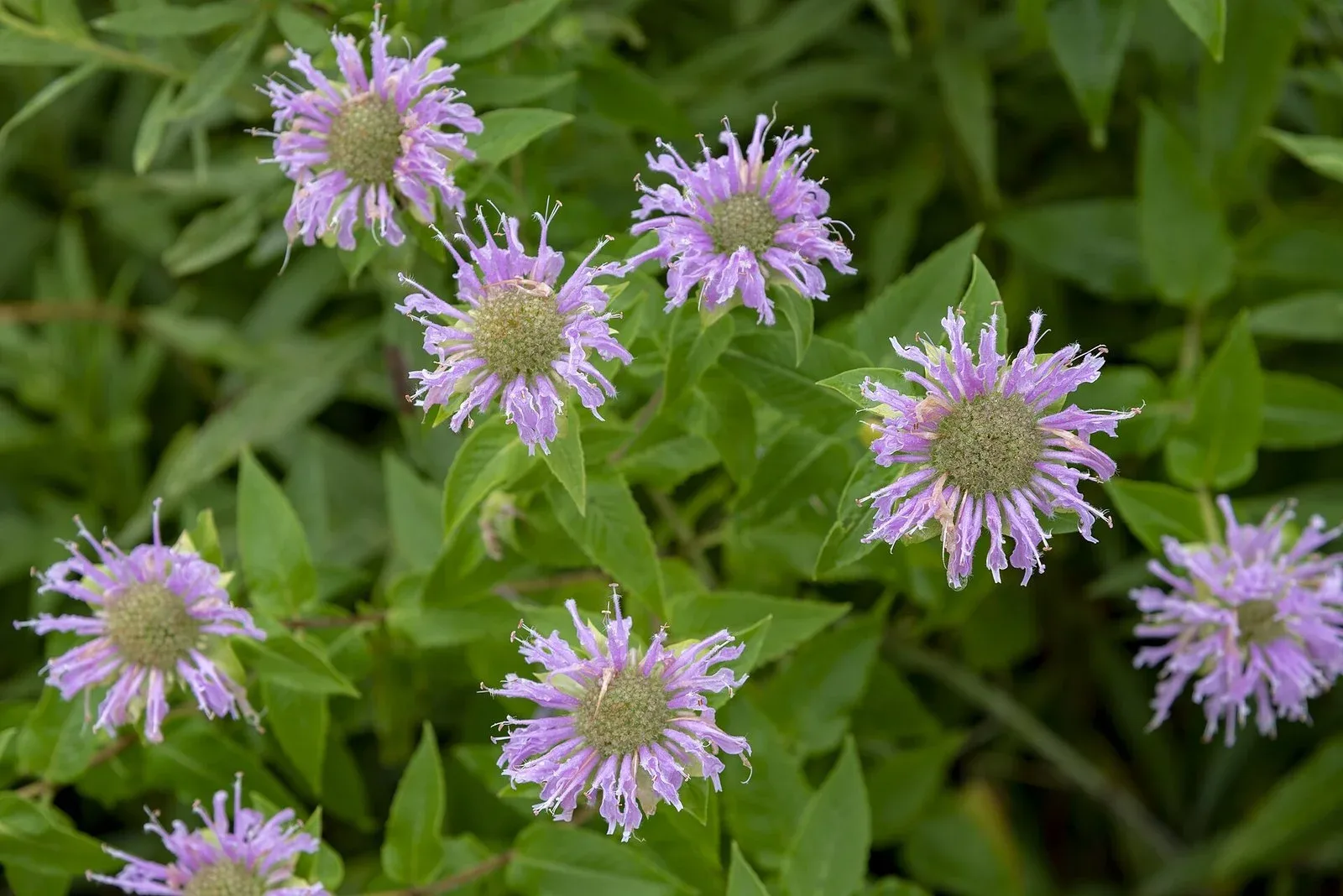
Native prairie wildflower with shaggy lavender-pink heads in July-August. Drought tolerant, loved by bees, butterflies and hummingbirds, smells of oregano.
Care instructions
Care Guide & Maintenance Routine
Full sun, dry to average well-drained soil, moderate water then drought tolerant. Space 45-60 cm for air flow (mildew). Divide every 2-3 years. Leave stems for native bees.
Light & Sunlight
Full sun
Watering Schedule
Moderate; drought tolerant once established
Potting Mix & Drainage
Well-drained; tolerates dry to average moisture
Temperature & Humidity
Zone 3a (Edmonton-area garden centre, via Mossfield); USDA zones 3a-9b (NC State Plant Toolbox)
Wild bergamot (Monarda fistulosa) fills the parkland and prairie with its spicy-sweet fragrance from July through August, and it is a magnet for bees, butterflies and hummingbirds. It is a clump-forming native perennial with square stems, opposite grey-green toothed leaves, and shaggy round heads of lavender-pink, two-lipped flowers at the top of each stem. NC State lists its native range as Canada to northeast Mexico. In Alberta it grows in parkland and grassland, mainly in the south and centre of the province.
Scent and uses
Rub a leaf between your fingers and it smells strongly of oregano and thyme, and for good reason: its essential oil is rich in carvacrol and thymol, the compounds that flavour those two herbs. Leaves and flower heads picked in July and August, at or just before full bloom, can be dried in small bundles out of the sun for tea or as an oregano-like seasoning. Leave most of each clump for the bees.
Hardiness and site
An Edmonton-area garden centre lists it as zone 3a, and NC State rates it USDA 3a to 9b. It handles dry to average soil in full sun and grows into a generous clump within a couple of seasons. It reaches about 60-120 cm tall and 60-90 cm wide, with a spacing of 45-60 cm. Good air movement helps prevent powdery mildew.
Propagation
It is easy from seed or division. Surface-sow the seed, because it needs light, after 30 days of cold stratification; germination takes 2-4 weeks. Divide mature clumps every 2-3 years. Stem cuttings taken in early summer also root readily.
For wildlife
Native bees nest in the dead, hollow stems, so NC State encourages cutting stems back to 30-60 cm and leaving them standing into spring.
Pets
The ASPCA has no listing for wild bergamot. A Canadian nursery calls it generally considered safe around pets, but we have not verified this with a veterinary source.
Seasonal rhythm
Seasonal Calendar
A month-by-month calendar for Wild Bergamot in Canada is coming soon. See the light, water and temperature notes above.
Diagnostics
Common Problems & Troubleshooting
- Powdery mildew | Cause: Poor air movement | Fix: Space plants 45-60 cm apart and divide crowded clumps every 2-3 years
Care encyclopedia · 3 guides
Guides & Articles for Wild Bergamot
Top 7 Native Pollinator Plants for Canadian Gardens
Native bees, monarchs and hummingbirds depend on plants they evolved with. These 7 native wildflowers are listed as native in Canada by the VASCAN database, bloom from spring to fall, and are easy to grow in a home garden.
Read guide →Top 10 Hardy Perennials for Zone 3–4 Prairie Gardens
Prairie winters, chinooks and dry wind kill many perennials sold in Canadian stores. These 10 are rated zone 3 or colder on Canada's hardiness scale, and most are rated zone 2, so they return reliably in zone 3–4 gardens.
Read guide →Powdery Mildew: How to Identify, Prevent and Treat It in Canada
Powdery mildew coats lilac, phlox, roses, squash and peas across Canada every summer. Learn how to identify it, why it thrives even in dry weather, how to prevent it, and which treatments are effective and allowed under Canadian and Ontario rules.
Read guide →Q&A
Frequently Asked Questions
Is wild bergamot native to Canada?
Yes. NC State lists its native range as Canada to northeast Mexico, and in Alberta it grows in parkland and grassland.
How is wild bergamot different from bee balm?
Bee balm has scarlet or deep pink flowers and wants moister soil; wild bergamot has lavender-pink flowers and tolerates dry to average soil.
Can I grow wild bergamot from seed?
Yes. Give seed 30 days of cold stratification and surface-sow it, since it needs light. Germination takes 2-4 weeks.
Can I use it in cooking?
Leaves and flowers can be dried for tea or as an oregano-like seasoning. Pick from unsprayed ground and always verify plant identification.
Similar Botanical Matches
Grower field notes
Reader Field Notes in Canada
Share how this plant performs in your local Canada climate.