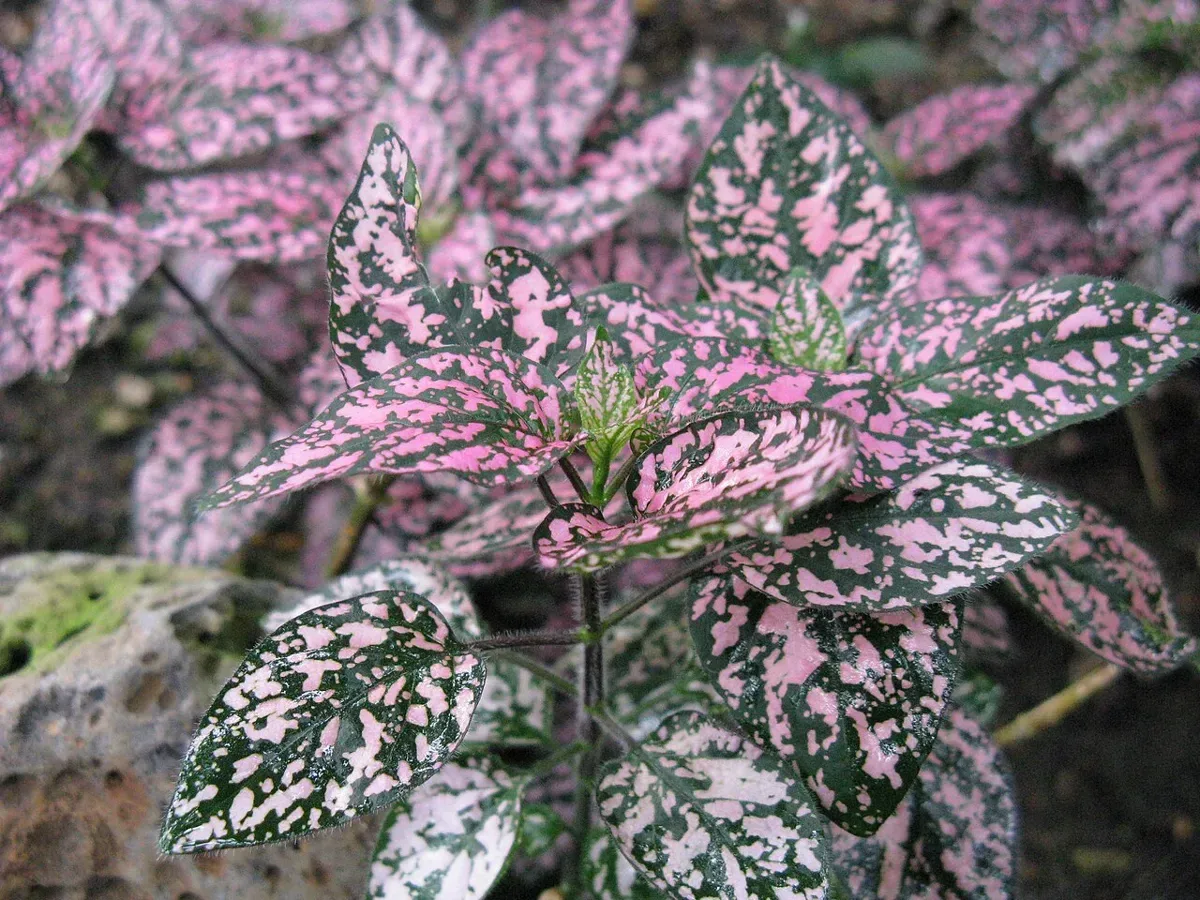
| ☀️ Light | Bright indirect light |
|---|---|
| 💧 Water | Moderate (lightly moist) |
| 🪴 Soil | Airy houseplant mix that holds some moisture |
| 🌡️ Temp | 10°C – 32°C |
| 🐾 Safety | Cats: non-toxic · Dogs: non-toxic |
| 📏 Mature size | 30 cm |
Where It Grows & Climate Tolerance
Pet & Companion Animal Toxicity (How to Grow Polka Dot Plant in Canada)
In Canada, polka dot plant is a year-round houseplant that can also spend the summer outdoors in shaded containers. It is tender, so it must be indoors before nights drop below 10°C. Dry, heated winter air is its biggest challenge.
Care instructions
Care Guide & Maintenance Routine
Grow it near a bright east or west window, or under a grow light in winter. Keep the mix lightly moist, raise humidity with a pebble tray, and pinch often. In summer, move it to a shaded deck after nights stay above 10°C and bring it back inside in September.
Light & Sunlight
NC State and Wisconsin Horticulture both recommend bright, filtered light. NC State notes too much sun crinkles the leaves, while too little fades the colour and makes plants leggy. Wisconsin Horticulture notes colour is better in partial shade than full sun.
Watering Schedule
Wisconsin Horticulture advises watering well while plants grow actively and letting the mix dry slightly between waterings. The plant wilts quickly when dry but usually recovers after watering. Soggy soil causes root rot.
Potting Mix & Drainage
Airy houseplant mix that holds some moisture
Temperature & Humidity
Tender. Keep above 10°C; growth slows below 16°C. Cold drafts from doors and windows in January damage leaves. Bring outdoor plants in before September nights cool.
Polka dot plant in Canadian homes
Polka dot plant is sold across Canada as a small, cheerful houseplant and as a spring bedding plant for shade containers. Wisconsin Horticulture, writing for a similar climate, notes it should be quite happy outdoors in summer but may need misting indoors in winter.
Winter indoors
Short days from November to February reduce light, and colour fades. Move plants to the brightest window, ideally south-facing in winter, or place them under an LED grow light for 12 to 14 hours a day. Forced-air heating dries the air; Wisconsin Horticulture suggests misting, and a pebble tray or humidifier helps more. Keep plants away from cold drafts by doors and single-pane windows.
Summer outdoors
Wisconsin Horticulture advises waiting until temperatures stay above 10°C before planting outdoors, and notes growth really starts above 16°C. In most of southern Canada that means early June. Use it in shaded patio pots and window boxes with impatiens or caladiums, as Wisconsin Horticulture suggests, out of hot afternoon sun.
Bringing plants in
Before nights fall below about 10°C, usually in early to mid-September on the Prairies and late September in Ontario, pot up garden plants or take cuttings. Wisconsin Horticulture notes plants can be saved over winter by potting them in late summer and keeping them in a bright window. Check for whiteflies and aphids before bringing them indoors.
Region notes
- Vancouver, Victoria: outdoors in shade from late May to September.
- Toronto, Ottawa, Montréal: June to early September outside.
- Calgary, Edmonton, Winnipeg, Saskatoon: a short outdoor season; keep it mainly indoors.
- Atlantic provinces: cool summers; a sheltered porch works.
Light meters, LED strips and apartments
In a north-facing Toronto condo or a Winnipeg basement suite, natural light from October to March is rarely enough. An inexpensive full-spectrum LED strip on a timer, set 20 to 30 cm above the plant, keeps the spots bright. Rotate the pot a quarter turn each week so stems grow evenly. Humidity in heated homes can fall below 30% in January; a small room humidifier helps polka dot plants, ferns and people alike. Watch for fungus gnats if pots stay wet in the cool months, and let the top of the mix dry before watering again. Grocery-store plants bought in February often come from warm greenhouses, so keep them away from cold glass for the first few weeks.
A typical year in Montréal
The plant spends winter on a bright windowsill with a pebble tray, gets pinched in March, and goes onto a shaded balcony in June. In September it comes back indoors, cuttings are rooted, and the old plant is replaced by spring.
Questions from Canadian readers
- Why does my polka dot plant look washed out in January? Low winter light. Move it to a sunnier window or add a grow light.
Seasonal rhythm
Seasonal Calendar
| Month | Care Tasks | Seasonal Focus |
|---|---|---|
| Jan | protect | January: brightest window; pebble tray against dry air. |
| Feb | protect | Family Day: check for spider mites near heat vents. |
| Mar | prune | March break: pinch leggy stems; take cuttings. |
| Apr | feed, repot | April: repot; start dilute feeding. |
| May | protect | Victoria Day: wait for nights above 10°C. |
| Jun | plant | June: move pots to a shaded deck or balcony. |
| Jul | prune | Canada Day: pinch; water often outdoors. |
| Aug | feed | Civic holiday: feed every three to four weeks. |
| Sep | protect | Labour Day: bring plants indoors; inspect for pests. |
| Oct | prune | Thanksgiving: cut off flower spikes. |
| Nov | protect | Remembrance Day: add a grow light as days shorten. |
| Dec | protect | December: keep away from cold windows and drafts. |
Diagnostics
Common Problems & Troubleshooting
Leggy, floppy stems in low light or with age; faded spots in shade; crinkled, scorched leaves in direct sun; sudden wilting when dry; root rot in soggy mix; powdery mildew; whitefly and mealybugs.
Pests & seasonal watch: Whiteflies and aphids on plants brought indoors from outside, spider mites in dry, heated rooms, fungus gnats in overwatered winter pots, and mealybugs. Inspect plants before bringing them in.
- Drooping — Stems and leaves hang limp even though the plant was recently fine.
- Root rot — Roots turn brown and mushy in soil that stays wet.
- Mealybugs — White cottony clumps in leaf joints, often with sticky honeydew.
- Leggy — Long weak stems with big gaps between small leaves, leaning to the window.
- Whitefly — Tiny white insects fly up in a cloud when you touch the plant.
- White powder — A white powdery film on leaves, usually in still, humid air with dry soil at the roots.
- Sun scorch — Bleached or crispy patches on the side that faces strong sun.
- Fading variegation — Variegated leaves come in greener, or whole shoots turn fully green.
Similar Botanical Matches
Grower field notes
Reader Field Notes in Canada
Share how this plant performs in your local Canada climate.