| ☀️ Light | Bright indirect light |
|---|---|
| 💧 Water | Moderate (lightly moist) |
| 🪴 Soil | Well-drained, airy indoor potting mix |
| 🌡️ Temp | 15°C – 29°C |
| 🐾 Safety | Cats: toxic · Dogs: toxic |
| 📏 Mature size | 3.0 m |
Where It Grows & Climate Tolerance
Pet & Companion Animal Toxicity (Philodendron Micans (Velvet-Leaf Philodendron))
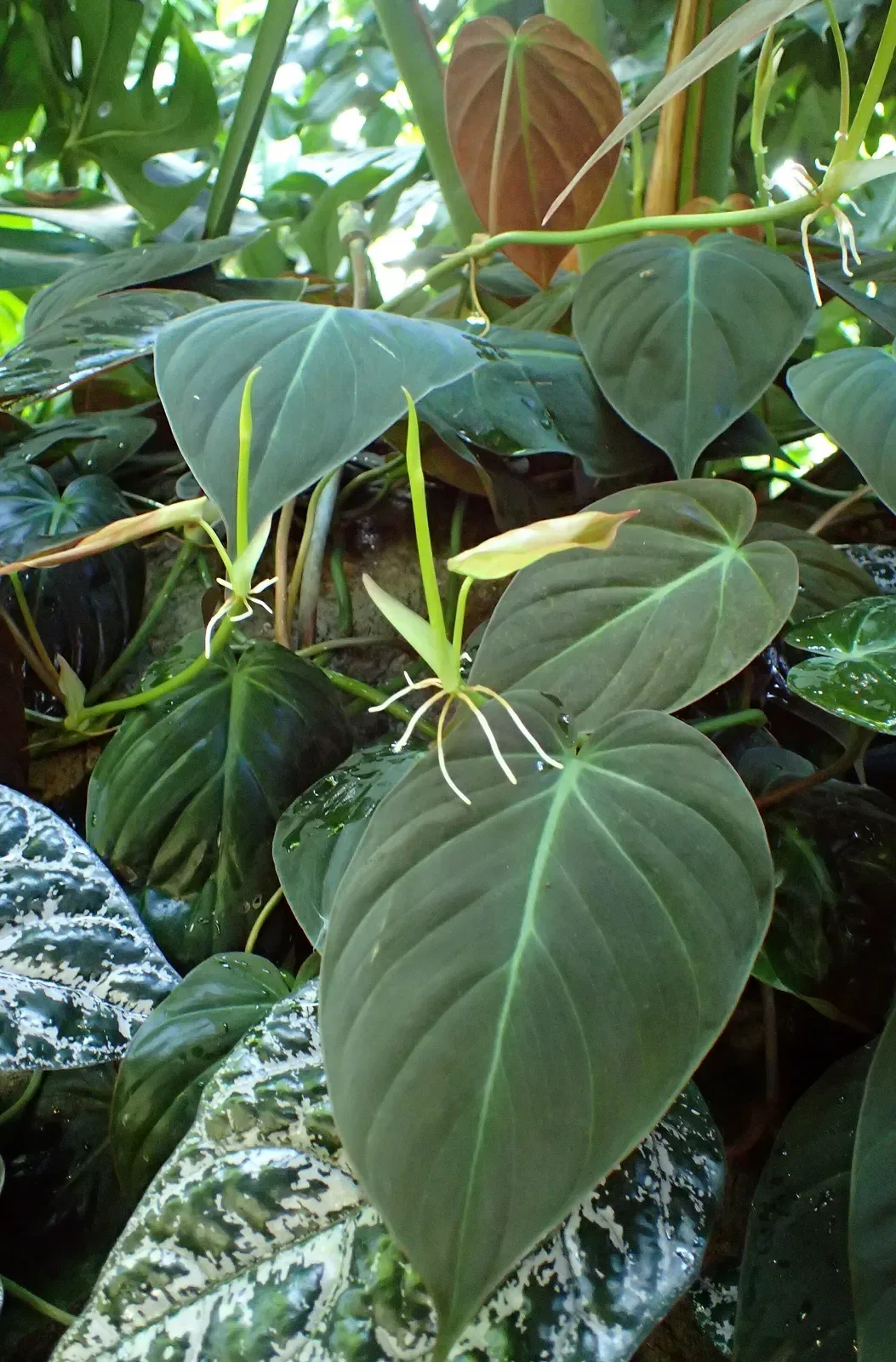
The velvet-leaf form of heartleaf philodendron, with soft leaves that shift from bronze to green. Easy, but keep it off cold glass and water the mix, not the leaves.
Care instructions
Care Guide & Maintenance Routine
Bright filtered or indirect light, plus a grow light in winter. Water when the top few centimetres are dry, less in cool months. Minimum 15°C. Feed half strength April to September. Clean leaves with a soft brush, no leaf shine. Toxic to pets.
Light & Sunlight
Bright but filtered or indirect light, east or west aspect (RHS). South window in winter, set back in summer. Grow light 12 to 14 h a day, 30 to 60 cm above leaves (UMN Extension). Low light makes leaves smaller.
Watering Schedule
Water moderately, less at low temperatures (RHS). Water when the top few centimetres are dry, then drain. Pour onto the mix, not the velvet leaves. No fixed schedule.
Potting Mix & Drainage
Well-drained, airy indoor potting mix
Temperature & Humidity
RHS gives a 15°C winter minimum. Upper figure is an editorial comfort guide. Leaves touching frosty glass can blacken overnight; keep away from drafty doors.
Philodendron micans is the velvet-leaf version of the heartleaf philodendron. Run a finger over a leaf and it feels like suede. In soft light the leaves look deep green to bronze; in other light they shimmer purple or almost red, especially new leaves. It is still an easy, fast-growing vine, but the velvet surface changes a few things: dust and water spots show more, and it likes a slightly warmer, calmer spot than the plain green plant. This guide explains the name, how to care for micans in a Canadian home, and what to do when the leaves shrink or lose their shine in winter.

Philodendron micans at a glance
| What you need to know | Short answer |
|---|---|
| Accepted name | Philodendron hederaceum var. hederaceum; arum family (Araceae) |
| Sold as | Philodendron micans, velvet-leaf philodendron, velvet heartleaf |
| Habit | Trailing or climbing vine with aerial roots |
| Leaves | Heart-shaped, velvety, deep green to bronze, often reddish when new |
| Light | Bright but filtered or indirect light (RHS) |
| Water | Moderately; less in low temperatures (RHS). Check the mix first |
| Warmth | Minimum 15°C in winter (RHS) |
| Difficulty | Beginner to intermediate |
| Pets | Toxic to cats, dogs and horses (ASPCA lists P. hederaceum) |
Identification, naming and varieties
How to recognise micans
Micans has the classic heartleaf shape: a heart-shaped base and a pointed tip on a thin, trailing stem. What sets it apart is the surface. The leaves are matte and velvety, not shiny, and the colour shifts with the light from dark green to bronze to a purplish sheen. New leaves often open with a reddish or coppery tone. RHS describes the species variety as having bronze-green leaves, red-tinted beneath.
Leaves on a hanging micans usually stay small, around palm size or less. On a pole, with good light, they can grow larger.

Why micans is now Philodendron hederaceum
Philodendron micans was once treated as its own species. Kew's checklist and RHS now list Philodendron micans as a synonym of Philodendron hederaceum var. hederaceum, the same species as the green heartleaf philodendron. RHS goes a step further and lists the form name Philodendron scandens subsp. scandens f. micans among the synonyms.
In plain words: micans is a velvet-leaved form of heartleaf philodendron. Shops keep using "micans" because it tells buyers exactly which look they are getting. The word comes from Latin and means shining or glittering, which suits the sheen on the leaves.
There is no registered cultivar called 'Micans' in the International Aroid Society registry. RHS does list a 'Micans Lime' form, with the name status unresolved. If you see a micans with bright lime leaves, that is probably the plant on sale.
Micans vs similar plants
- Plain heartleaf philodendron: same shape, but smooth and a bit glossy, plain green.
- Philodendron Brasil: smooth leaves with a lime-yellow centre stripe.
- Philodendron melanochrysum: a different species with velvet leaves too, but long, narrow, dark leaves with pale veins as it matures. Some sellers mix up young plants.
- Pothos: thicker, waxy leaves, never velvety, with a groove along the top of the leaf stalk.

Buying a Philodendron micans in Canada
Micans is sold at most plant shops and many garden centres in Canada, often in hanging pots. It costs a little more than plain heartleaf. Check:
- The velvet. Leaves should feel soft and matte. Shiny leaves mean it is not micans.
- The base of the stems. A thin, bare base with leaves only at the tips means it has been dried out or grown in poor light. It will need a trim and some cuttings to fill in.
- Leaf size along the stem. If leaves get much smaller towards the tip, the plant has been short of light.
- Pests. Look under leaves and in the joints. Thrips and spider mites can hide on velvet leaves.
In cold months, wrap the plant before you carry it out. Sub-zero air damages leaves quickly. Keep a new micans away from your other plants for two or three weeks.
Light in a Canadian home
RHS advises bright but filtered or indirect light for Philodendron hederaceum var. hederaceum, and lists east or west aspects. In a Canadian home that usually means:
- East window: a great spot all year.
- West window: good, with a sheer curtain in summer.
- South window: the best spot in winter. In summer, set it a metre back.
- North window: fine from May to August. Too dim for good growth in winter without a grow light.
Why does my micans look purple in one room and green in another?
The velvet surface scatters light, so the colour you see depends on where the light comes from. Under a bright window, leaves can look bronze or reddish. In shade or under warm lamps, they look darker green. Strong light also tends to bring out more red in new leaves. None of this means the plant is sick. Watch for real warning signs instead: very small leaves, long bare stems, or faded, bleached patches after sun.
Grow lights in winter
From November to February, a grow light keeps micans compact and full. University of Minnesota Extension suggests 12 to 14 hours a day for foliage plants, with the light 30 to 60 cm above the leaves. A timer makes it hands-off.
Soil mix, pots and repotting
RHS recommends a well-drained, peat-free potting compost for this plant. Micans has fine roots that rot easily if they sit wet in a cold pot. An airy mix helps:
- 2 parts indoor potting mix
- 1 part perlite
- 1 part small orchid bark
Adjust from there. Less bark if your house is very dry and the pot dries in a day or two. More perlite if it stays wet longer than a week or so.
Use a pot with a hole, just a little bigger than the root ball. Shallow pots suit trailing micans well. Repot in spring, April to June, only when roots fill the pot.
Watering by season
RHS advises moderate watering, and less at low temperatures. That fits Canada well: water more in summer, much less in winter, and always check first. Water when the top few centimetres of mix are dry, then water until it drains. Empty the saucer.
Spring and summer
Fast growth. A hanging micans in a warm room may need checking every two or three days. Some growers notice micans leaves curl in slightly when the plant is thirsty. That is a handy reminder, but do not wait for the leaves to curl every time.
Autumn
Growth slows. Once the heat comes on, check the middle of the pot, not only the surface.
Winter
Water much less. In a cool room the mix can stay damp for a long time, and wet, cold roots rot. If the plant droops and the mix is wet, check the roots before you water again. Use room-temperature water, and water the mix, not the leaves.
Velvet leaves hold drops of water, and those drops can leave spots, especially with hard tap water. Pour the water onto the mix under the leaves.
Humidity and temperature
NC State Extension says the species tolerates dry air but prefers medium humidity. Micans copes with normal home air, but very dry January air shows up as crispy edges, smaller leaves and spider mites. Simple fixes:
- A humidifier in the room during the heating season.
- Grouping plants.
- Distance from heat registers, baseboard heaters and fireplaces.
Skip heavy misting on micans. Water sitting on velvet leaves can mark them.
RHS gives a minimum winter temperature of 15°C. Canadian window ledges can get much colder than the room on January nights. If a leaf touches frosty glass, it can blacken overnight. Pull the plant back from the glass on very cold nights, and keep it away from exterior doors.
Fertilizer
Feed during active growth, about April to September in Canada. Use a balanced liquid houseplant fertilizer at half strength once a month, on moist mix. Stop in October. Winter feeding of a slow plant leads to salt build-up and brown edges, and it does not make leaves bigger.
Cleaning velvet leaves
Dust settles on velvet and dulls the sheen, and in winter dusty leaves catch less of the little light there is. Do not use leaf shine products or oil. They clog the velvet.
- Brush dust off with a soft, dry paintbrush or makeup brush.
- For a deeper clean, rinse the plant in a lukewarm shower, then let it drip dry somewhere warm and bright.
- Do this in the morning so leaves are dry by night.
Pruning
RHS says no routine pruning is needed, though it may need trimming to size indoors. A regular trim makes micans much fuller.
- Cut just above a node with clean scissors.
- Trim long, bare stems in spring and summer, and root the pieces.
- Remove yellow leaves at the base of the stalk.
- Wear gloves. RHS lists the sap as a skin and eye irritant.

Propagation
RHS lists stem-tip or leaf-bud cuttings in summer, and layering or air-layering in spring. Micans roots easily:
- Cut a stem piece with two to four leaves and at least one node.
- Remove the lowest leaf.
- Root in water, damp sphagnum moss or damp mix, in bright indirect light and warmth.
- Pot up once roots are a few centimetres long.
- Plant several rooted cuttings in one pot for a full look.
Winter cuttings root more slowly. A clear lid or bag over the pot helps in dry air, but open it daily. Our philodendron propagation guide will cover each method.
Why is my micans losing colour or getting smaller leaves?
Micans is not variegated, so it cannot revert. But its rich velvet colour can fade, and leaves can shrink.
- Smaller and smaller leaves in winter: low light. This is the most common cause in Canada. Move it closer to a bright window or add a grow light.
- Dull, greyish leaves: dust on the velvet. Clean as described above.
- Pale, washed-out patches: too much direct sun. Move back from the glass.
- Older leaves yellowing along a bare stem: often a sign of drying out too far, too often, or too little light. Trim the bare stem and root the tip.
- Pale new leaves all over in summer with no feeding for a long time: try a monthly half-strength feed.
Problem troubleshooter
| What you see | Likely cause | What to do first |
|---|---|---|
| Leaves getting smaller, stems stretching | Low light | Brighter window or grow light; trim and root the tips. |
| Bare stems with leaves only at the ends | Old leaves dropped after drought or low light | Trim back, root cuttings, plant them back in the pot. |
| Yellow leaves with wet mix | Overwatering, especially in winter | Let the mix dry more; check the drainage hole. |
| Mushy stems at the soil line | Root or stem rot | Take cuttings from healthy tips; repot the rest in fresh mix. |
| White or tan spots on leaves | Water drops drying on velvet, or hard-water marks | Water the mix only. Use the shower rinse to clean. |
| Black patches after a cold night | Cold damage from glass or a draft | Move away from the window; trim damaged leaves. |
| Brown crispy edges | Dry air, heat, fertilizer salts | Move from heat, humidify, flush the pot. |
| Fine webbing, speckles | Spider mites | Shower rinse weekly; houseplant-labelled insecticidal soap if needed. |
| Silvery streaks, tiny black dots | Thrips | Isolate; rinse; use a houseplant-labelled product. |
| White fluff or brown bumps | Mealybugs or scale | Remove by hand, then a labelled product. |
NC State Extension lists aphids, spider mites, mealybugs and scale for P. hederaceum, and RHS lists scale and glasshouse red spider mite. Thrips are a common houseplant pest too. Use products labelled for indoor plants in Canada and follow the label. More help: our plant problems page.
Month-by-month care calendar for Canada
| Month | What to do |
|---|---|
| January | Brightest spot or grow light. Off cold glass. Water rarely. No feeding. |
| February | Brush dust off leaves. Check for mites and thrips. |
| March | New growth begins. Water a little more often. |
| April | Start half-strength monthly feeding. Repot if roots fill the pot. |
| May | Trim leggy winter stems and root the cuttings. Plant them back to fill the pot. |
| June | Pull back from hot south or west glass. Shower-rinse to clean leaves. |
| July | Check moisture often in hot weather, especially hanging pots. |
| August | Last month for easy cuttings and repotting. |
| September | Last feed. Move closer to the window as days shorten. |
| October | Stop feeding. Heat goes on: check the mix deeper. Set up a grow light. |
| November | Water less. Run a humidifier. Keep away from heat registers. |
| December | Keep away from drafty doors and frosty windowsills. |
Safety for pets, children and skin
Philodendron micans is not pet safe. ASPCA lists Philodendron hederaceum, the species micans belongs to, as toxic to dogs, cats and horses. ASPCA does not have a separate micans entry. The toxic principle is insoluble calcium oxalate. Signs include mouth pain and swelling, drooling, vomiting and trouble swallowing. RHS lists the plant as harmful if eaten and a skin and eye irritant, and NC State Extension notes the species can cause contact dermatitis.
- Hang it out of reach of cats and dogs.
- Wear gloves when pruning; wash hands after.
- If a pet chews it, call your vet. The ASPCA Animal Poison Control line is (888) 426-4435 (a fee may apply). For a child, call your provincial poison centre.
See our pet-safe plants list for safer choices.
Common mistakes
- Using leaf shine or oil on velvet leaves.
- Misting heavily or watering over the leaves, which leaves spots.
- Letting it dry out hard again and again, so old leaves drop and stems go bare.
- Watering on a schedule in winter.
- Leaving it in a dim north room all winter.
- Sitting it on a cold windowsill in January.
- Buying a lime or shiny plant labelled micans without checking the velvet.
Watch: Philodendron micans care
A detailed guide covering light, soil, watering, humidity, pests and propagation. It also explains that micans is a form of Philodendron hederaceum.
Related plants and guides
- Philodendron types and care for Canadian homes, our main philodendron guide
- Heartleaf philodendron, the smooth green form
- Philodendron Brasil, the striped form
- Philodendron Birkin
- Hoya carnosa, another trailing plant for a bright shelf
- Heartleaf vs Brasil vs micans
- Philodendron winter care in Canada
Sources
- RHS: Philodendron hederaceum var. hederaceum (synonyms including P. micans, description, 15°C minimum, propagation, harm). Accessed 10 Nov 2026.
- Kew Plants of the World Online: P. hederaceum var. hederaceum. Accessed 10 Nov 2026.
- RHS: P. hederaceum var. hederaceum 'Micans Lime'. Accessed 10 Nov 2026.
- NC State Extension Plant Toolbox: Philodendron hederaceum. Accessed 10 Nov 2026.
- ASPCA: Heartleaf Philodendron. Accessed 10 Nov 2026.
- University of Minnesota Extension: Lighting for indoor plants. Accessed 10 Nov 2026.
Seasonal rhythm
Seasonal Calendar
A month-by-month calendar for Philodendron Micans (Velvet-Leaf Philodendron) in Canada is coming soon. See the light, water and temperature notes above.
Diagnostics
Common Problems & Troubleshooting
Smaller leaves in winter: low light. Bare stems: repeated drying out or low light, trim and replant tips. Spots on velvet: water drops or hard water. Black patches: cold glass.
Pests & seasonal watch: Aphids, spider mites, mealybugs and scale (NC State); scale and red spider mite (RHS); thrips are a common houseplant pest. Use products labelled for indoor plants in Canada.
Q&A
Frequently Asked Questions
Is Philodendron micans a heartleaf philodendron?
Yes. Kew's checklist and RHS list Philodendron micans as a synonym of Philodendron hederaceum var. hederaceum, the same species as the green heartleaf philodendron. Micans is the velvet-leaved form. Shops keep the name micans because it tells you which look you are buying. Care is very close to plain heartleaf.
Why does my micans look purple in one room and green in another?
The velvet surface reflects light differently depending on its angle and strength. Under a bright window, leaves can look bronze, purple or reddish, especially new ones. In shade they look darker green. This is normal. Real warning signs are very small new leaves, long bare stems, or bleached patches after direct sun.
Why are my micans leaves getting smaller in winter?
Low light is the main cause. From November to February, Canadian days are short, and the vine stretches and makes smaller leaves. Move it to a brighter south or east window, or add a grow light for 12 to 14 hours a day, 30 to 60 cm above the leaves. Trim and root the leggy tips in spring.
How do I clean velvet philodendron leaves?
Brush dust off with a soft, dry paintbrush or makeup brush. For a deeper clean, rinse the plant in a lukewarm shower in the morning and let it drip dry somewhere warm and bright. Never use leaf shine or oil on velvet leaves; it clogs the surface and dulls the sheen.
Is Philodendron micans safe for cats and dogs?
No. ASPCA lists Philodendron hederaceum, the species micans belongs to, as toxic to dogs, cats and horses because of insoluble calcium oxalates. Signs include mouth pain, drooling and vomiting. RHS lists it as harmful if eaten and a skin and eye irritant. Hang it out of reach and call your vet if a pet chews it.
How often should I water Philodendron micans?
Water when the top few centimetres of mix are dry, then let it drain. RHS advises moderate watering and less at low temperatures. In summer a hanging pot may need water every few days; in a cool Canadian winter it may go two weeks or more. Pour water onto the mix, not the velvet leaves.
What temperature does Philodendron micans need?
RHS gives a minimum winter temperature of 15°C. Normal room temperature suits it. The risks in Canada are cold windowsills on January nights and drafty doors. A leaf touching frosty glass can blacken overnight, so pull the plant back from windows on very cold nights.
Why does my micans have bare stems?
Bare stems with leaves only at the tips usually follow repeated drying out, low light, or both. Old leaves yellow and drop. Trim the bare stems back, root the leafy tips, and plant them back into the same pot. Then keep the mix from drying out hard, and give it brighter light.
Is Philodendron micans the same as melanochrysum?
No. Philodendron melanochrysum is a different species. Both have velvet leaves, but melanochrysum leaves grow long, narrow and dark with pale veins as the plant matures, while micans keeps the heartleaf shape. Young plants can look alike, so buy from a seller who shows the exact plant.
Can I mist Philodendron micans?
It is better not to mist heavily. Water drops sitting on velvet leaves can leave spots, especially with hard tap water. For dry Canadian winter air, run a humidifier, group plants and keep the micans away from heat registers instead. If you do mist, do it lightly in the morning.
How do I propagate Philodendron micans?
Cut a stem piece with two to four leaves and at least one node, remove the lowest leaf, and root it in water, damp sphagnum moss or damp mix in bright indirect light. RHS lists stem-tip and leaf-bud cuttings in summer. Plant several rooted cuttings together for a full pot.
Similar Botanical Matches
Grower field notes
Reader Field Notes in Canada
Share how this plant performs in your local Canada climate.