
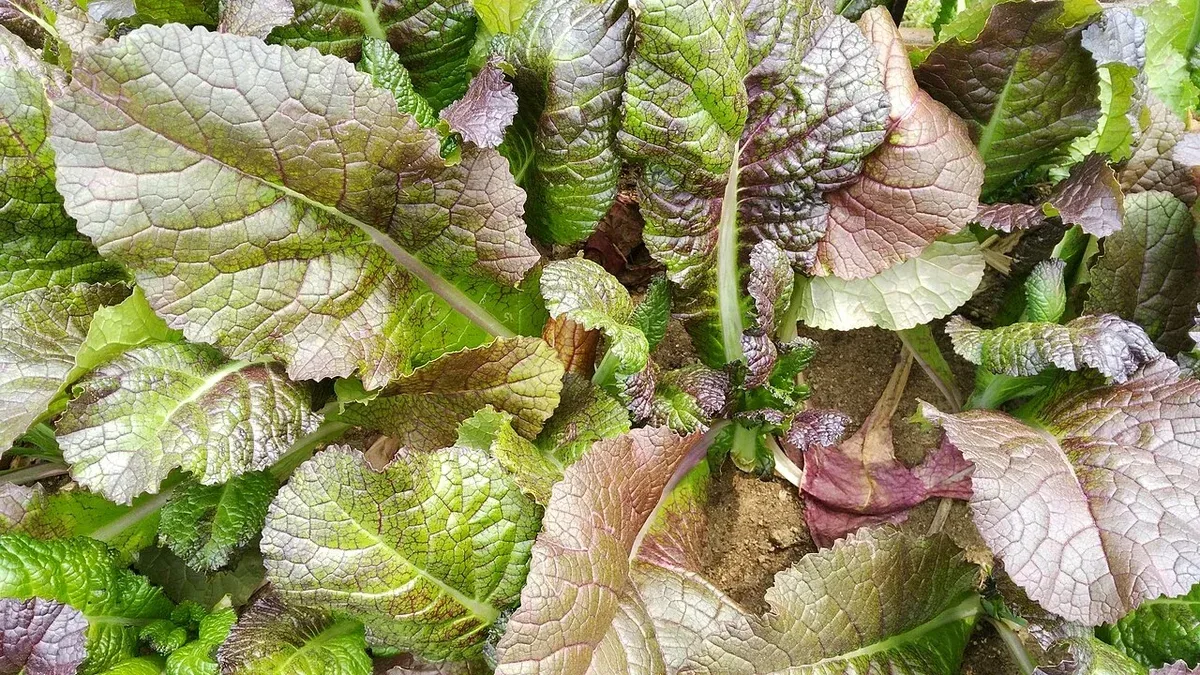
| ☀️ Light | Full sun |
|---|---|
| 💧 Water | Moderate (lightly moist) |
| 🪴 Soil | Rich, moist, well-drained loam with plenty of organic matter |
| 🌡️ Temp | -5°C – 27°C |
| 🐾 Safety | Cats: not verified · Dogs: not verified |
| 📏 Mature size | 45 cm |
Where It Grows & Climate Tolerance
Pet & Companion Animal Toxicity (How to Grow Mustard Greens in Canada)
Not yet verified: Toxicity status for cats, dogs, and horses has not yet been confirmed against veterinary poison-control records. Keep out of reach of pets or consult your veterinarian.
Mustard greens suit Canada's cool springs and falls. They can be sown as soon as the soil can be worked, tolerate light frost, and give a second crop from a late summer sowing. Hot, long June days are the main challenge, because they trigger bolting.
Care instructions
Care Guide & Maintenance Routine
Sow outdoors in April or May as soon as the soil is workable, and again from late July to late August for a fall crop. Use fine insect mesh against flea beetles. Keep the soil moist, harvest young, and pull plants that bolt in midsummer heat.
Light & Sunlight
NC State lists full sun to part shade and notes some shade is welcome as the weather turns hot, especially for baby greens.
Watering Schedule
NC State recommends consistently moist soil and watering early in the day so leaves dry before night, which reduces fungal disease. Moisture stress makes the leaves spicier and unpleasantly strong.
Potting Mix & Drainage
Rich, moist, well-drained loam with plenty of organic matter
Temperature & Humidity
Shrugs off light frost; curly kinds are hardier. Seed can go in two to three weeks ahead of the average last spring frost. Autumn plantings keep cropping into October, or later around Victoria and Vancouver. July heatwaves above roughly 27°C trigger bolting.
Mustard greens in Canadian gardens
Few greens are as quick or as tolerant of Canadian spring weather. Mustard greens germinate in cool soil, shrug off light frost, and are ready to pick in weeks. They are popular with gardeners who cook Chinese, Korean, Punjabi and Southern-style greens, and red frilly types brighten up salad mixes.
Spring sowing
Sow outdoors as soon as the soil can be worked, often in April on the BC coast and in southern Ontario, and in early to mid May on the Prairies. Average last frost dates from ECCC 1991-2020 normals, compiled by GrowersGuide.ca, run from 26 March in Vancouver to 4 May in Toronto, 16 May in Fredericton, 22 May in Edmonton and 1 June in St. John's; mustard can be sown two to three weeks before these.
Long days and bolting
Around the June solstice, days are 15 to 17 hours long across southern Canada, and heat arrives in July. Both push mustard into flower. Sow spring crops early, sow small amounts every two weeks, give afternoon shade, and pick young.
The fall crop
A late summer sowing is often the best crop. Sow from late July in Ottawa or Winnipeg to late August in Toronto or Victoria. Cooler fall nights sweeten the leaves, and curly types survive the first frosts, giving greens into October and sometimes November on the coast.
Flea beetles
Prairie gardeners know crucifer flea beetles well, because they also attack canola fields. They riddle seedlings with tiny holes in May and June. Cover rows with fine insect netting from sowing until plants are well grown.
Row covers and cold frames
Wire hoops with floating fabric or clear polyethylene stretch the season by several weeks in Halifax, Moncton or Kitchener. Vent the cover on sunny afternoons so heat does not build up, and close it before dusk once October nights dip below freezing.
Containers
A window box or a 20 cm deep container on a balcony is enough for salad leaves. Move it into partial shade in July.
In the kitchen
Mustard greens from the garden are milder than store-bought bunches. Braise them with smoked turkey or bacon, simmer them for saag with spinach, or salt and ferment the thick-stemmed types for Korean or Chinese pickles. Baby red leaves liven up a spring bowl of radishes and new lettuce.
Zones
Hardiness zones matter less for a quick crop than frost dates and summer heat. NRCan places much of the Prairies in Zones 3 and 4 and the BC coast in Zone 8 or 9, and mustard grows in all of them as a spring and fall crop.
Questions from Canadian readers
- Can I overwinter it? On the mild BC coast, fall-sown curly types may survive under a cold frame. Elsewhere, treat it as an annual.
- Is it the same plant as Saskatchewan's mustard crop? Brown and oriental mustard grown for seed on the Prairies is the same species, bred for seed rather than leaves.
Seasonal rhythm
Seasonal Calendar
| Month | Care Tasks | Seasonal Focus |
|---|---|---|
| Jan | Protect from frost/heat | Order seed; plan spring and fall sowings. |
| Feb | Sow | Sow microgreens indoors on a sunny sill. |
| Mar | Sow | BC coast: first outdoor sowings late in the month. |
| Apr | Sow | Southern Ontario and Quebec: sow outdoors. Cover with mesh. |
| May | Sow, Harvest | Prairies and Maritimes: sow. Coast: first baby leaves. |
| Jun | Harvest | Pick young. Pull bolting plants. |
| Jul | Sow, Harvest | Ottawa and Winnipeg: sow the fall crop late in the month. |
| Aug | Sow | Southern Ontario, BC: sow the fall crop. |
| Sep | Harvest | Fall harvest begins. Thin rows. |
| Oct | Harvest | Pick after light frosts; flavour sweetens. |
| Nov | Harvest, Protect from frost/heat | Coast: last pickings under a cold frame. |
| Dec | Protect from frost/heat | Save seed from bolted plants for next year. |
Diagnostics
Common Problems & Troubleshooting
Bolting and bitter, tough leaves in heat or long days; small holes in seedling leaves from flea beetles; aphid colonies under leaves; slug damage in damp weather; poor germination in cold, wet soil.
Pests & seasonal watch: Crucifer flea beetles on seedlings in May and June, especially on the Prairies. Imported cabbageworm caterpillars from June to September. Aphids in dry spells. Slugs on the wet BC coast.
- Yellow leaves — Leaves fade from green to yellow, often starting at the bottom.
- Aphids — Clusters of small soft insects on new tips, often sticky.
- White powder — A white powdery film on leaves, usually in still, humid air with dry soil at the roots.
- Leaf spot — Brown or tan spots with a yellow halo, sometimes with tiny dots in the centre.
- Underwatering — Soil is bone dry and leaves are crispy, curled or dull.
- Nutrient shortage — Overall pale growth, or yellowing between veins, on a plant that is otherwise watered well.
Similar Botanical Matches
Keep exploring
Related plants

Grower field notes
Reader Field Notes in Canada
Share how this plant performs in your local Canada climate.