
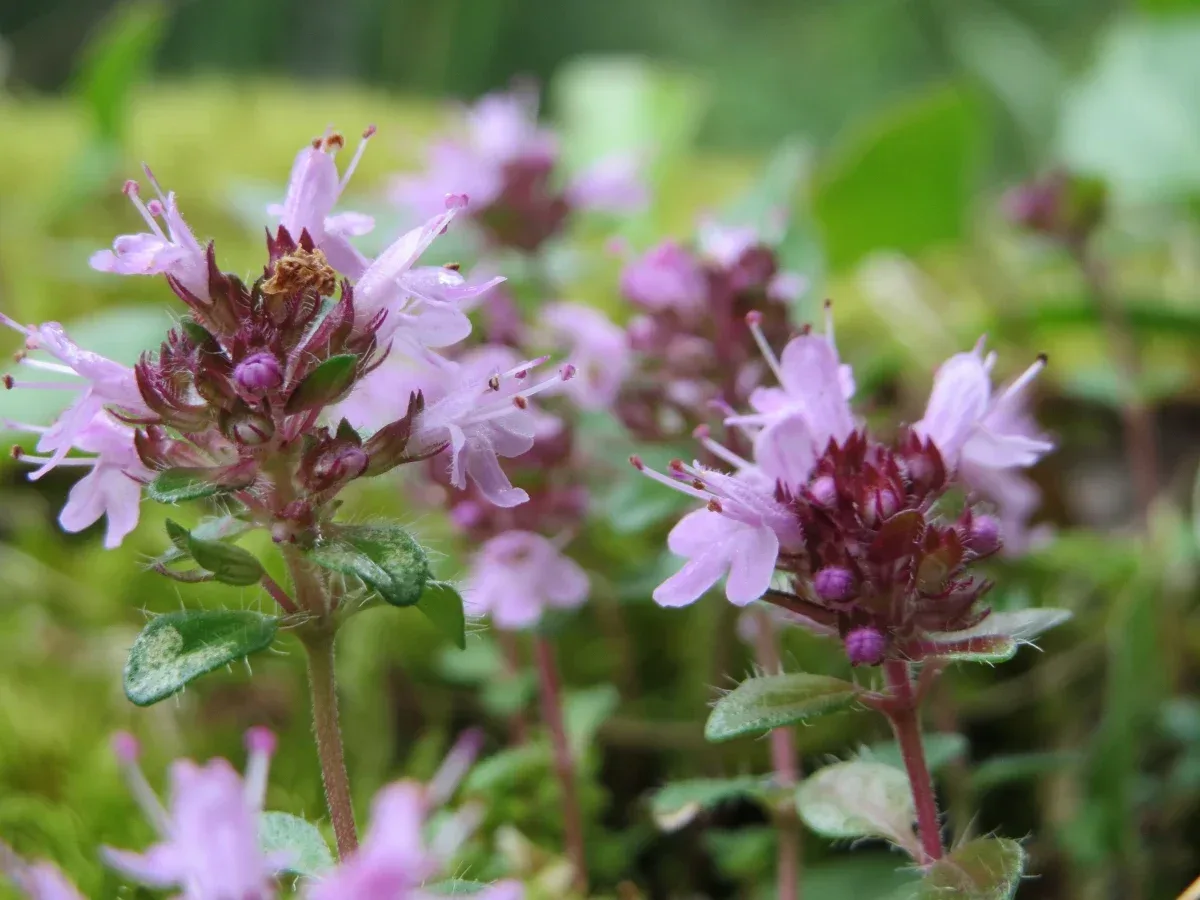
| ☀️ Light | Full sun |
|---|---|
| 💧 Water | Low (allow soil to dry) |
| 🪴 Soil | Well-drained sandy or gritty soil |
| 🐾 Safety | Cats: not verified · Dogs: not verified |
| 📏 Mature size | 10 cm |
Where It Grows & Climate Tolerance
Pet & Companion Animal Toxicity (Creeping Thyme for Canadian Gardens)
Not yet verified: Toxicity status for cats, dogs, and horses has not yet been confirmed against veterinary poison-control records. Keep out of reach of pets or consult your veterinarian.
For a sunny Canadian path or rock garden, this low thyme spreads into a fragrant mat and flowers in summer. Check the botanical name on the nursery label.
Care instructions
Care Guide & Maintenance Routine
Plant in full sun and fast-draining soil. Keep new plants watered while roots settle; established mats need little water. Protect against standing winter moisture.
Light & Sunlight
Full sun, ideally six or more hours of direct light.
Watering Schedule
Water after planting until rooted. Established plants prefer average to dry soil; check soil before watering.
Potting Mix & Drainage
Well-drained sandy or gritty soil
Temperature & Humidity
Outdoor hardiness is listed as zone 4 by KPU. Cold tolerance does not remove the need for free drainage through snowmelt and winter thaws.
In a Canadian garden, the first question is whether the site drains after rain and snowmelt. Creeping thyme handles cold better than saturated roots. Kwantlen Polytechnic University lists Thymus serpyllum for zone 4, while individual nursery cultivars may have different labels. Check your local zone before planting, especially in colder prairie and northern gardens.
Place it between widely spaced stepping stones, on a sunny slope or at the edge of a raised bed. Give it full sun. Mix grit into a suitable planting area only when it improves drainage through the whole root zone; a small pocket of amended soil in heavy clay can still hold water. A raised bed or pot is simpler where the ground remains wet. Water during establishment, then let the soil dry between waterings.
Plant after the last hard spring frost. In milder areas, early autumn planting can work if roots have time to grow before freeze-up. Flowering is usually in summer and timing varies by location. Trim lightly after bloom to limit woody stems, but leave some flowering stems for bees. Divide a mature patch in spring if you need more plants. Clear weeds while young thyme is spreading. This is an ornamental groundcover, so use culinary thyme if you want a dependable kitchen herb.
Seasonal rhythm
Seasonal Calendar
| Month | Care Tasks | Seasonal Focus |
|---|---|---|
| Jan | Routine check | Check for standing water under thawing snow; leave frozen plants undisturbed. |
| Feb | Routine check | Keep paths clear of salt runoff and watch for water pooling during a thaw. |
| Mar | Routine check | As snow recedes, check drainage before doing any spring work. |
| Apr | Routine check | In suitable zones, prepare a sunny site with free-draining soil; divide established clumps once growth resumes. |
| May | Routine check | After local hard frosts pass, plant nursery starts and water them while roots settle. |
| Jun | Routine check | Weed around young mats; flowers may begin in warmer areas. |
| Jul | Routine check | Enjoy summer flowers and pollinators; water only during a prolonged dry spell. |
| Aug | Routine check | Trim spent flowers lightly if the patch looks woody; keep drainage clear. |
| Sep | Routine check | In mild regions, early autumn planting may work if roots can establish before frost. |
| Oct | Routine check | Remove fallen leaves that trap moisture over a dense mat. |
| Nov | Routine check | Avoid soggy soil and heavy feeding as growth slows. |
| Dec | Routine check | Leave the groundcover alone through freeze-up; plan repairs for spring. |
Diagnostics
Common Problems & Troubleshooting
Poor drainage can cause root rot. Too much shade produces thin growth and fewer flowers.
Pests & seasonal watch: Check for rot where meltwater pools. Spider mites can occur during a hot, dry summer; inspect before treating.
Similar Botanical Matches
Keep exploring
Related plants
Grower field notes
Reader Field Notes in Canada
Share how this plant performs in your local Canada climate.