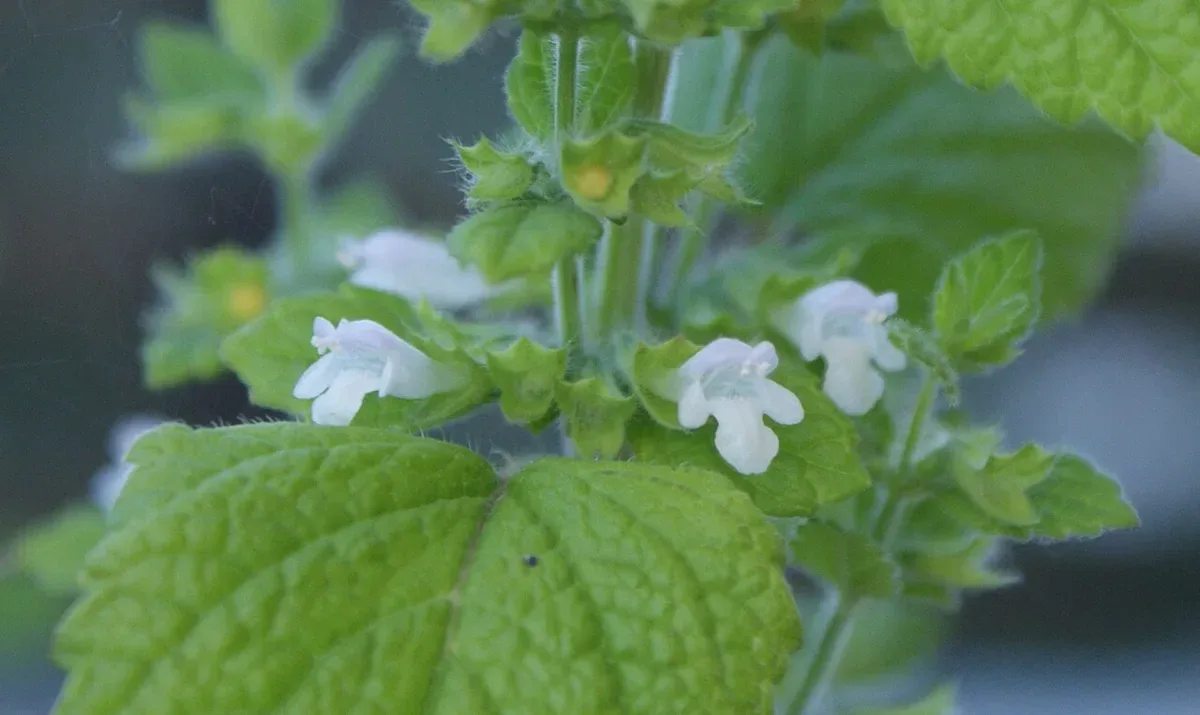
| ☀️ Light | Full sun |
|---|---|
| 💧 Water | Moderate (lightly moist) |
| 🪴 Soil | Fertile, moist but well-drained loam; tolerates most soils |
| 🌡️ Temp | -37°C – 32°C |
| 🐾 Safety | Cats: non-toxic · Dogs: non-toxic |
| 📏 Mature size | 60 cm |
Where It Grows & Climate Tolerance
Pet & Companion Animal Toxicity (How to Grow Lemon Balm in Canada)
Lemon balm is one of the hardiest herbs a Canadian gardener can grow. Wisconsin Horticulture rates it to zone 3a, so it comes back each spring across most settled parts of Canada. The bigger risk is that it seeds itself through the garden.
Care instructions
Care Guide & Maintenance Routine
Plant after the last spring frost in sun or part shade. Water until established. Harvest tips from June, cut back hard after flowering in July to stop seeding, and take a last cut in September. Leave the crown alone over winter; snow insulates it. Divide every three or four years.
Light & Sunlight
NC State and the RHS list full sun to partial shade. Wisconsin Horticulture notes the yellow-leaved 'All Gold' colours best in partial shade. In hot, dry climates afternoon shade prevents scorched leaves.
Watering Schedule
Keep the soil lightly moist during active growth and water in dry spells. NC State notes established plants tolerate some drought, but leaves turn tough and less fragrant when stressed. Pots dry faster and need checking every day or two in warm weather.
Potting Mix & Drainage
Fertile, moist but well-drained loam; tolerates most soils
Temperature & Humidity
Hardy across most of southern Canada. Top growth is killed by the first hard frost and the crown resprouts in May. Late spring frosts can blacken new shoots, which regrow. Containers above ground are more exposed than plants in beds.
Lemon balm in Canadian gardens
A single clump of lemon balm gives enough leaves for summer iced tea and a jar of dried leaves for winter. It handles cold far better than basil or rosemary and needs little attention beyond one hard cut a year.
Zones
Wisconsin Horticulture rates it hardy in zones 3a to 9b. NRCan's 1991-2020 map puts Regina and Saskatoon in 3a, Calgary and Edmonton in 4a, Ottawa and Québec City in 5a, Montréal in 5b, Halifax in 6b and Toronto and Kelowna in 7. In practice, lemon balm overwinters in all of these with normal snow cover. In Zone 2 and the North it can be grown as an annual.
Planting time
Plant nursery pots after the last spring frost. Average dates from ECCC 1991-2020 normals, compiled by GrowersGuide.ca, are 26 March in Vancouver, 30 April in Kamloops, 7 May in London, 11 May in Québec City, 18 May in Charlottetown, 22 May in Saskatoon and 28 May in Regina. Start seed indoors four to six weeks before your date.
Stopping it from seeding
Self-sown seedlings are the main complaint in Canadian gardens. Cut the whole plant back by about two thirds as soon as flowering begins in July. A fresh crop of leaves follows, and few seeds ripen.
Harvest calendar
Pick tips from June. Take the main cut in July, a second in late August and a light final picking in September. Drying on screens in a dark, airy room preserves some scent for winter tea.
Winter
The stems collapse after hard frost. Leave the crown in place and let snow cover it. On the windy Prairies, a few evergreen boughs hold snow over the plant. Plants in pots on a balcony are less protected; sink the pot into the ground or move it into an unheated garage.
Coast and humidity
In humid southern Ontario and Quebec summers, and on the wet BC coast, crowded clumps get powdery mildew. Space plants 40 to 45 cm apart and cut back regularly.
Balcony containers
Condo gardeners in Vancouver, Toronto and Montréal can keep lemon balm in a 30 cm planter for years. Use a frost-resistant fibreglass or wooden box rather than terracotta, which cracks in freeze-thaw cycles. Push it against the building wall in November, where it stays a few degrees warmer.
Using the harvest
Fresh sprigs suit lemonade at a summer barbecue, a jug of iced tea or a fruit salad with Ontario strawberries. In winter, steep a spoonful of dried leaf with honey.
Questions from Canadian readers
- Is it invasive? It is not on federal or provincial invasive lists, but it can seed heavily; deadhead to control it.
- Do deer eat it? Wisconsin Horticulture says deer and rabbits rarely do.
Seasonal rhythm
Seasonal Calendar
| Month | Care Tasks | Seasonal Focus |
|---|---|---|
| Jan | protect | Dormant under snow; nothing to do. |
| Feb | sow | Start seed indoors in Ontario and BC. |
| Mar | sow | Prairies and Maritimes: start seed indoors. |
| Apr | plant, prune | Coast: cut away old stems. Plant after frost. |
| May | plant | Divide old clumps as shoots appear. Plant new pots. |
| Jun | harvest | Pick tips for iced tea. |
| Jul | prune, harvest | Cut back hard at first flowers to prevent seeding. |
| Aug | harvest | Second cut. Dry leaves on screens. |
| Sep | plant, harvest | Light final picking. Divide or plant before mid-month. |
| Oct | protect | Let frost-killed stems fall; leave the crown. |
| Nov | protect | Cover with evergreen boughs on the windy Prairies. |
| Dec | protect | Store dried leaves in closed jars. |
Diagnostics
Common Problems & Troubleshooting
Self-seeding and spreading clumps; tall, floppy flowering stems with tough leaves; powdery mildew in humid, crowded conditions; wilting and leaf scorch in heat and drought; declining old clumps after three or four years.
Pests & seasonal watch: Powdery mildew in July and August in humid regions. Aphids on spring shoots. Spider mites in hot, dry spells on the Prairies. Self-seeding if flowers are left on.
- Leggy — Long weak stems with big gaps between small leaves, leaning to the window.
- Spider mites — Fine webbing and pale speckled leaves, worse in dry heated rooms.
- Aphids — Clusters of small soft insects on new tips, often sticky.
- White powder — A white powdery film on leaves, usually in still, humid air with dry soil at the roots.
- Leaf spot — Brown or tan spots with a yellow halo, sometimes with tiny dots in the centre.
- Grey mould — Fuzzy grey mould on faded flowers, damaged leaves or soft stems.
- Underwatering — Soil is bone dry and leaves are crispy, curled or dull.
- Sun scorch — Bleached or crispy patches on the side that faces strong sun.
Care encyclopedia · 1 guide
Guides & Articles for How to Grow Lemon Balm in Canada
Similar Botanical Matches
Grower field notes
Reader Field Notes in Canada
Share how this plant performs in your local Canada climate.