
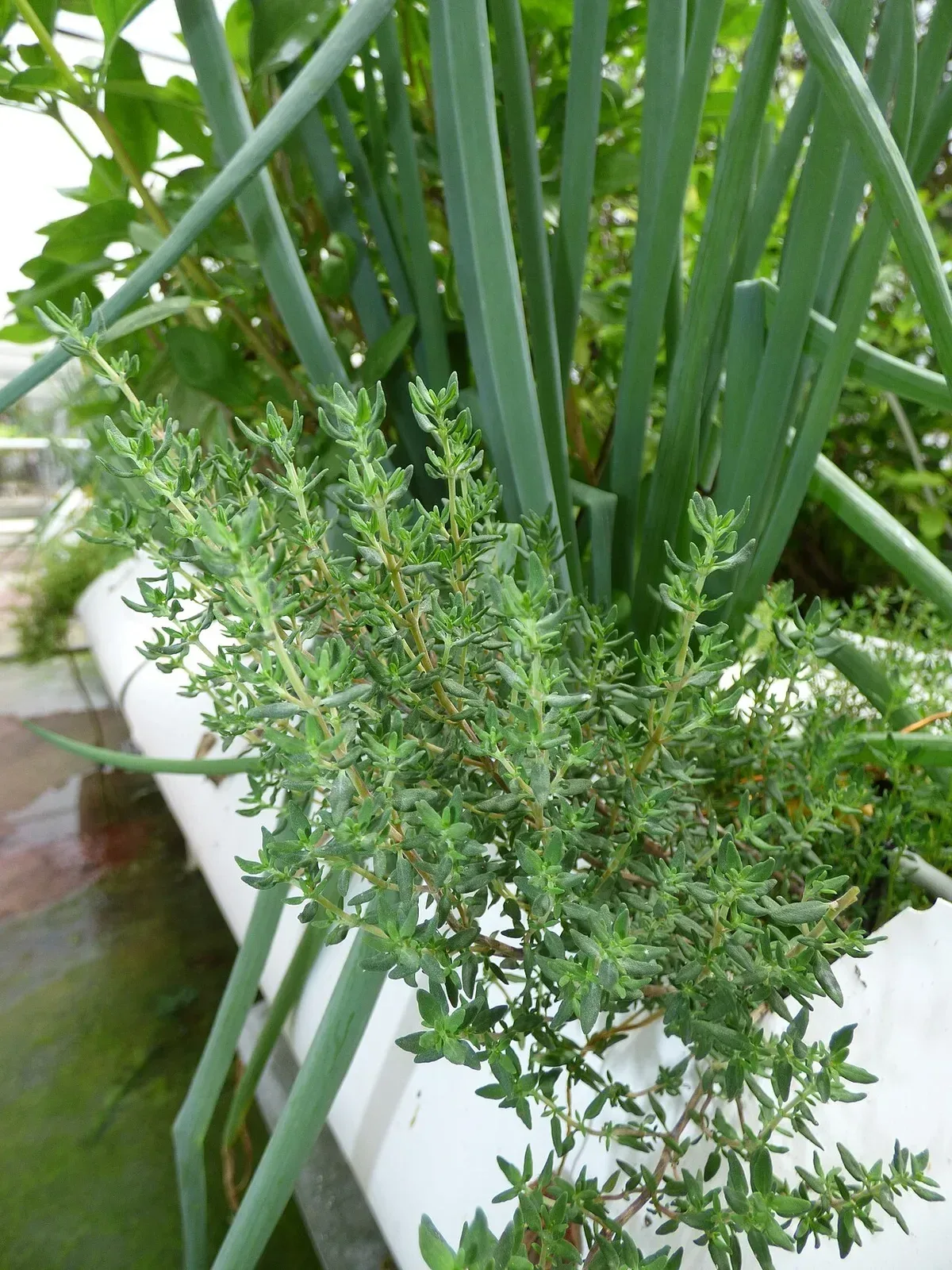
| ☀️ Light | Full sun |
|---|---|
| 💧 Water | Low (allow soil to dry) |
| 🪴 Soil | Dry, sandy or rocky, well-drained soil; neutral to alkaline |
| 🌡️ Temp | -23°C – 35°C |
| 🐾 Safety | Cats: non-toxic · Dogs: non-toxic |
| 📏 Mature size | 30 cm |
Where It Grows & Climate Tolerance
Pet & Companion Animal Toxicity (Thyme)
Common thyme (Thymus vulgaris) is a small, woody evergreen herb with tiny grey-green leaves and a warm, savoury scent. It wants full sun, lean gritty soil and very little water, and it is one of the easiest herbs to keep in a pot.
Care instructions
Care Guide & Maintenance Routine
Grow in full sun in sharply drained, neutral to alkaline soil. Water only when the soil is dry. Trim lightly after flowering and again in early spring so it does not turn woody and sprawling. Take cuttings every few years to replace old plants.
Light & Sunlight
NC State Extension lists full sun only. Six or more hours of direct sun keeps growth compact and aromatic; shade makes it thin and floppy.
Watering Schedule
NC State describes it as drought tolerant and suited to dry, sandy or rocky soils. Water established plants only in long dry spells; pots need water when the top of the mix is dry.
Potting Mix & Drainage
Dry, sandy or rocky, well-drained soil; neutral to alkaline
Temperature & Humidity
NC State rates common thyme for USDA zones 5 to 9 and describes it as frost tolerant. USDA zone 5 lows reach about -29 to -23°C; -23°C is used here as a cautious minimum for a well-drained site. Winter wet does more damage than cold alone. 35°C is an approximate upper limit for comfortable growth in pots.
About common thyme
Common thyme (Thymus vulgaris) is a woody, evergreen herb in the mint family. NC State Extension describes it as native to southwestern Europe and southeastern Italy, forming a mound about 15 to 30 cm high and up to 40 cm wide. The narrow leaves are only 6 to 12 mm long, hairy and very fragrant.
It is a staple in soups, stews, sauces and roasts, and it dries well. The flowers are rich in nectar and bring bees and butterflies into the garden.
Thyme or creeping thyme?
Common thyme grows as a small upright bush and is the one grown for the kitchen. Creeping thyme (Thymus serpyllum) hugs the ground and is mostly used between paving stones or as a lawn alternative. They need similar conditions, but they are different species.
Where to grow it
Full sun is essential. NC State says thyme performs best in dry, sandy or rocky soils with good drainage and a neutral to alkaline pH, and that it is frost and drought tolerant. Raised beds, rock gardens, gravel paths and terracotta pots all suit it.
Heavy, wet soil is the main danger, especially in winter. If your soil is clay, grow thyme in a pot or a raised bed with plenty of grit.
Watering and feeding
Water young plants until they settle, then only during long dry spells. In pots, water when the top few centimetres are dry and let excess water drain away. Skip regular feeding; lean soil keeps the leaves aromatic.
Pruning and harvesting
Trim thyme whenever it gets leggy, and cut it back in early spring and summer to slow woody growth, as NC State recommends. Avoid cutting into old bare stems. For the kitchen, harvest just before flowering, when oil content peaks: cut the soft top growth and leave the woody framework.
New plants
Seed comes up unevenly, so most gardeners use cuttings, layering or division. Soft tip cuttings root in a few weeks in gritty mix. Older plants decline after a few years; rooting a few cuttings each summer keeps a fresh supply.
Problems
NC State reports no significant pest or disease problems. Rot at the base after wet weather is the usual reason plants die. Indoors, look for spider mites in dry heated rooms.
Pet safety
ASPCA lists common thyme as non-toxic to dogs, cats and horses.
Thyme looks good beside rosemary and lavender, which like the same dry, sunny conditions.
Buying tips
For cooking, look for common thyme (Thymus vulgaris) or lemon thyme, and check the label: many creeping thymes sold for paths and rock gardens are milder. Choose a plant with grey-green, aromatic leaves and fresh shoots at the base. Avoid pots with brown, bare centres or wet, sour-smelling soil.
Containers
The RHS suggests a pot at least 15 cm wide and 10 cm deep for one plant, with plenty of drainage holes, filled with a soil-based compost. Terracotta suits thyme because it dries quickly. Stand pots on feet so water drains freely after rain.
Watering through the year
Growing season
Water only when the soil has dried out a few centimetres down. NC State describes common thyme as drought tolerant once established.
Wet or humid weeks
Stop watering and move pots under cover if rain is constant. Wet roots are the main reason thyme dies.
Cold months
Garden plants need no water. Keep pots just moist and avoid leaving them sitting in puddles.
Troubleshooting
Woody, leggy stems
Normal with age. The RHS recommends trimming lightly in mid- to late spring and again after flowering. Avoid cutting hard into old, bare wood, which often fails to regrow.
Grey or brown patches in the middle
Usually rot from wet soil, or an old plant wearing out. Take cuttings from healthy tips and replace the plant.
Pale, mottled leaves
Leafhoppers, which the RHS notes can cause a coarse pale mottling on thyme and related herbs. Damage is mostly cosmetic.
Plant collapses after rain
Root rot. Improve drainage with grit or grow it in a raised bed or pot.
Uses
Thyme holds its flavour well in slow cooking, so it suits soups, stews, roasted vegetables, dals and marinades. Strip leaves by running your fingers down the stem against the growth. NC State notes the flowers attract bees, butterflies and other pollinators.
Common mistakes
- Planting in rich, heavy soil that stays wet.
- Pruning hard into bare wood.
- Feeding often, which gives soft, less fragrant growth.
- Expecting one plant to last forever instead of renewing it from cuttings every few years.
India and Canada in brief
In India thyme grows best in the cool, dry months and at higher elevations, with the rainy season as the main risk. In Canada it is a hardy, low perennial in many southern gardens, where good drainage matters more than cold.
Harvesting and storing
Cut sprigs from the soft tips in the morning, after dew dries. NC State suggests harvesting just before flowering, when essential oil levels peak, and recommends leaving the woody stems. Thyme dries easily: spread sprigs on paper in a warm, airy room out of sun for a week, then strip the leaves into a jar. Small bunches also freeze well.
Starting new plants
NC State says seed germinates unevenly, so cuttings, layering and division are better. Take 5 to 8 cm softwood cuttings in late spring or early summer, strip the lower leaves and root them in gritty mix. To layer, pin a low stem to the soil; it usually roots in a few weeks.
Seasonal rhythm
Seasonal Calendar
A month-by-month calendar for Thyme in Global is coming soon. See the light, water and temperature notes above.
Diagnostics
Common Problems & Troubleshooting
Rot at the base from wet soil or humid weather; woody, bare centre on older plants; thin growth in shade; leaves browning after a wet winter.
Pests & seasonal watch: NC State reports no significant problems. In practice, root and stem rot in wet soil is the main cause of loss. Spider mites can appear on indoor plants.
Care encyclopedia · 1 guide
Guides & Articles for Thyme
Q&A
Frequently Asked Questions
What is the difference between thyme and creeping thyme?
Common thyme (Thymus vulgaris) is an upright little shrub grown mainly for cooking. Creeping thyme (Thymus serpyllum) is a low, mat-forming plant grown mostly as groundcover. Both are edible, but common thyme has the stronger flavour.
Why is my thyme turning woody?
Thyme naturally becomes woody with age. Trim it lightly after flowering and in early spring, never cutting into bare old wood, and replace very old plants with cuttings.
How do I harvest thyme without killing it?
NC State suggests cutting 12 to 15 cm off the top growth while leaving at least 12 cm of stem and the woody base. Harvest just before flowering for the strongest flavour.
Can I grow thyme from seed?
Yes, but NC State notes germination is uneven. Cuttings, layering or division give faster, more reliable plants.
Is thyme safe for cats and dogs?
ASPCA lists Thymus vulgaris as non-toxic to dogs, cats and horses.
How often should I water thyme?
Rarely. Water when the soil is dry a few centimetres down. Thyme is drought tolerant and dies from wet roots far more often than from dryness.
Does thyme need fertiliser?
Very little. Lean soil gives better flavour. One light feed in spring is enough for a potted plant.
Can thyme grow indoors?
Yes, on a very sunny windowsill or under a grow light, in a terracotta pot with gritty mix.
Why is my thyme dying in the middle?
Older plants often go woody and bare in the centre, and wet soil makes it worse. Trim lightly after flowering, improve drainage and replace the plant every few years with rooted cuttings.
Similar Botanical Matches
Keep exploring
Related plants
Grower field notes
Reader Field Notes in Global
Share how this plant performs in your local Global climate.