| ☀️ Light | Medium light |
|---|---|
| 💧 Water | Low (allow soil to dry) |
| 🪴 Soil | Free-draining indoor mix |
| 🌡️ Temp | 15°C – 27°C |
| 🐾 Safety | Cats: toxic · Dogs: toxic (ASPCA Animal Poison Control) |
| 📏 Mature size | 1.8 m |
Where It Grows & Climate Tolerance
Pet & Companion Animal Toxicity (Dracaena Marginata)
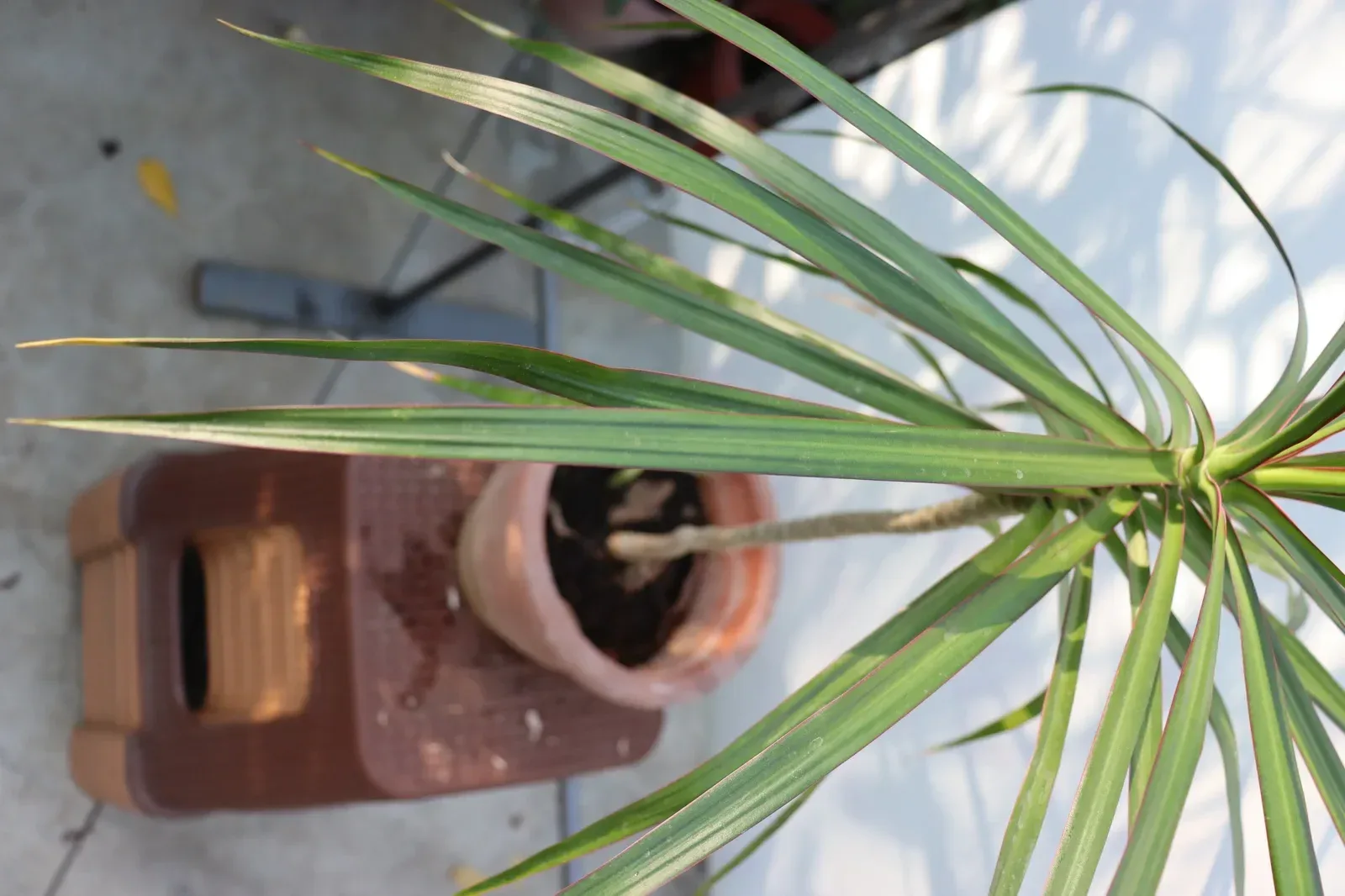
Dragon tree with thin red-edged leaves; tough, slow and fine with dry Canadian indoor air.
Care instructions
Care Guide & Maintenance Routine
Medium light, water when top half dry, filtered water reduces tip burn.
Light & Sunlight
Medium to bright indirect.
Watering Schedule
Water when top half dry. Overwater causes cane rot.
Potting Mix & Drainage
Free-draining indoor mix
Temperature & Humidity
Above 13 C.
Dracaena marginata, the dragon tree, is one of the toughest tall plants for Canadian apartments with dry winter air.
Medium light is enough. Water when the top half of the mix is dry — cane rot from soggy soil is the main risk. It handles low humidity well.
Brown tips often come from fluoride in municipal water; filtered water helps. Cut a tall cane anywhere and new heads will sprout below. Root the top as a new plant.
Keep away from pets. Wipe leaves occasionally. Slow growth means you rarely need to repot. It is a reliable choice for beginners who want height without fuss.
Dragon trees shrug off the dry air that browns ferns in prairie winters, which is why they fill Canadian condos. Filtered water reduces tip burn from fluoride. If a cane grows too tall for the ceiling, cut it and new heads sprout below; root the top in water or mix.
Slow growth means less repotting and less feed. Soft canes mean rot from wet soil — cut back to firm tissue and let the mix dry. Keep away from pets. Medium light and a light watering hand keep the red margins colourful for years with almost no drama.
Multiple canes in one pot can be left for a bushy look or separated when repotting. Tip burn on older leaves can be trimmed with clean scissors following the natural point. Do not overpot — a slightly snug pot dries safer in winter. Medium light and patience suit this slow grower.
Seasonal rhythm
Seasonal Calendar
A month-by-month calendar for Dracaena Marginata in Canada is coming soon. See the light, water and temperature notes above.
Diagnostics
Common Problems & Troubleshooting
Brown tips (fluoride/dry); yellow lower leaves (age or overwater); soft cane (rot).
Pests & seasonal watch: Mites and mealybugs.
Care encyclopedia · 3 guides
Guides & Articles for Dracaena Marginata
Dracaena Marginata Care Guide for Canada
A practical Canadian guide to dracaena marginata, with seasonal care, common problems, propagation and buying checks.
Read guide →Top 10 "Air-Purifying" Plants for Canadian Apartments: What They Can and Can't Do
The famous 1989 NASA plant study doesn't translate to real homes: a 2019 review found you'd need 10 to 1,000 plants per square metre to match normal ventilation. Here is what plants can do, what really cleans apartment air, and 10 easy NASA-list plants.
Read guide →15 Low-Light Houseplants for Dim Canadian Winters
A cast-iron plant, a Chinese evergreen or a parlor palm is a realistic start in a dim Canadian winter room. Here are 15 plants with live Canada profiles, plus an honest note on a few that only pretend to like the dark.
Read guide →Q&A
Frequently Asked Questions
Why are tips brown?
Often fluoride in tap water or uneven watering.
Is it toxic to pets?
Yes. Dracaena contains saponins.
Can I cut it back?
Yes; new heads sprout below the cut.
How much light?
Medium to bright indirect.
Similar Botanical Matches
Grower field notes
Reader Field Notes in Canada
Share how this plant performs in your local Canada climate.