| ☀️ Light | Full sun |
|---|---|
| 💧 Water | Moderate (lightly moist) |
| 🪴 Soil | Adaptable: clay, loam or sand; best in moderately fertile, well-drained soil, pH 6.0-7.5 |
| 🌡️ Temp | Min -40°C |
| 🐾 Safety | Cats: toxic · Dogs: toxic (ASPCA Animal Poison Control) |
| 📏 Mature size | 90 cm |
Where It Grows & Climate Tolerance
Pet & Companion Animal Toxicity (Daylily)
Easy, long-blooming perennial hardy to zone 3 that tolerates clay and drought. Highly toxic to cats, so avoid it if cats can reach your garden.
Care instructions
Care Guide & Maintenance Routine
Full sun, adaptable soil, moderate water. Choose dormant types for cold winters. Divide every 4-6 years. Deadhead and cut foliage after frost. HIGHLY toxic to cats.
Light & Sunlight
Full sun for heaviest bloom; tolerates part sun
Watering Schedule
Moderate; drought tolerant once established; more water gives larger, longer bloom
Potting Mix & Drainage
Adaptable: clay, loam or sand; best in moderately fertile, well-drained soil, pH 6.0-7.5
Temperature & Humidity
Most cultivars hardy to zone 3; dormant types most reliable in Alberta (Mossfield)
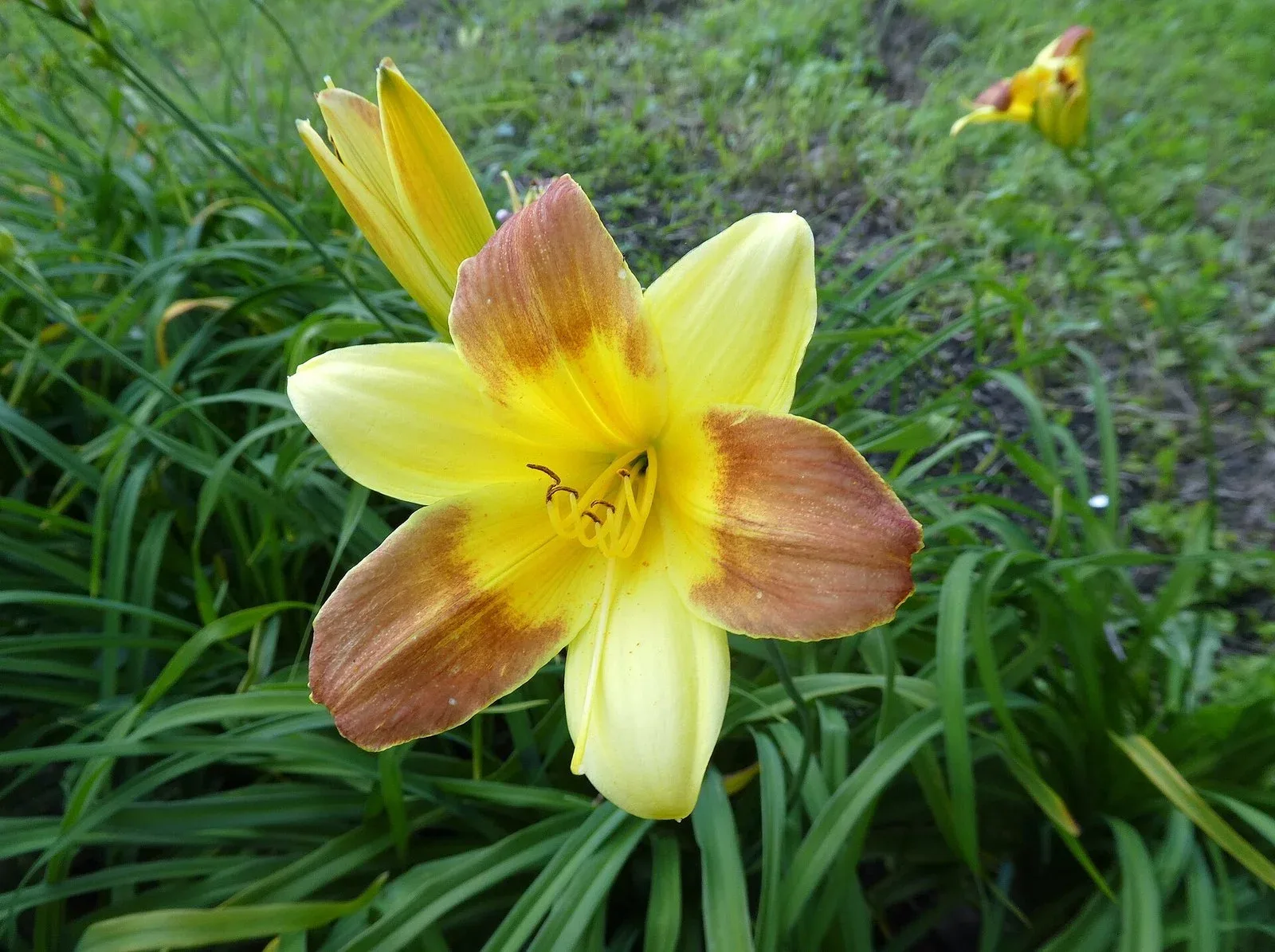
Daylilies (Hemerocallis) are among the most forgiving long-blooming perennials for Canadian gardens, native to East Asia. Each flower lasts a single day (the genus name is Greek for "beauty for a day"), but every flower stem carries a dozen or more buds that open in succession over several weeks. Modern hybrids come in every shade except true blue, with ruffled, eye-zoned and spider forms.
Important warning for cat owners
Every part of a daylily, including the pollen and even vase water, is toxic to cats and can cause acute kidney failure. Early signs such as drooling, vomiting, low energy and not eating start within 12 hours, and if treatment is delayed by 18 hours or more the damage is usually permanent. Treat any exposure as a veterinary emergency, and do not plant daylilies where cats can reach them. Dogs and horses are not affected this way, though a dog that eats a lot may get an upset stomach.
Hardiness in Canada
Most modern cultivars are hardy to zone 3. Dormant types, which die right back in fall, have the best record on the Prairies, while evergreen types rarely survive a prairie winter.
Growing conditions
Plant in full sun for the heaviest bloom, although they tolerate part sun. They tolerate clay, lean soil and drought once established, but bloom is larger and longer with consistent moisture. Best soil is moderately fertile and well-drained with a pH of about 6-7.5. Plant in spring (late April through May) or early fall, and space plants 45-60 cm apart.
Bloom time
Single-bloomers flower from late June to early August. Reblooming cultivars such as 'Stella de Oro', 'Happy Returns', 'Pardon Me' and 'Rosy Returns' flower from late June into September with deadheading.
Care
Snap off spent flowers, remove entire spent scapes once all buds have bloomed, and cut foliage back in late fall after frost. Divide crowded clumps every 4-6 years in early spring or early fall; each fan with roots becomes a new plant.
Seasonal rhythm
Seasonal Calendar
A month-by-month calendar for Daylily in Canada is coming soon. See the light, water and temperature notes above.
Diagnostics
Common Problems & Troubleshooting
- Evergreen cultivar dies over winter | Cause: Evergreen daylilies rarely survive prairie winters | Fix: Choose dormant (deciduous) cultivars rated zone 3 - Fewer flowers | Cause: Too much shade or overcrowded clumps | Fix: Move to full sun and divide every 4-6 years - Cat poisoning | Cause: Cats eating any part of the plant, pollen or vase water | Fix: Do not plant where cats can reach them; seek emergency veterinary care after exposure
Care encyclopedia · 7 guides
Guides & Articles for Daylily
Toxic Plants for Pets and Kids in Canada: Houseplants, Garden Plants and Poison Centre Numbers
Which houseplants and garden plants are toxic to cats, dogs and children in Canada, what to do right away if one is eaten, and the poison centre number for every province and territory.
Read guide →Perennial Gardening in Cold Places: Easy Tips for Canadian Gardens (Zones 3 to 8)
Perennials are plants that come back every spring. Here is how to pick the right ones for a cold Canadian garden and keep them alive through winter.
Read guide →Fall Garden Cleanup Checklist for Canadian Gardens
A step-by-step fall cleanup checklist for Canadian gardens: what to remove, what to leave standing for birds and stem-nesting bees, how to handle leaves and the lawn, and how to put tools and water away for winter.
Read guide →Overwintering Perennials and Bulbs in Canada: Mulch, Tender Bulbs and Containers
Get perennials and bulbs through a Canadian winter: pick plants for your NRCan hardiness zone, mulch at the right time, dig and store dahlias, gladiolus and cannas, and keep container plants alive.
Read guide →Top 10 Hardy Perennials for Zone 3–4 Prairie Gardens
Prairie winters, chinooks and dry wind kill many perennials sold in Canadian stores. These 10 are rated zone 3 or colder on Canada's hardiness scale, and most are rated zone 2, so they return reliably in zone 3–4 gardens.
Read guide →Common Garden Pests in Canada: Slugs, Cutworms, Colorado Potato Beetle and Lily Leaf Beetle
Slugs, cutworms, Colorado potato beetle and lily leaf beetle cause more damage in Canadian gardens than almost anything else. Learn how to identify each one and control it with methods recommended by BC, Saskatchewan and Manitoba experts.
Read guide →Japanese Beetle in Canada: How to Identify It, Control It and Where It's Regulated
Japanese beetles are established in Ontario, Quebec and the Maritimes, and CFIA is fighting them in BC and Newfoundland. Learn how to identify adults and grubs, where they are regulated in 2026, how to report a sighting, and how to protect your roses, raspberries and lawn.
Read guide →Q&A
Frequently Asked Questions
Are daylilies poisonous to cats?
Yes. Every part can cause acute kidney failure in cats. Seek urgent veterinary care after any exposure.
Are daylilies hardy in Canada?
Most cultivars are hardy to zone 3. Dormant types are the most reliable in cold prairie winters; evergreen types rarely survive.
How often should I divide daylilies?
Every 4-6 years, or sooner if the clump is crowded and flowering less.
Do daylilies rebloom?
Some do, such as 'Stella de Oro', 'Happy Returns' and 'Rosy Returns', which flower from late June into September with deadheading.
Similar Botanical Matches
Grower field notes
Reader Field Notes in Canada
Share how this plant performs in your local Canada climate.