
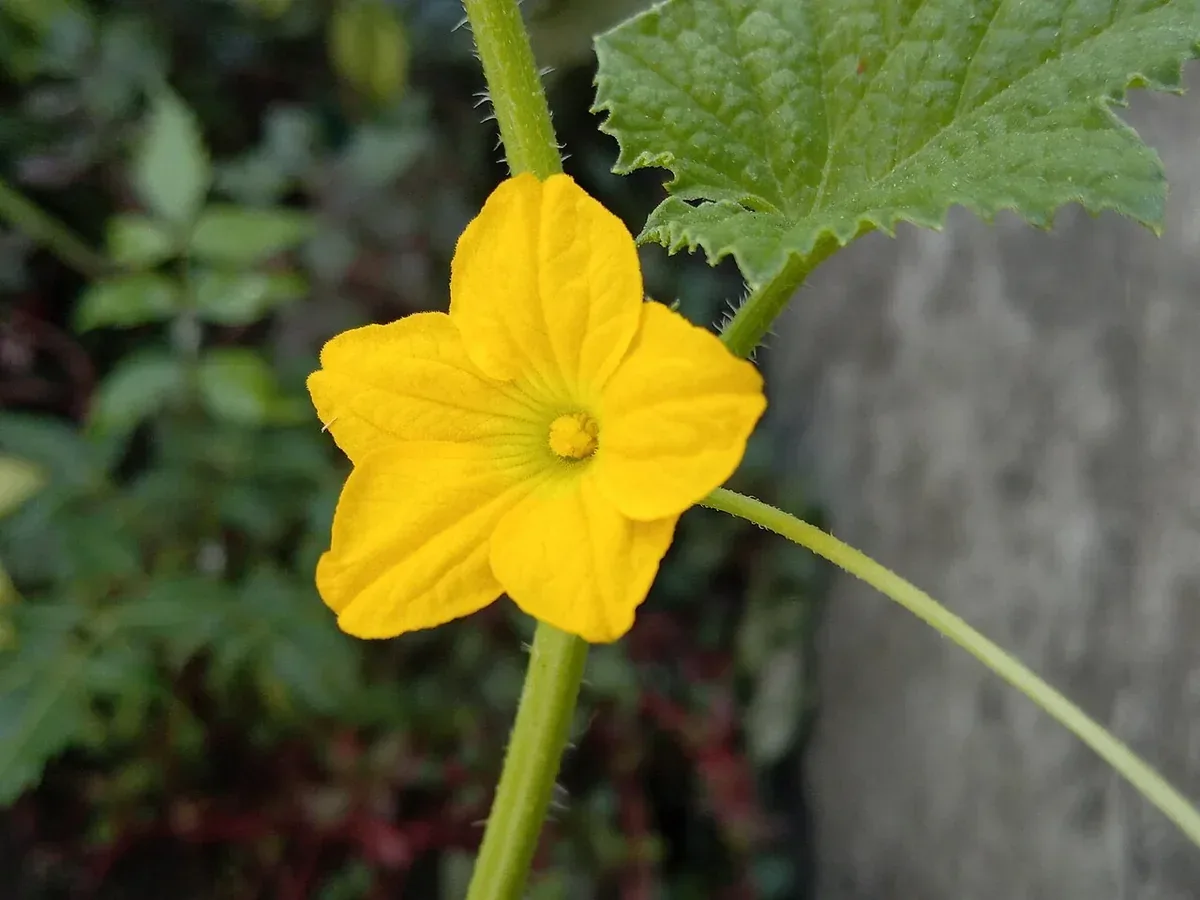
| ☀️ Light | Full sun |
|---|---|
| 💧 Water | High (consistently moist) |
| 🪴 Soil | Rich, moist, well-drained soil high in organic matter; slightly acidic to neutral |
| 🌡️ Temp | 12°C – 35°C |
| 🐾 Safety | Cats: toxic · Dogs: toxic (ASPCA Animal Poison Control) |
| 📏 Mature size | 45 cm |
Where It Grows & Climate Tolerance
Pet & Companion Animal Toxicity (How to Grow Cucumbers in Canada)
Cucumbers do well from southern Ontario to the Prairies as long as you wait for warm soil. Direct seed once it reaches about 18°C, or set out small transplants about two weeks after your last frost, then race the first fall frost.
Care instructions
Care Guide & Maintenance Routine
Wait for soil of at least 15 to 18°C (USask). Transplant about two weeks after last frost, from mid-May in Toronto to mid-June on the Prairies. Plastic mulch and row covers warm the bed; remove covers when flowers open. Water deeply, pick every day or two, and harvest everything before frost.
Light & Sunlight
Full sun is needed for good fruit production. Avoid shaded beds.
Watering Schedule
Keep soil evenly moist, especially during flowering and fruiting; water at soil level and use mulch after warming.
Potting Mix & Drainage
Rich, moist, well-drained soil high in organic matter; slightly acidic to neutral
Temperature & Humidity
Frost kills cucumbers. USask: soil at least 15°C for germination (18°C for direct seeding), and transplant when days and nights stay around 18°C. First fall frost ends the season: about 10 to 15 September on the Prairies, October in Ontario, Quebec and the Atlantic provinces.
Cucumbers in a short Canadian summer
Cucumbers are a warm-season crop squeezed into the Canadian frost-free season, so timing and soil warmth matter more than anything else. In Quebec and francophone New Brunswick the seed packet will say concombre. Pickling types are popular for dill pickles in late August; slicing types for salads; long, smooth English types are best kept in a greenhouse.
Buying seed and transplants
Stokes in Ontario, Veseys in PEI and West Coast Seeds in BC ship seed nationwide, and racks fill hardware and grocery stores from January. Garden centres sell cucumber transplants in late May. USask advises small ones; big, root-bound plants in cups often stall. Do not buy transplants too early: a cold garage or a chilly drive home can damage them.
When to plant, by region
USask suggests transplanting about two weeks after average last frost, once days and nights reach about 18°C. Using ECCC normals via GrowersGuide.ca:
- Ontario and Quebec: last frost about 4 May in Toronto, 7 May in Ottawa and 29 April in Montréal, so mid to late May for planting.
- Atlantic: about 8 May in Halifax, 16 May in Fredericton and 18 May in Charlottetown, so late May to early June.
- Prairies: about 22 May in Saskatoon and Edmonton, 24 May in Winnipeg, 26 May in Calgary and 28 May in Regina, so early to mid-June.
- BC coast: Vancouver's last frost averages about 26 March, but the soil stays cool for weeks. Most coastal gardeners wait until late May or June.
Warming the soil
USask recommends plastic mulch, supported tunnels or crop covers to warm soil and plants. Lay black plastic a week or two before planting. Remove covers as soon as flowers open so bees can reach them. In northern areas, transplants give a head start.
Zones and greenhouses
Hardiness zones apply to perennials, not annual vegetables, but they hint at season length. Regina and Saskatoon sit in Zone 3a and Winnipeg in 3b on NRCan's 1991-2020 map; their frost-free window is short, so choose quick varieties. A small greenhouse or cold frame helps in Newfoundland, where St. John's last frost averages about 1 June.
Racing the fall frost
With 45 to 65 days to maturity (USask), timing is tight on the Prairies, where first fall frost averages 10 September in Calgary and 15 September in Saskatoon. Pick everything when a frost warning is issued.
Identifying pests
- Striped cucumber beetle: yellow and black striped, chewing seedlings; wilting vines may mean bacterial wilt.
- Cutworms: seedlings cut off at soil level overnight.
- Powdery mildew: white dusty leaves in late August.
For warm-crop timing, see last frost dates for tomatoes and peppers, and grow cucumbers beside tomatoes.
Seasonal rhythm
Seasonal Calendar
| Month | Care Tasks | Seasonal Focus |
|---|---|---|
| Jan | Protect from frost/heat | Seed catalogues arrive. Order slicing and pickling types; greenhouse English types only with a heated greenhouse. |
| Feb | Protect from frost/heat | Pick a sunny, sheltered bed and plan a trellis. Compare days to maturity on the packets. |
| Mar | Sow | Still far too early outside. Gather peat or paper pots for May sowing. |
| Apr | Sow | Soil still cold almost everywhere, even on the BC coast. Prairie gardeners buy black plastic. |
| May | Sow, Plant out | Southern Ontario and Quebec: seed indoors early in the month, transplant after the long weekend once nights reach about 18°C. Prairies: lay plastic to warm beds. |
| Jun | Sow, Plant out | Prairies, Maritimes, coastal BC: direct seed or transplant early in the month. Lift row covers once flowers open for bees. |
| Jul | Fertilize, Harvest | Feed weekly and water about 2.5 cm twice a week from mid-July (USask). First cukes in Ontario and Quebec. |
| Aug | Harvest | Pickling season: pick every day or two for dills. Watch for powdery mildew and striped beetles. |
| Sep | Harvest, Protect from frost/heat | Prairie frost by mid-month: cover or pick everything. Ontario and Quebec: still harvesting. |
| Oct | Harvest | Toronto, Montréal, Halifax: last pickings before October frost. Compost healthy vines. |
| Nov | Protect from frost/heat | Season done. Bag diseased vines for the garbage, not the compost. |
| Dec | Protect from frost/heat | Plan rotation: next year's cucumbers go away from this year's squash and cucumber bed. |
Diagnostics
Common Problems & Troubleshooting
Flowers but no fruit early on (male flowers come first); misshapen fruit from poor pollination; bitter fruit from dry soil or overripeness; yellow fruit left too long; white powdery leaves; yellow mottled, distorted leaves from mosaic virus.
Pests & seasonal watch: Striped and spotted cucumber beetles chew seedlings and spread bacterial wilt in Ontario and Quebec. Cutworms sever young stems; USask suggests a collar pushed 5 cm into the soil. Powdery mildew in late August. Aphids spread mosaic virus.
- Yellow leaves — Leaves fade from green to yellow, often starting at the bottom.
- Drooping — Stems and leaves hang limp even though the plant was recently fine.
- Spider mites — Fine webbing and pale speckled leaves, worse in dry heated rooms.
- Aphids — Clusters of small soft insects on new tips, often sticky.
- Whitefly — Tiny white insects fly up in a cloud when you touch the plant.
- White powder — A white powdery film on leaves, usually in still, humid air with dry soil at the roots.
- Leaf spot — Brown or tan spots with a yellow halo, sometimes with tiny dots in the centre.
- Underwatering — Soil is bone dry and leaves are crispy, curled or dull.
- Curling — Leaves cup, roll or twist instead of lying flat.
- Nutrient shortage — Overall pale growth, or yellowing between veins, on a plant that is otherwise watered well.
Similar Botanical Matches
Keep exploring
Related plants
Grower field notes
Reader Field Notes in Canada
Share how this plant performs in your local Canada climate.