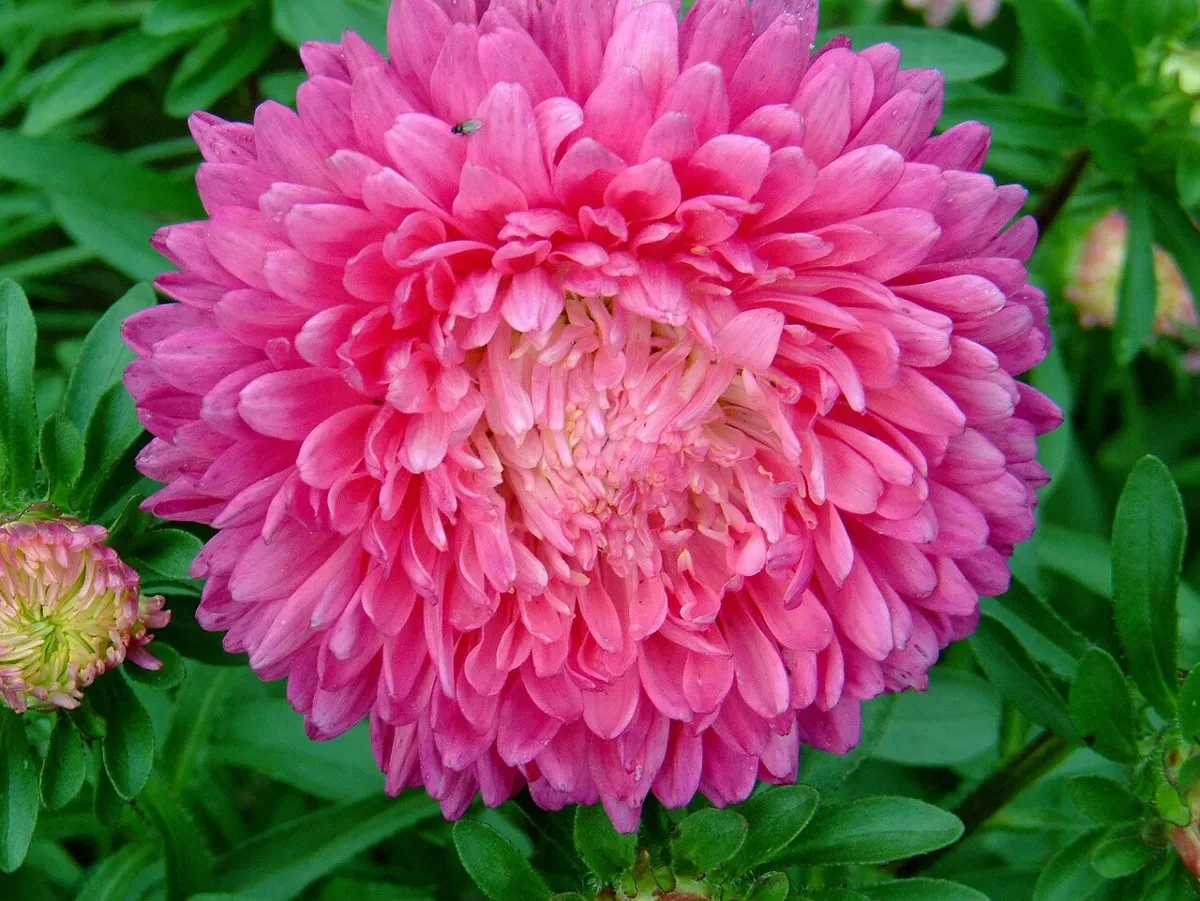
| ☀️ Light | Full sun |
|---|---|
| 💧 Water | Moderate (lightly moist) |
| 🪴 Soil | Rich, moist, well-drained loam |
| 🌡️ Temp | 0°C – 32°C |
| 🐾 Safety | Cats: non-toxic · Dogs: non-toxic |
| 📏 Mature size | 60 cm |
Where It Grows & Climate Tolerance
Pet & Companion Animal Toxicity (How to Grow China Aster in Canada)
China aster is a classic Canadian cut-flower annual, flowering from late July until the first fall frost. It handles cool summers well, which suits the Prairies, the Maritimes and coastal BC. Its main enemies are aster yellows and soil-borne wilt.
Care instructions
Care Guide & Maintenance Routine
Start seed indoors six to eight weeks before the last frost, or sow outdoors once the soil warms. Plant in full sun in a spot where asters have not grown in recent years. Stake tall types, water at the base, and pull out any plant with green, twisted flowers.
Light & Sunlight
NC State lists full sun to partial shade. Full sun gives sturdier stems and more flowers; light shade helps in very hot weather.
Watering Schedule
Keep the soil evenly moist, especially as buds form. Water at the base, not over the leaves, to limit foliar disease, and never leave the soil waterlogged, which encourages stem rot and wilt.
Potting Mix & Drainage
Rich, moist, well-drained loam
Temperature & Humidity
Frost tender. Plant out after the last spring frost. Light fall frosts may mark flowers, but a hard frost, usually September on the Prairies and October in southern Ontario, ends the season.
China aster in Canadian gardens
China aster has long been a favourite cut flower in Canadian gardens. Its cool-weather nature, as NC State describes it, means it handles Prairie and Maritime summers well and flowers late in the season, when many annuals are fading. Tall cut-flower strains give long stems for late summer bouquets and fall fairs.
Starting seed
Start seed indoors six to eight weeks before the last frost date, usually in late March or April. Sow lightly covered in fresh mix and keep at room temperature. Transplant seedlings after the last frost, once nights are mild. Direct sowing in late May or early June also works and avoids transplant shock.
- Vancouver, Victoria: plant out from early May.
- Toronto, Ottawa, Montréal: after Victoria Day.
- Calgary, Edmonton, Saskatoon, Regina, Winnipeg: early June.
- Atlantic provinces: early June.
Aster yellows
Manitoba Agriculture explains that aster yellows is caused by a phytoplasma carried by the aster leafhopper, an olive-green or straw-coloured insect with six dark spots on its head. Large numbers migrate in from the south, usually arriving in early to mid June, and the first local generation appears in late June to early July. The leafhopper does not fly below 15°C. The pathogen has more than 300 hosts, including carrot, lettuce, celery, potato, canola and flax, and weed hosts such as pineappleweed, wild carrot, plantain, sow thistle and wild asters. Infected asters turn yellow and their flowers become green and distorted. Pull affected plants, keep nearby weeds down, and use yellow sticky traps from late May to mid-August to see when leafhoppers arrive. Floating row cover over young plants in June keeps them off.
Wilt and rotation
NC State advises rotating the planting site every year. In small gardens, move asters to a different bed each season, or grow them in containers with fresh mix.
Staking and cutting
Tall strains need support, which NC State notes. Use stakes or a horizontal mesh. Cut stems for the vase when flowers are nearly open. Sowing a second batch three weeks after the first extends the season into September.
Fall fairs and cutting gardens
Asters have a long history at agricultural fairs and horticultural society shows from the Annapolis Valley to the Peace Country, where tall, double blooms are judged in late August and September. For show stems, grow one of the tall strains, disbud to a single flower per stem, and cut early in the morning. At home, a short row in the vegetable patch gives armfuls of flowers for the Labour Day table, and seed packets are cheap enough to try a new mix every spring.
A typical season in Edmonton
Seed is sown under lights in early April and planted out in the first week of June. Stakes go in at planting. The first flowers open in late July and the bed is at its best in August, ready for fall fair entries. A September frost usually ends the season.
Questions from Canadian readers
- Can China asters take frost? Light frost may mark the flowers; a hard frost kills the plants.
Seasonal rhythm
Seasonal Calendar
| Month | Care Tasks | Seasonal Focus |
|---|---|---|
| Jan | sow | Order seed of tall cut-flower strains. |
| Feb | sow | Family Day: plan a new bed for rotation. |
| Mar | sow | Late March: sow indoors in Ontario and BC. |
| Apr | sow | April: Prairie indoor sowing under lights. |
| May | plant | Victoria Day: plant out in the south; direct sow. |
| Jun | plant, protect | June: Prairie planting; row cover against leafhoppers. |
| Jul | feed | Canada Day: stake tall types; second sowing. |
| Aug | harvest | Late July: first flowers; cut for the vase. |
| Sep | harvest | Labour Day: fall fair bouquets; pull yellows plants. |
| Oct | harvest, protect | Thanksgiving: last flowers before hard frost. |
| Nov | protect | Remembrance Day: clear and bin old plants. |
| Dec | sow | December: note where asters grew this year. |
Diagnostics
Common Problems & Troubleshooting
Plants wilting and dying from soil-borne wilt; green, distorted flowers from aster yellows; stem rot at the base in wet soil; aphids and spider mites; flopping stems in tall types; powdery mildew in crowded beds.
Pests & seasonal watch: Leafhoppers and aster yellows, especially on the Prairies; soil-borne wilt where asters are replanted in the same spot; aphids; and grey mould in wet, cool late summers.
- Yellow leaves — Leaves fade from green to yellow, often starting at the bottom.
- Drooping — Stems and leaves hang limp even though the plant was recently fine.
- Root rot — Roots turn brown and mushy in soil that stays wet.
- Spider mites — Fine webbing and pale speckled leaves, worse in dry heated rooms.
- Aphids — Clusters of small soft insects on new tips, often sticky.
- White powder — A white powdery film on leaves, usually in still, humid air with dry soil at the roots.
- Leaf spot — Brown or tan spots with a yellow halo, sometimes with tiny dots in the centre.
- Stem rot — The stem goes soft, dark or black at soil level and the top collapses.
Similar Botanical Matches
Grower field notes
Reader Field Notes in Canada
Share how this plant performs in your local Canada climate.