
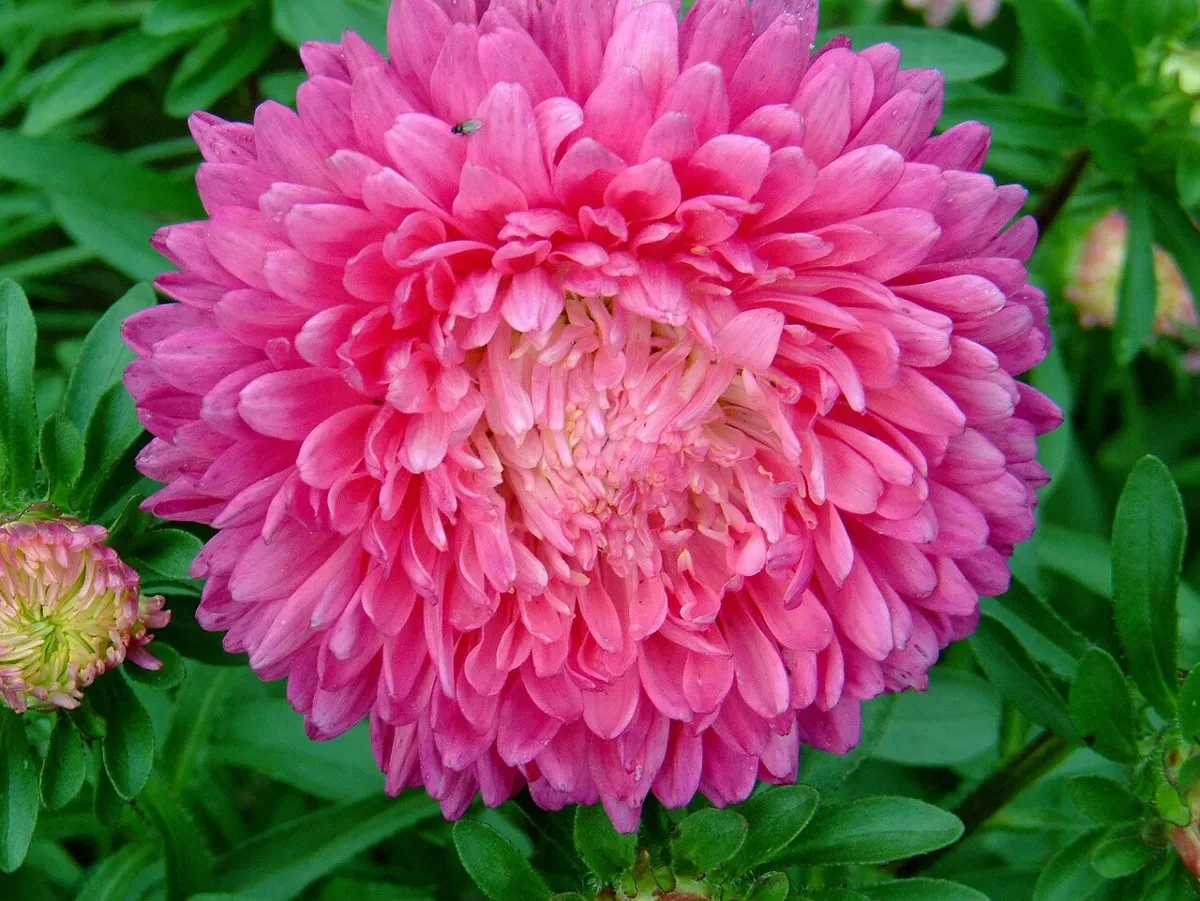
| ☀️ Light | Full sun |
|---|---|
| 💧 Water | Moderate (lightly moist) |
| 🪴 Soil | Rich, moist, well-drained loam |
| 🌡️ Temp | 0°C – 32°C |
| 🐾 Safety | Cats: non-toxic · Dogs: non-toxic |
| 📏 Mature size | 60 cm |
Where It Grows & Climate Tolerance
Pet & Companion Animal Toxicity (China Aster (Annual Aster))
China aster is a cool-weather annual from China grown for its daisy, pompon, quill and peony-like flowers in white, pink, red, purple, blue-violet and cream. It is a popular cut flower and, in south India, an important garland crop. ASPCA lists it as non-toxic to pets.
Care instructions
Care Guide & Maintenance Routine
Grow in full sun or light shade in rich, moist, well-drained soil with good air movement. Pinch young plants, stake tall types, and water at the base. Do not plant asters in the same spot two years running, because soil-borne wilt builds up. Control leafhoppers, which spread aster yellows.
Light & Sunlight
NC State lists full sun to partial shade. Full sun gives sturdier stems and more flowers; light shade helps in very hot weather.
Watering Schedule
Keep the soil evenly moist, especially as buds form. Water at the base, not over the leaves, to limit foliar disease, and never leave the soil waterlogged, which encourages stem rot and wilt.
Potting Mix & Drainage
Rich, moist, well-drained loam
Temperature & Humidity
A cool-weather annual. It grows best in mild days and cool nights and is killed by hard frost. Hot, humid weather favours wilt and shortens flowering.
About China aster
China aster, Callistephus chinensis, is the only species in its genus, a member of the daisy family native to China. NC State describes it as a cool-weather annual. Plants are upright and branching, 20 to 90 cm tall depending on the cultivar, with coarsely toothed leaves and long, stiff flower stems.
Wild plants have single violet daisies with a yellow centre. Breeding has produced a huge range of forms: single, semi-double and fully double; pompon, powderpuff, quilled, needle, ostrich-plume and peony types. Colours include white, cream, yellow, pink, rose, red, purple and blue-violet. NC State gives flower sizes of about 8 to 12 cm on many types.
Types
- Dwarf bedding types (20 to 30 cm): compact, for edging and pots.
- Medium types (40 to 60 cm): borders and short cut stems.
- Tall cut-flower types (60 to 90 cm): long stems for the vase; need staking.
- Powderpuff and pompon types: tightly packed, rounded heads used in garlands.
- Quill and needle types: narrow, tubular petals, like small chrysanthemums.
Light and position
NC State lists full sun to partial shade. Choose an open, airy spot, because NC State notes good air circulation is needed to limit disease. Avoid low, damp corners.
Soil
Rich, moist, well-drained soil suits it best. Mix in compost before planting. Do not plant China asters where they or their relatives grew in the past few years; NC State advises rotating the planting site each year to limit wilt.
Sowing
China aster grows only from seed. Sow thinly in trays or nursery beds, cover lightly, and keep the surface moist. Seedlings usually appear within a week to ten days in warm conditions. Transplant at the four- to six-leaf stage, spacing about 25 to 30 cm apart. Seed can also be sown in place.
Pinching and staking
Pinch the tip of young plants to encourage branching. SKUAST-Jammu pinches asters at 5 to 10 cm. For exhibition-sized flowers, remove side buds at pea size so one bloom develops per stem. Insert stakes or a mesh support early for tall types.
Watering and feeding
Keep soil moist, watering at the base, never over the flowers. A balanced feed a few weeks after transplanting helps in poor soil; follow label rates. Too much nitrogen makes soft, floppy plants.
Flowering and succession
Each plant flowers for about a month. For a longer season, sow a few batches two or three weeks apart. Cut flowers regularly; this also helps plants keep producing.
Cut flowers
China aster is one of the best annual cut flowers. Cut stems when flowers are nearly open, strip lower leaves, and put them straight into clean water. Change the water every two days.
Pests and diseases
NC State lists the main problems:
- Wilt: soil-borne disease; plants wilt and die, often at flowering. Rotate sites and use clean soil.
- Stem rot: dark, soft stem bases in wet soil.
- Aster yellows: a disease spread by leafhoppers; flowers turn green and distorted, plants yellow and stunted. Remove affected plants.
- Aphids and spider mites: sap feeders on leaves and buds.
- Leafhoppers: small, wedge-shaped insects that carry aster yellows.
Picking for loose flowers
Where asters are grown for garlands rather than vases, the flower heads are picked without stems once they are fully open, usually every two or three days during the peak. Pick in the cool early morning, keep the heads shaded and lightly misted, and string or sell them the same day. Powderpuff and pompon forms hold their shape best when threaded.
Buying seed
Aster seed loses vigour quickly, so buy fresh packets each season and store any leftovers cool and dry. Named varieties give uniform colour and height. Cheap mixed packets are fine for a casual cutting row but vary widely.
Seed saving
PAU notes aster is often cross-pollinated, with a 5 to 10% chance of crossing, and needs at least 100 m isolation for pure seed. Seed saved from a mixed bed gives mixed colours and forms.
Flower forms explained
Seed catalogues describe China asters by flower form, which affects how they look and how they are used:
- Single: one row of ray petals around a visible yellow disc, closest to the wild plant and attractive to bees.
- Peony-flowered: large, fully double heads with incurved petals, the classic tall cut-flower aster.
- Ostrich plume: long, loose, curling petals that give a feathery look.
- Pompon and powderpuff: small, tightly packed rounded heads, long lasting and easy to string.
- Quill and needle: narrow, rolled petals radiating like a spider chrysanthemum.
Doubles last longer in a vase; singles are better for pollinators.
Growing in containers
Dwarf and medium types do well in pots. Use a container at least 20 cm wide, fresh potting mix with drainage, and one plant per small pot. Pots let you avoid wilt-infested soil completely. Water when the top of the mix dries and feed lightly every few weeks. Turn pots so stems grow straight.
Pets
ASPCA lists China aster, as annual aster, non-toxic to dogs, cats and horses.
Companions
China aster combines well with other daisy-family annuals such as zinnia, cosmos, calendula and marigold. For cut flowers and garlands, compare chrysanthemum and gerbera daisy.
Common mistakes
- Replanting asters in the same bed year after year, which builds up wilt.
- Overhead watering late in the day, which keeps foliage wet.
- Sowing all seed at once, which gives one short burst of flowers.
- Skipping supports for tall types until they have already flopped.
Country timing and regional advice follow in the market sections.
Seasonal rhythm
Seasonal Calendar
A month-by-month calendar for China Aster (Annual Aster) in Global is coming soon. See the light, water and temperature notes above.
Diagnostics
Common Problems & Troubleshooting
Plants wilting and dying from soil-borne wilt; green, distorted flowers from aster yellows; stem rot at the base in wet soil; aphids and spider mites; flopping stems in tall types; powdery mildew in crowded beds.
Pests & seasonal watch: NC State lists aphids, spider mites and leafhoppers, plus wilt and stem rot. Leafhoppers spread aster yellows, which turns flowers green and distorted. Blister beetles and caterpillars may chew flowers.
Q&A
Frequently Asked Questions
Is China aster the same as Michaelmas daisy?
No. China aster, Callistephus chinensis, is an annual. Michaelmas daisies and other perennial asters belong to Symphyotrichum and related genera.
Why do my asters wilt and die?
Often from a soil-borne wilt disease. NC State lists wilt and stem rot and advises rotating the planting site each year. Use fresh soil and do not replant asters in the same spot.
Why are my aster flowers green and twisted?
That is aster yellows, spread by leafhoppers. Pull infected asters out, since nothing cures the disease.
Is China aster safe for pets?
Yes. ASPCA lists it, as annual aster, non-toxic to dogs, cats and horses.
Which China aster varieties are grown in India?
ICAR-IIHR Bengaluru has released Arka Kamini (deep pink, semi-double), Arka Poornima (white powderpuff), Arka Shashank (creamy white powderpuff), Arka Archana (white) and Arka Aadya (pink).
When do China asters flower in Karnataka?
In ICAR-IIHR's Chikkaballapur trial, Arka Kamini transplanted in August was ready for harvest in October, in time for Dussehra and Deepawali.
Should I pinch China asters?
Yes. SKUAST-Jammu pinches aster at 5 to 10 cm height for more branches.
Do China asters need staking?
Tall types do. NC State notes tall plants need support.
How long do cut asters last?
Several days to over a week in clean water. Cut when flowers are nearly fully open and strip leaves below the waterline.
Similar Botanical Matches
Keep exploring
Related plants
Grower field notes
Reader Field Notes in Global
Share how this plant performs in your local Global climate.