
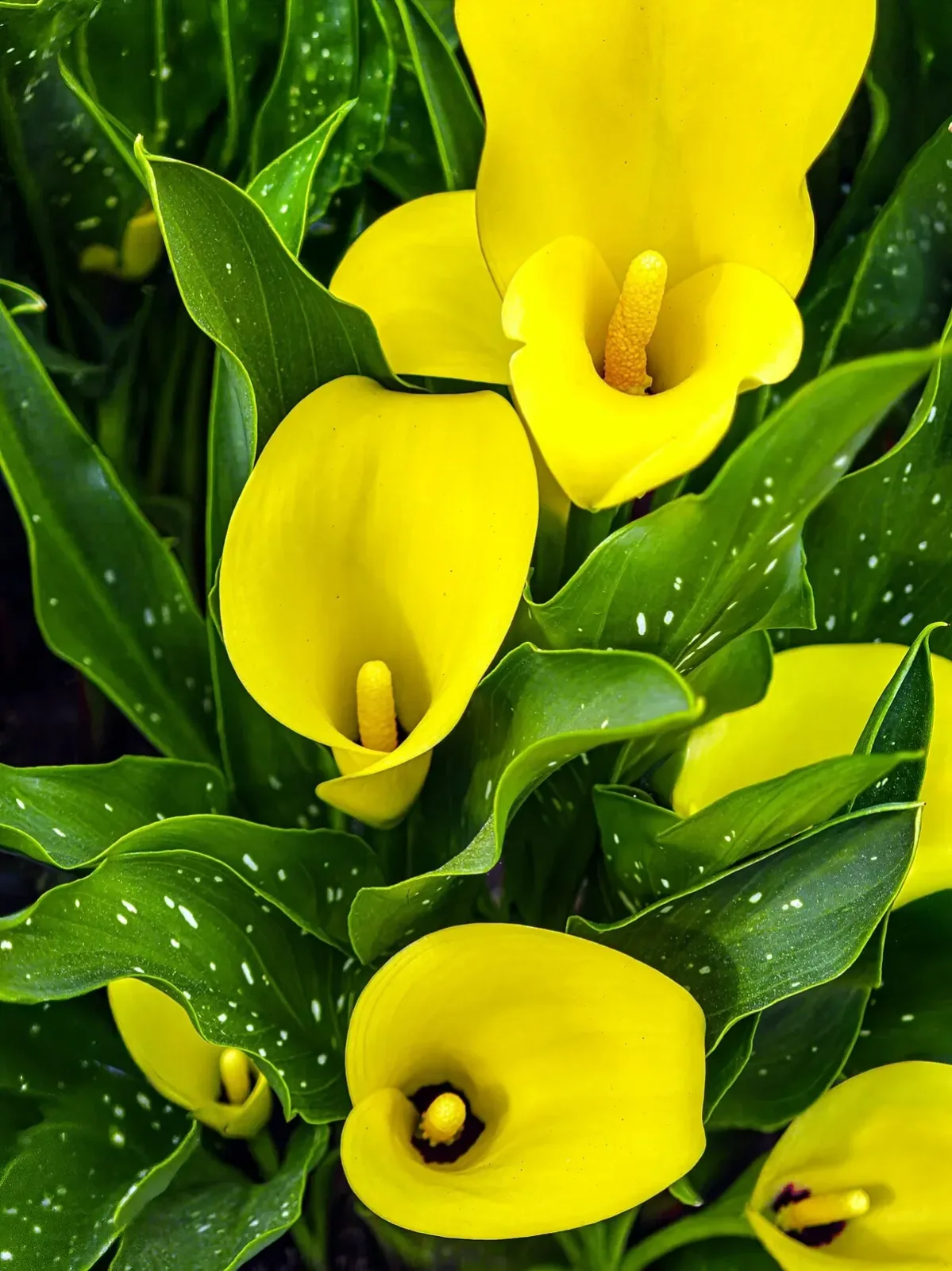
| ☀️ Light | Full sun |
|---|---|
| 💧 Water | High (consistently moist) |
| 🪴 Soil | Rich, moisture-retentive soil high in organic matter |
| 🌡️ Temp | -10°C – 30°C |
| 🐾 Safety | Cats: toxic · Dogs: toxic |
| 📏 Mature size | 75 cm |
Where It Grows & Climate Tolerance
Pet & Companion Animal Toxicity (How to Grow Calla Lily in Canada)
From Halifax to Edmonton, callas are patio and deck plants: potted in March, set out after Victoria Day, and hauled into the basement or garage each October. Only coastal British Columbia, around Victoria, is mild enough for the white arum lily to stay in a sheltered bed year-round.
Care instructions
Care Guide & Maintenance Routine
Pot up rhizomes on a windowsill in March, harden off and set the containers outside once nights stay mild, typically late May in Ontario and early June on the Prairies. Water generously through July and August. After the first autumn frost, dig, cure in a garage for two to three weeks, then box them in vermiculite in the basement.
Light & Sunlight
NC State lists full sun to partial shade and advises partial shade in hot climates. UMN Extension notes callas flower more freely in full sun in cool summers. In Indian plains summers, shade from the afternoon sun.
Watering Schedule
The white arum lily, Z. aethiopica, likes soil that never dries out; RHS notes it can grow as a pond marginal in water up to 30 cm deep. Coloured hybrid callas want moist but well-drained soil in growth and a drier rest after flowering. Too little water browns leaf edges; stagnant wet soil rots coloured callas.
Potting Mix & Drainage
Rich, moisture-retentive soil high in organic matter
Temperature & Humidity
Outside of zone 8 on Vancouver Island and the Lower Mainland, Canadian winters kill callas left outdoors. A September frost on the Prairies or an October one in Ontario blackens foliage; lift within days. Late May frosts in Calgary or Winnipeg can still nip pots set out too early.
Calla lilies in Canadian gardens
UMN Extension, writing for neighbouring Minnesota, describes callas as summer annuals or houseplants in cold climates, with rhizomes dug in fall and kept indoors over winter. The same applies across Canada. Callas are prized for containers, patios and cut-flower beds, flowering from July into August when started indoors.
Which callas suit Canada
Compact coloured hybrids are the easiest for decks and balconies and store neatly in a shoebox. The big white arum lily is zone 8 hardy per NC State, so Victoria and parts of the Lower Mainland can leave it in a mulched bed; everyone else grows it in a tub and hauls it inside.
Getting a head start
UMN Extension suggests potting rhizomes in late winter and growing them as houseplants until it is warm enough outside. Plant them 5 to 10 cm deep in a sunny window or under lights in March. Keep the mix just moist until leaves show. Harden them off for a week and move them outside once nights stay above about 10°C, usually around Victoria Day in Toronto and early June on the Prairies. In the ground UMN plants rhizomes 10 to 15 cm deep and 30 to 60 cm apart, in full sun.
Lifting and storing
Wisconsin Horticulture advises lifting tender bulbs just after the first frost, or when the foliage has dried, and digging within a few days of frost damage so rot does not enter the rhizome. Dry calla rhizomes for two to three weeks somewhere warm, shake off the soil and remove the dead stems, then store them at 7 to 13°C in a ventilated box of peat moss, vermiculite or wood shavings. Never use an airtight container. A basement shelf works well.
Region notes
- Vancouver and Victoria: white arum lilies can stay out in sheltered beds; mulch heavily and protect from wet winter crown rot.
- Toronto, Ottawa, Montréal: pots outside from late May to late September.
- Calgary, Edmonton, Winnipeg, Saskatoon: short season; start indoors early for July flowers and lift before the September frosts.
- Halifax, St. John's: cool summers; give full sun.
Patios, condos and short summers
On a Toronto or Vancouver condo balcony, a single calla in a glazed pot gives months of colour. Wind tunnels between towers shred the leaves, so tuck pots against a railing or wall. On the Prairies, hail and chinook gusts do similar damage; keep containers on casters so they can be wheeled under the eaves when Environment Canada issues a storm warning. In the Okanagan and around Kelowna, July heat can top 35°C, so give afternoon shade and check soil moisture daily.
A typical season in Ottawa
Pot rhizomes during March break, move them to the deck after Victoria Day, enjoy flowers from Canada Day into August, and bring the pots in before the Thanksgiving frost. Let the leaves die down in the garage, then store the cured rhizomes in the basement.
Questions from Canadian readers
- Can I keep my calla growing all winter as a houseplant? UMN notes you can grow callas indoors in a sunny window, but most flower better after a dormant rest.
Seasonal rhythm
Seasonal Calendar
| Month | Care Tasks | Seasonal Focus |
|---|---|---|
| Jan | Protect from frost/heat | January: peek into the basement box; toss mushy pieces. |
| Feb | Protect from frost/heat | Family Day: mist shrivelled ones lightly and repack. |
| Mar | Plant out | March break: pot up on a south-facing windowsill or under LEDs. |
| Apr | Fertilize | Easter: leaves unfurling; half-strength feed fortnightly. |
| May | Plant out | Victoria Day long weekend: wheel containers onto the patio. |
| Jun | Fertilize | June: daily watering on windy balconies; watch for hail. |
| Jul | Harvest | Canada Day: first spathes open; pull stems for bouquets. |
| Aug | Fertilize, Harvest | Civic holiday: peak bloom; shade Okanagan pots at noon. |
| Sep | Protect from frost/heat | Labour Day: stop fertilizing; foliage begins fading. |
| Oct | Protect from frost/heat | Thanksgiving: dig or tip out rhizomes; cure in the garage. |
| Nov | Protect from frost/heat | Remembrance Day: box cured rhizomes in vermiculite. |
| Dec | Protect from frost/heat | December: keep the box near 10°C, away from the furnace. |
Diagnostics
Common Problems & Troubleshooting
Soft rot in wet, warm soil; no flowers from too much shade, too small a rhizome or overcrowding; brown leaf tips in dry air or dry soil; yellow leaves after flowering as plants go dormant; aphids and slugs.
Pests & seasonal watch: Aphids on deck pots in June, spider mites in dry, furnace-heated apartments over winter, slugs in rainy Vancouver and Victoria gardens, and storage rot in basements that stay too damp. Inspect boxed rhizomes monthly.
- Yellow leaves — Leaves fade from green to yellow, often starting at the bottom.
- Brown tips — Leaf tips and edges turn dry, brown and papery.
- Root rot — Roots turn brown and mushy in soil that stays wet.
- Spider mites — Fine webbing and pale speckled leaves, worse in dry heated rooms.
- Aphids — Clusters of small soft insects on new tips, often sticky.
- Leaf spot — Brown or tan spots with a yellow halo, sometimes with tiny dots in the centre.
- Overwatering — Soil stays wet, leaves yellow or droop, and the pot feels heavy.
- No flowers — A flowering houseplant stays leafy and will not bloom.
Similar Botanical Matches
Keep exploring
Related plants
Grower field notes
Reader Field Notes in Canada
Share how this plant performs in your local Canada climate.