
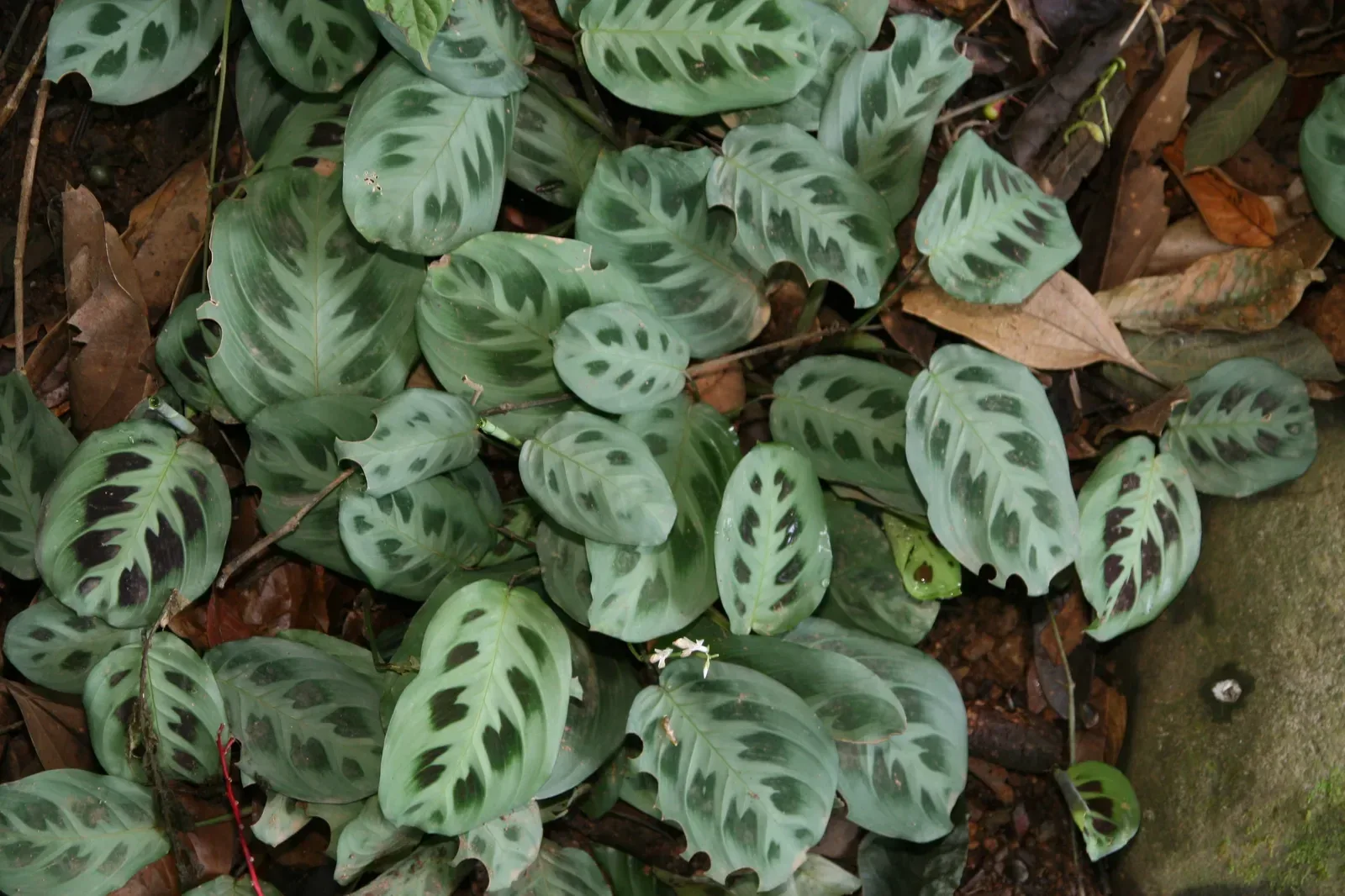
Prayer plant leaves move between day and night. That normal habit is worth learning before treating every folded leaf as a watering emergency, particularly in a dry, furnace-heated Canadian room.
Quick answer
Maranta naturally changes leaf position through the day. Persistent curling calls for checks of root moisture, warmth and air dryness rather than interpreting evening folding as thirst. Provide filtered light and a lightly moist open mix. In Canadian heating season, protect the plant from vent airflow and inspect unfolding leaves for pests.
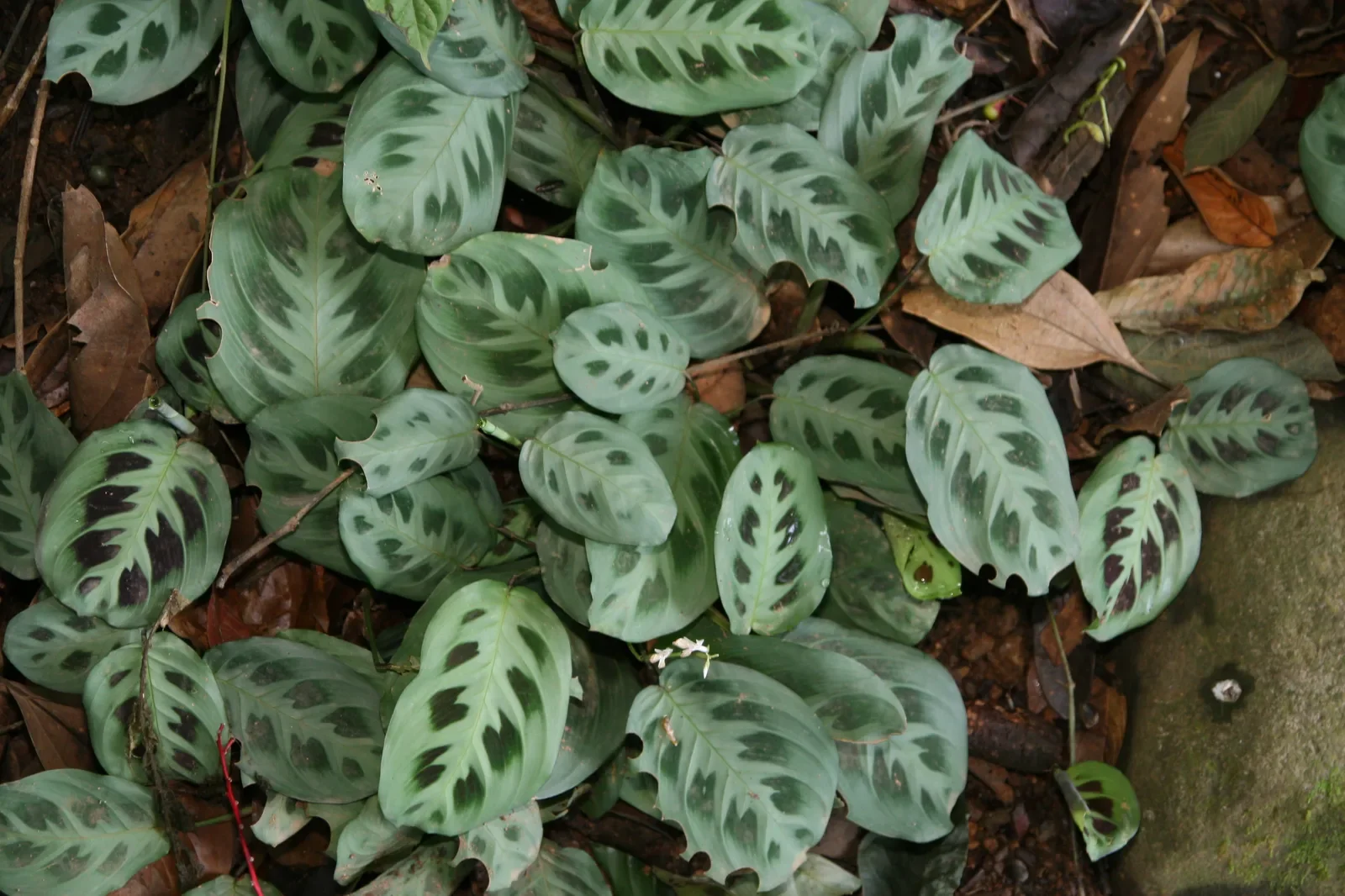
How do you identify prayer plant?
Prayer plant: Maranta leuconeura is a low spreading plant. Red-veined forms and green-patterned 'Kerchoveana' are common. Leaves lift at night naturally. Calatheas are relatives, but need a different propagation approach.
Why do prayer plant leaves stay curled?
Normal night movement differs from tight rolling that persists in daylight. Check moisture before watering. Dry roots, cold drafts, dry air and mites can all contribute. Move the plant out of heater airflow. If mix is wet and foliage wilts, check roots rather than adding water. Low-mineral water can help where deposits are heavy. Old brown margins do not recover, so judge changes from fresh leaves.
What light does it need in a Canadian winter?
Direct sun bleaches leaves.
Maranta folds and lowers its leaves through a daily cycle, which is part of its normal behaviour. Judge a problem from persistent curling, damaged margins or failure of new leaves to open, not merely from the evening position. Place the plant in bright filtered light where the pattern remains clear without hot sun striking the blades. In a Canadian winter, it may need to sit closer to daylight than it does in July. Keep it on the warm room side of the curtain. A lamp can support steady growth without forcing the pot onto a cold sill.
How should you water through the seasons?
The fine roots benefit from moisture that is consistent but aerated. Check the upper mix before watering and avoid letting the entire root ball shrink away from the pot repeatedly. At the other extreme, a wet pot inside a sealed cover can lose roots even while the leaves appear thirsty. Water with room-temperature water and let the excess escape. If your tap supply leaves heavy mineral deposits and leaf edges repeatedly suffer, consider a suitable low-mineral water source. This is a diagnosis to explore alongside root health and humidity, not proof that every brown tip has one universal cause.
What soil or potting mix is best?
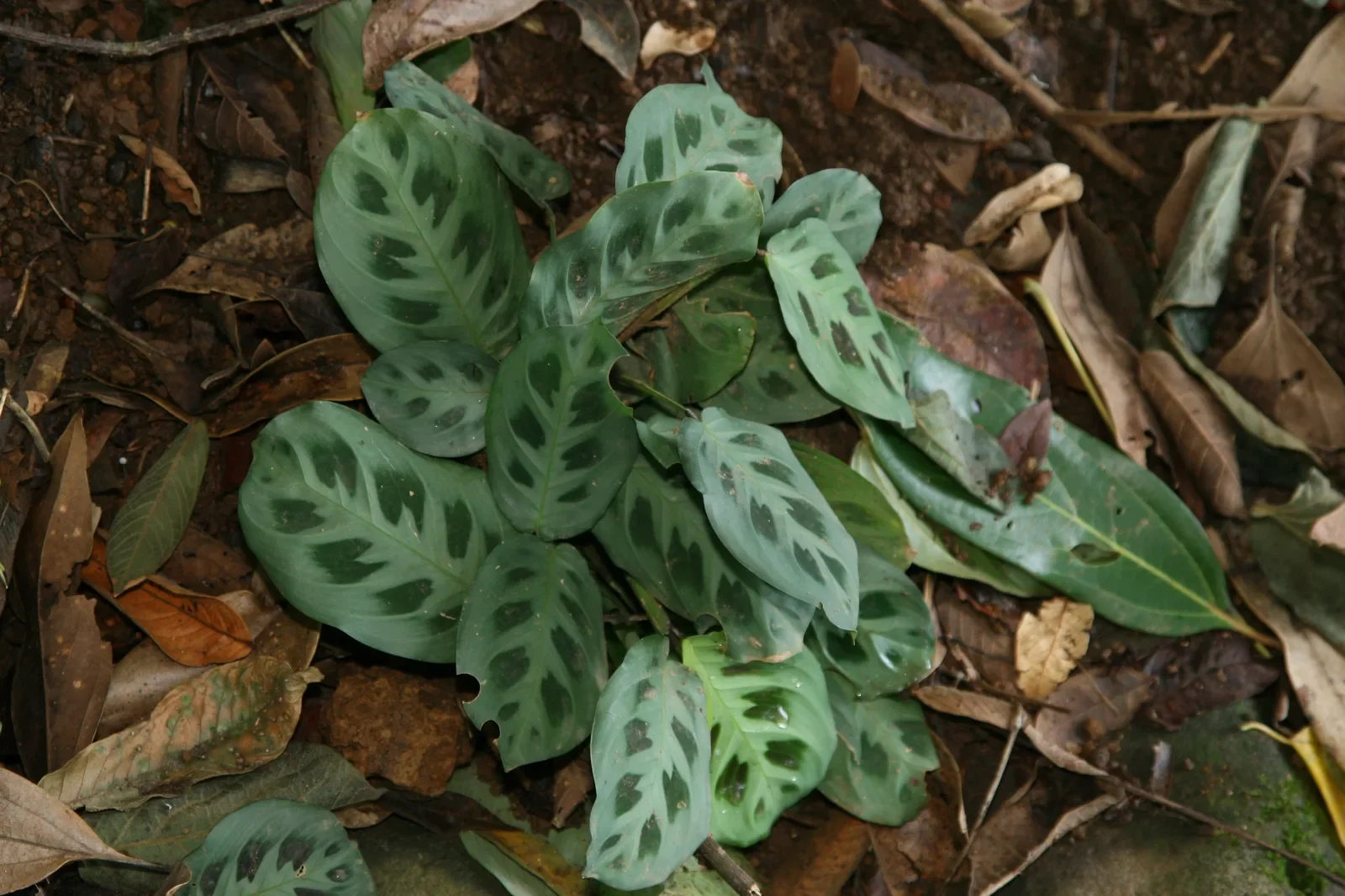
Choose a light, moisture-retentive blend with enough coarse material that it does not compact into a soggy block. A relatively shallow root system does not require a deep decorative tub. Repot into a modest increase when roots fill the usable space, keeping the stem bases at a sensible surface level. Do not press the mix hard around the fine roots. A newly divided plant needs particular care because fewer roots must supply its remaining leaves. Keep the pot in stable gentle conditions while growth resumes. Immediate strong sunlight and a full fertilizer dose add stress rather than speeding recovery.
When should you fertilize?
Quarter-strength liquid monthly April to August.
Feed with a mild measured solution during active growth. A Maranta making little progress in the darkest weeks generally needs less feeding. Salt accumulation around fine roots can compound margin damage, so include fertilizer history in your checks. Prune stretched stems above suitable nodes to encourage a fuller outline, retaining healthy leaf area. Remove completely dead material from the soil surface. Small flowers can appear on a healthy plant, but the patterned foliage remains the main display. Their presence does not mean the plant is about to die, nor does removing them cure an unrelated watering problem.
Does dry air or humidity matter?
Dry furnace air can make the leaf margins crisp, especially when warm air passes directly over the canopy. Measure humidity if possible instead of guessing from how the room feels. A clean humidifier may help a group of tropical plants, but condensation on cold windows signals a need to balance moisture and ventilation. Do not keep foliage continuously wet as a substitute for managing the room. Remove accumulated dust gently, supporting each leaf. Tiny damage on an old blade is permanent; evaluate whether the next leaves emerge clean rather than repeatedly trimming the same edge and expecting it to regrow.
What temperatures and winter protection does it need?
Above 16 C; no cold drafts.
How should you prune it?
Prune the parent just above a node; cut below a node on the piece being rooted. Remove fully dead leaves with clean scissors.
What is the best propagation method?
Take a stem section with a node and root in water or airy moist mix. Cut below a node on the piece you keep and above a node on the parent. Rooted divisions also work. Calathea leaf stalks do not follow this method.
Stem cuttings must include a node. A leaf with only its stalk is not a reliable route to a new prayer plant. Choose a sound section, remove any leaf that would be submerged and keep the rooting setup clean. Water-rooted cuttings should be transferred carefully into a suitably moist airy mix once they have useful roots. Division is possible when a mature pot contains separable rooted sections, but avoid tearing a compact fine-rooted mass into numerous weak pieces. A few substantial divisions usually establish more predictably. Label cuttings so different patterned selections do not become confused in a shared propagation area.
Which pests and diseases should you watch for?
On Maranta, inspect patterned blades from below so mite stippling is not hidden by normal leaf markings.
Spider mites can show as pale stippling before obvious webbing appears. Inspect the leaf undersides and the folds around new growth. Isolate an affected specimen and follow an appropriate indoor-plant treatment programme, including repeat checks. Buying a plant with already tightly curled leaves makes it harder to distinguish transport stress from a developing problem. Select one with clean foliage and a firm growing centre, then protect it from winter cold on the journey home. Maranta is a different plant from the similarly named calatheas; retain its correct name so future care and safety references actually apply to the species you have.
How do you work out the cause?
Brown edges (dry air/tap water); curled leaves (thirst); pale leaves (too much sun).
Is it safe around pets and children?
Maranta leuconeura is generally regarded as non-toxic to cats and dogs. ASPCA's prayer-plant page currently names Calathea insignis, so it is not an exact species citation for this Maranta. Prevent chewing anyway and keep plant food and treated foliage away from children and pets.
A seasonal care calendar for Canada
| Season | What to do |
|---|---|
| Spring | Divide; resume feed. |
| Summer | Steady moisture. |
| Autumn | Raise humidity as heat starts. |
| Winter | Humidifier, soft water, no cold glass. |
What should you check before buying?
The leaf movements of calathea invite comparison with Maranta. Look at begonia rex for a different patterned blade and peperomia for another compact foliage choice, checking moisture requirements before arranging them together.
What does a useful care record show?
Photograph a new Maranta leaf while it opens and record where the pot stands. Note any change in irrigation water or room humidity. If its margins stay clean while older ones remain marked, the adjustment may be helping. Changing light, feed and water source simultaneously makes that comparison much less informative, even if the plant eventually improves.
Comments
No comments yet — share what worked in your climate.