
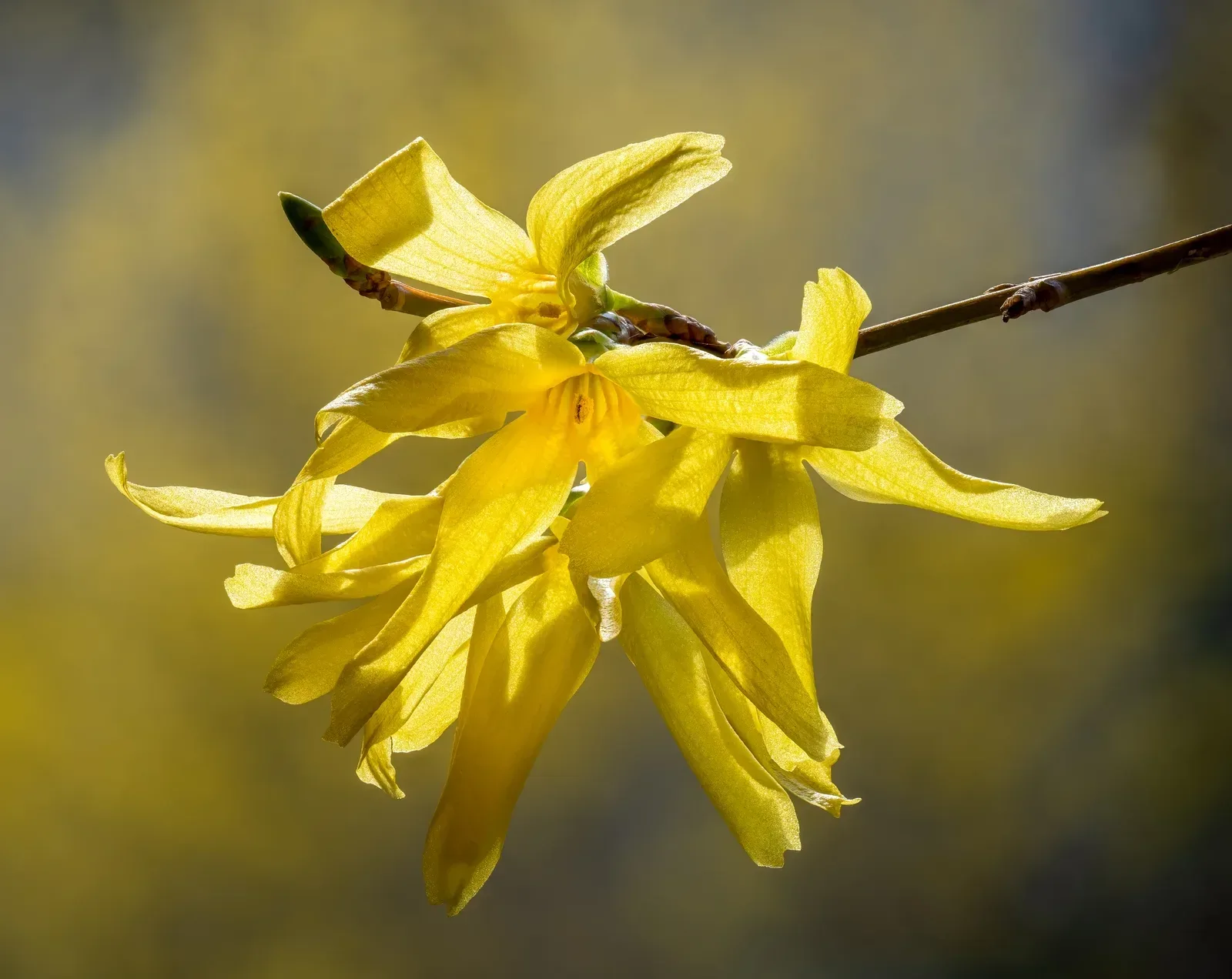
A forsythia can survive a winter that kills its exposed flower buds. Canadian gardeners need to compare flower-bud hardiness as well as shrub survival before choosing a cultivar.
Quick answer
Select forsythia for local flower-bud hardiness, not just survival of the shrub. Give it sun and enough width for arching canes. Prune after flowering by removing selected older stems. In Canadian winters, flowers only below the snow line may reveal bud injury. Fertilizer cannot replace buds removed by autumn shearing.
How do you identify forsythia?
Forsythia: Forsythia × intermedia flowers on older wood. 'Northern Gold' and 'Northern Sun' were selected for better cold performance. Plant survival and flower-bud survival differ, so buy for local bloom reliability.
Why does forsythia flower only near the ground?
Snow may protect lower buds while exposed upper buds freeze. The shrub can remain alive yet flower poorly. A hardier selection and shelter help more than fertilizer. Prune immediately after flowering, taking out selected old stems. Autumn trimming removes next spring's buds. Give room for arching branches instead of clipping a tight cube. If flowering stays sparse in mild years, check shade and past pruning dates too. Do not confuse unbroken green growth with proven flower-bud hardiness.
Where should you plant it for enough light?
Full sun for densest bloom.
Give the shrub good sun and enough width for its arching growth. A small nursery plant can become a substantial tangle if placed beside a narrow walkway. Shade reduces flowering and makes a compact outline harder to maintain. Dormant outdoor forsythia needs no winter grow light. The useful light is what the canopy receives during the growing season after surrounding trees leaf out. Avoid a site where roof snow repeatedly crushes branches. Salted snow and road runoff are additional concerns in Canadian front gardens, especially where the shrub is used as an informal boundary near a driveway.
How should you water through the seasons?
Medium while establishing.
After planting forsythia, moisten both its former nursery root mass and the adjacent ground where new roots must develop. Established forsythia is more resilient, but drought can still affect shoot growth and bud development. Check beneath mulch before adding water after rain. A bed that remains permanently soggy is not suitable just because the shrub is vigorous. Prepare a broadly drained planting area rather than an isolated compost pocket in compacted clay. Keep the crown visible and mulch away from the stems. Long arching branches may touch the soil and root, so inspect the perimeter if you want to keep the planting within a defined area.
What soil or potting mix is best?
Average garden soil.
When should you fertilize?
Compost in spring if needed.
Fertilizer is not the first answer to missing flowers. Review pruning dates, winter bud survival and sun before adding a bloom product. Many established shrubs in ordinary soil need little additional feed. Excess nitrogen can create longer shoots and more pruning without improving the display. A modest spring application or compost dressing may be useful where growth and soil fertility warrant it. Do not apply concentrated material against roots during drought. If leaves are unusually pale, check drainage and root health as well as nutrition. A soil test can be more informative than trying several different products in succession.
What temperatures and winter protection does it need?
Standard hybrids often suit zones around 5 upward; selected northern cultivars are used around zones 3 or 4. Check flower-bud hardiness locally.
Forsythia can survive winter yet flower poorly if its exposed flower buds were injured by cold. That distinction matters in Canadian gardens. Choose a cultivar with local evidence of bud hardiness, not merely a label saying the shrub itself survives. Flowers restricted to branches beneath the snow line can be a clue to winter bud damage. A mild coastal site and an exposed Prairie yard are very different tests. Ask nearby nurseries which selections bloom consistently in the area. A plant that grows vigorous leaves every spring is not necessarily the best cultivar for the yellow display you want.
How should you prune it?
Right after bloom only ; never fall prune.
Prune after the main flowers fade if preserving the following spring's display is the goal. Select older crowded stems for removal near the base rather than clipping every branch into a tight ball. Flower buds form on wood retained through the later season. Routine autumn shearing can remove that potential display. A badly overgrown shrub can be renovated, but severe cutting sacrifices flowers and should be a planned recovery project. Spread renewal over time where practical. Remove dead, broken or clearly diseased wood as needed, using clean sharp tools and avoiding torn cuts at the cane bases.
What is the best propagation method?
Layer a low flexible branch into soil, leaving the tip free, then separate once rooted. Softwood and hardwood cuttings can also work. Propagate named hardy selections vegetatively, subject to cultivar restrictions.
Layering is straightforward where a healthy flexible branch can be held in contact with soil. Wait for useful roots before cutting it free from the parent. Suitable stem cuttings can also reproduce a named cultivar, subject to propagation rights. Seedlings are not dependable copies of a selection chosen for flower-bud hardiness. Keep labels accurate when sharing rooted pieces. Do not distribute material from a shrub with unexplained cankers, gall-like growth or recurring dieback. Healthy vigorous growth at the tips does not cancel a suspicious problem lower on the stem. Inspect the whole branch before selecting propagation material.
Which pests and diseases should you watch for?
Inspect unexplained stem swellings, dieback or leaf spots. Remove suspect wood with clean tools and seek a local diagnosis if damage spreads.
How do you work out the cause?
Few flowers (wrong prune or bud kill); leggy (needs renew).
Is it safe around pets and children?
No individual ASPCA safety clearance is claimed here for Forsythia × intermedia. Absence from a list does not make flowers or leaves food. Prevent chewing by children and pets and check ingestion professionally.
A seasonal care calendar for Canada
| Season | What to do |
|---|---|
| Spring | Bloom then prune. |
| Summer | Leave forsythia's developing flower buds intact; skip autumn hedge-style clipping. |
| Autumn | Do not prune. |
| Winter | Preserve forsythia flower-bearing wood and avoid heavy snow damage. |
What should you check before buying?
For a sequence of woody flowers, compare common lilac and ninebark. The foliage of potentilla can extend interest after forsythia finishes, provided every shrub has enough room for its mature outline and the correct pruning schedule.
At purchase, choose a well-branched base and firm roots rather than only a flowering branch forced early in a warm shop. Ask about mature size and local bud survival. Potted shrubs need extra winter root protection beyond their in-ground rating. Do not try to keep one in a heated living room as an evergreen houseplant. For winter cut-branch displays, collect healthy stems responsibly and keep the vase out of reach of pets and children; ornamental flowers are not play food. A suitable cultivar with selective after-flowering pruning offers a more reliable result than yearly severe clipping of an oversized shrub in the wrong place.
Can cut branches be opened indoors?
Healthy dormant branches collected at an appropriate winter stage may open flowers in water indoors. Use clean tools, avoid taking so much that the garden display is spoiled, and refresh the vase water. Bud response varies with prior cold and indoor conditions, so do not promise flowers for a particular date.
Comments
No comments yet — share what worked in your climate.