
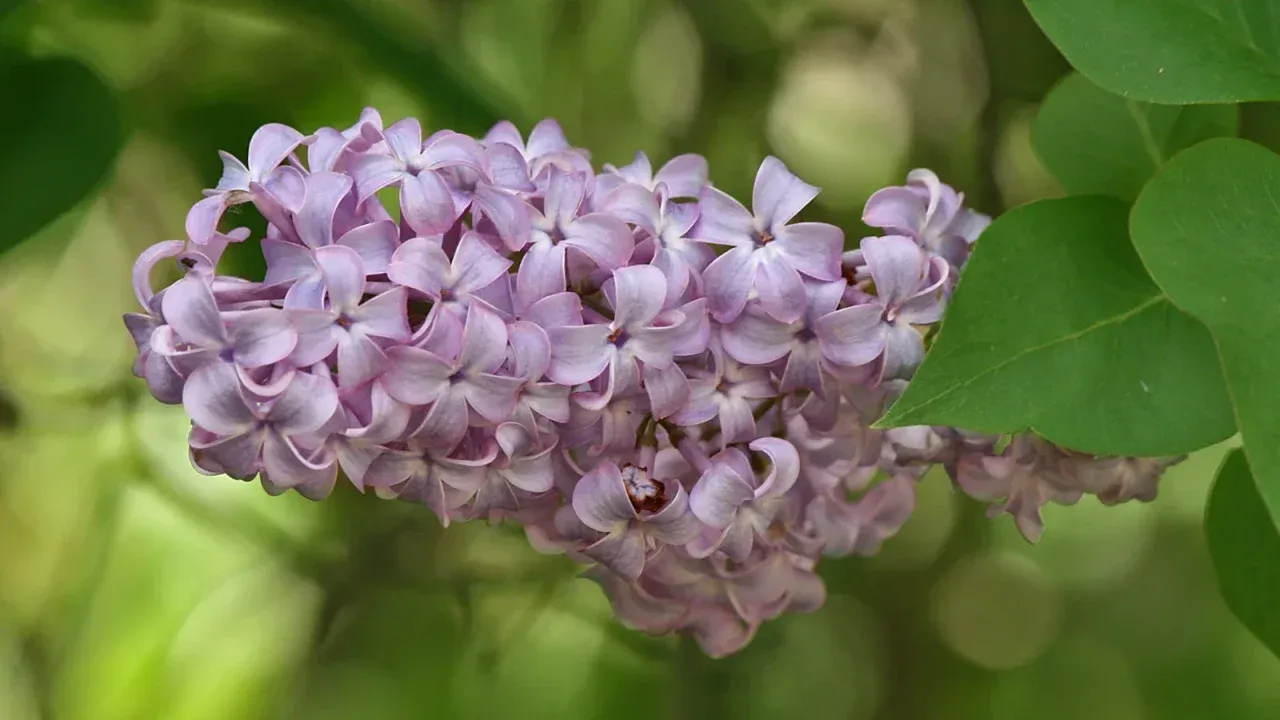
Common lilac earns its space through a brief, fragrant spring display. The quiet work happens after flowering, when pruning decisions determine how much of next year's display you leave on the shrub.
Quick answer
Give common lilac a sunny site large enough for its mature framework. Renew selected old canes after flowering instead of shearing every branch in autumn. Check pruning dates and shade before feeding a shrub that has stopped blooming. Canadian winter conditions and cultivar choice also affect how reliably flower buds perform.
How do you identify common lilac?
Common lilac: Syringa vulgaris has opposite heart-shaped leaves and fragrant spring clusters. 'Sensation' has pale-edged purple flowers; 'Madame Lemoine' is a white double. Dwarf reblooming lilacs are different selections.
When should you prune lilac without losing flowers?
Prune soon after flowering. Common lilac makes next year's buds during the growing season, so autumn shearing removes them. Take out selected old stems at ground level instead of trimming every branch into a ball. Renew a neglected shrub over several years. Heavy cutting may cost flowers while new stems mature. Late-summer mildew is often more of an appearance problem than a survival threat. More sun, space and root watering are better first steps than repeatedly spraying a crowded hedge.
The best routine pruning window follows the fading of the flower clusters. Work selectively, taking an old cane near the ground and leaving younger replacement shoots, rather than clipping a uniform surface. Next year's flower buds develop on growth retained after this period. For an overgrown specimen, renewal can be spread over several seasons so the garden does not lose its entire screen at once. Mark canes while leaves are present if it helps you see which are shaded or crossing. A heavy dormant renovation is possible, but it sacrifices bloom and should be a deliberate choice rather than normal annual tidying.
Where should you plant it for enough light?
Full sun for best bloom. Shade equals few flowers.
Give a common lilac an open position where its eventual width will not block a doorway or compete with overhead wires. A small nursery shrub can become a broad multi-stemmed plant. The leaves need sunshine through the growing season, not only before a nearby maple opens its canopy. In a Canadian yard with a short spring display, the shrub must also earn its space as a summer structure. Consider a lower cultivar if yearly height reduction would be unavoidable. Constant clipping to fit an unsuitable corner is likely to remove flowers and make the framework increasingly congested.
How should you water through the seasons?
Water new plants regularly for 2 years. Established shrubs need water mainly in drought.
During the first couple of growing seasons, direct water into the original root-ball area and the nearby soil. Rain wetting the outer foliage may not reach a dense nursery root mass. Once established, common lilac generally needs less attention, but prolonged drought still affects foliage and developing buds. Avoid a planting hole that acts as a basin in compacted clay. A broad, drained planting area is preferable to an isolated pocket of rich compost. Mulch can reduce competition from lawn, but leave the cane bases visible and do not create a wet collar against the stems.
What soil or potting mix is best?
Lilac roots need a broadly drained planting area. In a naturally suitable garden loam, there is no reason to create an isolated pocket of rich wet compost.
When should you fertilize?
Avoid heavy nitrogen that pushes leaves over flowers.
A small spring top-dressing is usually more sensible than feeding lilac like a bed of annual flowers. Too much nitrogen can favour long leafy shoots over the flowering you want. If the shrub fails to bloom, write down the last pruning date and check actual hours of sun before changing fertilizer. Very young growth and major recent renovation are other reasons for a light display. Mild coastal conditions can also differ from the colder inland locations where common lilac is a familiar success. Match the cultivar to local performance rather than assuming every Canadian postal code supplies identical winter conditions.
What temperatures and winter protection does it need?
Common lilac is grown in very cold Canadian gardens, often zone 2 upward. Cultivar bud hardiness and exposure still matter.
Heavy snow can bend branches, so avoid a site beneath a roof where repeated loads slide onto the shrub. Do not beat frozen branches to remove ice. In spring, wait until the damage is visible before making large cuts. A lilac grown in a pot needs more thought about root freezing and summer moisture than one established in the ground. At the nursery, examine cane bases, cultivar labels and the shape of future shoots instead of choosing solely by the flowers currently open. Ask when that cultivar normally blooms nearby. A reliable local shrub is a better long-term choice than an impressive but poorly matched impulse purchase.
How should you prune it?
Prune immediately after bloom only. Renew by removing a few old stems at ground level each year.
What is the best propagation method?
Lift rooted suckers from an own-root plant during dormancy. A sucker from a grafted plant may be rootstock rather than the named variety. Softwood cuttings require careful humidity. Keep the cultivar label.
Check whether the shrub is on its own roots before lifting suckers. A rooted shoot from the base of an own-root named lilac should retain its identity; growth below a graft may be something else. Do not hack through a dense clump merely to obtain freebies for neighbours. Lift a usable rooted piece with care during a suitable dormant period and water it through establishment. Keep the name attached to the young plant. A seedling is not a dependable copy of a double-flowered or unusual-coloured cultivar, even if it grew directly beneath that shrub.
Which pests and diseases should you watch for?
Powdery mildew in humid, still air. Lilac borers on stressed trunks ; keep plants watered and pruned open.
White powder late in summer may be mildew, especially on crowded foliage. It can spoil the look without meaning that the shrub is dying. Improve room around the canopy, avoid unnecessary overhead watering late in the day and remove badly affected fallen material where practical. Dieback, holes or damaged bark on individual canes need a different inspection, including the possibility of borers. Do not treat every brown patch with the same spray. A local diagnosis is useful when damage recurs. Clean pruning tools after suspicious wood and avoid moving diseased cuttings into another garden.
How do you work out the cause?
No flowers (shade or wrong pruning time); mildew (crowded, damp site); poor bloom on mild coast (low chill).
Is it safe around pets and children?
No species-specific ASPCA safety clearance is claimed here. Common lilac is not generally regarded as a major poisoning plant, but absence from a list is not proof leaves are safe food. Prevent chewing and check ingestion professionally.
A seasonal care calendar for Canada
| Season | What to do |
|---|---|
| Spring | Bloom time. Water if dry. Prune right after flowers fade. |
| Summer | Preserve lilac shoots carrying next spring's buds and inspect the late-season canopy for powdery coating. |
| Autumn | Do not prune. Mulch young plants after soil cools. |
| Winter | Dormant. Enjoy the structure; leave buds alone. |
What should you check before buying?
Compare the spring display of forsythia with lilac flowering in your area. The foliage of ninebark can extend shrub-border interest, while potentilla offers another way to plan the sunny woody layer.
Watch: a related growing task
Comments
No comments yet — share what worked in your climate.