
An indoor plant that is easy in a Brisbane unit can struggle in a dry Perth summer, and the same pot can need a completely different window in Hobart. This is a shortlist of twelve plants that already have live Australia profiles on GardenOrbit, grouped by the light they need and by the climate they are more likely to cope with. It is not a promise that every plant will thrive in every room, and some of the gift plants on this list are honest short stays rather than long-term houseplants.
Treat the climate groups as a starting point, not a hard rule. A tropical Darwin or Cairns room is often warm and humid, though air-conditioning can still dry the air. Coastal Queensland and northern New South Wales are subtropical. Melbourne, much of Victoria, Tasmania and the cooler parts of New South Wales are temperate. Adelaide, Perth and much of the south-west have a Mediterranean pattern: a dry, hot summer and a wetter winter. Inland and arid towns, from Alice Springs to parts of inland Western Australia, have very dry air and strong light. For December planting outdoors, see what to plant in December in Australia. If you are choosing festive plants rather than everyday indoor foliage, see our Australian Christmas plants guide.
Quick picks
- Most forgiving in most homes: snake plant and money plant (pothos)
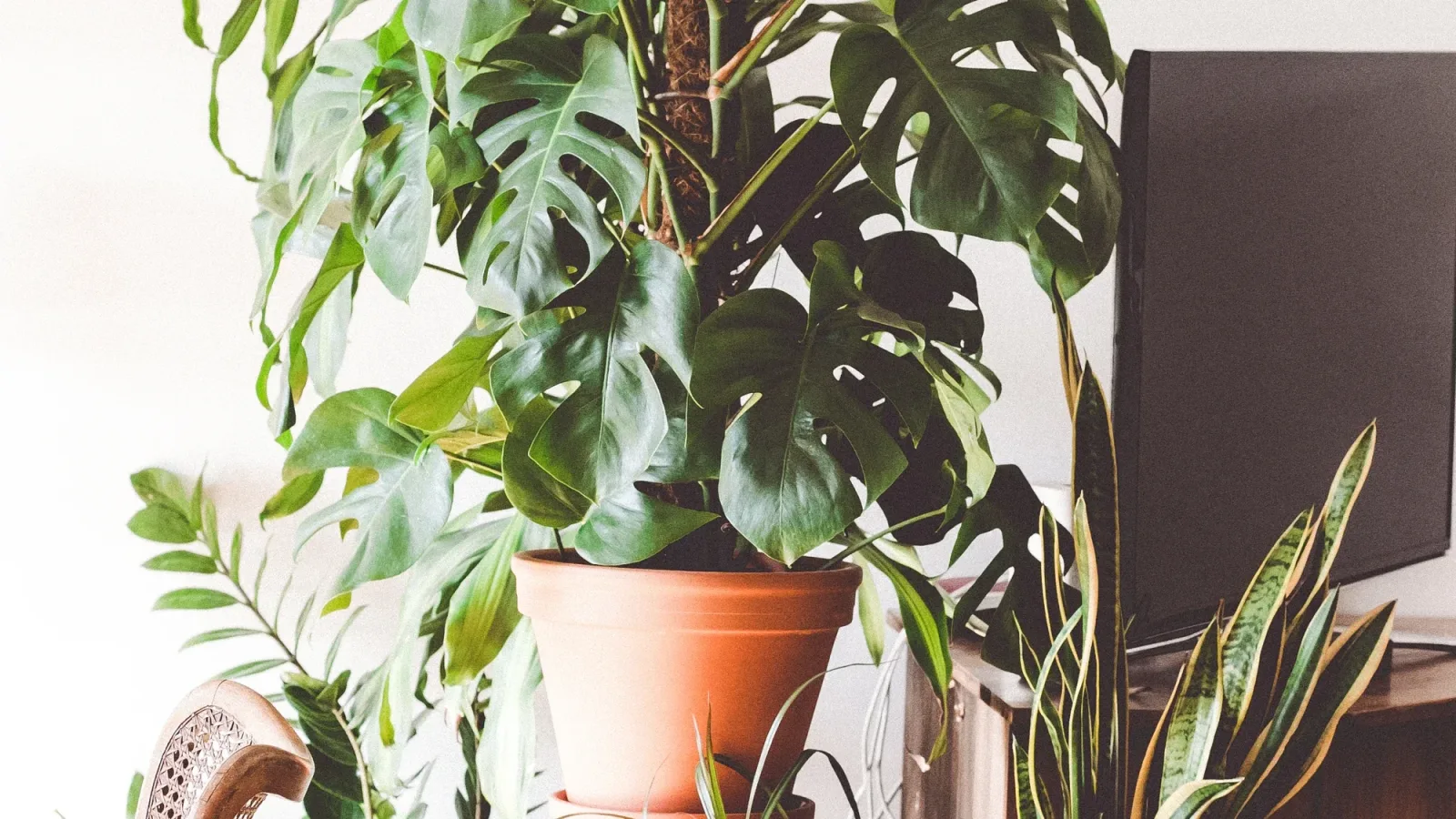
- Best statement plant in bright, indirect light: monstera
- Best for a dry Perth or Adelaide summer: snake plant, money plant and aloe vera
- Best for a humid Brisbane or coastal Queensland room: peace lily, monstera and areca palm, with good drainage
- Treat as a short indoor display, not a guaranteed houseplant: florist's azalea and, often, gardenia
Comparison at a glance
| Plant | Light | Best climate fit indoors | Pet safety | Honest caveat |
|---|---|---|---|---|
| Snake plant | Low to bright, no harsh west sun | All groups, including dry western rooms | Toxic if eaten | Very reliable if you do not keep the mix wet |
| Peace lily | Medium, indirect | Humid subtropical or tropical rooms | Toxic if eaten | Brown tips are common in dry air-conditioning |
| Money plant | Medium to bright, indirect | All groups | Toxic if eaten | A good trailing plant in dry or humid rooms |
| Monstera | Bright, indirect | All groups with a bright room | Toxic if eaten | Needs space; hot glass in a western summer can scorch |
| Areca palm | Bright, indirect | Better in humid rooms than in a dry Perth summer | Non-toxic | Frond tips brown easily in dry air |
| Aloe vera | Bright light | Mediterranean, arid and any bright dry room | Toxic if eaten | Keep it under cover in a wet tropical wet season |
| Majesty palm | Bright, indirect, no hot glass | Humid rooms; a hard ask in dry air-conditioning | Non-toxic | Often sold as easy, and often struggles indoors |
| Norfolk Island pine | Bright light | Temperate and cool-subtropical rooms | Non-toxic | Needs even moisture and good light; it is not a cactus |
| Dendrobium nobile | Bright, indirect | Subtropical and bright temperate rooms | Not verified | A winter-spring flowering orchid; do not keep the pot soggy |
| Pineapple | Very bright light | Warm, bright rooms; tropical and subtropical homes have an easier time | Not verified | It may not fruit indoors; enjoy it as foliage first |
| Florist's azalea | Bright, cool, no hot sun | Better as a short indoor display, then outdoors in a temperate garden | Toxic if eaten | Often declines in a hot or air-conditioned house |
| Gardenia | Bright light, some morning sun | Often happier on a verandah than in a closed lounge | Not verified | Dry indoor air and sudden heat set it back |
1. Snake plant
- Light: Low to bright. Keep it out of harsh west sun through glass in a Perth or Brisbane summer.
- Water: When the mix is dry deep in the pot. Over-watering is the usual failure, even in a dry climate.
- Pet safety: Toxic if eaten. See our snake plant profile.
Snake plant is the safest first choice if you are not sure about your light or how dry the room gets. It copes with a dry Adelaide or Perth room, and it also copes in a cooler Melbourne flat if the pot drains. In tropical wet-season rooms, it still needs a pot that can dry between waterings.
2. Peace lily
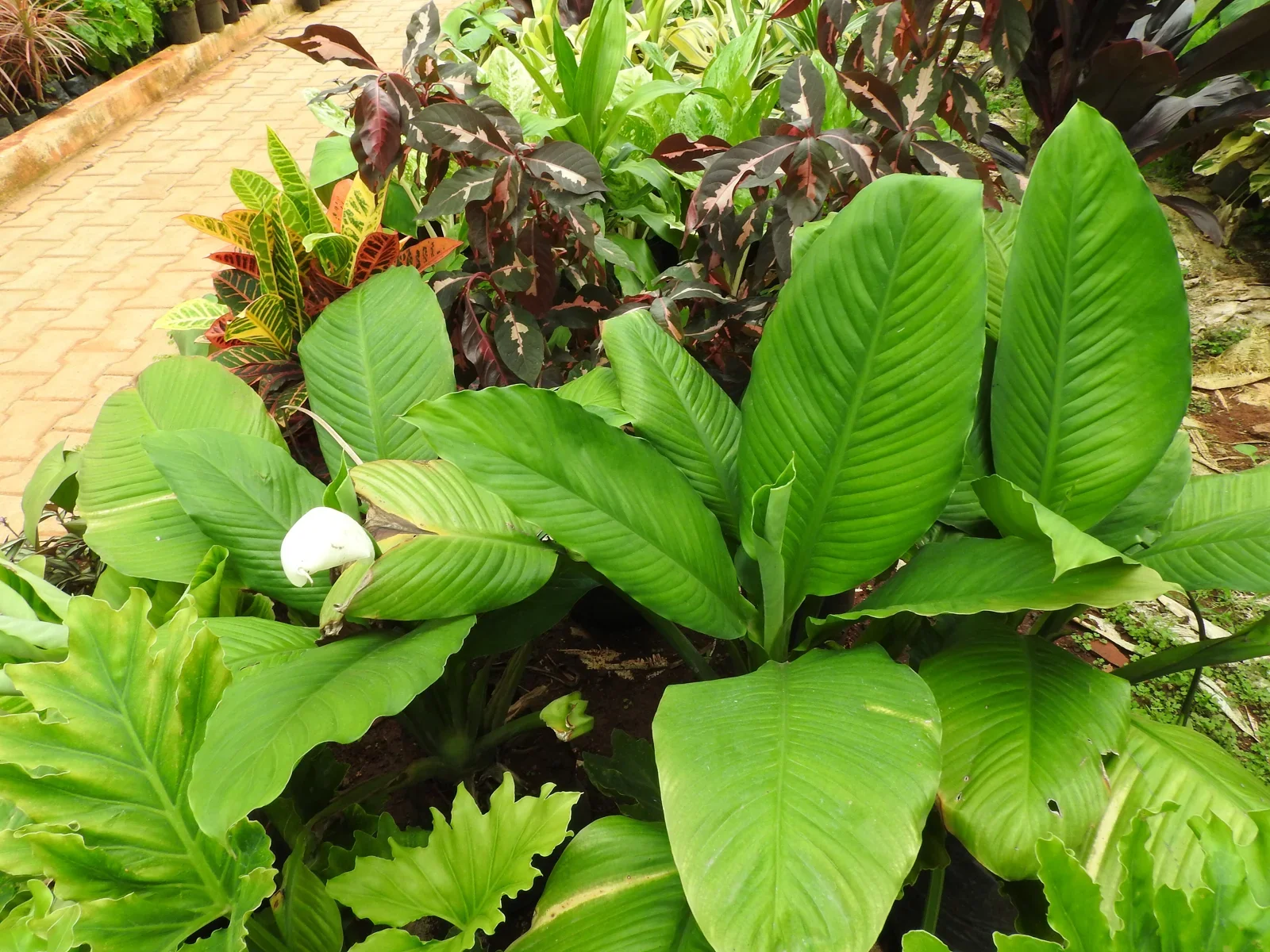
- Light: Medium, indirect light. Midday summer sun through a west window can scorch the leaves.
- Water: When the top of the mix is dry. Do not leave it sitting in a saucer of water.
- Pet safety: Toxic if eaten. See our peace lily profile.
Peace lily is a fair choice in a humid Brisbane or coastal Queensland room, and in a well-lit tropical bathroom that is not pitch dark. In a dry Perth summer, or right under an air-conditioner, brown tips are common. If the room is dry, pick snake plant or money plant instead.
3. Money plant (pothos)
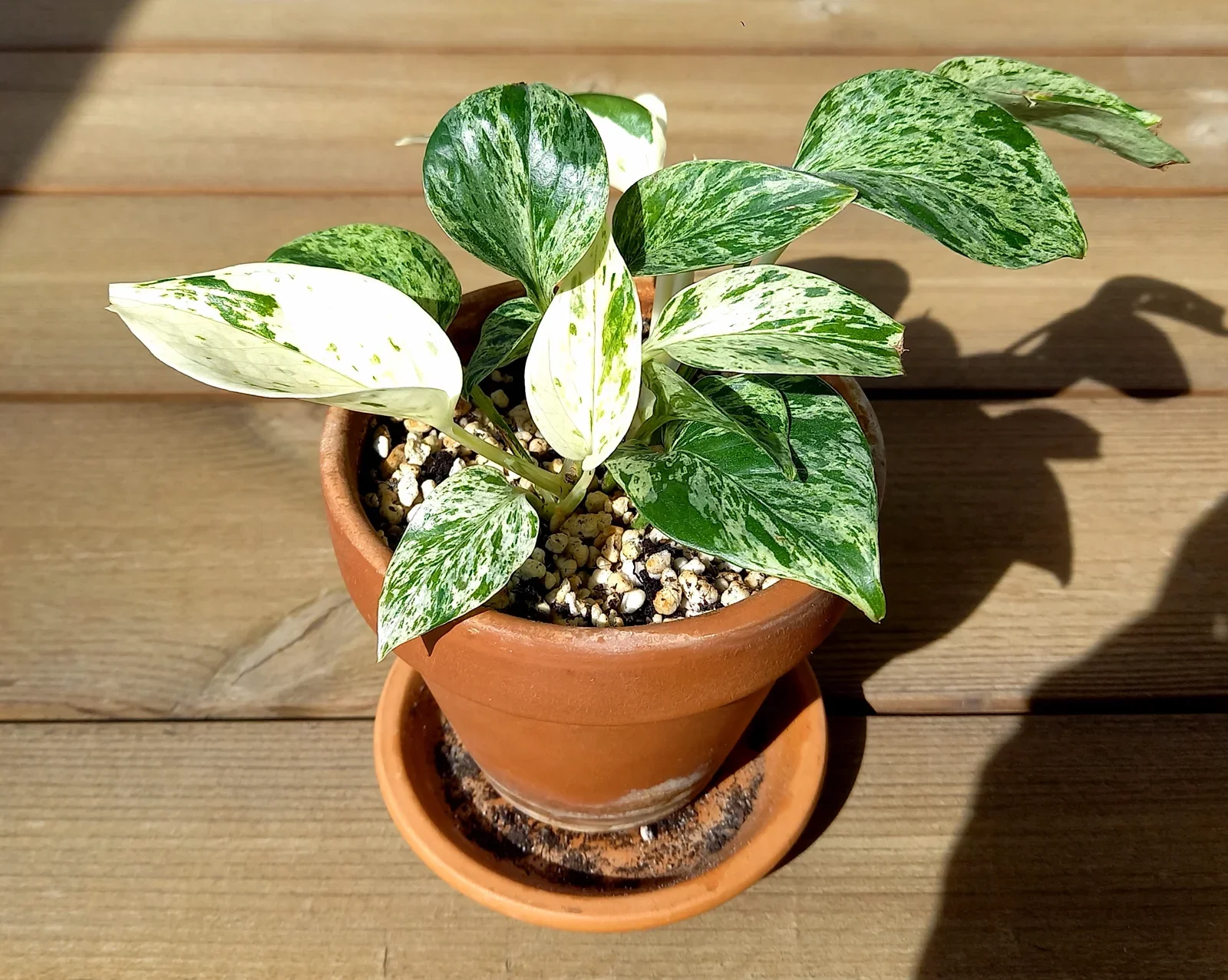
- Light: Medium to bright, indirect light. Strong variegation holds better in brighter light, but still out of hot glass.
- Water: When the top of the mix is dry.
- Pet safety: Toxic if eaten. See our money plant profile.
Money plant, or pothos, is useful in almost every Australian climate group because it copes with ordinary indoor air better than a fern or a calathea. It trails from a shelf or climbs a simple support. Keep it out of reach of pets, and empty the saucer after you water.
4. Monstera
- Light: Bright, indirect light. A little distance from a bright window is better than a dark corner or a sun-baked pane.
- Water: When the top of the mix is dry. A chunky, draining mix helps, as covered in our potting mix guide for indoor plants.
- Pet safety: Toxic if eaten. See our monstera profile.
Monstera is a realistic indoor plant in Melbourne, Sydney, Brisbane and many warmer towns, as long as you can give it space and light. A west window in a January heatwave can scorch the leaves, so use a sheer curtain or move the pot back. In cooler Tasmania, keep it in the brightest room you have, but still out of cold, wet drafts.
5. Areca palm
- Light: Bright, indirect light.
- Water: When the top of the mix is dry, then water thoroughly and drain.
- Pet safety: Non-toxic to cats and dogs, as noted on our areca palm profile.
Areca is one of the few palms on this list that is listed as non-toxic, which is why people often choose it in a home with pets. It is happier in a humid subtropical or tropical room than in a dry Perth summer. Brown frond tips are common next to a heating or cooling vent. Move it first, then look at watering.
6. Aloe vera
- Light: Bright light, including some sun if the plant is used to it.
- Water: When the mix is dry. A wet pot in a cool Melbourne winter is a bigger risk than a dry one in summer.
- Pet safety: Toxic if eaten. See our aloe vera profile.
Aloe suits a bright kitchen window in Perth, Adelaide and inland towns, and it also works in a temperate home if the light is strong enough. In a Darwin or Cairns wet season, keep the pot under cover and let the mix dry. Do not leave it in a dark bathroom and hope the thick leaves will make up for the lack of light.
7. Majesty palm
- Light: Bright, indirect light, out of hot glass.
- Water: Even moisture, never a soggy crown, and never a bone-dry pot for weeks.
- Pet safety: Non-toxic, as noted on our majesty palm profile.
Majesty palm is widely sold as an easy indoor palm, and it often disappoints in a dry, air-conditioned room. If you already have one, give it the brightest safe light you can and keep it away from vents. If you are still choosing, areca or snake plant is usually a more honest indoor option in a dry climate.
8. Norfolk Island pine
- Light: Bright light, all year.
- Water: Even moisture. It is a tree, not a cactus, and it drops lower branches if it dries out too often.
- Pet safety: Non-toxic. See our Norfolk Island pine profile.
This is a natural fit in a temperate or cool-subtropical home, and it is often bought as a living Christmas tree. Put it in the brightest room, turn the pot now and then so it grows evenly, and do not leave it against a hot window in a summer heatwave. After the holidays it still needs real light, not a dim hallway.
9. Dendrobium nobile
- Light: Bright, indirect light. Some morning sun is useful; hot afternoon sun is not.
- Water: Water when the mix or bark is approaching dry. Do not leave the pot in standing water.
- Pet safety: Not verified on our dendrobium nobile profile, so keep it out of reach if you are unsure.
This is a winter-to-spring flowering orchid, not a foliage plant. In a bright Sydney or Brisbane room, or a well-lit Melbourne room, it can bloom indoors if the pot drains and the plant has a cooler, drier rest after the canes mature. It is a poor choice for a dark, humid bathroom with no real daylight.
10. Pineapple
- Light: Very bright light. A dim corner will not do.
- Water: When the mix is dry. Water into the mix, not only into the rosette, and let extra drain away.
- Pet safety: Not verified on our pineapple profile.
A pineapple plant can be a striking indoor bromeliad in a warm, bright room, especially in tropical and subtropical homes. Fruit is possible, but it is not something to promise in a southern apartment. Enjoy the foliage first, and only expect a fruit if the plant has strong light and a long, warm growing season.
11. Florist's azalea
- Light: Bright, cool light, out of hot sun.
- Water: Keep the mix evenly moist while it is in flower, and never let the root ball dry to a hard brick.
- Pet safety: Toxic if eaten. See our florist's azalea profile.
Florist's azalea is often sold in bloom as a gift plant. It can look beautiful for a few weeks in a cool, bright room, then decline in a hot lounge or under air-conditioning. In a temperate garden, moving it to a sheltered outdoor pot after flowering is usually kinder than forcing it to live as a houseplant. Keep it away from pets.
12. Gardenia
- Light: Bright light, with some morning sun if the plant can have it.
- Water: Even moisture, and a mix that never sits sour.
- Pet safety: Not verified on our gardenia profile, so keep it out of reach if you are unsure.
Gardenia is included because people try to keep it indoors for the scent, but a closed, dry lounge is a hard place for it. In many Australian suburbs it is happier on a sheltered verandah or in a bright, slightly humid room. If the air-conditioner runs all day, choose money plant or snake plant for that space instead, and give the gardenia outdoor light and air.
What helps indoor plants in Australian homes
- Match the plant to the room's light and to your climate group, not only to a photo in a shop.
- Keep pots out of hot west sun through glass, and out of the direct path of heating and cooling vents.
- Water when the mix needs it, then empty the saucer. A Darwin wet-season room and a Hobart winter room will not dry at the same speed.
- Use a mix that drains. Our potting mix guide for indoor plants is more useful than a fixed watering calendar.
- If a plant is clearly a poor match, move it or choose another from this list rather than misting every day and hoping.
Watch: easy houseplants
Sources
- Bureau of Meteorology climate classifications and local climate data, for regional weather context, not as a watering recipe.
- GardenOrbit Australia plant profiles linked above, for light, watering and pet safety.
- Potting mix for indoor plants, what to plant in December in Australia, and Australian Christmas plants.


Comments
No comments yet — share what worked in your climate.