
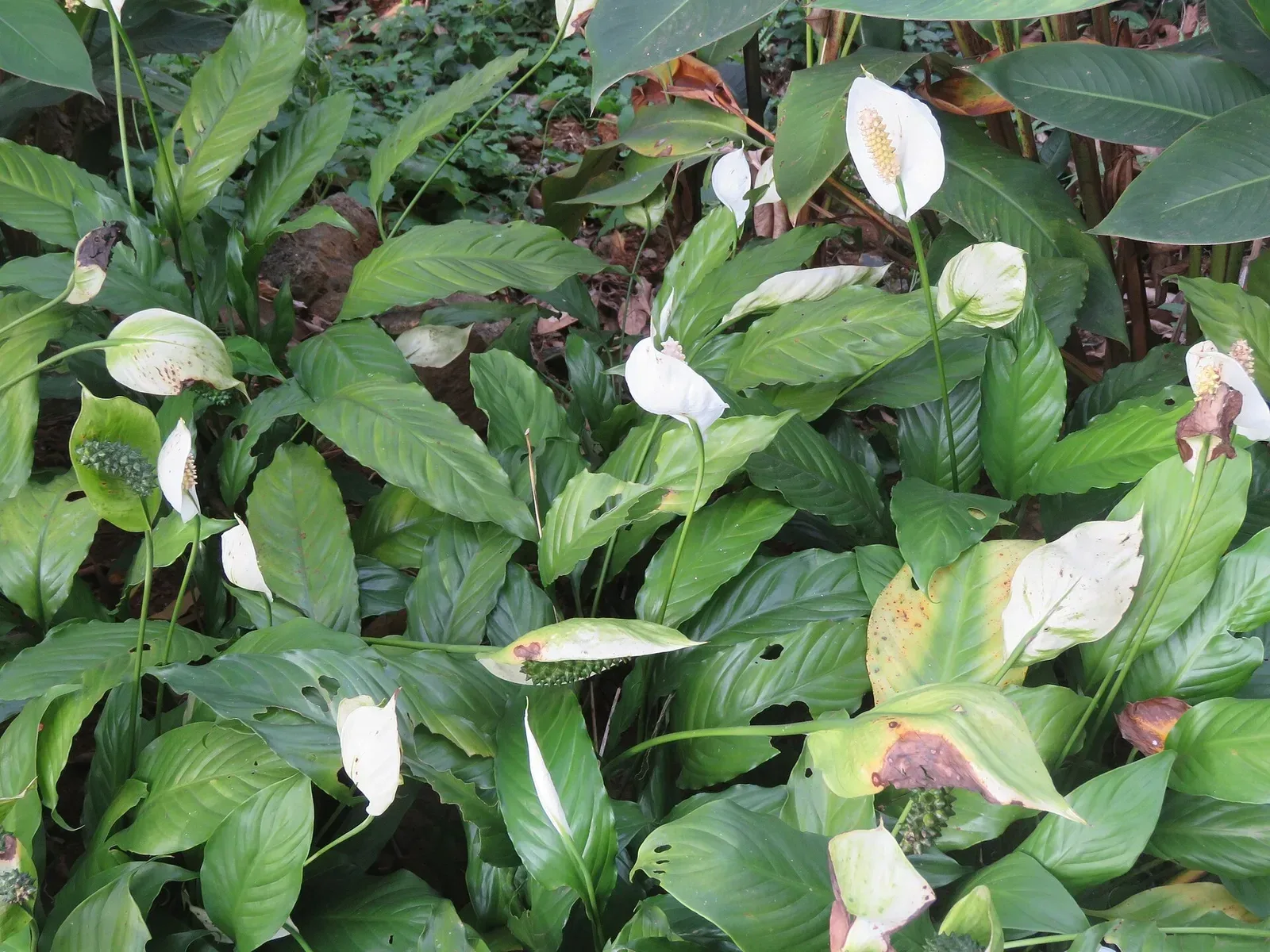
| ☀️ Light | Low light |
|---|---|
| 💧 Water | High (consistently moist) |
| 🪴 Soil | Moisture-retentive, airy mix |
| 🌡️ Temp | 16°C – 32°C |
| 🐾 Safety | Cats: toxic · Dogs: toxic (ASPCA Animal Poison Control) |
| 📏 Mature size | 70 cm |
Where It Grows & Climate Tolerance
Pet & Companion Animal Toxicity (Peace Lily Care in Australia)
Peace Lily (Spathiphyllum wallisii) care guide for Australian gardeners across ABC Tropical, Subtropical, Arid, Warm Temperate and Cool Temperate zones (16-32°C).
Care instructions
Care Guide & Maintenance Routine
Suits sheltered humid living rooms in Sydney, Brisbane and coastal WA; keep clear of Adelaide summer hot winds and Melbourne ducted heating vents to reduce leaf-tip scorching. Watering: high; Light: low; Soil: Moisture-retentive, airy mix.
Light & Sunlight
Australian harsh northern sun (Queensland, WA coast and inland terraces) calls for low conditions shaded from intense afternoon western glass exposure.
Watering Schedule
Match high watering rhythms to local humidity: check pots more often during dry Perth/Adelaide summers and allow potting mix to drain freely during wet coastal QLD summers.
Potting Mix & Drainage
Moisture-retentive, airy mix
Temperature & Humidity
Optimal Australian temperature range derived from species tolerance: 16°C minimum to 32°C maximum. Protect frost-sensitive foliage whenever southern overnight lows dip toward 16°C.
Suits sheltered humid living rooms in Sydney, Brisbane and coastal WA; keep clear of Adelaide summer hot winds and Melbourne ducted heating vents to reduce leaf-tip scorching.
In Australia, seasonal care shifts by six months relative to the Northern Hemisphere: active feeding and repotting run from September through February (Spring and Summer), while cooler southern regions from Melbourne and Canberra to Hobart pause wet-season fertilising between June and August.
Seasonal rhythm
Seasonal Calendar
| Month | Care Tasks | Seasonal Focus |
|---|---|---|
| Jan | Water, Shade | Water more often; avoid dry pots |
| Feb | Water, Check For Pests | Late Australian summer peak warmth (Feb); avoid fertilising heat-stressed roots |
| Mar | Taper Fertiliser | Taper fertilizer as growth slows |
| Apr | Repot, Taper Watering | Mid-autumn across NSW, VIC, WA and SA; bring tender patio pots inside south of Brisbane |
| May | Reduce watering | Late Australian autumn; halt nitrogen fertiliser before June winter rest |
| Jun | Protect from frost/heat, Reduce watering | Water less; let soil dry deeper |
| Jul | Protect from frost/heat | Coldest Australian winter month across Melbourne, Canberra, Hobart and inland towns; dry roots deeper between waterings |
| Aug | Inspect, Wipe leaves | Late Australian winter; plan early spring repotting (or dry-season outdoor sowing in Darwin/Cairns) |
| Sep | Repot, Fertilise | Resume regular watering as growth picks up |
| Oct | Fertilise, Propagate | Active mid-spring across southern & eastern Australia; frost danger passes in most VIC/ACT zones |
| Nov | Fertilise, Water | Late Australian spring warming; mulch outdoor beds before summer UV peaks |
| Dec | Water, Humidity | Early Australian summer; guard west-facing windows against afternoon glass scorch |
Diagnostics
Common Problems & Troubleshooting
Brown leaf tips = low humidity or tap-water salts. No flowers = too little light.
Pests & seasonal watch: Fungus gnats if soil stays wet; scale on stems. Improve drainage and use neem.
- Yellow leaves — Leaves fade from green to yellow, often starting at the bottom.
- Brown tips — Leaf tips and edges turn dry, brown and papery.
- Drooping — Stems and leaves hang limp even though the plant was recently fine.
- Fungus gnats — Tiny dark flies hover around wet potting mix.
- Thrips — Silvery streaks and twisted new leaves, sometimes with black specks of frass.
- White powder — A white powdery film on leaves, usually in still, humid air with dry soil at the roots.
- Leaf spot — Brown or tan spots with a yellow halo, sometimes with tiny dots in the centre.
- Grey mould — Fuzzy grey mould on faded flowers, damaged leaves or soft stems.
- Overwatering — Soil stays wet, leaves yellow or droop, and the pot feels heavy.
- Underwatering — Soil is bone dry and leaves are crispy, curled or dull.
- Curling — Leaves cup, roll or twist instead of lying flat.
- Brown spots — Scattered brown blotches on the leaf blade, not only the tip.
- White crust — A white or yellow crust on the soil surface or pot rim.
- Sun scorch — Bleached or crispy patches on the side that faces strong sun.
- No flowers — A flowering houseplant stays leafy and will not bloom.
Care encyclopedia · 1 guide
Guides & Articles for Peace Lily Care in Australia

Similar Botanical Matches
Keep exploring
Related plants
Grower field notes
Reader Field Notes in Australia
Share how this plant performs in your local Australia climate.