
If you want an Australian garden that actually looks like Christmas in December, start with New South Wales Christmas bush where it will grow, Christmas bells in a moist sandy pot or bed, and bursaria if you need a tougher shrub for a hot or inland site. All three earned their common names because they colour up in Australian summer, not in a northern winter.
The eight plants below are natives. Flowering times follow the Australian National Botanic Gardens, PlantNET, Florabase and Gardening Australia. December here is early to mid summer, so “Christmas flower” means a plant that is in bloom, or in coloured bracts, in the hot season. Jacaranda is widely planted and often flowers near the start of the holidays, but it is not native, and we have left it out of the eight for that reason.
Quick picks
- Best known Christmas shrub in NSW: NSW Christmas bush
- Best for a cooler, shadier garden: Victorian Christmas bush
- Best tough shrub for most states except W.A.: sweet bursaria
- Best for a pot: Christmas bells and, in a large pot, tall kangaroo paw
- Best western-Australian landscape tree: moodjar (WA Christmas tree) — enjoy it in the bush; it is a poor garden choice
- Best extra summer colour: crimson bottlebrush and lemon myrtle
Comparison at a glance
| Plant | Light | Water | Size | Flowering at Christmas | Difficulty | Best for | Climate zone |
|---|---|---|---|---|---|---|---|
| NSW Christmas bush | Sun for good colour | Well-drained; regular water in summer | Shrub to about 5 m | Red calyces in summer, after late-spring white flowers | Moderate | A feature shrub and cut stem | Best in temperate to subtropical coastal NSW and similar gardens; worth trying in cool Canberra with water |
| Victorian Christmas bush | Sun or shade | Moist, well-drained | 2–10 m, often about 5 m in gardens | White, pink or mauve flowers in summer | Easy for a mint bush | A screen or forest-edge shrub | Cool to temperate; mountains, tablelands, southern forests; from Qld to Tasmania |
| Christmas bells | Full sun or light shade | Moist, sandy, never really dry | Leaves to 50 cm; flower stems to about 80 cm | Summer, including December | Moderate; better in a pot for many gardeners | A pot or a moist rockery | Temperate to subtropical east coast (NSW, Qld); not a dry-inland plant |
| WA Christmas tree (moodjar) | Full sun | Native sites; not a typical garden shrub | Tree to about 10 m | Brilliant yellow-orange flowers in summer | Very difficult in a garden | Bush walks in south-west W.A. | South-west Western Australia. Not a practical eastern-states garden tree |
| Sweet bursaria | Almost any, once established | Hardy; drought-tolerant when established | Shrub to 3 m, often taller | White flowers in late spring and summer | Easy | A tough, insect-rich shrub | Temperate, cool, coastal and much of inland eastern and southern Australia; all states except W.A. |
| Crimson bottlebrush | Sun | Better with water in dry spells; it is a swamp-edge plant in the wild | Usually 1–3 m | Main flush November–December; often a second flush in autumn | Easy | A reliable December feature | Temperate to subtropical east coast; widely grown elsewhere with water |
| Tall kangaroo paw | Sun to light shade | Well-drained; moist in the growing season | Clump with stems 0.5–3 m | November to February | Moderate outside W.A.; drainage matters | Summer colour and bird nectar | Native to south-west W.A.; grown in temperate and Mediterranean-climate gardens with sharp drainage |
| Lemon myrtle | Sun to part shade | Moist, well-drained | Small tree, smaller if pruned | Creamy flowers in summer and autumn; earlier in warmer districts | Easy in the right climate | Scented foliage, and flowers as a bonus | Subtropical to warm temperate; native to Qld and northern NSW; frost-tender when young |
The ASPCA pet-safety list, which we use for house-plant claims, has no pages for these Australian species, so the table does not call them safe or toxic. See the notes under each plant, and the left-out section, for spines, irritating hairs and the limits of that list.
NSW Christmas bush (Ceratopetalum gummiferum)
- Light: A sunny position is preferred for good flowering, according to the Australian National Botanic Gardens.
- Water: Well-drained soil; regular water in a dry summer helps the colour last.
- Size: An erect shrub to about 5 m high and 1.5 m wide.
- Difficulty: Moderate. Choose a good-coloured form if you can.
- Region note: Endemic to New South Wales, mainly near the coast. It also does well in Canberra in a cool summer with water, and is grown in other temperate gardens.
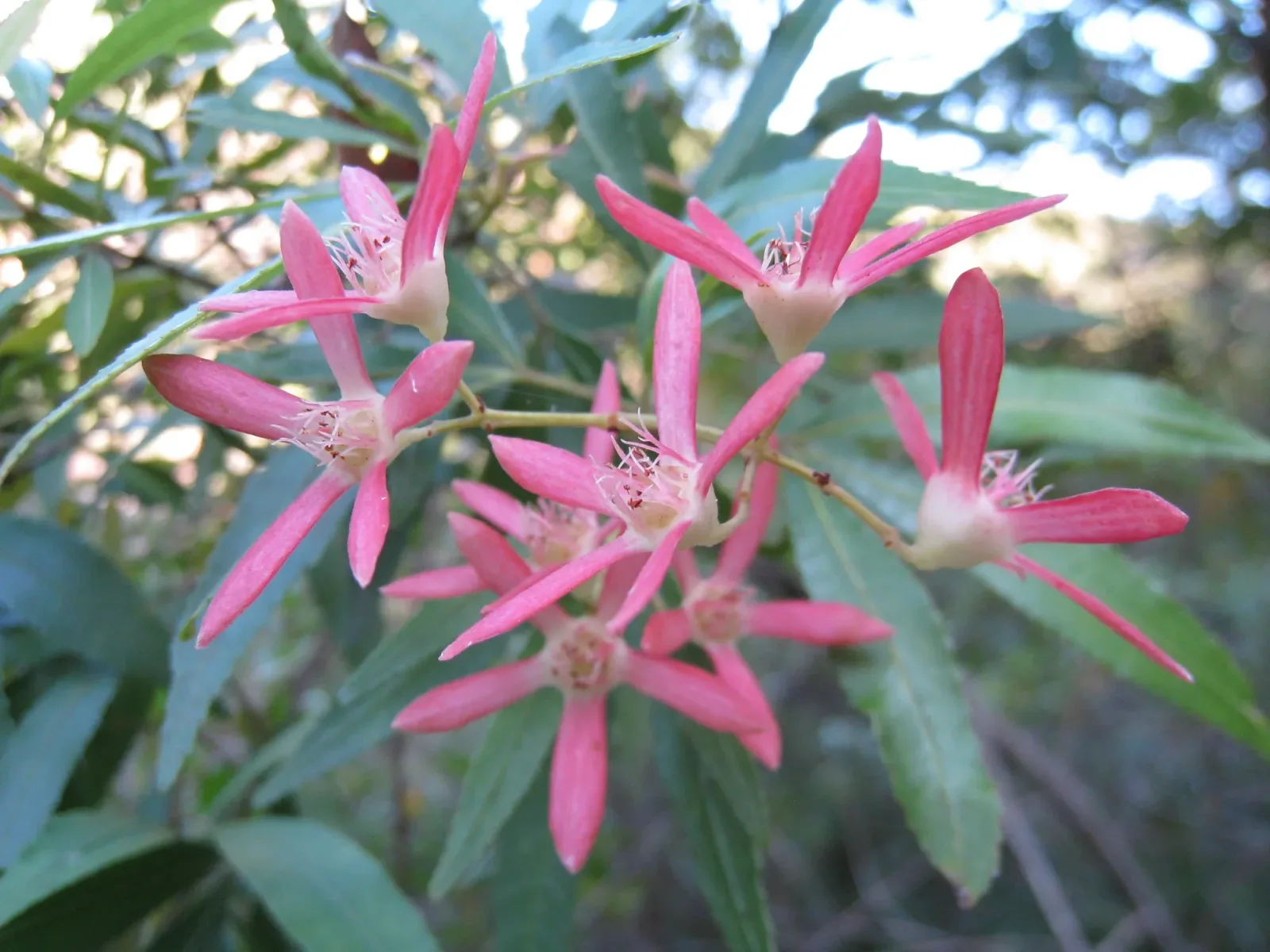
This is the Christmas bush of the Sydney markets. ANBG describes sprays of white, star-like flowers in late spring, followed by reddened, swollen calyces in summer. Gardening Australia makes the same point: the white flowers do not last long, but as they drop, the calyx swells and turns red and papery, like a second flower. That red stage is what people cut for the house in December.
The honest drawback is climate. It is not the right “Christmas bush” for a Melbourne clay garden or a dry inland block unless you can give it drainage and summer water, and the best reds come from selected clones, not from a random seedling. Full care guide →
Victorian Christmas bush (Prostanthera lasianthos)
- Light: ANBG calls this probably the most adaptable of the Christmas-named plants: heavy shade or full sun.
- Water: It grows wild on moist forest edges and creek lines, but older plants can stand drier spells once established.
- Size: A variable shrub or small tree, 2–10 m, often around 5 m in gardens.
- Difficulty: Easier than many mint bushes, and useful as a screen.
- Region note: Wild from southern Queensland to Tasmania, including the ACT, from the coast into the mountains. A good match for cool and temperate southern gardens.
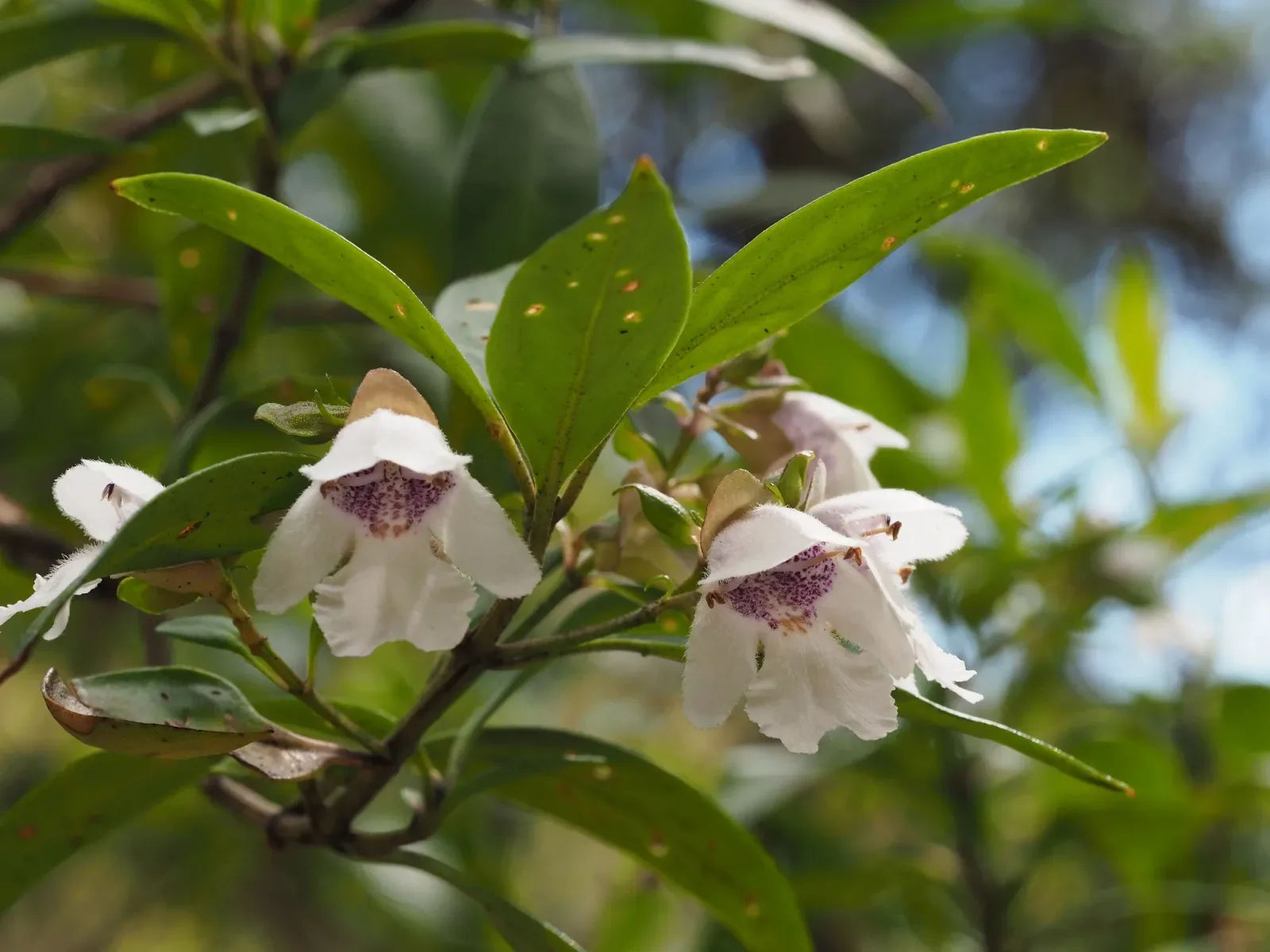
This is a mint bush, not a relation of the NSW species. Crush a leaf and you will smell it. Flowers come in terminal sprays, white, pink or mauve, in summer. Gardening Australia also uses the name Coranderrk, and notes a preference for a damp, shady spot, though ANBG’s garden plants have grown in full sun as well.
The honest drawback is size and softness. In a rich, wet site it can become a tall, slightly sprawling shrub, and like other prostantheras it can suffer in heavy, poorly drained soil. It is a plant for a garden, not a tiny courtyard pot. Full care guide →
Christmas bells (Blandfordia grandiflora)
- Light: Full sun is important for B. grandiflora; B. nobilis takes full sun or part shade.
- Water: Moist, sandy soil. ANBG says ample water is needed, and commercial flowers are grown with a high water table.
- Size: A tuft of grass-like leaves to about 50 cm, with flower spikes to 50–80 cm.
- Difficulty: Moderate in the ground; often easier in a pot, as ANBG has shown in Canberra.
- Region note: B. grandiflora occurs in New South Wales and Queensland; B. nobilis in New South Wales. Not a plant for dry inland or arid gardens without a carefully watered pot.
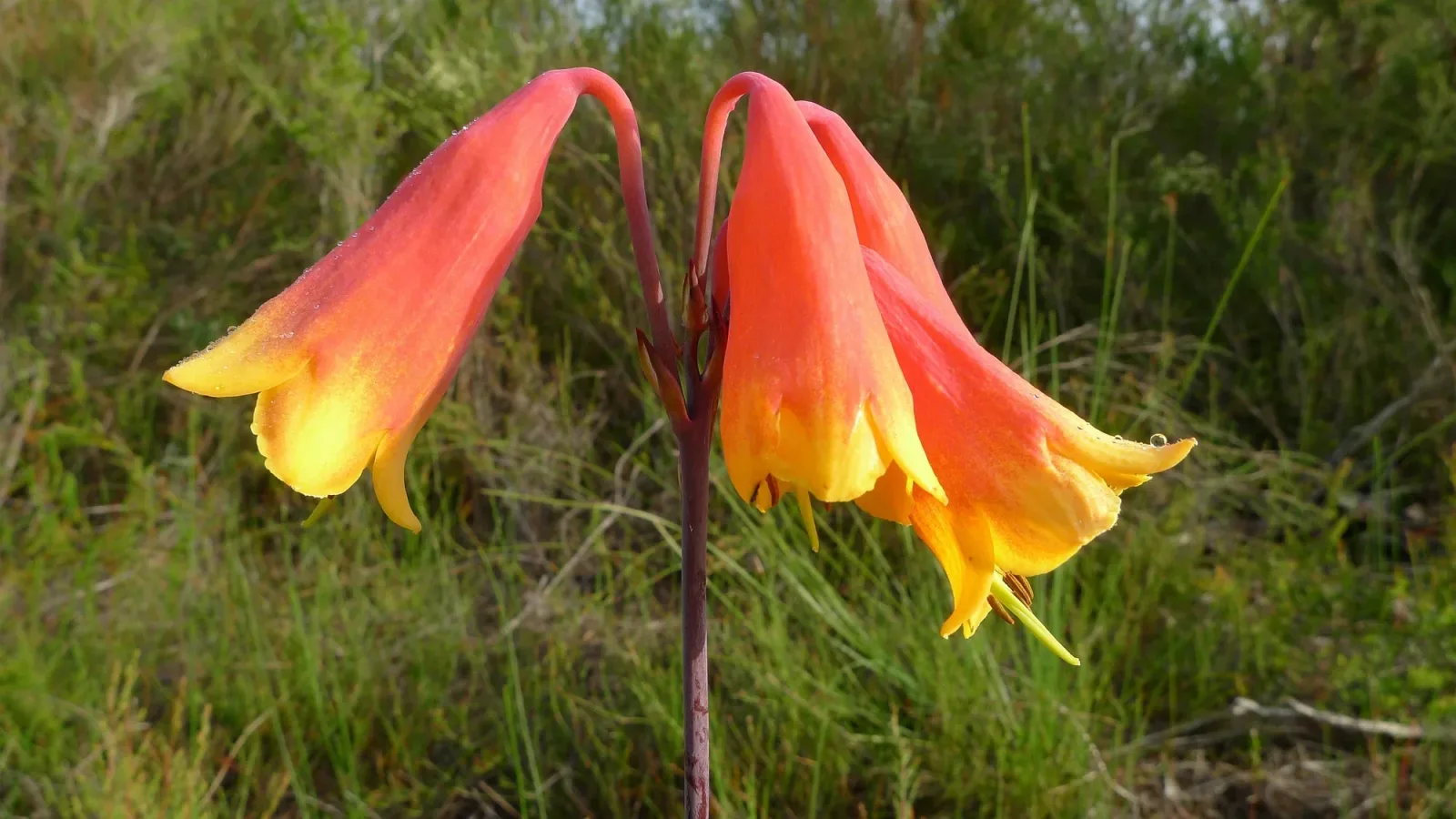
These are the red-and-yellow bells in old Sydney Christmas pictures. ANBG says B. grandiflora usually flowers in summer, with odd blooms at other times, and that the bells may be pure yellow or deep red with yellow tips. Gardening Australia gives mid-December to February for B. nobilis and warns that seed-grown plants can take three years to flower. GardenOrbit does not yet have an Australia profile for Blandfordia, so this entry has no plant-page link.
The honest drawback is patience and moisture. The plant will not forgive a dry, heavy clay bed, and you should not dig wild plants. Buy nursery stock or grow from seed, and be ready to wait for the first flowers.
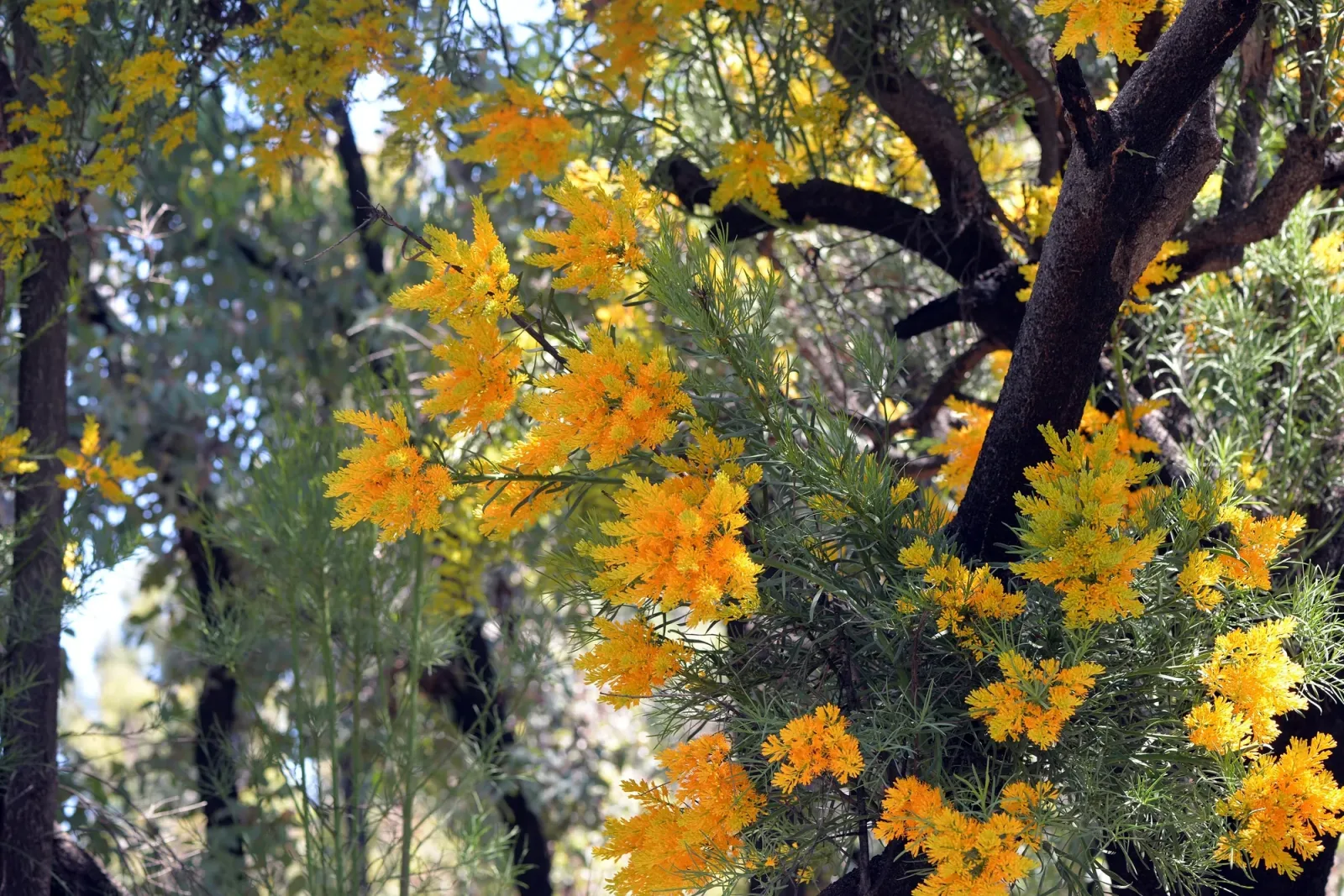
Western Australian Christmas tree, moodjar (Nuytsia floribunda)
- Light: Full sun. ANBG says it appears to be frost resistant.
- Water: A wild plant of south-west Western Australia, not a regular watered garden shrub in the eastern states.
- Size: A tree to about 10 m.
- Difficulty: Very difficult in cultivation. It is partly parasitic on the roots of other plants.
- Region note: Native only to Western Australia. This is a south-west landscape tree, not a Sydney or Melbourne front-garden plant.
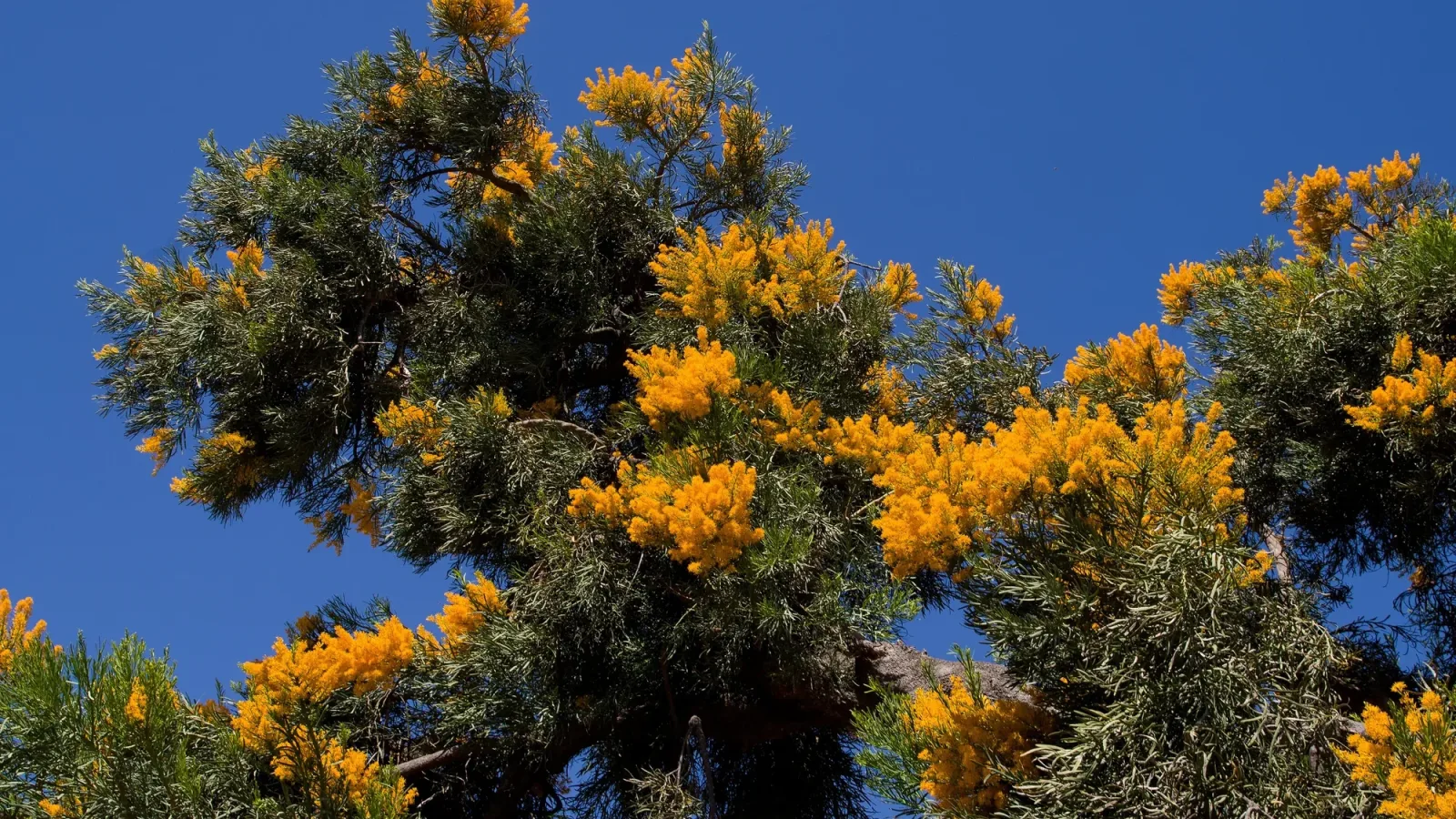
When moodjar flowers, you can see the orange-yellow mass from a long way off. ANBG describes brilliant yellow flowers, profuse in summer, and notes that grasses and strawberries have been tried as companion hosts. Gardening Australia calls it the world’s largest mistletoe, says it is regarded as sacred by Noongar people of the south-west, and is blunt that it is not suited to garden growing. Enjoy it on a walk. There is no live GardenOrbit Australia profile for this species yet.
The honest drawback is the one that matters: you probably cannot grow a good specimen in a suburban garden outside its range, and you should not try to transplant a wild tree. It is on this list because it is the Christmas plant of Western Australia, not because it is an easy nursery purchase.
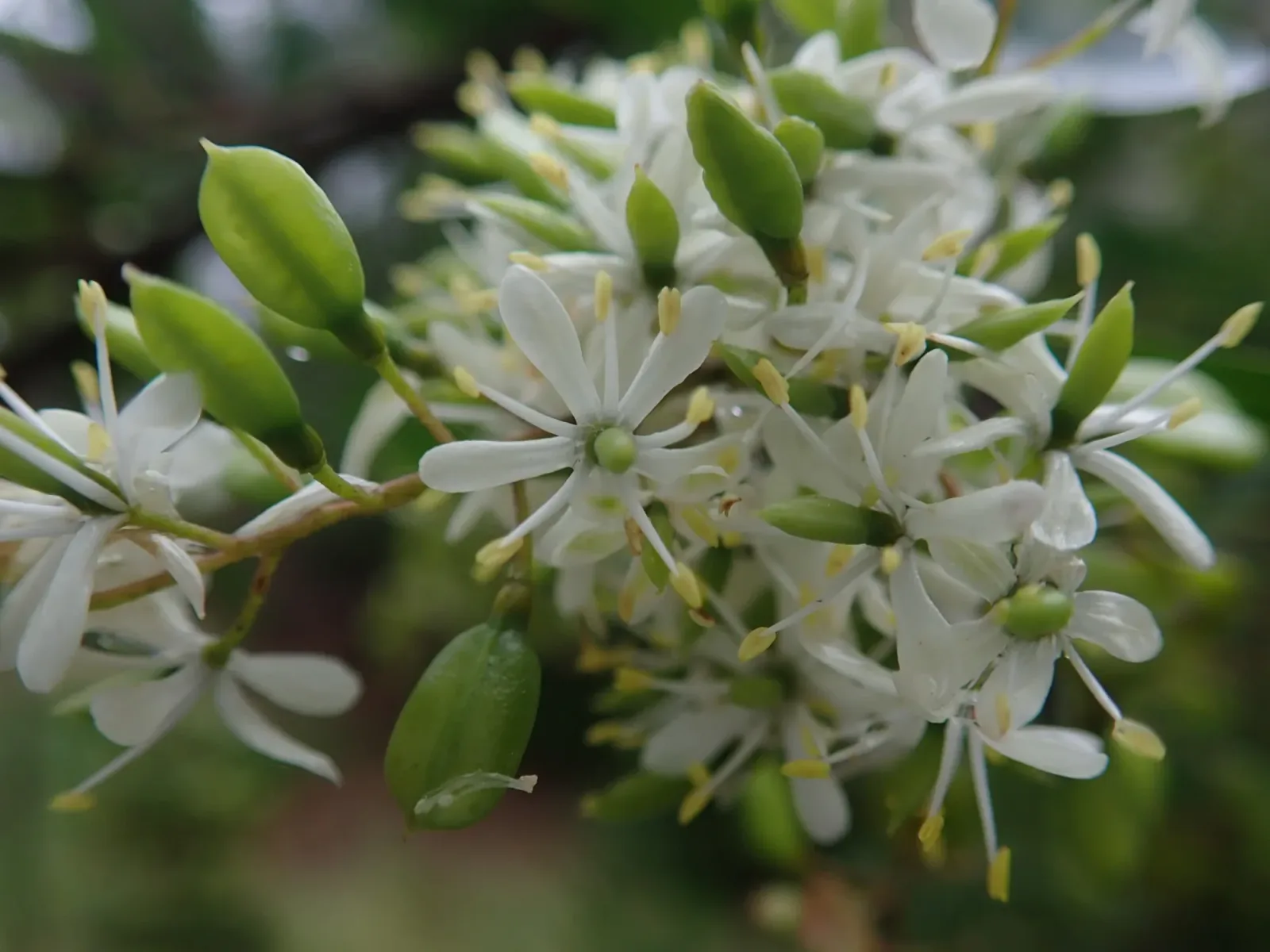
Sweet bursaria, Tasmanian or South Australian Christmas bush (Bursaria spinosa)
- Light: ANBG says it will grow in almost any situation.
- Water: Very hardy once established; a good choice where summer water is short.
- Size: An erect, thorny shrub to 3 m, and often taller.
- Difficulty: Easy. Scale insects can appear in some areas.
- Region note: All Australian states except Western Australia. This is the Christmas bush of South Australia and Tasmania in the ANBG account, and a useful summer-flowering native over much of the east and south.
Masses of white flowers cover the bush in late spring and summer, then the brown seed cases take over. ANBG notes that the fruits are useful in floral arrangements. Gardening Australia describes it as drought-tolerant and good for insects and the birds that eat them, including in small gardens. It is a practical Christmas-month shrub for Melbourne, Adelaide, Hobart and much of inland New South Wales, where NSW Christmas bush may sulk.
The honest drawback is the spines, which are sharp, and the fact that a wild-looking bursaria is less “pretty” than a selected NSW Christmas bush in full red. Wear gloves when you prune. Full care guide →
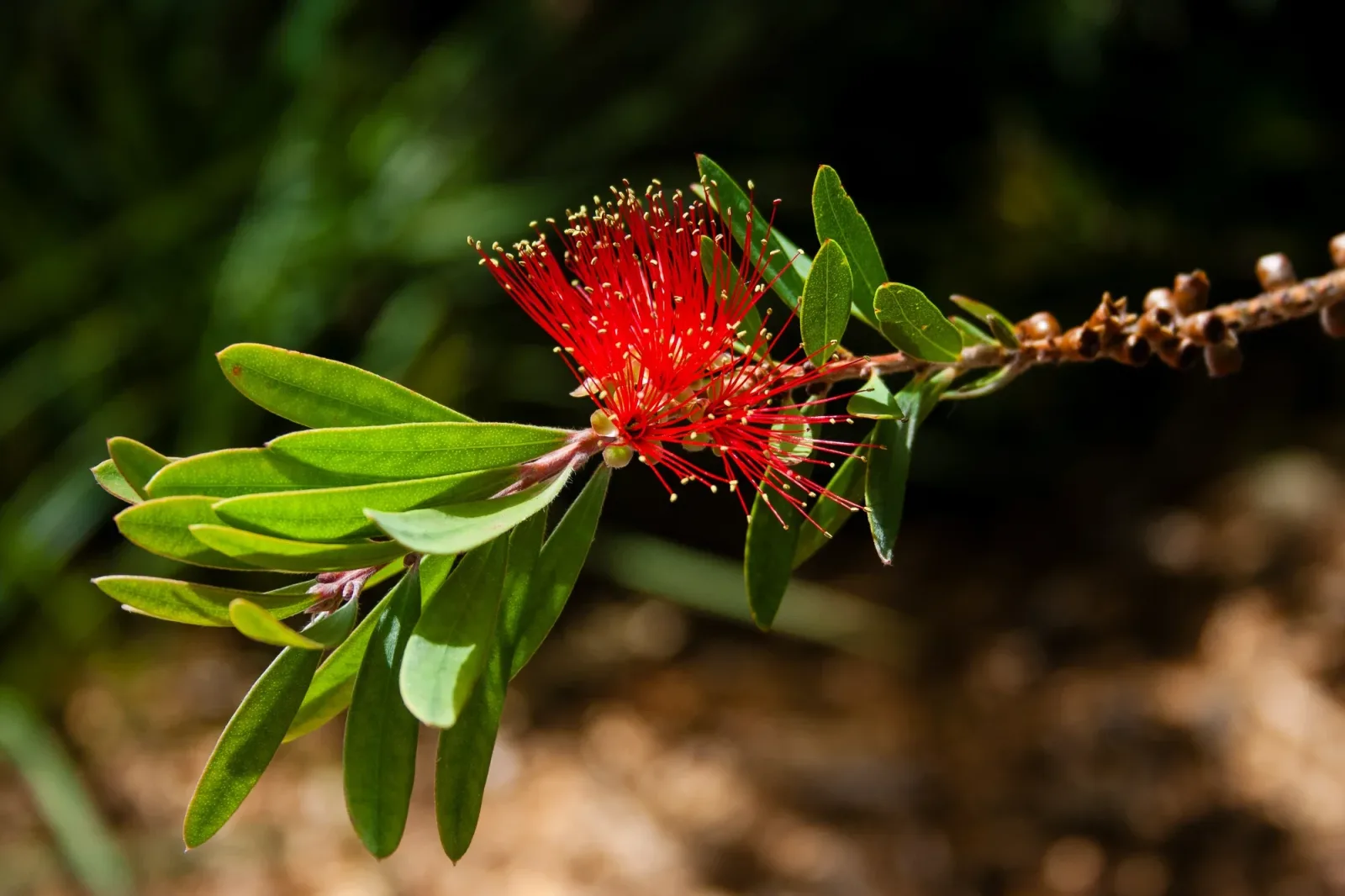
Crimson bottlebrush (Callistemon citrinus, also Melaleuca citrina)
- Light: Sun.
- Water: In the wild it often grows in damp ground near the coast. In a garden, a deep watering in a dry spell helps it flower well.
- Size: Usually a stiff shrub 1–3 m, sometimes larger in good conditions.
- Difficulty: Easy, and widely grown.
- Region note: Native in New South Wales, Queensland and Victoria. PlantNET gives the flowering time as November–December. ANBG notes a main flush from early November around Canberra, and welcome autumn flowers from the end of March if the plant is well watered.
This is not called a Christmas bush, but it is one of the most reliable native reds at Australian Christmas in the east. The showy part of the flower is a bottlebrush of stamens, usually bright red with dark anthers. Many garden forms are sold, and some are probably hybrids.
The honest drawback is naming and wet feet in the wrong soil. Herbaria may label it Melaleuca citrina, while nurseries still say Callistemon. In a poorly drained heavy clay it can struggle, even though the wild plants like moisture, because still, sour soil is not the same as a living swamp edge. Full care guide →
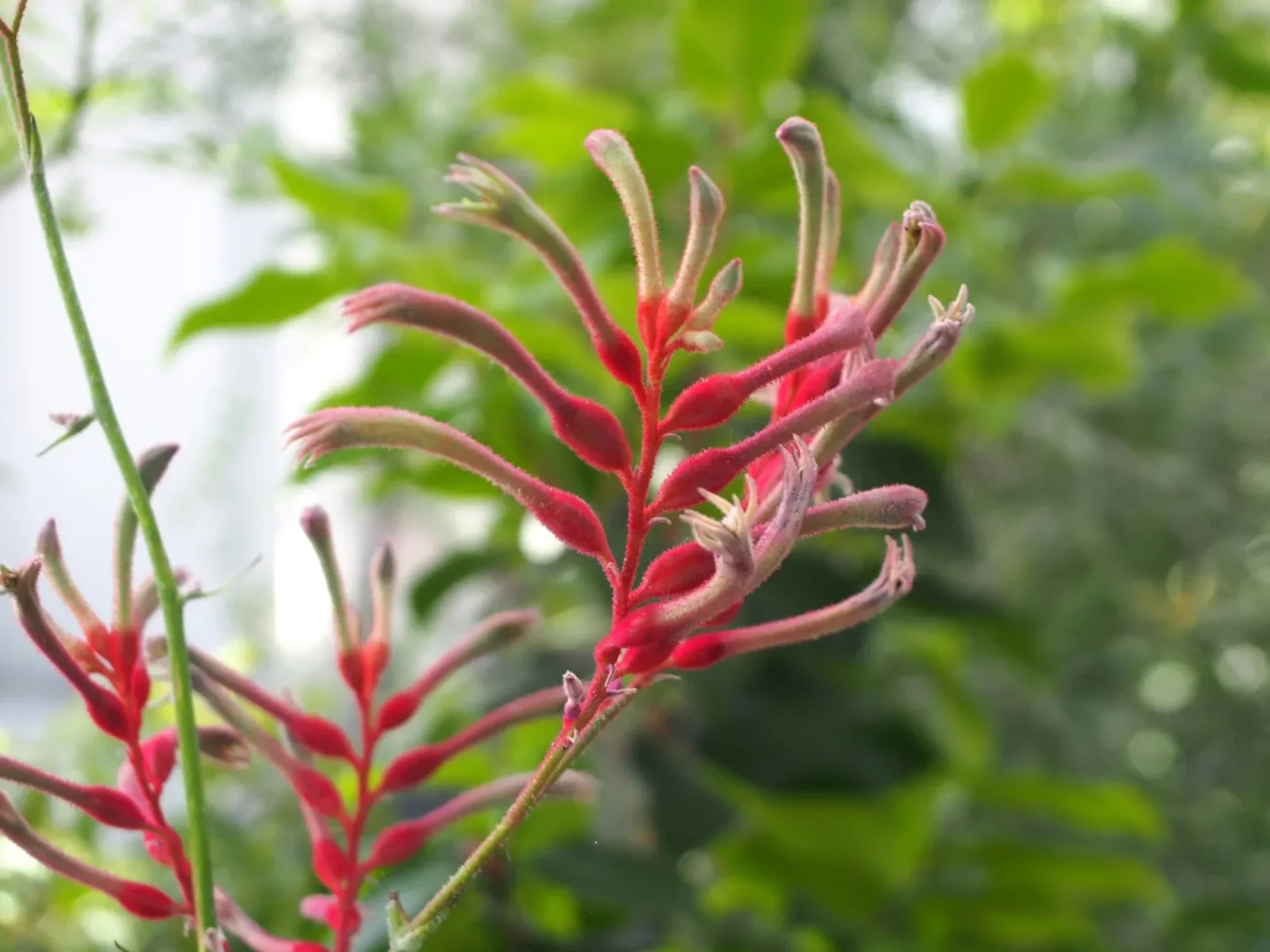
Tall kangaroo paw (Anigozanthos flavidus)
- Light: Sun, with light shade tolerated.
- Water: Well-drained soil; moist in the growing season. The wild plants often sit on drainage lines and damp ground in south-west Western Australia.
- Size: A clumping perennial; Florabase gives 0.5–3 m high.
- Difficulty: Moderate outside its home range, mainly because of drainage and, in humid summers, leaf and flower diseases.
- Region note: Native to the extreme south-west of Western Australia. ANBG says flowering is November to February, “a colourful summer display when little else in the garden flowers.” In temperate and Mediterranean-climate gardens it is a realistic Christmas-month plant if the soil drains.
The flowers are tubular and felted, in yellow-green, red, pink or orange, on tall branched stems, and they are used fresh and dried. Birds use the nectar. This is one of the tougher kangaroo paws, which is why it is the species most often seen in gardens outside Western Australia.
The honest drawback is the felt on the flowers, which ANBG says may irritate skin and eyes if you handle it often, and the plant’s dislike of still, humid, poorly drained ground. It is not a lush tropical-garden plant for far north Queensland wet-season beds without careful siting. Full care guide →
Lemon myrtle (Backhousia citriodora)
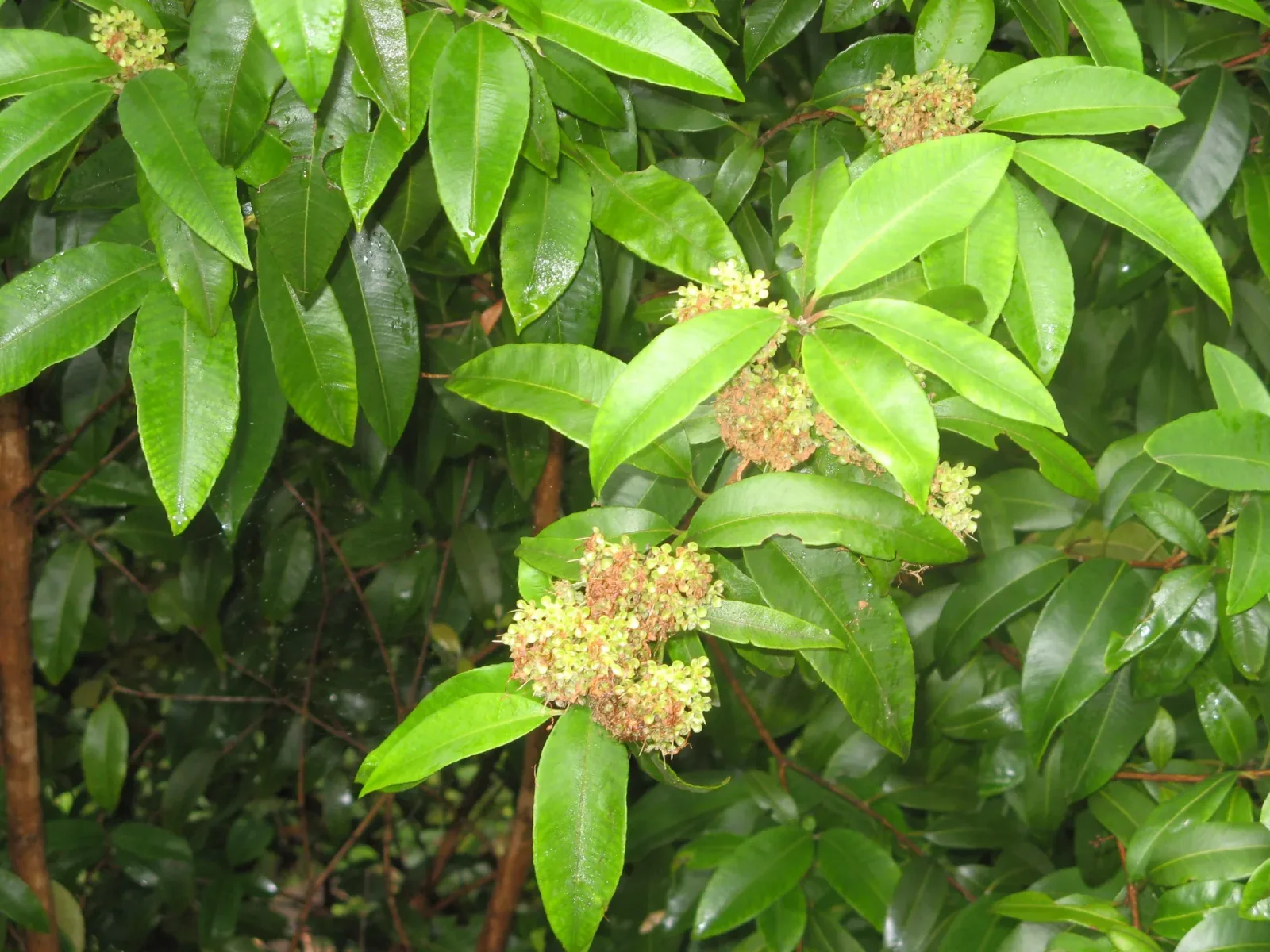
- Light: Full sun to part shade.
- Water: Moist, well-drained soil; young plants need care in a dry spell.
- Size: A small tree in the ground, often kept smaller as a hedge or large pot plant.
- Difficulty: Easy in warm, reasonably frost-free gardens; slower and more frost-tender when young in the south.
- Region note: Native to the rainforests of Queensland and northern New South Wales. In those districts, and in other subtropical gardens, the creamy flower clusters often open in early summer, around Christmas. Further south they may come later, through summer into autumn.
People grow lemon myrtle for the leaves, which smell strongly of lemon when crushed, and the flowers are a summer extra rather than the whole point. In a Queensland or northern New South Wales garden that extra often arrives in time for Christmas; in Melbourne or Hobart you may be admiring foliage in December and flowers a little later. It is still a fair inclusion on a summer-flowering native list, with that timing caveat.
The honest drawback is frost and patience in the south. A young plant can be cut back by a cold night in a cool-temperate garden, and it will not give you the red Christmas-bush look that many people are hoping for. Grow it for scent first. Full care guide →
Care that applies to most of them
December planting is possible, but it is not the kindest month for a new shrub in a heatwave. Water in well, mulch, and try not to move a plant that is already in full flower if you can help it. Many Australian natives, including bottlebrush, banksia relations and some others, are sensitive to high-phosphorus fertilizers. If you feed, use a product labelled for Australian natives and follow that label. This article does not give fertilizer or pesticide doses.
For pot culture, a well-drained mix matters as much as the pot size. Our potting-mix guide is written for indoor plants, but the drainage point still holds if you grow Christmas bells or a compact kangaroo paw in a container.
Climate zones, in brief
Tropical north (Darwin, Cairns and similar): Christmas falls in the wet season. Lemon myrtle is a better climatic match than Victorian Christmas bush or dry-heath Christmas bells. NSW Christmas bush and bottlebrush need a look at local advice before you plant them as if you were in Sydney.
Subtropical coast (south-east Queensland, northern New South Wales): NSW Christmas bush, crimson bottlebrush, lemon myrtle and, in moist sandy ground or a pot, Christmas bells are the core of a December garden. Bursaria also grows here.
Temperate coast (Sydney, much of the NSW south coast, Adelaide’s milder pockets): NSW Christmas bush and bottlebrush are at home around Sydney. Adelaide gardeners often lean on bottlebrush and bursaria. Lemon myrtle will flower, sometimes a little later than in Queensland.
Cool temperate and tablelands (Melbourne, Tasmania, Canberra, the ranges): Victorian Christmas bush and bursaria are the more natural Christmas-month shrubs. ANBG has grown NSW Christmas bush well in Canberra with water and a mild autumn. Moodjar is still not a realistic garden tree here.
Arid and dry inland: Bursaria is the tough one on this list for much of inland eastern and southern Australia. The rest need a carefully chosen microclimate, a pot, or a different plant.
South-west Western Australia: This is moodjar country, and also the home of tall kangaroo paw. The eastern Christmas bushes are optional garden plants here, not local wildflowers.
Plants we left out and why
- Jacaranda (Jacaranda mimosifolia). Widely planted, often in flower as the holidays start, and GardenOrbit has an Australia profile for it. It is native to South America, not Australia, so it does not belong on a native Christmas list.
- Christmas orchid (Calanthe triplicata). ANBG and Gardening Australia both list it: a terrestrial orchid with showy white summer flowers, and a good pot plant in a sheltered, moist, shaded spot. We have no live Australia profile yet, and it is harder to buy than the shrubs above, so it sits here rather than in the eight.
- Pohutukawa. A famous Christmas tree, but it is a New Zealand native, not an Australian one.
- Albany woolly bush (Adenanthos sericeus). Gardening Australia mentions compact forms as a short-term indoor Christmas-tree substitute. We have no Australia profile, and its main interest is foliage, not a big December flower show.
Sources
- Australian National Botanic Gardens: Australian Christmas plants; NSW Christmas bush; Victorian Christmas bush; crimson bottlebrush; tall kangaroo paw
- NSW PlantNET: Callistemon citrinus (flowering November–December)
- Western Australian Herbarium, Florabase: Anigozanthos flavidus
- Gardening Australia: NSW Christmas bush, Series 34 Episode 38, 15 December 2023
- ABC News Science: Native plants to help make your Christmas
Updated 15 November 2026 (IST): new guide, written so it can be published before 1 December. No named reviewer is listed, pending confirmation of real reviewers.



Comments
No comments yet — share what worked in your climate.