
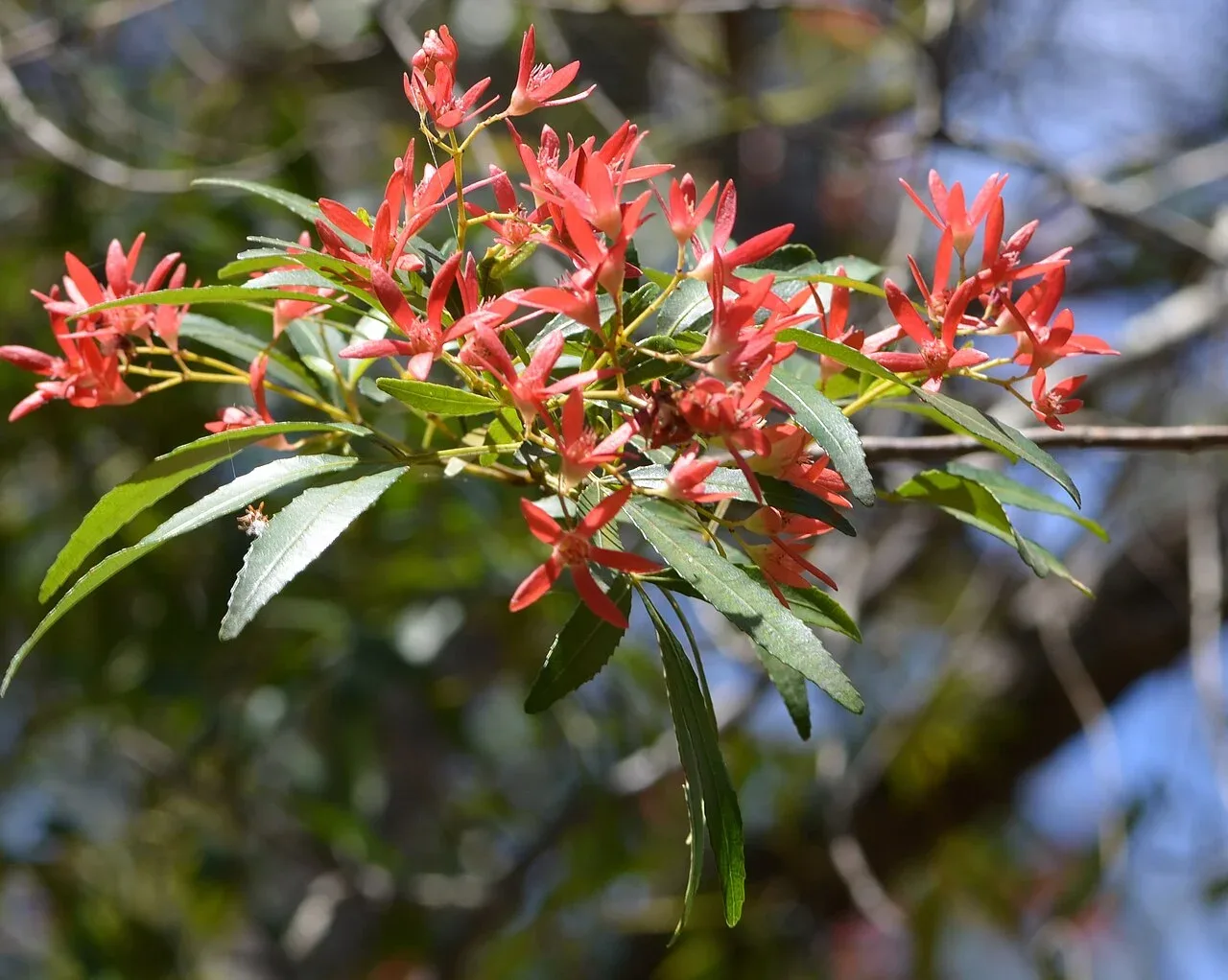
| ☀️ Light | Full sun |
|---|---|
| 💧 Water | Moderate (lightly moist) |
| 🪴 Soil | Well-drained sandy loam or improved garden soil |
| 🐾 Safety | Cats: not verified · Dogs: not verified |
Where It Grows & Climate Tolerance
Pet & Companion Animal Toxicity (NSW Christmas Bush (Ceratopetalum gummiferum) in Australia)
Not yet verified: Toxicity status for cats, dogs, and horses has not yet been confirmed against veterinary poison-control records. Keep out of reach of pets or consult your veterinarian.
Cream flowers are followed by bright red papery sepals. This NSW native needs drainage, shelter from strong wind and water in dry weather.
Care instructions
Care Guide & Maintenance Routine
Plant in a sheltered, well-drained site. Water young plants while they establish. Protect them from frost in colder districts.
Light & Sunlight
Full sun suits plants in sheltered sites. Light shade is also suitable, especially while young.
Watering Schedule
Water young plants regularly while roots establish. In dry weather, water deeply; avoid waterlogged soil.
Potting Mix & Drainage
Well-drained sandy loam or improved garden soil
Temperature & Humidity
Protect young plants from frost in cool areas. Mature specimens have grown on sheltered Canberra slopes, but site and season matter.
Ceratopetalum gummiferum is native to coastal New South Wales. Its flowers are cream. The red display comes later, when the sepals around the fruit grow larger and change colour. PlantNET records spring flowers and summer fruit in NSW. In Canberra, the Australian National Botanic Gardens has seen flowers from December and colour lasting longer in some seasons.
Use a sunny or lightly shaded site away from strong wind. Add mulch and water in long dry spells. Improve drainage in heavy soil because wet roots can cause dieback. Young plants in cold areas need frost shelter. Named cultivars can differ in colour and size. Check the botanical label: other Australian plants share the name Christmas Bush.
Seasonal rhythm
Seasonal Calendar
| Month | Care Tasks | Seasonal Focus |
|---|---|---|
| Jan | Routine check | Watch the red sepals and water if summer is dry. |
| Feb | Routine check | Check mulch and soil moisture during heat. |
| Mar | Routine check | Let the fruit mature; avoid cutting back every stem. |
| Apr | Routine check | Clear fallen leaves and check drainage after rain. |
| May | Routine check | Choose a sheltered planting spot in mild districts. |
| Jun | Routine check | Protect young plants from frost in cold gardens. |
| Jul | Routine check | Water only when needed and keep heavy soil from staying wet. |
| Aug | Routine check | Plan planting after the worst frost has passed. |
| Sep | Routine check | Refresh mulch and check for healthy new growth. |
| Oct | Routine check | Water young shrubs as spring growth starts. |
| Nov | Routine check | Look for cream flowers; keep the plant sheltered from strong wind. |
| Dec | Routine check | Cream flowers and red sepals may appear; timing varies by district. |
Diagnostics
Common Problems & Troubleshooting
Root trouble in wet soil, leaf damage in strong wind and frost injury on young plants.
Pests & seasonal watch: Wet, poorly drained soil can lead to root rot and dieback. Inspect a declining plant and correct drainage before adding more water.
Care encyclopedia · 1 guide
Guides & Articles for NSW Christmas Bush (Ceratopetalum gummiferum) in Australia
Similar Botanical Matches
Keep exploring
Related plants
Grower field notes
Reader Field Notes in Australia
Share how this plant performs in your local Australia climate.