
| ☀️ Light | Full sun |
|---|---|
| 💧 Water | Moderate (lightly moist) |
| 🪴 Soil | Adaptable garden soil, including damp sites |
| 🐾 Safety | Cats: not verified · Dogs: not verified |
| 📏 Mature size | 4.0 m |
Where It Grows & Climate Tolerance
Pet & Companion Animal Toxicity (Crimson Bottlebrush)
Not yet verified: Toxicity status for cats, dogs, and horses has not yet been confirmed against veterinary poison-control records. Keep out of reach of pets or consult your veterinarian.
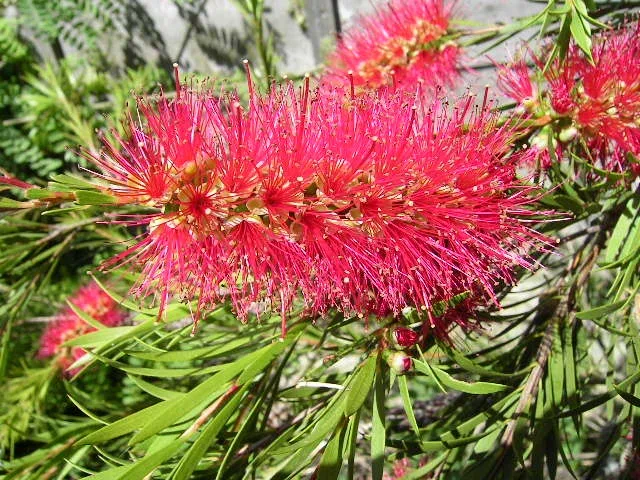
An eastern Australian native with vivid red brushes that attract bees and small birds. This large shrub can be pruned as a hedge or trained as a small tree.
Care instructions
Care Guide & Maintenance Routine
In NSW gardens, establish with regular watering, especially ahead of warm weather. Watch moisture through dry spells if repeat flowering is desired, and prune after the main spring display.
Light & Sunlight
Place outdoors in a bright, open position for a good flower display. Avoid assuming a compact cultivar has the same mature size as the species.
Watering Schedule
Water well while establishing. ANBG notes better repeat flowering when watered; prolonged dry spells can reduce bloom. Established plants in damp ground need less added water.
Potting Mix & Drainage
Adaptable garden soil, including damp sites
Temperature & Humidity
In NSW, heat, cold and drought can all reduce flowering in some years. Protect small container plants during severe weather.
Crimson bottlebrush occurs naturally in parts of NSW, Queensland and Victoria. It was traditionally called Callistemon citrinus; Kew accepts Melaleuca citrina. Keep both names in a profile so gardeners can match nursery labels with current taxonomy.
The Australian National Botanic Gardens describes plants from swampy ground that also adapt to garden soils and seaside sites. In NSW, allow for a substantial shrub rather than assuming every bottlebrush is dwarf. A species plant can approach 3–4 m; named selections or hybrids may be smaller or larger. Bright red stamens form the showy flower spikes and bring bees and small birds.
ANBG observations put a main flowering flush from early November and a possible second flush from late March when moisture and weather suit. Those dates are a guide, not a promise for every NSW garden. Water young shrubs to establish and give additional water in extended dry periods if flowering matters. Prune after spring flowering to maintain a dense hedge; where autumn frost is possible, time late pruning with care.
Seasonal rhythm
Seasonal Calendar
| Month | Care Tasks | Seasonal Focus |
|---|---|---|
| Jan | Routine check | In NSW summer, check soil moisture during hot dry spells and water young shrubs as needed. Flowering can vary by site. |
| Feb | Routine check | In late summer, keep establishing plants watered through dry weather and inspect leaves for scale symptoms. |
| Mar | Routine check | In autumn, a second flowering flush may begin from late March when moisture and weather suit. |
| Apr | Routine check | If flowering continues in autumn, let blooms finish before shaping; avoid late hard pruning where frost is likely. |
| May | Routine check | In late autumn, keep young shrubs watered during prolonged dry weather and leave major pruning until after the main spring display. |
| Jun | Routine check | In winter, check drainage after rain; avoid leaving container plants waterlogged. |
| Jul | Routine check | In midwinter, protect small container plants during severe frost and check that soil drains freely. |
| Aug | Routine check | As winter ends, inspect new tips for scale and plan any spring planting. |
| Sep | Routine check | Spring is a useful time to plant in NSW; water regularly while roots establish. |
| Oct | Routine check | In spring, check soil moisture as flower buds develop and avoid unnecessary hard pruning. |
| Nov | Routine check | A main red flowering flush may begin around early November in suitable NSW conditions; dates vary between gardens. |
| Dec | Routine check | After the main spring display finishes, lightly prune to keep a dense shape and water young plants through summer heat. |
Diagnostics
Common Problems & Troubleshooting
Sparse flowering after heat, cold or prolonged dryness; leaf blistering and twisting from scale; overlarge growth where a species plant was expected to remain compact.
Pests & seasonal watch: Watch for raised, blistered or twisted leaves and sooty mould that may accompany scale insects. Diagnose before using any horticultural product.
Care encyclopedia · 1 guide
Guides & Articles for Crimson Bottlebrush
Similar Botanical Matches
Keep exploring
Related plants
Grower field notes
Reader Field Notes in Australia
Share how this plant performs in your local Australia climate.