
| ☀️ Light | Full sun |
|---|---|
| 💧 Water | Moderate (lightly moist) |
| 🪴 Soil | Well-drained soil from sandy to moderately heavy |
| 🐾 Safety | Cats: not verified · Dogs: not verified |
Where It Grows & Climate Tolerance
Pet & Companion Animal Toxicity (Hairpin Banksia (Banksia spinulosa) in Australia)
Not yet verified: Toxicity status for cats, dogs, and horses has not yet been confirmed against veterinary poison-control records. Keep out of reach of pets or consult your veterinarian.
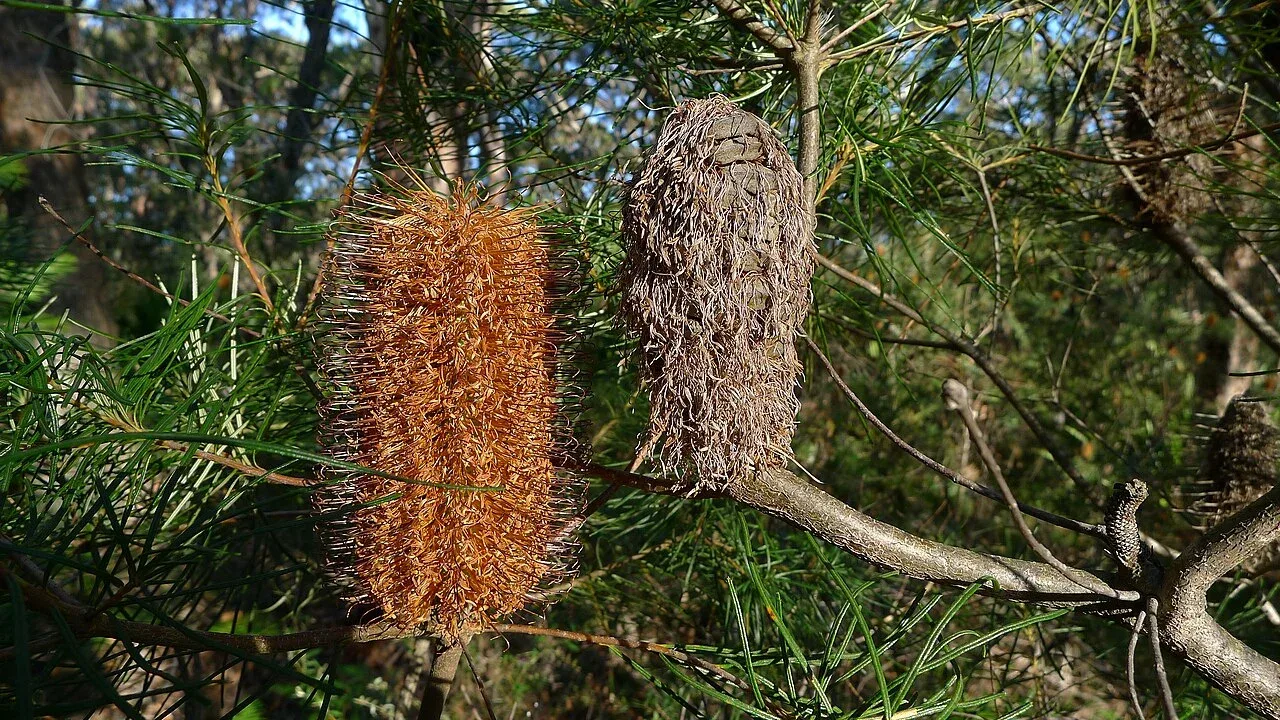
This eastern Australian shrub carries showy nectar-rich flower spikes from autumn into spring. It grows best in sun and drained soil.
Care instructions
Care Guide & Maintenance Routine
Plant in sun with good drainage. Water while young and through long dry spells. Use only low-phosphorus native plant feed if needed.
Light & Sunlight
Full sun helps make a compact rounded shrub. Heavy shade can make growth open and thin.
Watering Schedule
Provide water during establishment and long dry spells. Keep soil moist enough for growth but never waterlogged.
Potting Mix & Drainage
Well-drained soil from sandy to moderately heavy
Temperature & Humidity
ANBG reports that southern forms withstand Canberra winter frost. Buy a locally suited form rather than assuming every plant has the same cold tolerance.
Banksia spinulosa is native along eastern Australia, from Victoria to Queensland. Its narrow leaves and tall flower spikes make it easy to recognise. Colours vary, and the flower spikes can open from autumn through winter into spring. The nectar attracts birds and insects.
Choose an open, well-drained spot. ANBG reports good growth in soils from light to moderately heavy when moisture and drainage are both good. High-lime soil can cause yellow leaves. In open sun it forms a more compact shrub; heavy shade can make it sparse. Southern forms can handle Canberra frost, but plants from other areas may differ. Do not use a high-phosphorus fertiliser.
Seasonal rhythm
Seasonal Calendar
| Month | Care Tasks | Seasonal Focus |
|---|---|---|
| Jan | Routine check | Water young plants in summer heat; keep soil drained. |
| Feb | Routine check | Check mulch and water during dry weather. |
| Mar | Routine check | Look for buds and avoid hard pruning. |
| Apr | Routine check | Flower spikes may start to open in cooler places. |
| May | Routine check | Enjoy flowers and check soil moisture. |
| Jun | Routine check | Watch for nectar-feeding birds and keep roots from staying wet. |
| Jul | Routine check | Inspect leaves for yellowing that may point to high-lime soil. |
| Aug | Routine check | Check the plant after frost and remove only dead growth. |
| Sep | Routine check | New growth may start; use a low-phosphorus feed only if needed. |
| Oct | Routine check | Water new plants as spring weather warms. |
| Nov | Routine check | Check drainage before summer rain. |
| Dec | Routine check | Mulch lightly and monitor young plants in heat. |
Diagnostics
Common Problems & Troubleshooting
Yellow leaves in high-lime soil, weak growth in heavy shade and root stress in poorly drained soil.
Pests & seasonal watch: Few pests were noted by ANBG, but check your own plant for leaf damage and stress. Poor drainage and high-lime soil are more likely care problems.
Similar Botanical Matches
Keep exploring
Related plants
Grower field notes
Reader Field Notes in Australia
Share how this plant performs in your local Australia climate.