
| ☀️ Light | Full sun |
|---|---|
| 💧 Water | Moderate (lightly moist) |
| 🪴 Soil | Deep, fertile, well-drained sandy loam with plenty of organic matter |
| 🌡️ Temp | -5°C – 30°C |
| 🐾 Safety | Cats: toxic · Dogs: toxic |
| 📏 Mature size | 2.0 m |
Where It Grows & Climate Tolerance
Pet & Companion Animal Toxicity (Sweet Pea)
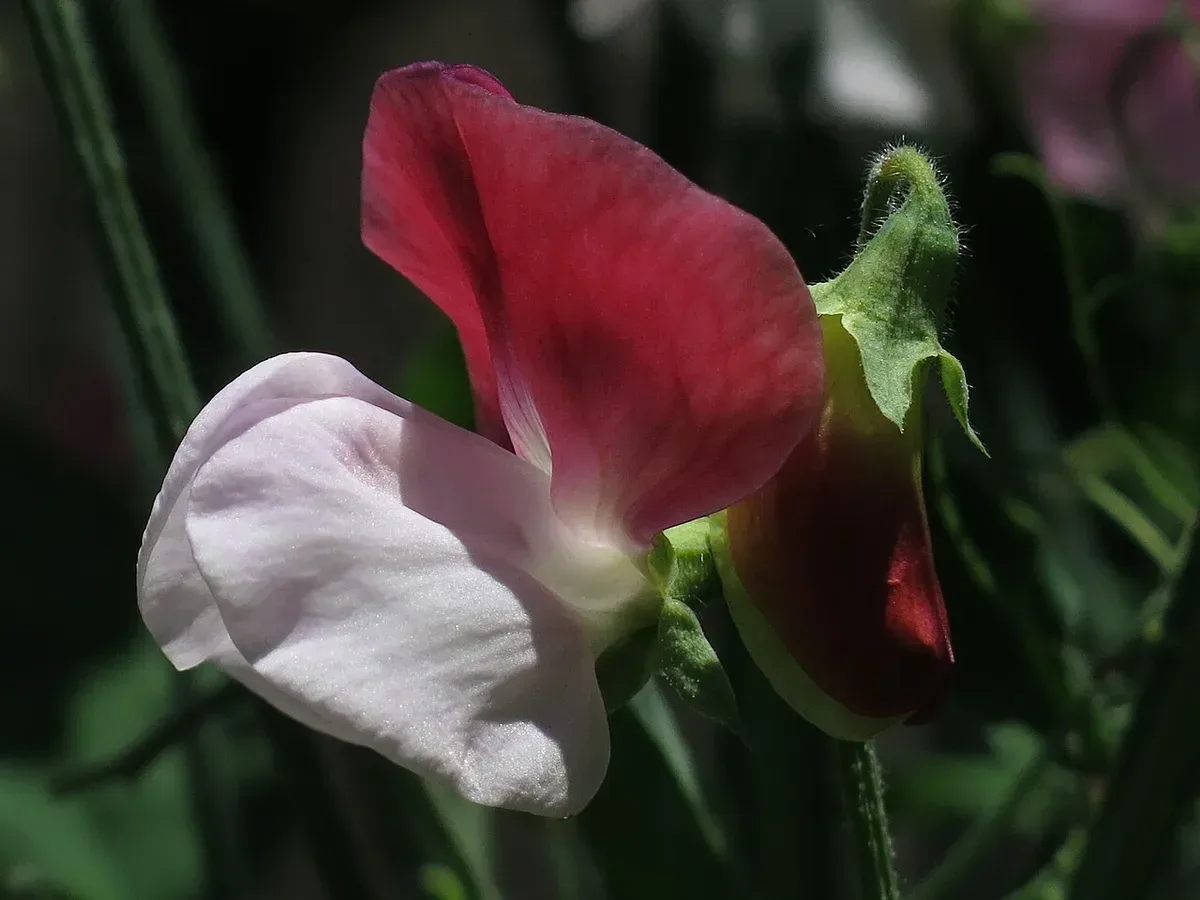
Sweet pea (Lathyrus odoratus) is an annual climber grown for its scented, ruffled flowers in white, pink, red, mauve, purple and bicolours. It climbs by tendrils to about two metres, likes cool weather and rich soil, and flowers longer the more you pick. The seeds are poisonous.
Care instructions
Care Guide & Maintenance Routine
Soak seed and sow in cool weather in rich, well-drained soil in full sun. Give netting or canes to climb. Keep the soil evenly moist, mulch the roots, and pick flowers every few days so pods do not form. Hot weather ends flowering. Never eat the pods or seeds.
Light & Sunlight
NC State Extension lists full sun, and PAU warns that seedlings grow weak and leggy in shade. The RHS also accepts partial shade. A spot with sun all morning is the minimum.
Watering Schedule
NC State advises keeping soil evenly moist and mulching. PAU warns that excessive watering before and after flowering rots roots and stems. Water deeply but let the surface dry a little between waterings.
Potting Mix & Drainage
Deep, fertile, well-drained sandy loam with plenty of organic matter
Temperature & Humidity
NC State says sweet pea prefers a cool climate and tolerates some frost; the RHS rating H3 means hardy to about -5 to 1°C. PAU gives an ideal of 25 to 30°C by day and 17 to 18°C at night. Flowering usually stops once days stay above about 30°C.
About sweet pea
Sweet pea (Lathyrus odoratus) is a fast-growing annual climber in the bean family. NC State Extension gives its origin as southern Italy, Sicily and Crete. The species name means fragrant, and scent is the main reason people grow it. Winged stems carry pairs of leaflets and end in tendrils that wrap around netting, twine or twigs.
Climbing types reach 1.5 to 2.5 m; dwarf types stay bushy and low. Flowers come in white, cream, pink, red, mauve, purple and bicolours, but not yellow.
Important: not a food plant
Sweet peas look like garden peas but are a different genus. NC State says the seeds are poisonous and can cause lathyrism, and advises not planting them near edible peas. The RHS notes that pods and seeds are not edible.
Where and when to grow
Sweet peas prefer cool weather, full sun and rich, well-drained soil. NC State notes they tolerate some frost but can struggle in hot, humid summers. In warm climates they are sown in autumn to flower in late winter and spring; in cold climates they are sown in early spring for summer flowers.
Soil preparation and sowing
Dig deeply and add plenty of well-rotted manure or compost a few weeks before sowing; heavy clay is best avoided, as roots rot in it. Soak seed for up to 24 hours to soften the hard coat, then sow 1 to 1.5 cm deep. Seedlings dislike root disturbance, so sow in place or in deep pots.
Support and training
Put supports up before sowing. Tie young shoots in until tendrils take over. For long-stemmed cut flowers, growers train a single stem up a cane and remove side shoots and tendrils.
Watering and picking
Keep the soil evenly moist and mulch the roots. Avoid waterlogging. The more you pick, the more you get: NC State notes that flowering decreases once pods form, so cut flowers every few days.
Problems
Watch for slugs, snails and aphids, which NC State lists. Powdery mildew often appears late in the season. Avoid sowing in the same spot two years running, as NC State recommends.
For a pea you can eat, see garden peas. Sweet peas make a scented backdrop for snapdragons and calendula.
Buying tips
Seed packets list the type. Spencer varieties have large, ruffled flowers on long stems, good for cutting. Older grandiflora or heirloom types have smaller flowers but often the strongest scent. Dwarf bush types suit pots and baskets. Buy fresh seed each year or store your own in a cool, dry jar.
Watering through the year
Young plants
Keep soil just moist after sowing. Waterlogged soil rots the seed before it sprouts.
Flowering
NC State advises keeping the soil evenly moist and mulching. Water deeply once or twice a week rather than a little every day. Dry roots in flowering cause buds to drop.
Heat
Water early in the morning and keep the mulch thick. Expect flowering to end once hot weather sets in.
Feeding
Dig in plenty of well-rotted manure or compost before sowing. Once flowering starts, a potash-rich liquid feed every couple of weeks, at label rate, keeps flowers coming. Avoid high-nitrogen feeds.
Troubleshooting
Buds dropping before they open
Usually heat, dry roots or a sudden cold night. Water deeply and mulch.
Weak, leggy seedlings
Not enough light. Grow seedlings in the brightest spot and pinch the tip once they have three or four pairs of leaves to encourage side shoots.
Yellow lower leaves
Can be dry soil, heat or the end of the season. Remove the worst leaves and keep picking flowers.
Seedlings bitten off
Slugs, snails and birds. NC State lists slugs and snails among its pests. Check at dusk and protect young plants.
Picking for the vase
Cut stems in the morning when the lowest flowers on the stem are open and the top bud is still closed. Sweet peas last only a few days in a vase, but the more you pick, the more the plant produces.
Safety and pets
All parts, especially the seeds and pods, should be treated as poisonous. Keep stored seed out of the kitchen and away from children and pets.
Common mistakes
- Sowing too late, so plants hit hot weather before they flower.
- Leaving pods on, which stops flowering.
- Growing them in the same bed year after year.
- Planting next to edible peas.
India and Canada in brief
In India sweet peas are sown in autumn and bloom late in the cool season. In Canada they go in as early in spring as the soil allows and bloom in the cool weeks of early summer.
Rotation and spacing
NC State advises against planting sweet peas in the same spot in consecutive years. Move the row each season to limit soil-borne root problems. Space plants about 10 to 15 cm apart along netting; crowded vines get mildew sooner.
Starting in pots
Sweet peas grow long roots early, so use deep pots such as root trainers or tall paper tubes. Plant out with the whole root ball intact. Pinching the tip of each seedling above the third or fourth pair of leaves gives two or three strong side shoots instead of one.
Scent and colour
Scent varies a lot between varieties. Older heirloom types and many mauve and purple flowers are usually the most fragrant, while some modern large-flowered types have less scent. If fragrance matters most, read the packet description or ask fellow growers.
Seasonal rhythm
Seasonal Calendar
A month-by-month calendar for Sweet Pea in Global is coming soon. See the light, water and temperature notes above.
Diagnostics
Common Problems & Troubleshooting
Buds dropping in heat; powdery mildew on older leaves; root rot from heavy, wet soil; poor flowering when pods are left on; seedlings eaten by slugs, snails or birds.
Pests & seasonal watch: NC State lists slugs, snails and aphids. Powdery mildew is common late in the season, especially in warm, dry spells after rain. Root and stem rot in waterlogged soil (PAU).
Q&A
Frequently Asked Questions
Are sweet peas edible?
No. NC State warns the seeds are poisonous and can cause lathyrism, and the RHS says the pods and seeds are not edible. Do not grow them next to edible garden peas where they could be confused.
Should I soak sweet pea seeds?
Yes. PAU soaks seed in water for 24 hours before sowing to soften the hard seed coat, and germination follows in about 10 days.
Why have my sweet peas stopped flowering?
Usually heat, dry soil or pods left on the plant. NC State notes flowering decreases if pods develop, so pick flowers often.
Do sweet peas need support?
Climbing types reach up to 2 m or more and need netting, canes or a trellis. Dwarf bush types can grow without support.
When should I sow sweet peas?
In warm climates, sow in autumn; PAU advises the first fortnight of October in North India. In cold climates, sow in early spring or start indoors in late winter.
Are sweet peas safe for pets?
Treat them as unsafe. The seeds and pods are poisonous. ASPCA has no page for Lathyrus odoratus; its sweet pea entry covers a related species that is toxic to horses.
Why are the leaves white and powdery?
Powdery mildew, common late in the season. Improve airflow, water at the base and remove badly affected leaves.
Can I grow sweet peas in pots?
Yes, in a deep pot at least 30 cm deep with supports, or choose dwarf types for smaller containers.
Why are my sweet pea buds dropping?
Usually heat, dry roots or a sudden cold night. Water deeply, mulch the roots and keep picking flowers.
Similar Botanical Matches
Keep exploring
Related plants
Grower field notes
Reader Field Notes in Global
Share how this plant performs in your local Global climate.