
| ☀️ Light | Full sun |
|---|---|
| 💧 Water | Moderate (lightly moist) |
| 🪴 Soil | Fertile, well-drained loam rich in organic matter; pH about 6.0 to 6.5 |
| 🌡️ Temp | -5°C – 30°C |
| 🐾 Safety | Cats: non-toxic · Dogs: non-toxic |
| 📏 Mature size | 60 cm |
Where It Grows & Climate Tolerance
Pet & Companion Animal Toxicity (Snapdragon)
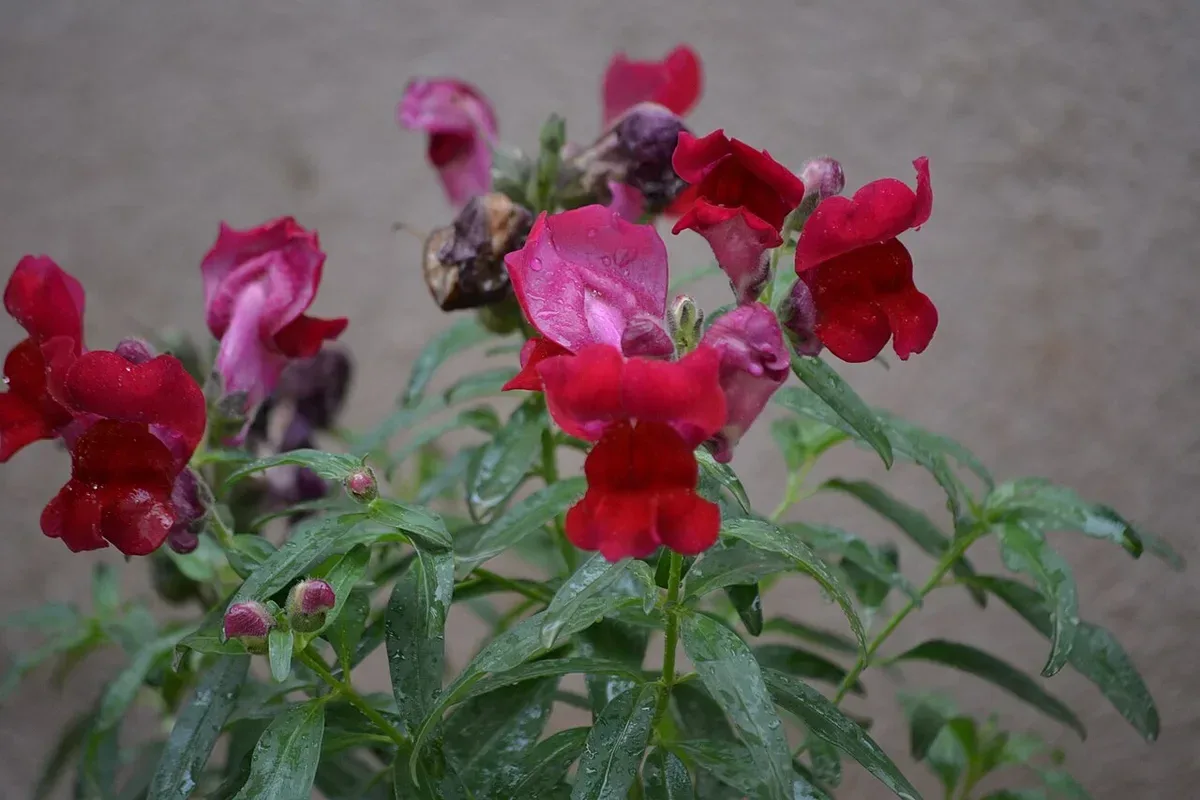
Snapdragon (Antirrhinum majus) is a cool-season flower with upright spikes of two-lipped blooms that open like a dragon's mouth when squeezed. It comes in dwarf bedding types and tall cut-flower types, in almost every colour except true blue.
Care instructions
Care Guide & Maintenance Routine
Grow in full sun in fertile, well-drained soil. Water at the base and let the surface dry slightly between waterings. Stake tall types, pinch young plants for more spikes, and cut faded spikes to keep flowers coming. It flowers best in mild weather and stalls in summer heat.
Light & Sunlight
NC State Extension lists full sun to partial shade; PAU says it grows best in full sun. Plants in too much shade stretch and flower less. In hot spells, light afternoon shade lengthens flowering.
Watering Schedule
NC State notes low drought tolerance and advises avoiding overhead watering. PAU says the plant prefers some dryness around the roots and rots when overwatered. Water at the base when the top centimetre is dry.
Potting Mix & Drainage
Fertile, well-drained loam rich in organic matter; pH about 6.0 to 6.5
Temperature & Humidity
PAU gives 18°C as the optimum growing temperature. NC State notes it languishes in summer heat and rates it for USDA zones 7 to 10; the RHS rating is H2 (tolerates low temperatures but not being frozen). -5°C is used as an approximate limit for short light frosts on hardened plants. 30°C is roughly where flowering stalls.
About snapdragon
Snapdragon (Antirrhinum majus) is a short-lived perennial from southwestern Europe, grown almost everywhere as an annual. NC State Extension notes that the genus name means "like a snout", after the shape of the flower. Squeeze the sides of a bloom and the lips open like a mouth, which is why children love it and why it is called dog flower in parts of India.
Flowers come in white, yellow, orange, pink, red, magenta and bicolours. Plants range from 15 cm dwarfs for edging to cut-flower types close to a metre tall.
Light and temperature
Give snapdragons full sun. PAU gives 18°C as the ideal growing temperature, and NC State notes plants languish in summer heat. That makes them a winter and spring flower in warm countries and a late spring to autumn flower in cooler ones. Light frost does little harm to hardened plants.
Soil and watering
Plant in fertile, well-drained soil with plenty of organic matter; PAU gives a pH of 6.0 to 6.5. NC State advises avoiding overhead watering, and PAU notes that the plant likes some dryness around the roots and rots when overwatered. Water the soil, not the leaves, in the morning.
Sowing and planting
The seed is as fine as dust. Mix it with sand, scatter it on moist seed mix and barely cover it. PAU reports germination in six to seven days and transplanting when seedlings are 7 to 8 cm tall, spaced 30 to 40 cm apart.
Pinching, staking and deadheading
Pinch the tips of young plants for bushier growth. Tall cultivars need canes or netting. Cut each spike back once it fades and side shoots will carry on flowering for weeks.
Pests and diseases
NC State lists significant susceptibility to rust, as well as moulds, leaf spots, downy mildew, wilt and root rots. Good spacing, morning watering and removing affected leaves help. Caterpillars and aphids may attack buds and shoots.
Uses
Snapdragons work in beds, borders, rockeries and pots, and tall types are excellent cut flowers. Bees force open the lips to reach the nectar, so the plant is a good pollinator flower too.
Pet safety
NC State tags snapdragon as non-toxic for cats, dogs and horses. The flowers are edible but bitter.
Good partners include pansy, calendula and sweet alyssum.
Buying tips
Snapdragons come in three rough heights: dwarf types of about 20 to 30 cm for edging and pots, intermediate types for beds, and tall types of 75 cm or more for cutting. Choose seedlings that are stocky and green, not stretched or yellow. Check the undersides of leaves for orange rust spots, since NC State notes the plant is significantly susceptible to rust.
Watering through the year
Cool growing season
Keep the soil evenly moist but not soggy. NC State advises avoiding overhead watering, so water at the base in the morning.
Warm weather
NC State notes snapdragons have low drought tolerance and languish in summer heat. Mulch, water more often and expect flowering to slow.
Wet spells
Root rots and fungal leaf spots increase. Make sure beds drain well and space plants for airflow.
Feeding
Rich soil prepared with compost suits snapdragons. A balanced feed every few weeks during flowering, used at label rate, keeps new spikes coming.
Troubleshooting
Orange powdery spots under leaves
Rust. Remove affected leaves, avoid wetting the foliage and do not grow snapdragons in the same bed every year.
Wilting plants with healthy-looking soil
NC State lists wilt and root rots among the plant's problems. Pull and bin affected plants and use a different bed next season.
Tall spikes falling over
Stake tall types early, as NC State suggests, or grow them through netting.
Few flowers
Usually heat, shade or spent spikes left on. Cut faded spikes back to a side shoot.
Grey fuzz on flowers
Grey mould in damp, still weather. Remove affected flowers and improve airflow.
As cut flowers
Cut spikes in the cool of the morning when the lower third of the flowers are open. Strip the lower leaves and put the stems straight into water. Spikes bend upwards towards light, so keep the vase upright and away from a window if you want straight stems.
Common mistakes
- Sowing too late, so plants flower into hot weather.
- Watering over the leaves in the evening.
- Skipping stakes for tall types.
- Growing them in the same bed year after year, which builds up rust.
India and Canada in brief
In India snapdragons are a cool-season flower, sown after the rains and in bloom from late winter into spring. In Canada they are spring-planted annuals that flower from early summer and can handle light frost in fall.
Growing from seed
Snapdragon seed is very fine. Sprinkle it on the surface of moist seed mix and press it in lightly without covering, as it needs light to germinate. Keep the tray in a bright, cool spot. Prick out seedlings when they have two true leaves and pinch once they have three or four pairs.
Uses in the garden
NC State notes snapdragons are good for massing, borders and containers, with tall types for cutting and dwarf ones for edging. Bees land on the lower lip and force the flower open to reach the nectar, which makes snapdragons fun for children to watch. NC State also lists the flowers as edible but bitter, best used only as a garnish.
Seasonal rhythm
Seasonal Calendar
A month-by-month calendar for Snapdragon in Global is coming soon. See the light, water and temperature notes above.
Diagnostics
Common Problems & Troubleshooting
Rust pustules under leaves; leaf spot and grey mould in damp weather; root rot from overwatering; floppy tall stems without support; flowering stops in heat; caterpillars boring into buds.
Pests & seasonal watch: NC State lists significant susceptibility to rust, plus moulds, fungal leaf spots, downy mildew, wilt and root rots. SKUAST-Jammu notes Helicoverpa caterpillars attack antirrhinum. Aphids feed on young shoots.
Q&A
Frequently Asked Questions
When should I sow snapdragons?
In warm climates, sow in autumn so plants flower in late winter and spring; PAU advises September to October in North India. In cold climates, start seed indoors in late winter and plant out in spring.
Why are my snapdragons not flowering?
Common causes are too much shade, heat, or rich feeding that pushes leaves. They flower best in full sun and mild temperatures around 18°C, according to PAU.
Should I pinch snapdragons?
Yes. Pinching the tip of young plants makes them branch and gives more flower spikes.
What are the orange spots under the leaves?
Most likely rust, which NC State lists as a significant problem. Remove affected leaves, water at the base and improve airflow.
Are snapdragons safe for pets?
NC State tags Antirrhinum majus as non-toxic for cats, dogs and horses.
Can you eat snapdragon flowers?
NC State says the flowers are edible but bitter, so they are best used only as a garnish.
Do snapdragons come back every year?
They are short-lived perennials usually grown as annuals. In mild climates they may survive a second year, but flowering is weaker.
Why is it called dog flower?
The flower looks like an animal's snout. The genus name comes from Greek words meaning like a nose or snout, as NC State explains.
Are snapdragons good cut flowers?
Yes. Cut spikes in the morning when the lower third of the flowers are open, strip the lower leaves and put them straight into water. Tall varieties give the longest stems.
Similar Botanical Matches
Keep exploring
Related plants
Grower field notes
Reader Field Notes in Global
Share how this plant performs in your local Global climate.