
| ☀️ Light | Full sun |
|---|---|
| 💧 Water | Moderate (lightly moist) |
| 🪴 Soil | Light, very well-drained soil of moderate fertility |
| 🌡️ Temp | -5°C – 30°C |
| 🐾 Safety | Cats: non-toxic · Dogs: non-toxic |
| 📏 Mature size | 15 cm |
Where It Grows & Climate Tolerance
Pet & Companion Animal Toxicity (Sweet Alyssum (Sweet Alison))
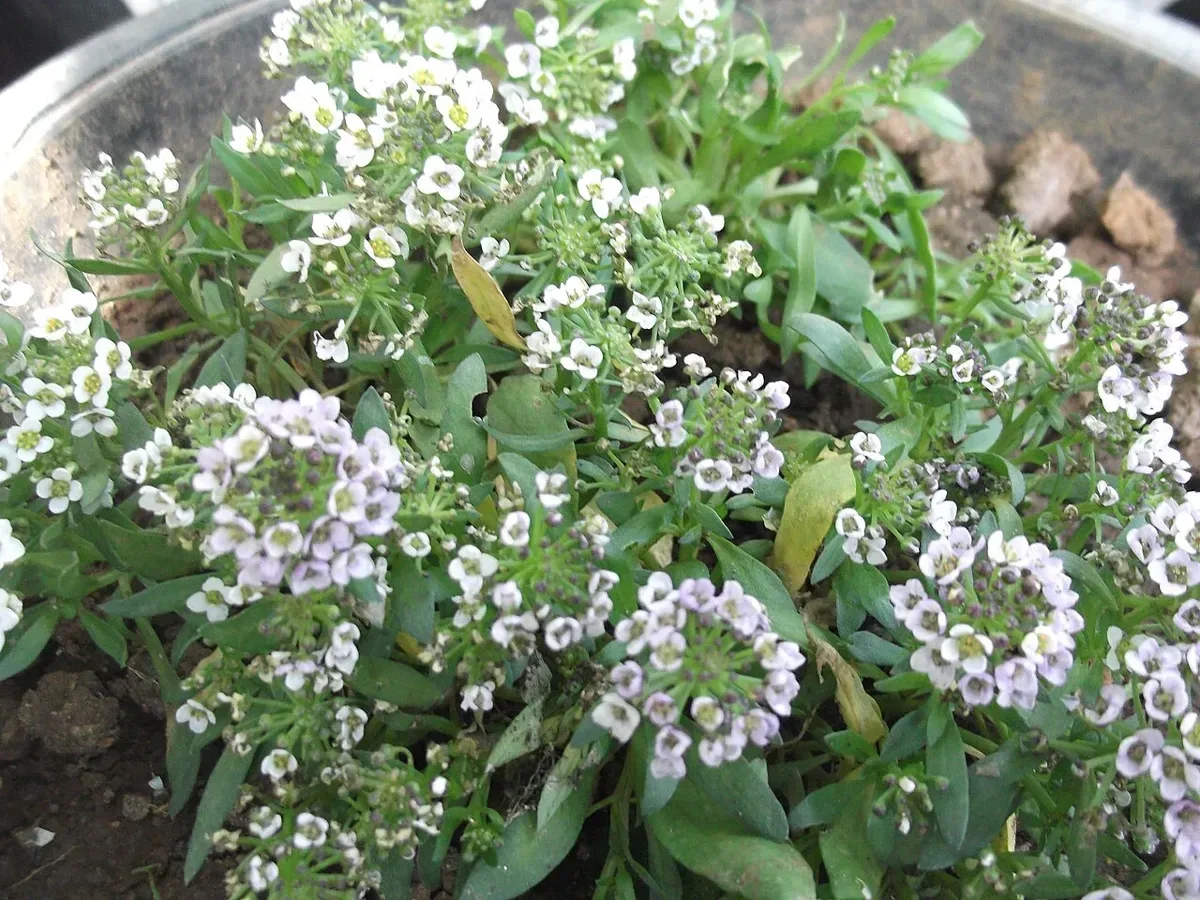
Sweet alyssum is a low, spreading annual in the mustard family, covered for months in tiny four-petalled flowers with a honey scent. White is the classic and most fragrant colour; there are also purple, lilac, pink and apricot strains. It edges beds, fills pots and draws helpful insects.
Care instructions
Care Guide & Maintenance Routine
Grow in sun or light shade in very well-drained soil. Water when the top of the soil is dry, and never leave it soggy, because stems and crowns rot. Flowering slows in hot weather; shear plants back by a third and feed lightly to bring a new flush. It is a cool-season plant.
Light & Sunlight
NC State lists full sun to partial shade. In hot climates, afternoon shade extends flowering; in cool summers, full sun gives the densest carpet.
Watering Schedule
Water when the top few centimetres dry out. NC State stresses very good drainage, because stem and crown rots and edema follow wet soil. Pots and hanging baskets dry faster and need more frequent checks.
Potting Mix & Drainage
Light, very well-drained soil of moderate fertility
Temperature & Humidity
NC State gives hardiness zones 5a to 9b, though it is grown almost everywhere as an annual. It flowers best in cool weather; Wisconsin Horticulture notes plants turn ragged in heat and revive as temperatures drop. Light frosts usually do little harm.
About sweet alyssum
Sweet alyssum, Lobularia maritima, is a low, mounding plant in the mustard and cabbage family. Wisconsin Horticulture notes it is native to the Mediterranean region, the Canary Islands and the Azores. It is a short-lived perennial grown almost everywhere as an annual, usually 8 to 25 cm tall and spreading wider than it is high.
Narrow grey-green leaves are almost hidden by rounded clusters of tiny four-petalled flowers. NC State describes the scent as like new-mown hay or honey and notes white forms are the most fragrant. Purple, rose, lilac and apricot strains are also sold.
Name
The plant was once called Alyssum maritimum, and many seed packets still say alyssum. The perennial yellow alyssums, such as basket of gold, belong to other genera and have different needs.
Uses
- Edging: a neat border along paths and beds.
- Containers: spilling over the rim of pots, window boxes and hanging baskets.
- Paving: self-sown seedlings fill cracks between stones.
- Under taller plants: a living mulch beneath roses, lilies and bulbs.
- Vegetable gardens: a companion that draws beneficial insects.
Beneficial insects
Wisconsin Horticulture notes sweet alyssum attracts syrphid flies, or hoverflies, whose larvae eat aphids. It is used between lettuce rows on organic farms in California as part of aphid management. Small bees and parasitic wasps visit the flowers as well.
Light
NC State lists full sun to partial shade. In cool climates, full sun gives the most flowers. Where summers are hot, a spot with afternoon shade keeps it flowering longer.
Soil and drainage
Drainage matters more than fertility. NC State warns that stem and crown rots follow wet soil and calls very good drainage a must. Sandy or gritty soil of medium fertility is ideal. Heavy clay should be improved with compost and grit, or the plants grown in raised beds and pots.
Sowing
Sweet alyssum grows quickly from seed. NC State suggests starting indoors five to six weeks before the last frost, or sowing directly outdoors. PAU notes the tiny seed is mixed with sand so it can be spread evenly. Seedlings emerge in about a week in warm conditions and flower roughly six to eight weeks after sowing. Thin or space plants about 20 to 25 cm apart.
Watering
Water when the top of the soil is dry. Plants in baskets and small pots dry out fast, but constant wetness is worse than brief dryness. Water at the base in the morning so leaves dry quickly.
Feeding
Little is needed. Compost at planting time is usually enough in beds. After shearing, Wisconsin Horticulture suggests a light feed. In pots, use a balanced liquid feed at half the label rate every few weeks.
Shearing
Sweet alyssum flowers heavily for weeks, then slows as seed forms or as heat builds. NC State notes flowering declines in hot summers. Shearing the whole plant back by a third to a half removes seed heads and brings a fresh flush as the weather cools.
Cultivars
Wisconsin Horticulture lists several well-known strains:
- 'Clear Crystal' and 'Easter Bonnet': series in mixed colours.
- 'Snow Princess': a vigorous, heat-tolerant white.
- 'Royal Carpet': a violet-purple strain that won an All-America Selections award in 1953.
Pests and diseases
- Downy mildew: yellowing leaves with grey growth underneath in humid, cool weather.
- Stem and crown rot: plants collapse from the base in wet soil.
- Edema: corky blisters on leaves when roots take up more water than leaves lose.
- Aphids: SKUAST-Jammu notes aphids attack alyssum.
- Flea beetles and cabbage caterpillars: pests of the mustard family that sometimes chew the leaves.
Growing in containers and baskets
Sweet alyssum is one of the best edging plants for containers. Plant it around the rim of a large pot so it spills over the edge, with an upright plant in the centre. In hanging baskets, tuck plugs into the sides as well as the top for a full ball of flowers. Use a free-draining potting mix and check moisture daily in warm weather, since baskets dry out fast. Trim straggly stems with scissors to keep the shape neat. If a basket turns brown in midsummer, shear it, feed it and move it to a spot with afternoon shade for a couple of weeks while it regrows.
Common mistakes
- Planting in heavy, wet soil, which leads to rot at the base.
- Pulling plants out when they flag in heat, instead of shearing them.
- Overfeeding, which gives soft, leafy growth.
- Sowing seed too thickly, which crowds seedlings and invites damping-off.
- Watering late in the evening in cool weather, which keeps leaves wet and encourages downy mildew.
Self-sowing
Plants often drop seed, and seedlings appear the next season in paths and bed edges. Purple and pink strains may revert towards white over several generations. Pull unwanted seedlings while small.
Fragrance and posies
The honey perfume is strongest on warm, still afternoons and carries further than such tiny blossoms suggest. Plant it beside a bench, doorstep or path where people brush past. Short sprigs make charming fillers for small posies and egg-cup arrangements, lasting several days in water. Bees, hoverflies and butterflies also come for the nectar, making it a useful addition to pollinator-friendly planting schemes.
Pets
NC State tags sweet alyssum as non-toxic to cats, dogs and horses. ASPCA has no listing for it.
Companions
Sweet alyssum edges beds of petunia, pansy, snapdragon, calendula and marigold. In dry, sunny pots it combines with portulaca.
India and Canada in brief
Timing differs sharply between the two markets; see the country sections for months, regions and local advice.
Seasonal rhythm
Seasonal Calendar
A month-by-month calendar for Sweet Alyssum (Sweet Alison) in Global is coming soon. See the light, water and temperature notes above.
Diagnostics
Common Problems & Troubleshooting
Plants turning brown and stringy in hot weather; rot at the base in wet soil; downy mildew in humid spells; blistered leaves (edema) from overwatering in cool, cloudy weather; aphids on shoots.
Pests & seasonal watch: NC State lists downy mildew, stem and crown rots and edema. SKUAST-Jammu notes aphids attack alyssum. Flea beetles and cabbage caterpillars, which feed on mustard-family plants, may chew leaves.
Q&A
Frequently Asked Questions
Is sweet alyssum the same as Alyssum?
Not quite. Sweet alyssum was once named Alyssum maritimum and is now Lobularia maritima. Perennial yellow alyssum, often called basket of gold, is a different plant.
Why has my sweet alyssum stopped flowering?
Heat. Wisconsin Horticulture notes plants become ragged in hot weather and revive in cool weather. Shear them back by a third to a half and feed lightly.
Is sweet alyssum safe for pets?
NC State tags it as non-toxic to cats, dogs and horses. ASPCA has no listing for it.
Does sweet alyssum smell?
Yes, a sweet honey scent. NC State notes white forms are the most fragrant.
Does it attract beneficial insects?
Yes. Wisconsin Horticulture notes it attracts hoverflies, whose larvae eat aphids, and is used between lettuce rows on organic farms in California for aphid control.
When should I sow sweet alyssum in India?
SKUAST-Jammu lists it with winter annuals sown in September or October. PAU transplants it from late October to the first week of November.
Why are the stems rotting at soil level?
Wet soil. NC State lists stem and crown rots and notes very good drainage is a must. Water less and improve drainage.
Will sweet alyssum come back next year?
It is usually grown as an annual, but it often self-sows, so seedlings may appear the following season.
How far apart should I plant it?
SKUAST-Jammu spaces dwarf annuals including alyssum at 25 by 25 cm.
Similar Botanical Matches
Keep exploring
Related plants
Grower field notes
Reader Field Notes in Global
Share how this plant performs in your local Global climate.