
| ☀️ Light | Full sun |
|---|---|
| 💧 Water | Moderate (lightly moist) |
| 🪴 Soil | Free-draining cactus mix with coarse mineral particles |
| 🐾 Safety | Cats: not verified · Dogs: not verified |
Where It Grows & Climate Tolerance
Pet & Companion Animal Toxicity (Dragon Fruit Plant)
Not yet verified: Toxicity status for cats, dogs, and horses has not yet been confirmed against veterinary poison-control records. Keep out of reach of pets or consult your veterinarian.
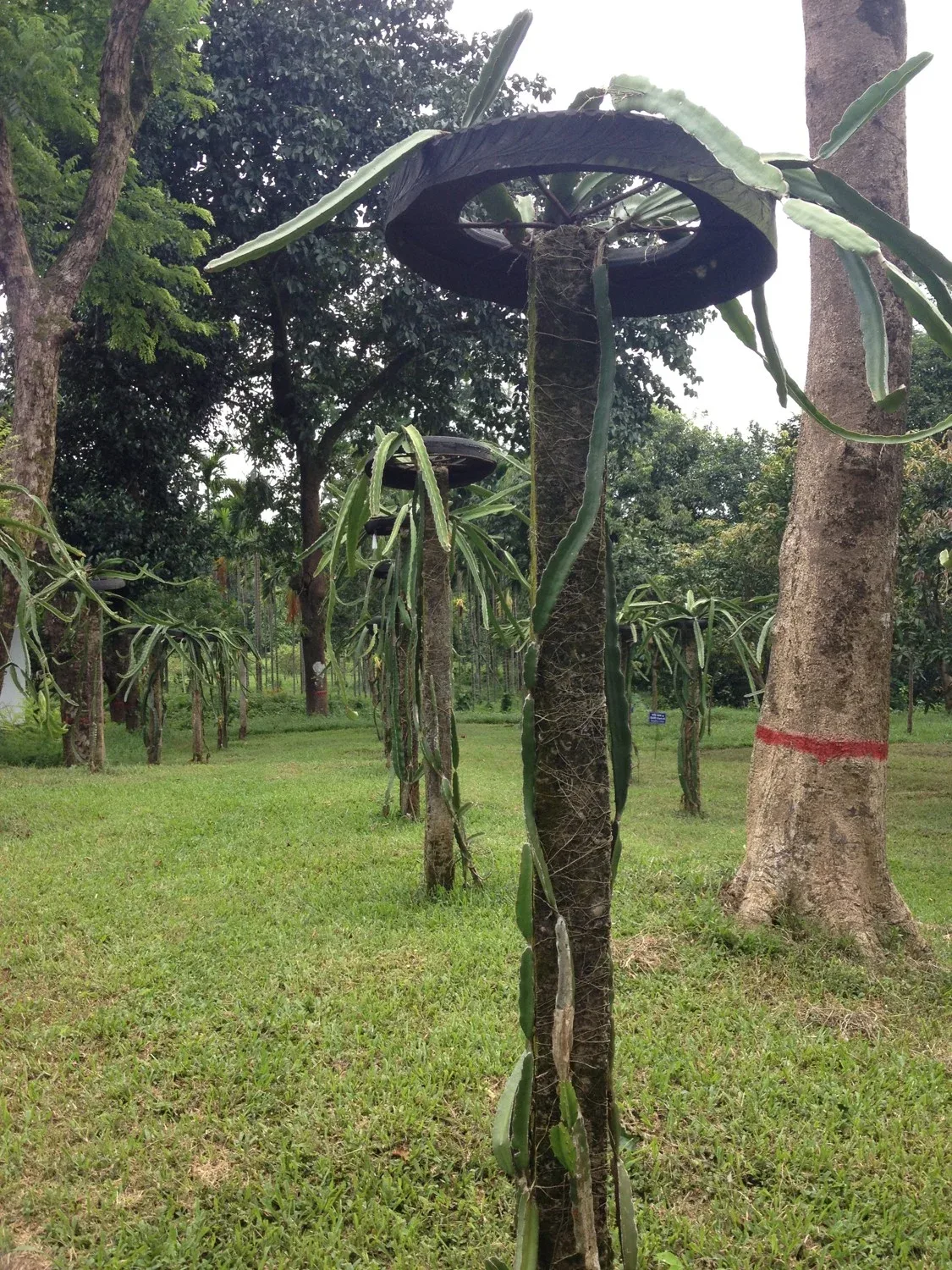
Dragon fruit, or pitaya, is a climbing cactus. Selenicereus undatus, previously called Hylocereus undatus, typically produces pink-skinned fruit with white flesh. Its long stems need a sturdy support and room to hang at the top.
Care instructions
Care Guide & Maintenance Routine
Grow dragon fruit in a warm, bright place with quick drainage. Train a few upright stems to a strong post and allow mature arms to drape. Water during warm growth, ease off in cool weather, and check your cultivar’s pollination needs.
Light & Sunlight
Gradually introduce an established plant to several hours of sun. In extreme heat, use afternoon shade if stem surfaces start to bleach.
Watering Schedule
Water well in warm growing weather and let the top of the mix dry before watering again. Keep the stem base out of standing water.
Potting Mix & Drainage
Free-draining cactus mix with coarse mineral particles
Temperature & Humidity
Pitaya grows best in warmth and is frost sensitive. A greenhouse or a sheltered bright spot is needed where winters are cold.
Dragon fruit, or pitaya, is a climbing cactus. Selenicereus undatus, previously called Hylocereus undatus, typically produces pink-skinned fruit with white flesh. Its long stems need a sturdy support and room to hang at the top.
Train the stems
Set a post with a broad crossbar or an open ring where stems can drape. Anchor it for the weight of mature stems and fruit. Tie a few leaders loosely up to the top, then let the arms arch down where light reaches them.
Start a cutting
Choose a healthy piece from a known plant. Let the cut end dry before putting it into a lightly moist, draining medium. Keep it warm in filtered light until roots form and increase light after you see fresh growth.
Water according to the pot
Water established plants while the weather is warm. In a container, lift or feel the mix below the surface and make sure the saucer drains. Reduce watering when cool nights slow growth.
Check pollination before adding fertiliser
Flowers open at night. Some named cultivars set fruit with their own pollen, while others need a compatible plant. Ask the nursery about the cultivar and hand-pollinate when flowers are open if natural pollination is unreliable.
Sources
- UF/IFAS Extension • Pitaya for the home landscape
- ABC Gardening Australia • Trellising dragon fruit
- Kew Plants of the World Online • Selenicereus undatus
Featured photo by Anik Sarker via Wikimedia Commons, CC BY-SA 4.0. Resized for display.
Seasonal rhythm
Seasonal Calendar
A month-by-month calendar for Dragon Fruit Plant in Global is coming soon. See the light, water and temperature notes above.
Diagnostics
Common Problems & Troubleshooting
Soft, dark stem bases can develop in persistently wet mix. Bleached patches after a move into strong sun can be scorch. If flowers drop, check cultivar compatibility and night pollination.
Q&A
Frequently Asked Questions
Can you grow dragon fruit in a pot?
Yes. Use a stable container with fast drainage and a strong support. Give the mature arms space to dangle and check the pot often in hot weather.
Why does my dragon fruit flower without fruit?
Check whether the cultivar requires cross-pollination. Lack of compatible pollen, very wet weather and heat stress can all affect fruit set.
Is dragon fruit a desert cactus?
Pitaya is a climbing cactus from warm regions. Give roots air and avoid standing water, but water established plants regularly during hot, active growth.
Similar Botanical Matches
Keep exploring
Related plants

Grower field notes
Reader Field Notes in Global
Share how this plant performs in your local Global climate.