
| ☀️ Light | Bright indirect light |
|---|---|
| 💧 Water | Low (allow soil to dry) |
| 🪴 Soil | Free-draining loam or potting mix with compost; near neutral pH |
| 🌡️ Temp | 10°C – 40°C |
| 🐾 Safety | Cats: toxic · Dogs: toxic |
| 📏 Mature size | 60 cm |
Where It Grows & Climate Tolerance
Pet & Companion Animal Toxicity (Indian Borage (Cuban Oregano, Ajwain Patta))
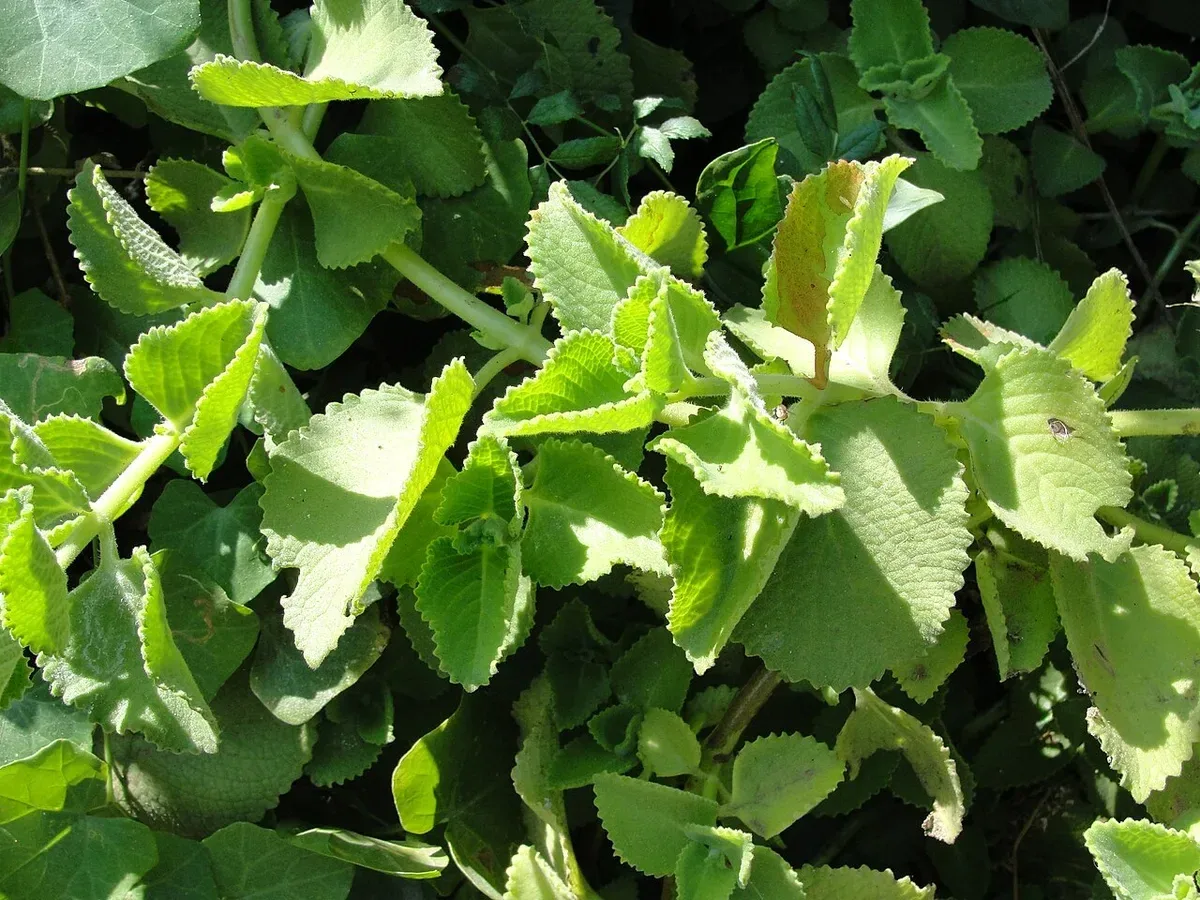
Indian borage (Coleus amboinicus, also called Cuban oregano and ajwain patta) is a fast-growing, sprawling herb with thick, fuzzy, scalloped leaves that smell strongly of oregano and thyme. It roots from cuttings almost anywhere warm, needs little water, and dies in frost.
Care instructions
Care Guide & Maintenance Routine
Grow in bright light with some shade from harsh afternoon sun. Use a free-draining mix and water only when the top of the soil is dry, because the succulent stems rot in wet soil. Pinch tips to keep it bushy. Keep above 10°C and bring it indoors before frost. Toxic to pets.
Light & Sunlight
NC State notes it likes hot, dry sites but needs protection from strong summer sun, which can burn the leaves. A review of the species in PubMed Central (PMC6274163) reports it tolerates both scorching sun and strong shade but grows best in partial shade. Morning sun with afternoon shade, or a bright window, suits it.
Watering Schedule
The PMC6274163 review advises watering sparingly: the fleshy stems and leaves store water, the plant copes with drought, and excess water in the soil makes the roots rot. Let the top few centimetres dry before watering.
Potting Mix & Drainage
Free-draining loam or potting mix with compost; near neutral pH
Temperature & Humidity
The PMC6274163 review states it cannot withstand temperatures below 0°C and is stressed even below 10°C. NC State rates it hardy in USDA zones 9a to 11b. NC State gives a height of 30 to 90 cm with a wider spread; pot plants usually stay around 30 to 60 cm.
About Indian borage
Indian borage is a soft, sprawling herb in the mint family. Botanists now place it in the genus Coleus as Coleus amboinicus, though it is still widely sold under its older name, Plectranthus amboinicus. NC State gives its origin as Africa, the Arabian Peninsula and India; it is now grown in warm gardens around the world.
The plant has thick, square stems and opposite, rounded leaves with scalloped edges. Leaves are covered in fine hairs, feel soft and slightly succulent, and release a sharp oregano and thyme scent when brushed. A variegated form with cream-edged leaves is common in nurseries. Plants reach about 30 to 90 cm, spreading wider than tall.
One plant, many names
Few herbs carry so many common names. In English it is Indian borage, Cuban oregano, Mexican mint, Spanish thyme and country borage. Across India it is ajwain patta, karpooravalli, panikoorka and doddapatre, among others. All refer to the same plant, which is not related to true borage or true oregano.
Green and variegated forms
The plain green form is the most vigorous and the most strongly scented. The variegated form, with a creamy white margin on each leaf, grows more slowly and is a little more sensitive to cold and harsh sun, but it looks attractive in a hanging basket or tumbling over the edge of a pot. Both are used in the same way.
Beds or containers
In a frost-free garden it makes a low, spreading ground cover and roots wherever stems touch the soil. Most people keep it in a container instead, because a pot is easier to move out of heavy rain or cold and gives the sharp drainage the stems need. A hanging basket also works, since the stems trail naturally.
Light and position
NC State notes the plant likes hot, dry sites but needs protection from the hottest summer sun, which can burn the leaves. A review in PubMed Central (PMC6274163) reports it survives scorching sun and strong shade but grows best in partial shade. A bright spot with morning sun suits pots outdoors; indoors, choose the brightest window you have.
Soil and pots
Drainage matters more than anything else. Use a free-draining mix with sand or perlite and some compost, and a pot with a drainage hole. The PMC6274163 review notes best growth in compost-rich soil of neutral pH, as long as water never stands. Terracotta pots dry faster than plastic and suit this herb well.
Watering
The fleshy stems and leaves hold plenty of water, and the plant copes with drought. The usual cause of death is the opposite: wet soil that rots the roots and stem base. Water thoroughly, let excess drain away, then wait until the top few centimetres are dry before watering again. In cool weather or low light, water even less.
Feeding
Indian borage is not a heavy feeder. A spring top-dressing of compost in beds, or an occasional balanced liquid feed at label rate for pots in summer, is plenty. Rich feeding produces soft, sappy shoots that rot more easily.
Pinching and pruning
Unpinched stems sprawl and eventually flop over the side of the pot. Pinch the tips every few weeks to make the plant branch. Cut back by a third when it gets leggy and use the trimmings as cuttings. Old plants turn woody at the base and are best replaced every year or two.
Propagation
NC State describes it as very easy to root from stem cuttings, and it can also be divided. Seed is rarely available, because the plant seldom sets it. Cut a 10 cm tip, strip the lower leaves and stand it in water or moist mix in a warm, bright spot. Roots appear within a week or two.
Temperature
The PMC6274163 review states the plant cannot survive below 0°C and is stressed below 10°C. NC State rates it hardy only in USDA zones 9a to 11b. Below about 10°C, leaves turn limp and dark. In cold climates it is a summer patio plant and a winter houseplant.
Harvesting and using
Pick leaves as needed once the plant is established, taking a few from each stem. The flavour is strong, so one or two leaves go a long way. They are used fresh in fritters, chutneys, rasam, beans and meat dishes, or steeped in hot water. Leaves do not dry well; keep a living plant instead.
Pests and problems
- Stem and root rot: soft, blackened stems at soil level after overwatering.
- Mealybugs: white, cottony clusters in leaf joints. Wipe off and isolate the plant.
- Spider mites: fine speckling in hot, dry weather or indoors in winter.
- Leaf burn: brown, papery patches after harsh sun.
- Cold damage: limp, darkened leaves after nights below 10°C.
Leaf spots and yellowing can have several causes. Check watering, temperature and the undersides of leaves before treating.
Pets
ASPCA lists Coleus amboinicus, with Indian borage as an alternate name, as toxic to dogs, cats and horses because of its essential oils. Keep pots out of reach of pets.
For other aromatic leaves, see oregano, thyme, mint and tulsi. Its colourful relative is ornamental coleus, and curry leaf is another kitchen plant often grown beside it.
India and Canada in brief
In one market this is a garden and doorstep herb that grows all year; the risk there is heavy rain. In the other it is a summer patio plant that spends winter on a windowsill. Each market section explains the season that matters.
Seasonal rhythm
Seasonal Calendar
A month-by-month calendar for Indian Borage (Cuban Oregano, Ajwain Patta) in Global is coming soon. See the light, water and temperature notes above.
Diagnostics
Common Problems & Troubleshooting
Stem rot and collapse in waterlogged soil; leaf burn in hot afternoon sun; leggy, sprawling stems in low light or without pinching; limp, darkened leaves after cold below 10°C; mealybugs in leaf joints.
Pests & seasonal watch: NC State lists spider mites and mealybugs. Whitefly and aphids sometimes appear on indoor plants. Stem and root rot follow wet soil.
Q&A
Frequently Asked Questions
Is Cuban oregano the same as Indian borage?
Yes. Cuban oregano, Indian borage, ajwain patta, Mexican mint and Spanish thyme are all common names for Coleus amboinicus, also known by the older name Plectranthus amboinicus.
Is it related to real oregano or borage?
It is in the mint family, like oregano, but it is a different genus. It is not related to borage (Borago officinalis). NC State notes the name Cuban oregano comes from its strong oregano scent.
How often should I water it?
Only when the top few centimetres of soil are dry. The fleshy stems store water, and the PMC6274163 review warns that excess water makes the roots rot.
Can it take full sun?
Some, but strong afternoon sun can burn the leaves, as NC State notes. Morning sun with light afternoon shade is the safest position in hot climates.
How do I propagate it?
From stem cuttings, which root very easily in water or soil. It rarely sets seed, so seed is not a practical option.
Why is my plant leggy and floppy?
Low light and no pinching. Move it to a brighter spot, pinch the tips every few weeks and restart old plants from cuttings.
What is the lowest temperature it tolerates?
The PMC6274163 review reports it cannot survive below 0°C and is stressed below 10°C. Keep it frost-free and preferably above 10°C.
Is it safe for cats and dogs?
No. ASPCA lists Coleus amboinicus, with Indian borage as an alternate name, as toxic to dogs, cats and horses because of its essential oils.
Is this the ornamental coleus?
No. Ornamental coleus is a related plant grown for its colourful leaves. Indian borage has plain green, sometimes cream-edged, fuzzy aromatic leaves and is grown as a herb.
Similar Botanical Matches
Keep exploring
Related plants
Grower field notes
Reader Field Notes in Global
Share how this plant performs in your local Global climate.